Pulse-Up
Pulse-Up is a short-range bodyweight core drill built around repeated pulses from a curled trunk position. It is useful when you want the abdominal wall to do the work without turning the rep into a full sit-up, a swing, or a hip-driven crunch. The emphasis stays on staying tight through the midsection while the movement itself remains small and deliberate.
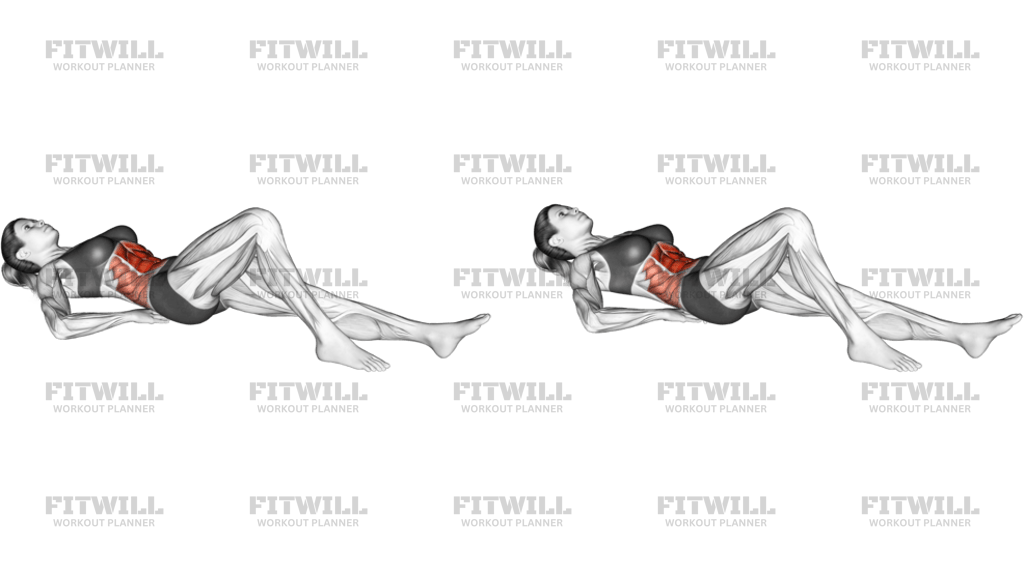
The main stress lands on the rectus abdominis, which is why the exercise is labeled for the waist and core. The obliques, transversus abdominis, and hip flexors help stabilize the pelvis and keep the ribcage stacked over the hips. When those support muscles are doing their job, the pulse stays crisp and the lower back is less likely to arch or take over.
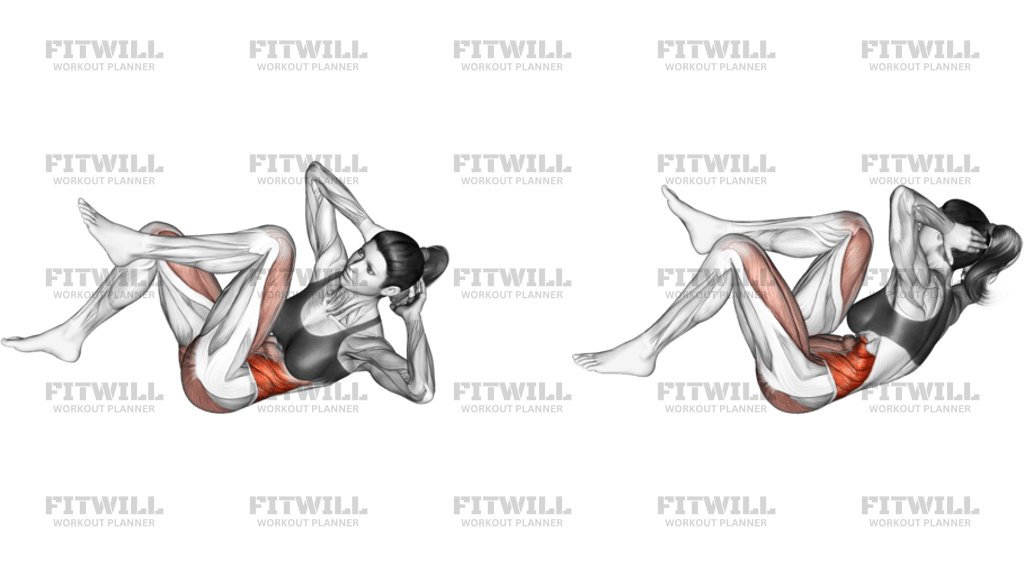
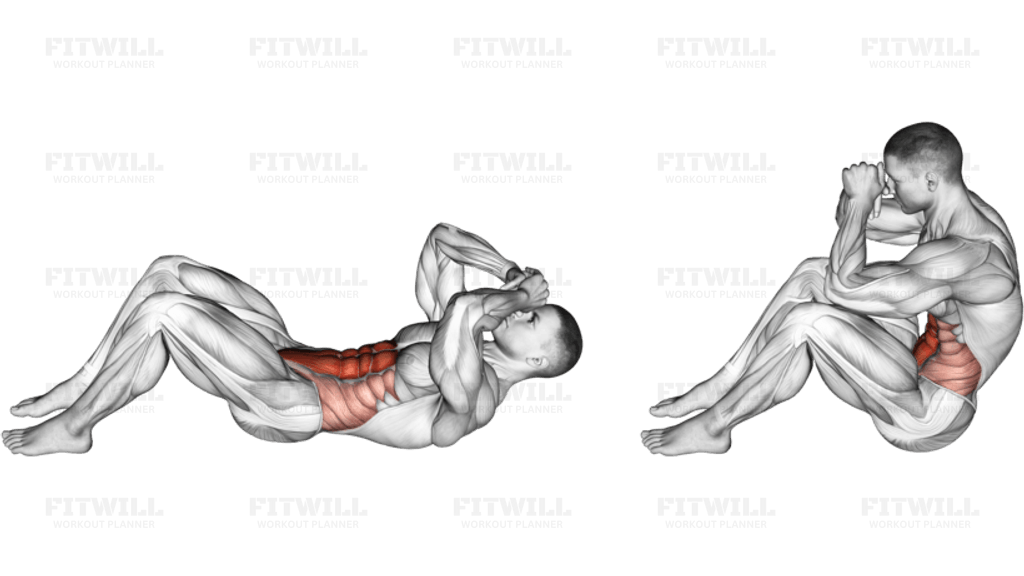
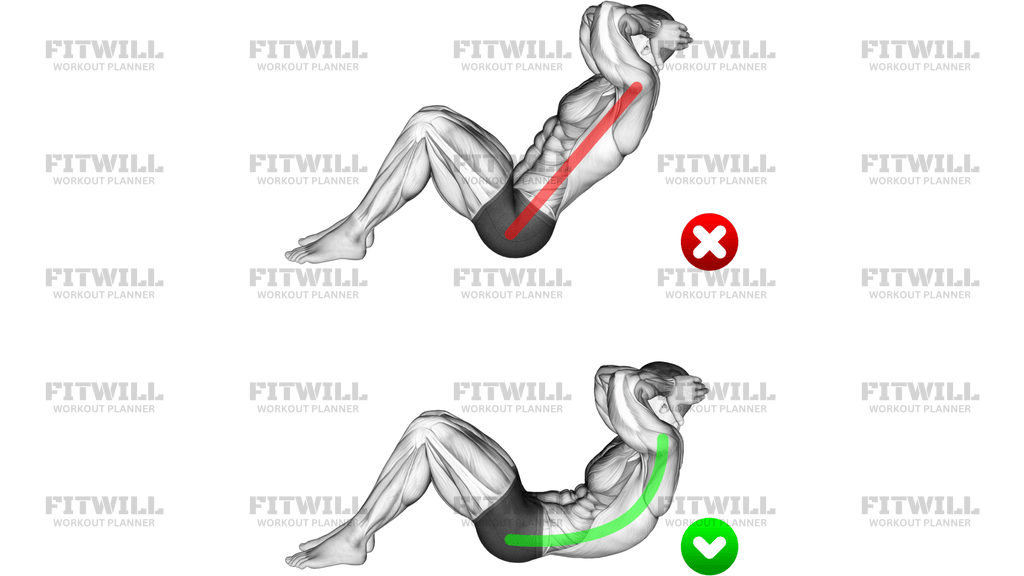
A good Pulse-Up starts with a clean setup on a mat. Lie on your back with your knees bent, feet flat and stable, and your chin gently tucked. Place your hands lightly at your temples or across your chest so the neck can stay relaxed. Before you move, exhale and draw the ribs toward the pelvis so the torso is braced before the first pulse begins.
From there, curl the shoulders and upper ribs off the floor, then pulse upward a small amount instead of trying to come all the way up. The rep should feel like a controlled squeeze through the front of the trunk, not a yank from the head or a thrust from the hips. Lower only far enough to keep tension in the abs, and keep the breathing steady so each pulse looks the same.
Pulse-Up works well as accessory core work, in a warm-up, or near the end of a session when you want focused abdominal tension with low equipment demand. Use it for clean reps, not speed. The set is finished when the neck starts pulling, the lower back arches, or the pulse turns into momentum instead of control.
[ Workout Log & Planner ]
Put your next workout in Fitwill
Keep your plan and training log ready when you are.


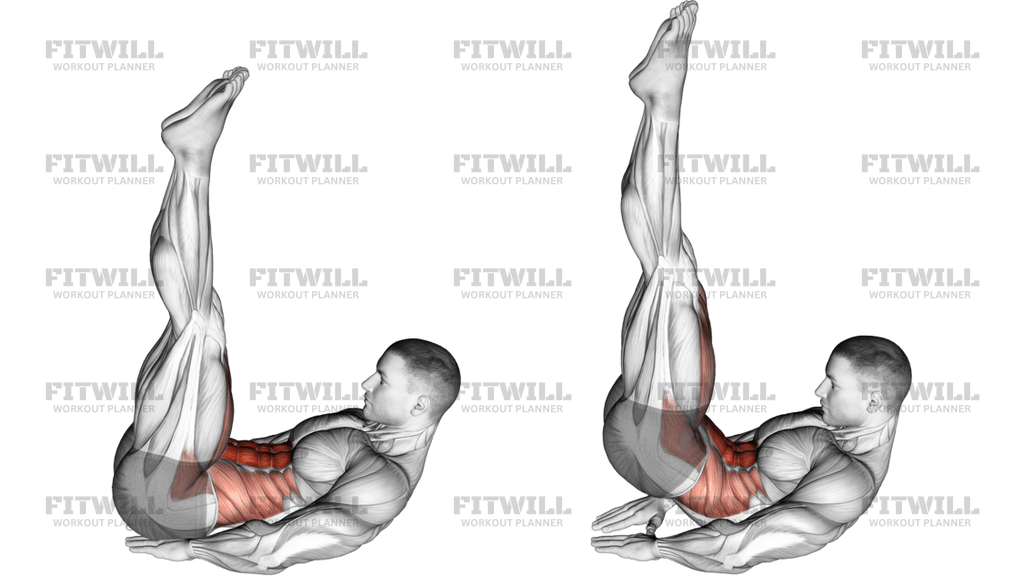
Instructions
- Lie on a mat with your knees bent, feet flat and hip-width apart, and your lower back gently anchored to the floor.
- Place your fingertips lightly at your temples or cross your arms over your chest so you are not pulling on your neck.
- Exhale, tuck your chin slightly, and brace your abs before the first rep.
- Curl your shoulders and upper ribs off the floor until the shoulder blades just clear the mat.
- Pulse upward a small amount from that top position, keeping the motion in the abs instead of the hips.
- Pause briefly at the top of each pulse while keeping the neck long and relaxed.
- Lower only halfway with control so the torso stays loaded and the shoulders do not fully relax.
- Repeat for the planned reps, breathing out on each pulse and resetting carefully between sets.
Tips & Tricks
- Keep the pulse small; if you are sitting all the way up, the movement has turned into a different exercise.
- Think about curling the ribs toward the pelvis instead of reaching your chin toward your knees.
- Use the hands only for light support so the neck does not become the limiter.
- Keep the feet pressed evenly into the floor to steady the pelvis and reduce hip-driven swinging.
- If the lower back starts to arch, shorten the range before you add more reps.
- Exhale on the upward pulse to help the front of the trunk stay braced.
- Lower under control; bouncing off the floor removes tension from the abs.
- Stop the set when you feel neck strain, hip flexors dominating, or the pulses getting sloppy.
Frequently Asked Questions
What muscles does Pulse-Up work most?
It primarily targets the rectus abdominis, with the obliques, transversus abdominis, and hip flexors helping to stabilize the position.
Is Pulse-Up a beginner-friendly ab exercise?
Yes. Beginners can keep the range very small and use the floor for support while they learn to brace and pulse without neck tension.
How high should I lift on each pulse?
Only enough to keep the shoulder blades off the floor and the abs working. The rep should stay short and controlled, not turn into a full sit-up.
Where should I feel Pulse-Up?
You should feel it mostly in the front of the torso, especially the upper and mid abs. A little work in the hip flexors can happen, but the neck should stay quiet.
Do my feet need to stay on the floor?
In the standard floor version, yes, keeping the feet planted helps stabilize the pelvis. If your version changes the leg position, keep the same rule of small, braced pulses.
What is the biggest mistake with this exercise?
The most common mistake is yanking the head forward or using momentum to bounce through the rep. The motion should come from the abs, not the neck.
Can I make Pulse-Up harder without adding weight?
Yes. Slow the lowering phase, hold the top pulse for a second, or keep the tension continuous without fully resting on the mat.
When should I stop the set?
Stop when your lower back starts arching, your neck starts pulling, or you can no longer keep the pulse small and clean.