Lever Triceps Dip (Plate Loaded)
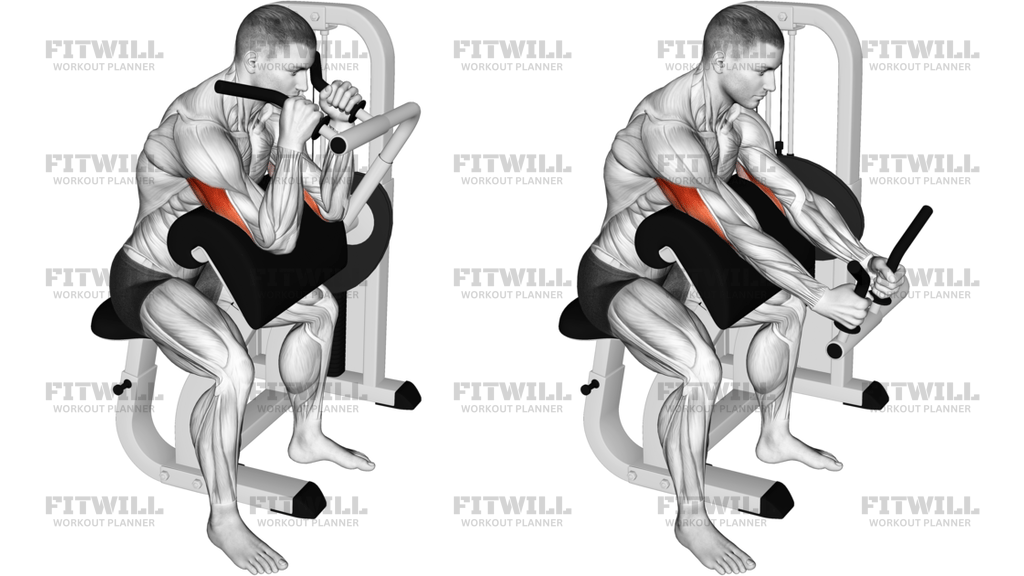
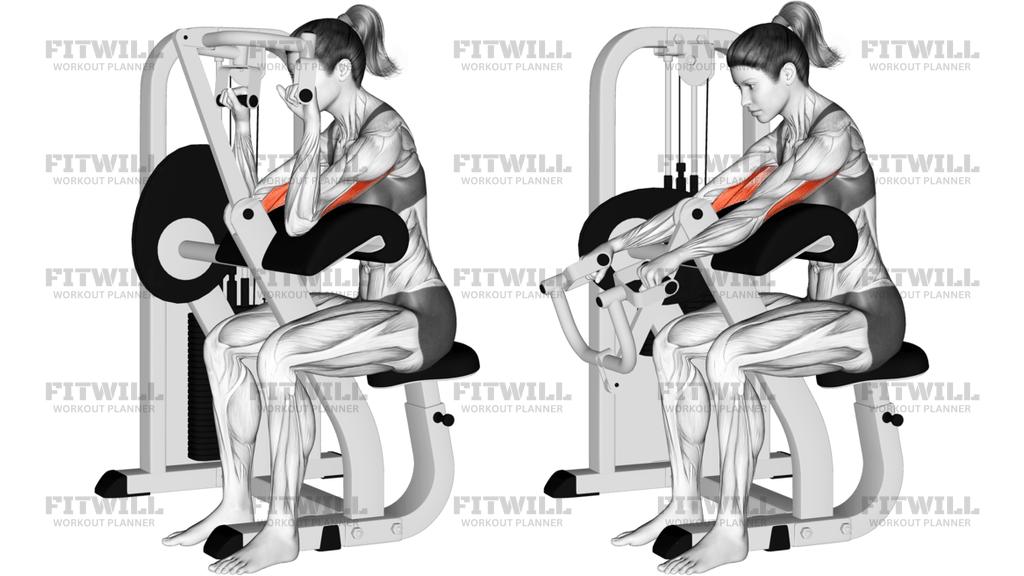
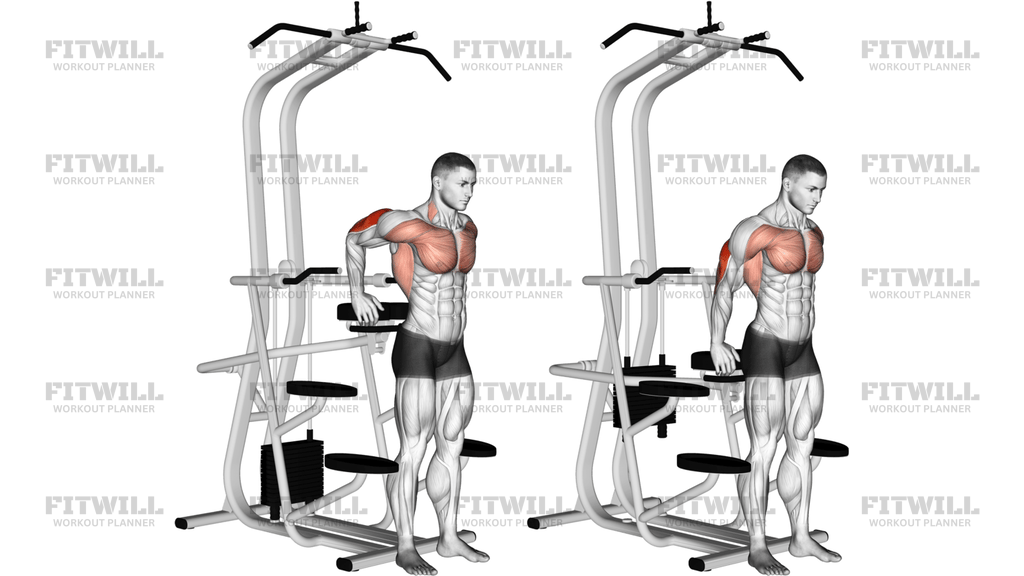
The Lever Triceps Dip (Plate Loaded) is a seated machine variation of the classic dip, built around a lever arm loaded with weight plates. You sit upright against the machine's back pad, grip the handles at your sides, and press down through your palms until your arms are fully extended, then lower the weight back under control. Because the movement arc is fixed by the machine, your elbows stay on a predictable path and you can focus entirely on driving the triceps through a full extension.
This exercise is a strong choice for anyone who wants the dip pattern without the shoulder and wrist demands of free-weight dips on parallel bars. The upright, padded position supports your torso, so you don't need to balance your bodyweight or lean forward to stabilize. That makes it especially useful for beginners building pressing strength, lifters rehabbing their confidence after a layoff, and intermediate trainees who want to add focused triceps volume late in a session when their stabilizers are already fatigued.
The triceps brachii does most of the work, extending the elbow against the resistance of the loaded lever. The front delts and chest assist on the press, particularly in the bottom half of the range, while the upper back and core work lightly to keep you seated tall against the pad. Because the handles sit beside your hips rather than in front of you, the torso angle is more vertical than a bar dip, which shifts a little more of the emphasis onto the triceps themselves.
Setup matters more than people expect on this machine. Seat height should place the handles roughly at hip level or just below, and your back should stay in contact with the pad throughout the set. If the seat is too high your elbows flare forward and the shoulders take over; too low and the range feels cramped. Load plates evenly and start lighter than you think you need — the lever arm usually has its own weight, and the top of the range is stronger than the stretched position.
To execute well, press the handles down in a smooth arc until your elbows are straight but not jammed, pause briefly, then lower until your elbows reach roughly ninety degrees. Avoid bouncing out of the bottom or shrugging your shoulders toward your ears as you press. Controlled tempo on the way down is where most of the triceps tension lives, so treat the lowering phase as work, not a rest.
In practice, this machine slots in as an accessory after your main pressing work, or as a standalone triceps builder on arm-focused days. Because loading is as simple as moving a pin or sliding plates on, it also suits drop sets and controlled overload progression without a spotter.
[ Workout Log & Planner ]
Put your next workout in Fitwill
Keep your plan and training log ready when you are.


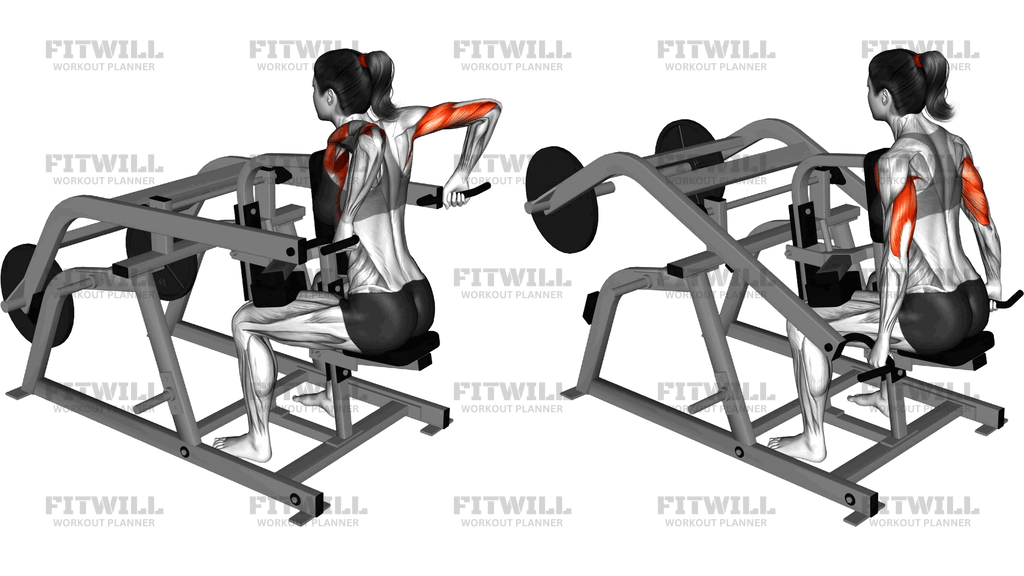
Instructions
- Adjust the seat so the handles sit at about hip height and your feet rest flat on the floor with knees bent around ninety degrees.
- Sit with your back and hips squarely against the pad, then grip the side handles with a neutral, palms-facing-in grip.
- Start with elbows bent and tucked close to your torso, forearms pointing forward or slightly down, shoulders pulled down away from your ears.
- Brace your core lightly and press the handles down and slightly back along the machine's fixed arc.
- Continue pressing until your arms are fully extended and the lever reaches the top of its range, keeping your back against the pad.
- Pause for a beat at full extension and squeeze the triceps without locking the elbows hard.
- Lower the handles slowly by bending the elbows until they return to roughly ninety degrees beside your torso.
- Exhale as you press down, inhale as you lower the weight back to the start.
- Keep your head neutral and your chest open through every rep rather than rounding forward into the pad.
- After your final rep, let the lever settle onto its rest stop before releasing the handles and standing up.
Tips & Tricks
- If your shoulders roll forward at the bottom of the rep, you're likely descending too deep — stop around ninety degrees of elbow bend where the machine still lets you keep contact with the pad.
- Watch for shrugging: if your shoulders climb toward your ears as you press, consciously push them down first, then start the rep from that position.
- The stretched position is the weak point on this machine, so use a two to three second lowering phase instead of dropping the weight back down quickly.
- Don't fully slam into elbow lockout on each rep; extend fully but stop just short of banging the joint into end range, especially with heavier loads.
- If your wrists ache, check your grip — the handles should run through the heel of your palm, not the middle of your wrist.
- Because the lever arm has its own starting weight, test the unladen or lightly loaded setting first; many people overshoot their opening set on this machine.
- Keep both hands pressing evenly. Uneven loading between sides is a common sign one arm is doing more of the work than the other.
- If your lower back arches off the pad as fatigue sets in, reduce the load — the arch means your core is compensating for weight you can't control with the triceps alone.
Frequently Asked Questions
Which muscles does the Lever Triceps Dip (Plate Loaded) target?
The triceps brachii is the primary mover, extending the elbows against the loaded lever. The front delts and chest assist during the press, and the upper back works lightly to keep you seated upright against the pad.
Is the Lever Triceps Dip (Plate Loaded) good for beginners?
Yes, it's one of the most beginner-friendly ways to train the dip pattern. The fixed path and padded seat remove the balance and shoulder stability demands of free-weight dips, so you can learn the pressing motion with a light, manageable load.
How deep should I lower the handles on this machine?
Lower until your elbows reach roughly ninety degrees or slightly past, provided your back stays on the pad and your shoulders stay relaxed. Going deeper rarely adds triceps benefit and tends to push the shoulders into an uncomfortable position.
How does this machine differ from regular parallel bar dips?
You stay seated upright with your torso supported, and the handles move on a fixed arc instead of your body moving through space. This makes it easier on the shoulders and wrists and lets you load precisely with plates rather than being tied to your bodyweight.
Why do my shoulders shrug up during the Lever Triceps Dip (Plate Loaded)?
That usually means the load is too heavy or the seat is set too high, so the shoulders try to help the press. Drop the weight, recheck the handle height at hip level, and start each rep by pulling your shoulder blades down before pressing.
What can I use if my gym doesn't have a plate-loaded dip machine?
Cable pushdowns with a straight bar or rope, bodyweight bench dips, or free-weight parallel bar dips all train the same elbow extension pattern. The cable pushdown is the closest substitute since it also keeps the torso upright and supported.
Where should the seat be set for the Lever Triceps Dip (Plate Loaded)?
Set it so the handles land at or just below hip height when you're seated with your back against the pad. This keeps your elbows tracking close to your torso and lets the triceps do the work through the full range.
Can I use this exercise to build up to bodyweight dips?
It works well for that. Train it in a moderate rep range, gradually adding load, and pair it with pressing work — as your triceps strength grows, the transition to supporting your own bodyweight on bars becomes much more manageable.
Is it safe for the elbows to lock out at the top?
Extending fully is fine for most people, but avoid driving the joint hard into lockout, particularly with heavy plates loaded. Reach full extension with control and let the muscle, not the joint, finish the rep.