Lever Seated Fly
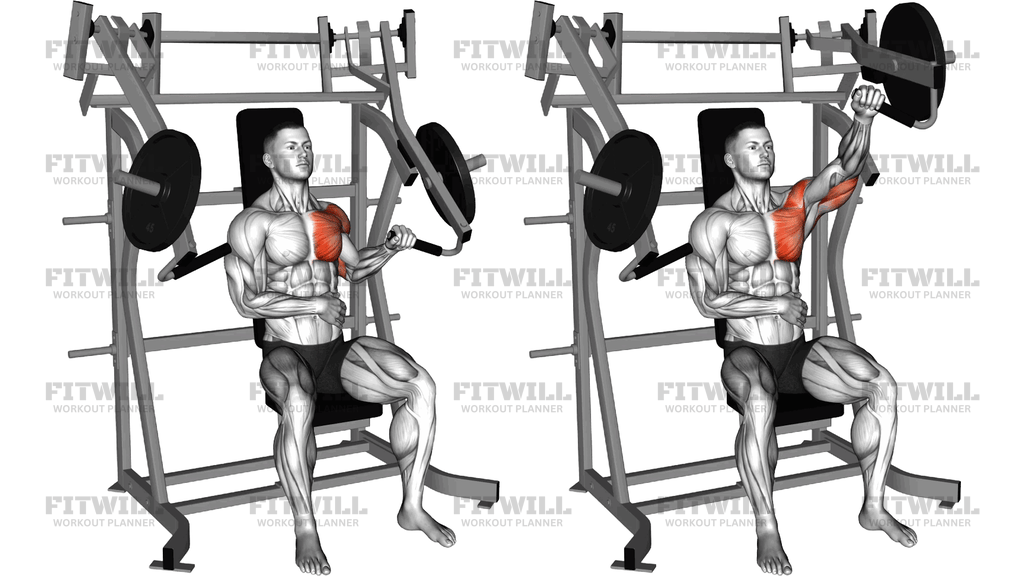
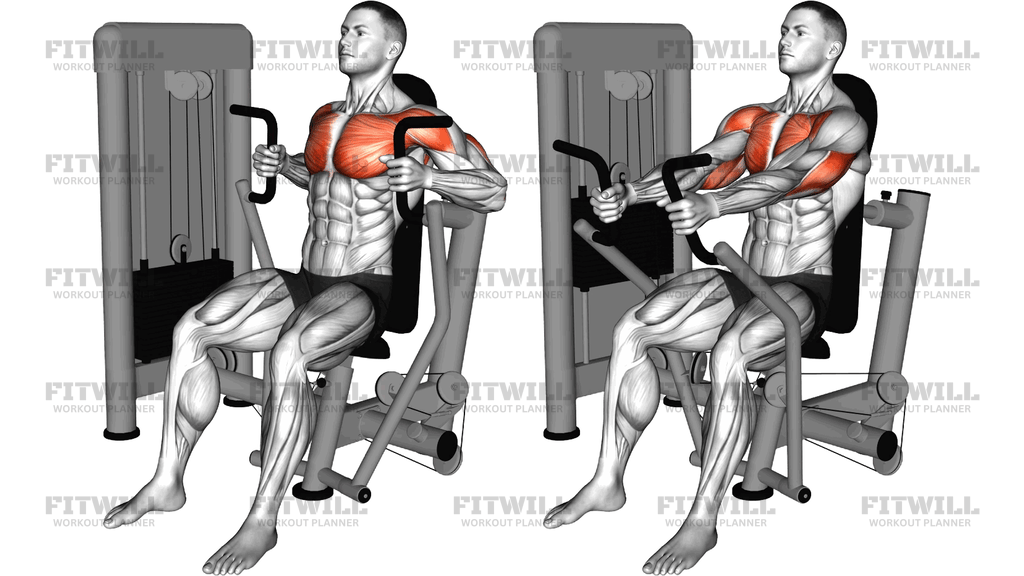
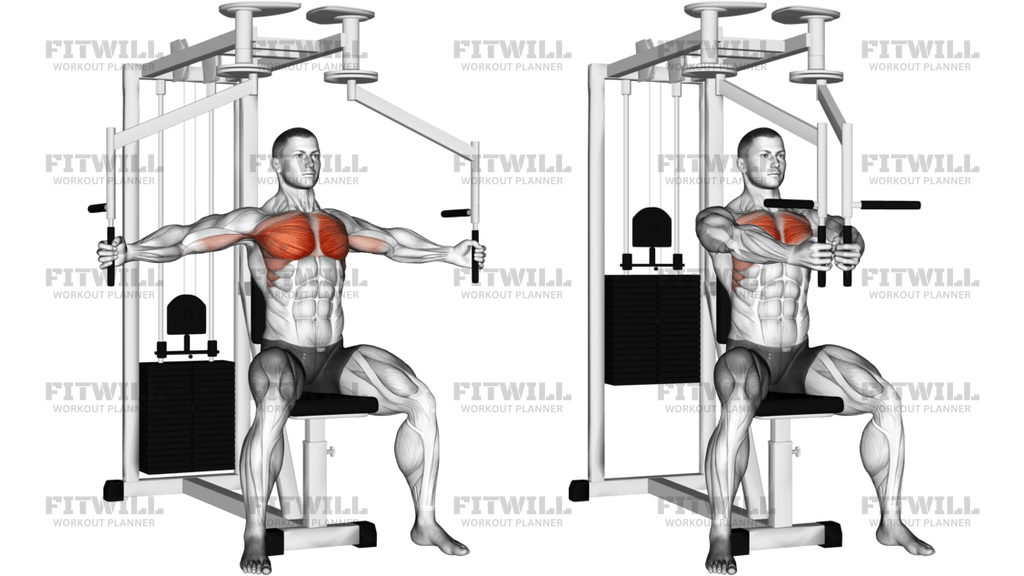
Lever Seated Fly is a seated chest isolation movement performed on a leverage machine with the arms moving in a wide arc from an open stretch to a strong squeeze in front of the body. It is a useful choice when you want direct pec work without having to balance a bar or dumbbells, because the seat, back pad, and guided arms let you focus on the line of pull and on keeping tension where it belongs.
The main target is the chest, especially the pecs, with the front shoulders and triceps helping to stabilize the elbows and shoulders through the arc. Because the machine fixes the path, Lever Seated Fly is often easier to learn than free-weight fly variations, but it still rewards good setup. If the seat is too high, too low, or too far from the handles, the movement can shift from chest work to shoulder strain.
A good setup starts with the back flat against the pad, feet planted, and the handles aligned so the start position feels like a chest stretch rather than a shoulder crank. Keep a slight bend in the elbows and a neutral wrist position, then settle the shoulder blades without forcing them hard together. That small amount of upper-back support helps the chest do the work while keeping the front of the shoulder from taking over.
Each repetition should travel in a smooth hugging motion. Bring the handles together in front of the chest with a controlled squeeze, then let them open back out slowly until you feel a comfortable stretch across the pecs. The return is as important as the squeeze, because bouncing out of the bottom or letting the shoulders roll forward turns the exercise into a sloppy joint movement instead of a clean chest isolation pattern.
Lever Seated Fly fits well after presses, in a hypertrophy block, or as a lighter accessory when you want to train the chest without the same technical demand as a barbell movement. Beginners can use it effectively because the machine guides the path, but the load should stay light enough to keep the torso still and the elbow angle consistent. If the front of the shoulders feels pinchy, shorten the range and recheck the seat height before adding more resistance.
[ Workout Log & Planner ]
Put your next workout in Fitwill
Keep your plan and training log ready when you are.


Instructions
- Sit on the Lever Seated Fly machine with your back and head against the pad and your feet flat on the floor.
- Adjust the seat so the handles line up with mid-chest and your upper arms can start wide without forcing the shoulders forward.
- Grip the handles with straight wrists and keep a soft bend in the elbows before you begin.
- Set your chest tall against the pad and let the shoulder blades sit gently back and down.
- Open the arms to the start position until you feel a comfortable chest stretch, not a sharp shoulder pinch.
- Exhale and sweep the handles forward in a wide arc until they meet in front of your chest.
- Squeeze the chest for a brief pause without shrugging or letting the wrists fold back.
- Inhale and return the arms slowly to the open position, keeping the same elbow angle and steady tension.
- Reset your shoulders, release the handles only after the stack settles, and repeat for the planned reps.
Tips & Tricks
- If the stretch feels more like a shoulder strain than a chest stretch, lower the seat or shorten the open position.
- Keep the elbow bend nearly fixed so the movement stays a fly, not a press.
- Think about bringing your upper arms together in a wide hug instead of pushing the handles forward.
- Use a load that lets you pause briefly at the closed position without the stack slamming.
- Let the return take longer than the squeeze so the pecs stay loaded through the whole arc.
- Keep your ribs stacked over your pelvis; a big lean-back usually turns the rep into a torso swing.
- Keep your wrists neutral so the handles stay lined up with the forearms and do not bend backward.
- Stop the set when the shoulders start rolling forward or the upper traps take over.
- A moderate-to-higher rep range usually works better here than max-effort low reps.
- Use the machine’s fixed path to match both arms evenly instead of overreaching on one side.
Frequently Asked Questions
What does Lever Seated Fly work most?
The main target is the chest, especially the pecs, with the front shoulders helping through the arc.
Is Lever Seated Fly the same as a pec deck?
It is the same basic fly pattern, but this version uses a leverage machine with guided arms and a seated position.
Where should the handles line up on Lever Seated Fly?
Set the seat so the handles start around mid-chest level, not up near the shoulders.
How bent should my elbows be during Lever Seated Fly?
Keep a small, consistent bend and hold it through the whole rep so the chest does the work instead of the triceps.
How far back should I open the arms?
Open only until you feel the pecs lengthen comfortably; if the front of the shoulder pinches, shorten the range.
Can beginners use Lever Seated Fly?
Yes. The machine path makes it beginner-friendly, as long as the load stays light and the torso stays against the pad.
Why do I feel Lever Seated Fly in my shoulders?
That usually means the seat is off, the arms are opening too far, or the shoulders are rolling forward at the bottom.
Should I use heavy weight on Lever Seated Fly?
Moderate resistance is usually better. If the stack has to slam closed or you lose the chest stretch, the load is too heavy.
Where does Lever Seated Fly fit in a workout?
It works well after pressing, as chest accessory work, or in a higher-rep hypertrophy block.