Sumo Squat
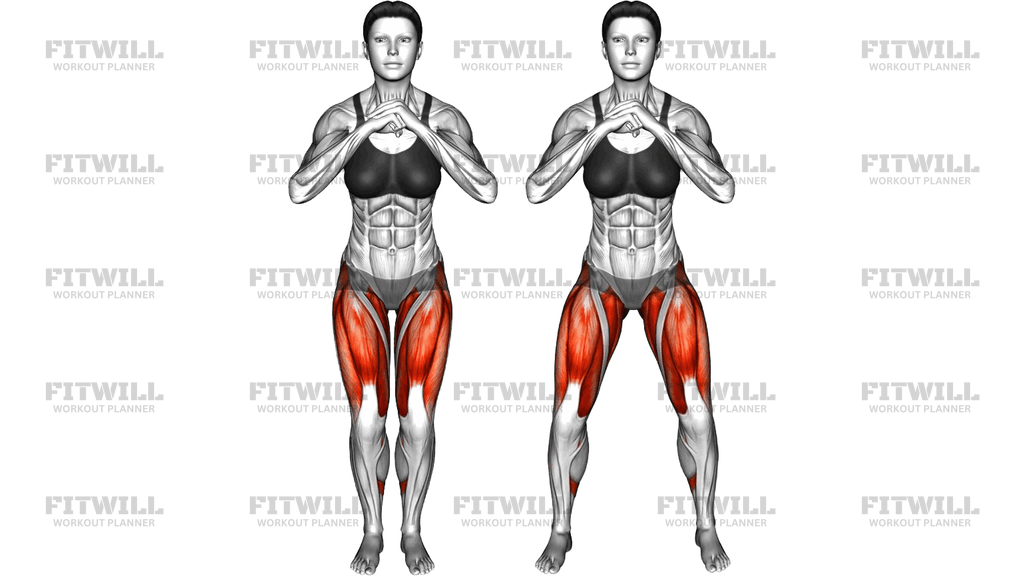
Sumo Squat is a bodyweight lower-body exercise performed from a wide stance with the toes turned out. It is designed to build strength, control, and position awareness through a squat pattern that lets you work the inner thighs, glutes, and quads without needing external equipment. The wide base changes the feel of the squat and makes the setup matter more than speed, because small changes in foot angle, knee track, and torso position quickly change where the work goes.
The main training emphasis is on the glutes and thighs, with the adductors, hamstrings, and core helping you keep the torso stacked and the knees tracking cleanly. In anatomy terms, the main work centers on the Gluteus maximus, with support from the Adductors, Biceps femoris, Rectus abdominis, and Erector spinae. When the stance is set correctly, this squat can be a useful way to strengthen the hips while also improving comfort in wide-stance lower-body work.
The setup should start with the feet placed wider than shoulder width, toes turned out, and weight balanced through the whole foot. From there, sit the hips down between the heels while keeping the chest lifted and the knees pushed out in line with the toes. That knee path is important: if the knees collapse inward, the hips lose tension and the squat becomes less stable. On the way up, drive through the floor and stand tall without snapping the hips forward or leaning the torso excessively.
Because this version is bodyweight, the exercise is often used for warm-ups, movement prep, beginner strength work, or higher-rep accessory sets. It is also a practical choice when you want to train the legs with a long, controlled range of motion and a stable base. The best reps look smooth and repeatable rather than deep for the sake of depth. Keep the range pain-free, stay controlled at the bottom, and reset each rep with the same stance so the set stays consistent from start to finish.
[ Workout Log & Planner ]
Put your next workout in Fitwill
Keep your plan and training log ready when you are.


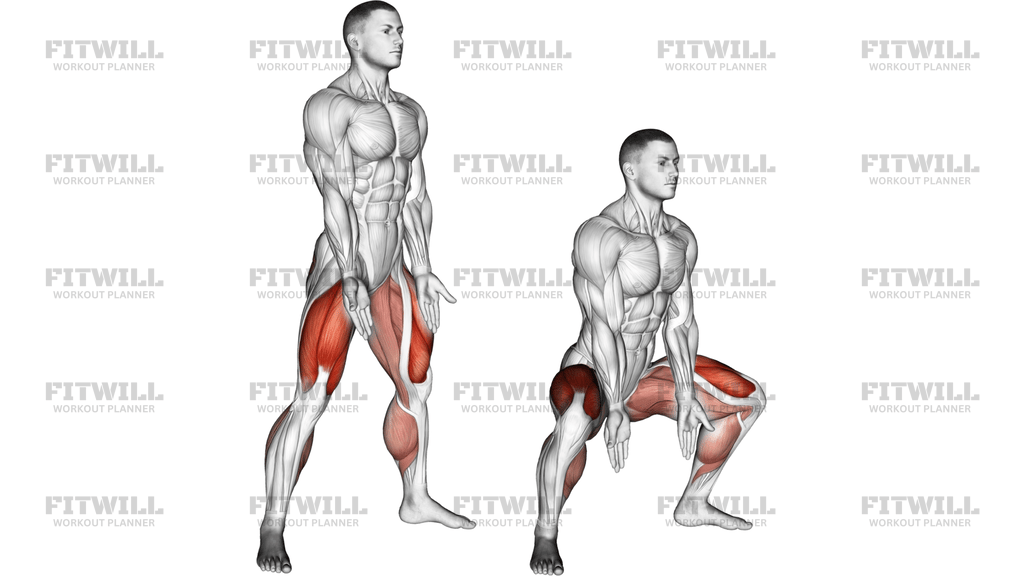
Instructions
- Stand with your feet wider than shoulder width, toes turned out, and your weight spread through the whole foot.
- Keep your chest up, ribs stacked over your pelvis, and your hands hanging in front of your body for balance.
- Brace your core before you descend so your torso stays steady as the hips move down.
- Send the knees out in the same direction as the toes and sit the hips straight down between the heels.
- Lower until your thighs are at your deepest pain-free depth or until your knees and hips stop tracking cleanly.
- Pause briefly at the bottom while keeping tension in the legs and feet.
- Drive through the floor to stand back up, leading with the chest and hips together instead of tipping forward.
- Fully extend the hips and knees at the top without locking out hard or losing balance.
- Exhale as you stand, then reset the stance before the next repetition.
- Repeat for the planned number of reps and stop if the knees cave in or the heels lift.
Tips & Tricks
- A slightly turned-out foot angle usually feels better than forcing a dramatic toe flare; let your hips decide the exact stance.
- Keep the knees tracking over the second or third toe so the squat loads the hips instead of collapsing inward.
- Think about sitting between your heels rather than reaching the hips straight back as in a narrow squat.
- Keep the heels heavy; if they lift, shorten the depth and widen or narrow the stance until the feet stay planted.
- Let the torso lean only as much as needed to keep the chest tall and the lower back neutral.
- Use a controlled tempo on the descent so you do not drop into the bottom position and bounce out of it.
- If balance is an issue, fix your foot placement first before chasing more depth or more repetitions.
- A brief pause at the bottom helps expose knee collapse or ankle shifting that fast reps can hide.
- Stop the set when the hips shift to one side or the arches collapse, because both usually signal the stance is too wide or too fatiguing.
Frequently Asked Questions
What muscles work most in a bodyweight sumo squat?
The main emphasis is on the glutes and thighs, with the inner thighs helping a lot because of the wide stance.
Why are my toes turned out in this squat?
The turned-out stance gives the hips room to sit down between the legs and helps keep the knees tracking with the feet.
How wide should my stance be?
Start a little wider than shoulder width, then adjust until you can keep both heels down and the knees moving cleanly over the toes.
Should my knees go past my toes?
Some forward knee travel is normal, but the knees should move in line with the toes instead of caving inward or drifting uncontrolled.
Do I need weights for this exercise?
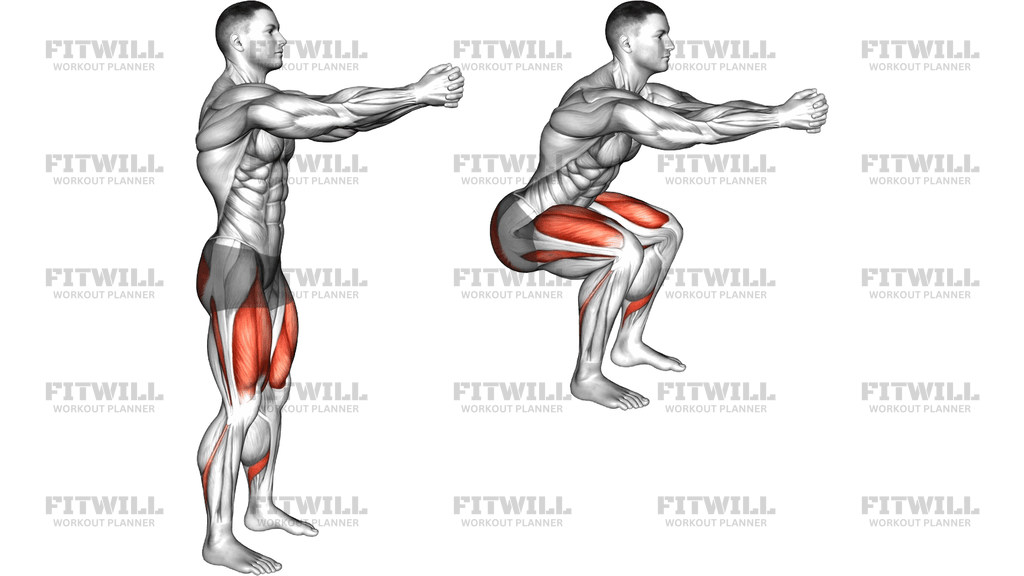
No. The version shown is a bodyweight squat and is commonly used for warm-ups, beginner training, or high-rep leg work.
How deep should I squat?
Go as low as you can while keeping the heels down, the chest lifted, and the knees tracking cleanly.
What is the most common mistake in sumo squats?
The usual problem is letting the knees collapse inward or losing foot pressure at the bottom.
Can I use this as a warm-up exercise?
Yes, it works well as a warm-up because it opens the hips and rehearses a stable squat pattern.
What should I feel if the form is right?
You should feel the thighs, glutes, and inner thighs working together while the feet stay planted and balanced.