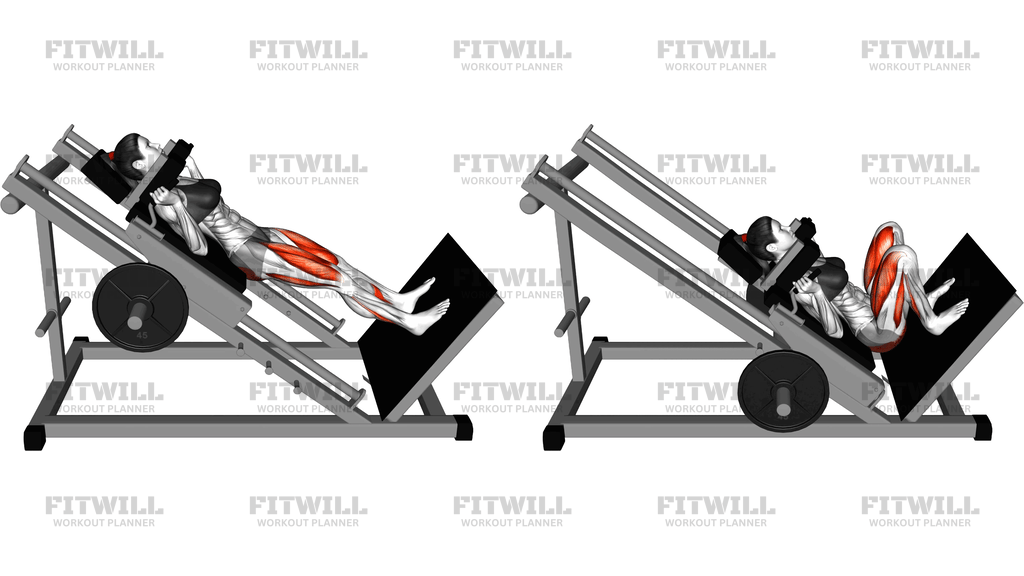
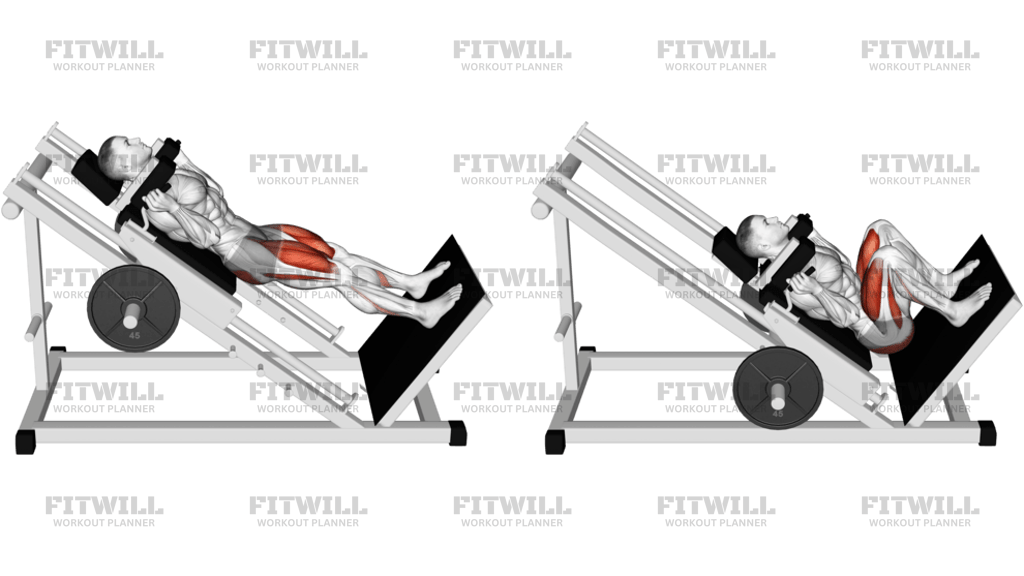
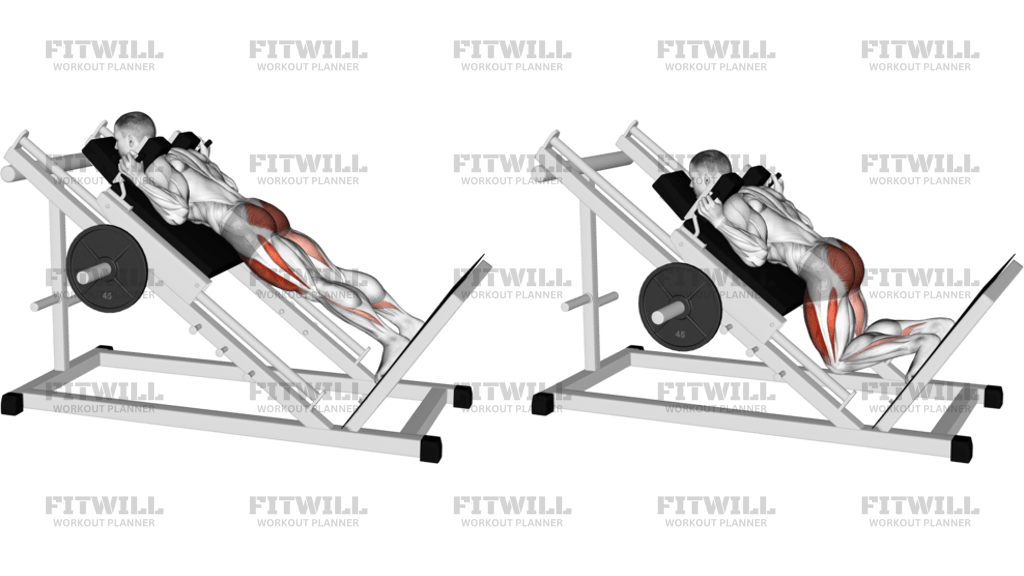
Sled 45 Degrees Deep Leg Press
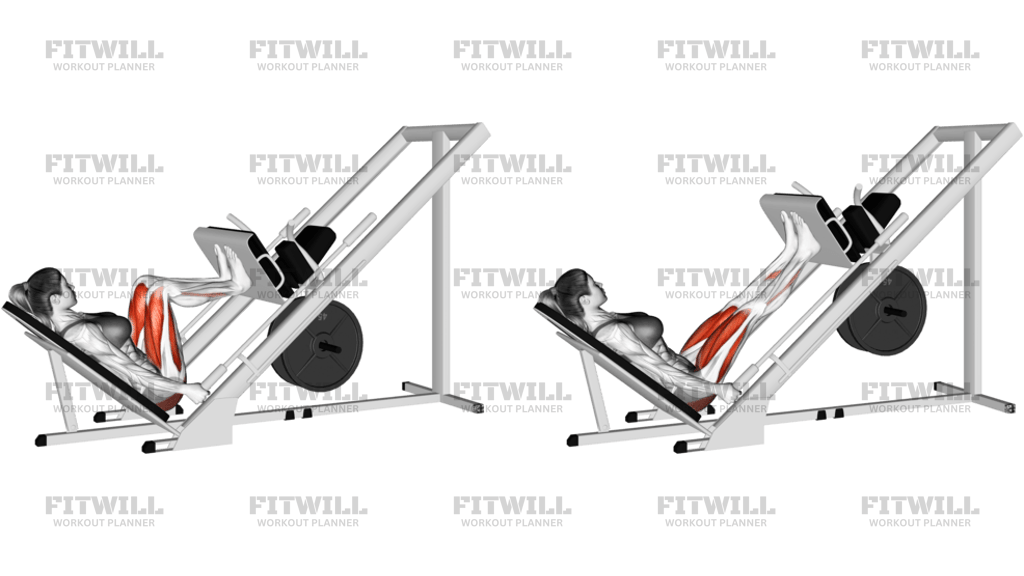
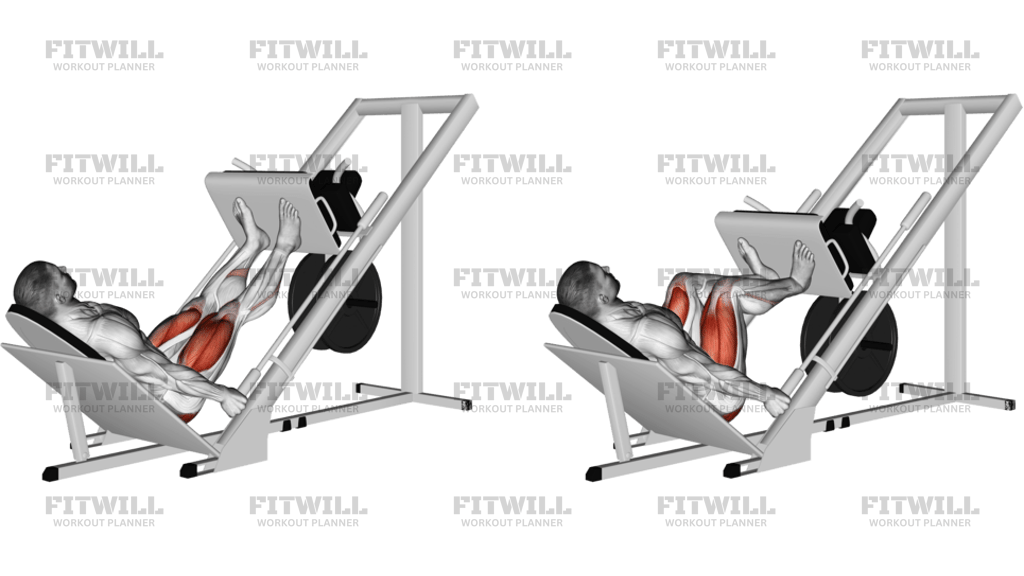
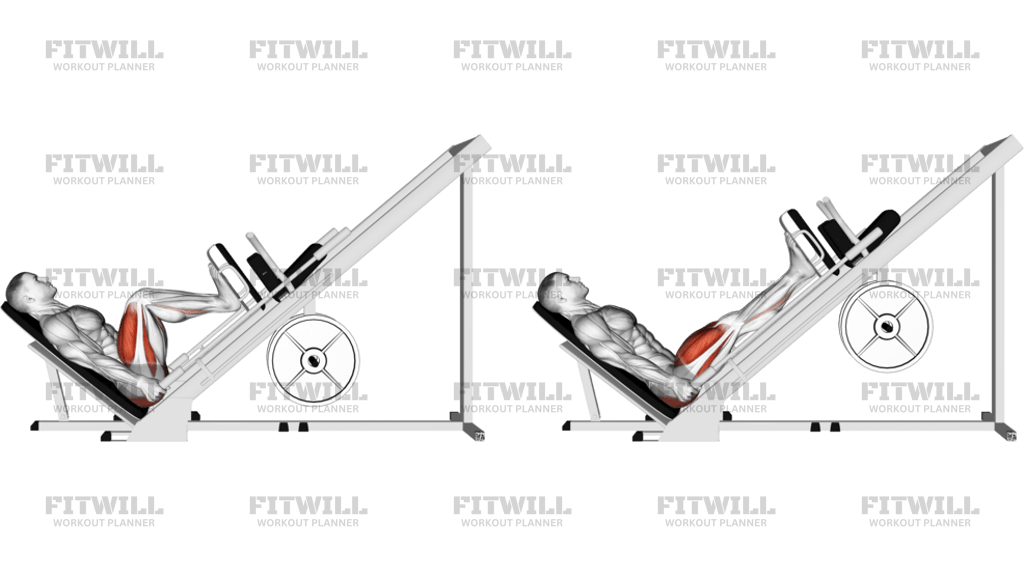
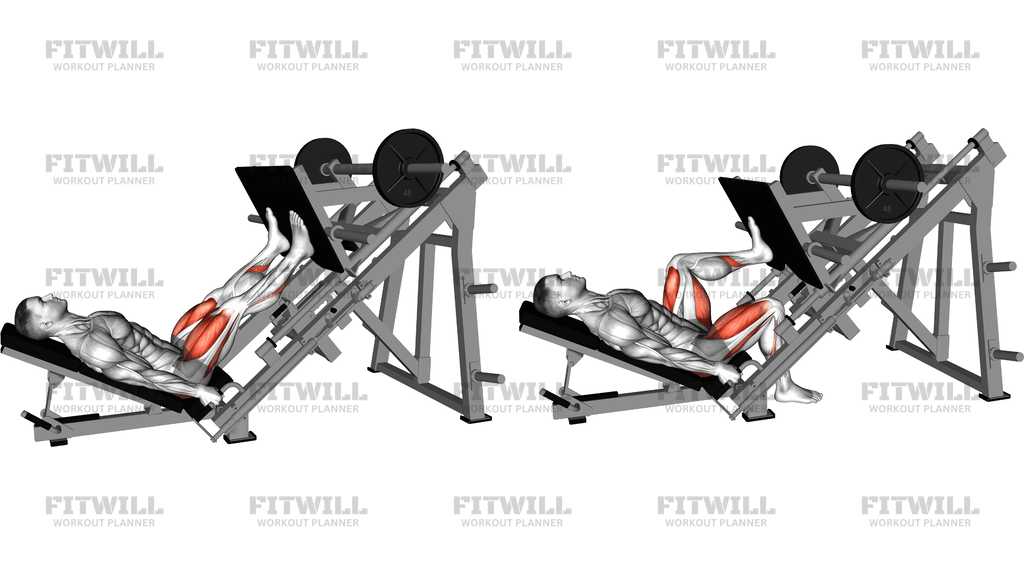
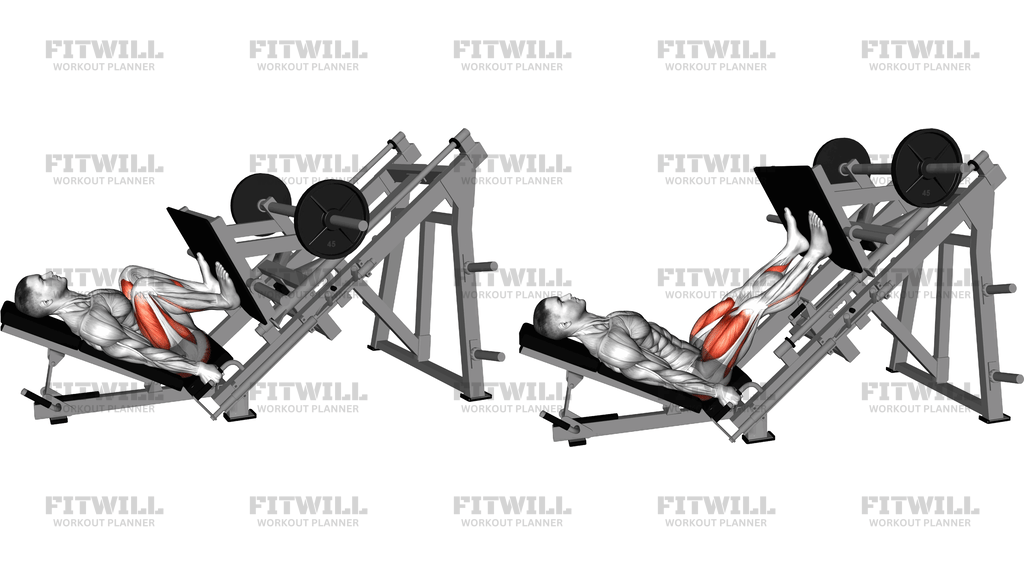
The Sled 45 Degrees Deep Leg Press is a plate-loaded machine exercise performed on an incline leg press, where the sled travels along a fixed 45-degree track. You sit in the angled seat with your back and hips supported against the pad, place your feet flat on the large platform, and press the sled away before lowering it into a deep knee bend. The word deep is the key distinction: instead of stopping at a shallow or half-depth repetition, you lower the sled until your knees travel well past a 90-degree angle, which demands more from the quadriceps and glutes through a longer range of motion.
Because the machine stabilizes your torso and guides the sled on rails, this movement lets you load the legs heavily without the balance or spinal compression demands of a barbell squat. That makes it a strong choice for lifters who want to build leg strength and size with a heavy load, for people returning from upper-body injuries who cannot hold a bar, and for anyone who struggles to hit depth comfortably in a free-weight squat. The deep range is also useful for athletes who need strength through large knee and hip angles, such as in sprinting, jumping, and changing direction.
The primary work is done by the quadriceps, which extend the knees as you press the sled away. The glutes contribute strongly, especially from the deep bottom position where the hips are flexed and loaded, and the hamstrings and adductors assist in controlling the descent and stabilizing the hips. Your feet, calves, and trunk work isometrically to keep the platform contact and your posture steady throughout each rep.
Setup matters more than most people realize on this machine. Your seat position determines where the sled path sits relative to your hips and knees, and small changes in foot placement shift the emphasis noticeably. A slightly lower foot position biases the quadriceps, while a higher placement on the platform brings the glutes and hamstrings more into the movement. Getting the seat close enough that your back and hips stay glued to the pad at full depth is what protects your lower back and lets you push hard safely.
To execute it well, keep the descent controlled and deliberate rather than letting the weight crash down. At the bottom of a deep rep, your knees will be near or outside your shoulders and your heels should stay flat on the platform. Drive through the whole foot, push the sled up in a smooth line, and stop just short of full knee lockout so the tension stays on the muscles rather than dumping into the joints. Common use cases include primary leg strength work, hypertrophy blocks, and as a controlled alternative to squats when fatigue or equipment limitations make free weights impractical.
From a safety standpoint, the main risks come from lifting the hips off the pad at deep positions, bouncing out of the bottom, and pushing with the heels floating off the platform. Keep the safety catches set before you load the sled, never place your hands under the sled path, and choose a depth where you can keep your tailbone and lower back in contact with the seat. Because the deep range places greater stress on the knees and hips, progress the load and depth gradually rather than chasing maximal weight from the first session.
[ Workout Log & Planner ]
Put your next workout in Fitwill
Keep your plan and training log ready when you are.


Instructions
- Sit on the leg press seat and adjust it so that when you lower the sled, your lower back and hips stay firmly against the back pad without rounding off the edge.
- Place your feet flat on the platform roughly shoulder-width apart, centered so the press line runs through your midfoot, and grip the side handles to pin your shoulders and hips into the seat.
- Load plates evenly on both weight horns, engage the safety stops, and press the sled up enough to release the safety mechanism.
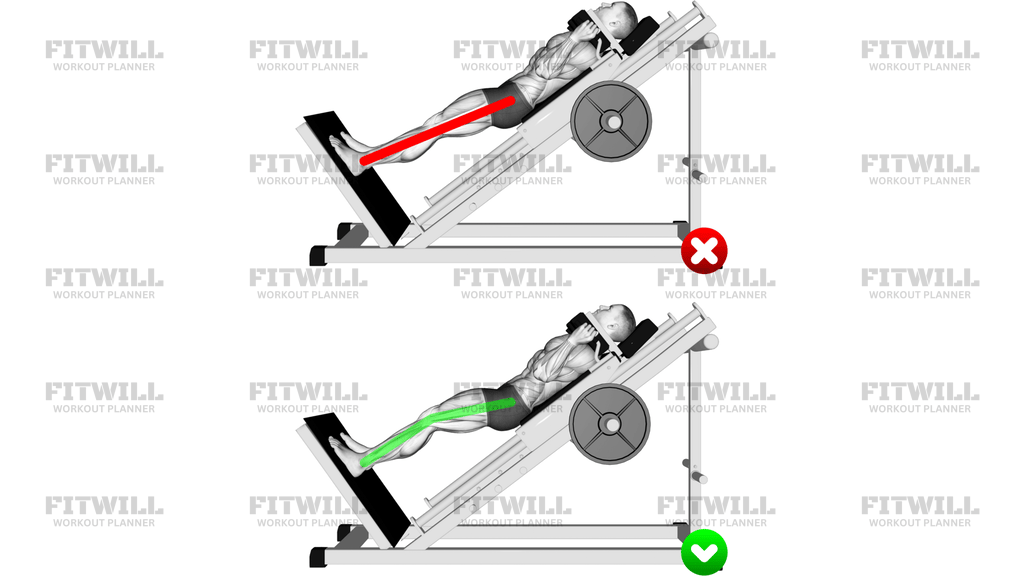
- Extend your legs to bring the sled to the top of the track, leaving a small bend in the knees rather than snapping into a full lockout.
- Brace your trunk and breathe in as you slowly bend your knees, letting the sled travel down along its rails until your knees reach a deep bend past 90 degrees.
- At the bottom, check that your heels stay flat on the platform and your tailbone remains in contact with the seat; if either drifts, do not go deeper than that.
- Drive through your whole foot and push the sled back up in a smooth, deliberate line, exhaling as you pass the hardest point of the press.
- Stop each rep just short of full knee extension so the quads stay loaded, then begin the next descent without pausing long at the top.
- Complete all repetitions, then press the sled up and re-engage the safety catches before releasing your feet from the platform.
Tips & Tricks
- Do not lower the sled faster than you can push it back up; the deep range only builds strength if you control the bottom instead of bouncing out of it.
- If your hips lift off the seat at the bottom, stop at that depth and work there until your mobility improves—forcing deeper range with a rounded lower back is the most common injury risk on this machine.
- Watch your heel contact: if your heels rise from the platform, the load is usually too heavy or your stance is placed too low on the platform for your ankle mobility.
- Adjust the seat forward rather than widening your feet if the sled feels cramped at the bottom; a wider stance changes which muscles dominate and defeats the purpose of the exercise.
- Keep both hands gripping the side handles for the entire set—reaching to reposition mid-set under a heavy sled is unnecessary and unsafe.
- Load plates symmetrically and check that collars are secure; an uneven sled will pull you toward one side as it travels the rails.
- If you feel pressure behind the kneecap at depth, try turning your toes out a few degrees and slightly raising your foot placement before reducing depth or load.
- On deep reps, expect the last few inches before lockout to feel easy and the bottom third to feel heavy—use a weight you can push cleanly through the deep portion, not one based on the top half alone.
- Do not fully straighten and rest your knees at the top between reps; keep a slight bend so each rep starts with tension already on the legs.
Frequently Asked Questions
What muscles does the Sled 45 Degrees Deep Leg Press work?
The quadriceps are the primary movers, with heavy involvement from the glutes, especially at the deep bottom position. The hamstrings, adductors, and calves assist in controlling and stabilizing the movement.
How deep should I go on the Sled 45 Degrees Deep Leg Press?
Go as deep as you can while keeping your heels flat on the platform and your hips and lower back pressed into the seat. If your tailbone starts to tuck and lift off the pad, that is your limit for the day.
Is the deep leg press safe for beginners?
Yes, the guided sled path makes it one of the safer ways to learn lower-body pressing, but beginners should start with a light load and moderate depth first. Learn to control the sled before extending into the deepest range.
How is a deep leg press different from a standard leg press?
The deep version takes the knees well past a 90-degree bend at the bottom, which increases the demand on the quads and glutes through a longer range. A standard press stops at or above 90 degrees, allowing heavier loads but less range.
Why do my hips lift off the seat when I go deep?
This usually means either the depth exceeds your current hip and ankle mobility or the seat is positioned too far back. Slide the seat closer to the platform and reduce depth until you can keep your pelvis planted throughout the rep.
What foot placement should I use on the Sled 45 Degrees Deep Leg Press?
A shoulder-width, mid-platform placement is the standard starting point and keeps the emphasis balanced between quads and glutes. Lower placement biases the quads, while a higher placement shifts more work to the glutes and hamstrings.
Should I lock out my knees at the top of each rep?
No, stop just short of full extension and keep a small bend in the knees. This keeps tension on the leg muscles and avoids unnecessary stress on the knee joints under load.
What can I substitute for the Sled 45 Degrees Deep Leg Press?
Barbell or dumbbell squats, hack squats, or a vertical leg press train similar muscles. If deep knee flexion is uncomfortable, a standard-depth leg press or goblet squat is an easier substitute while you build mobility.
How heavy should I go on this exercise?
Base your load on the hardest part of the range—the bottom third of a deep rep—not on what you can move through the top half. Pick a weight that lets you control the descent and press cleanly through full depth for your target reps.
Do I need a spotter for the deep leg press?
A spotter is not required because the machine has safety stops, but you must set them correctly before loading. Make sure the catches are positioned so the sled cannot descend below your safe depth if your leg strength gives out.