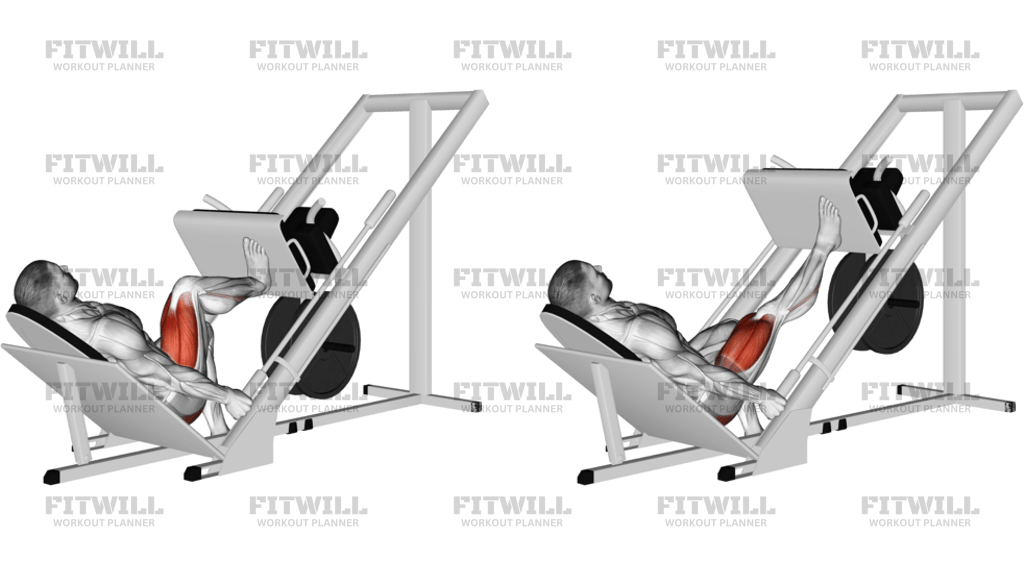
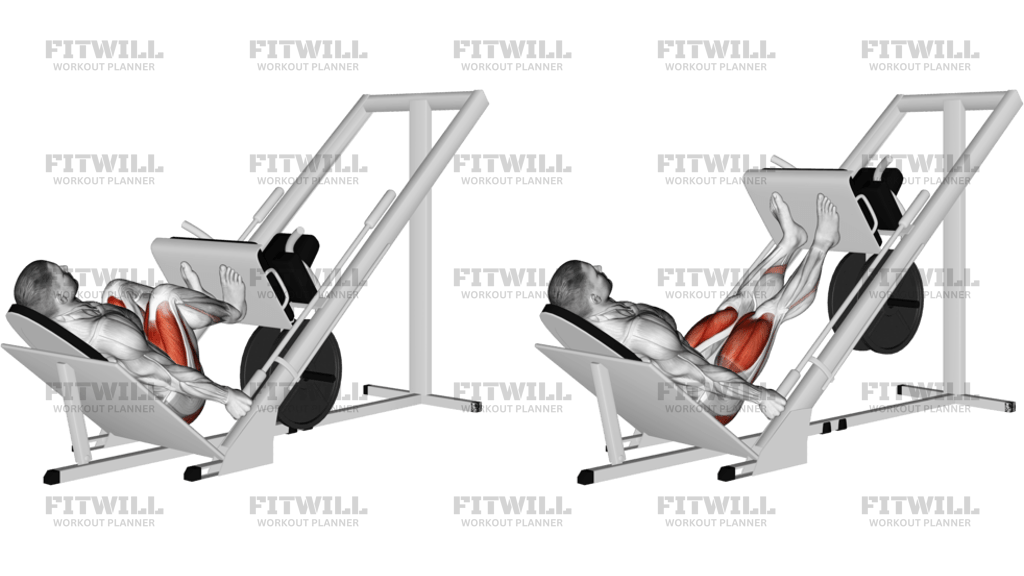
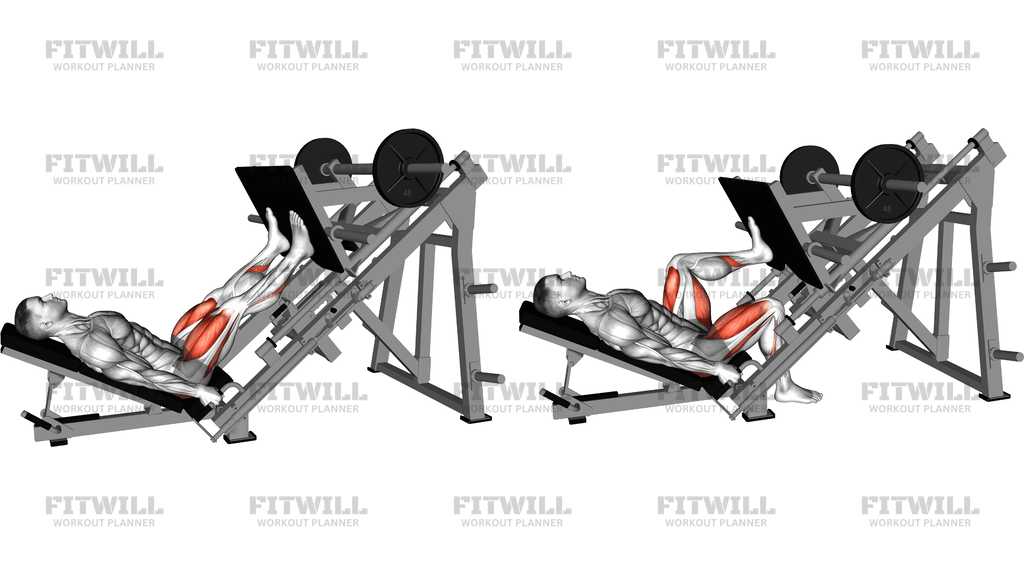
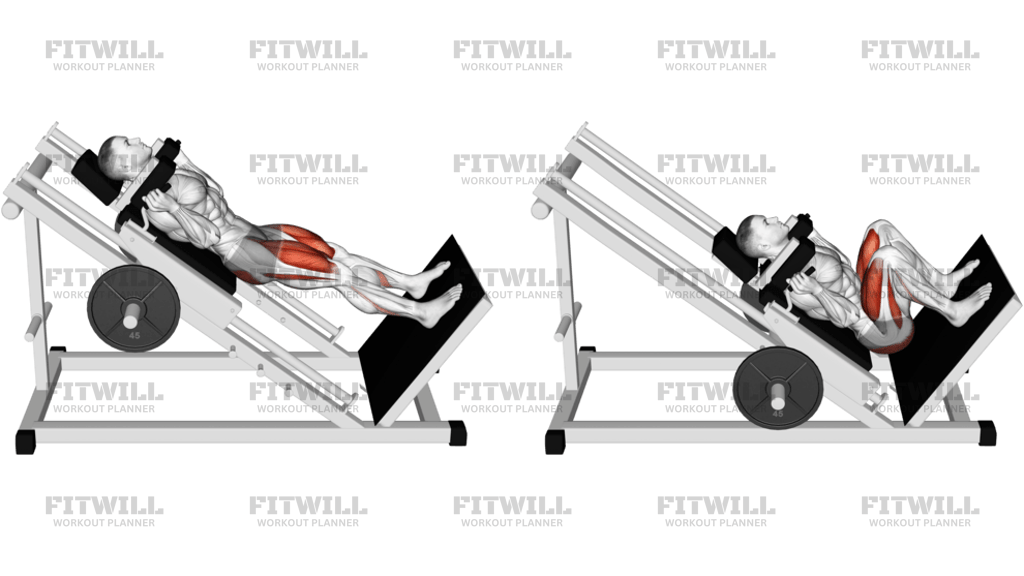
Sled Full Hack Squat
The Sled Full Hack Squat is performed on an angled sled machine that carries the load on your shoulders while your back stays supported against the pad. Unlike a free-standing squat, the sled runs along fixed rails, so the weight travels a set diagonal path while you sink into a deep knee bend and drive back up. The word "full" refers to taking the descent to a deep, controlled bottom position where the knees are fully flexed, rather than stopping at a shallow quarter-depth rep.
This movement is a quad builder first and foremost. The upright torso and fixed back support place a strong, consistent demand on the quadriceps through the entire range, while the glutes and hamstrings contribute heavily as you approach the bottom and drive out of it. Because the machine stabilizes the load for you, you can focus entirely on pushing hard with the legs instead of balancing a barbell.
The Sled Full Hack Squat suits a wide range of lifters. Beginners appreciate the guided path and the reduced balance requirement while they learn what a deep squat feels like. More experienced lifters use it to load the legs heavily without compressing the spine the way a heavy barbell squat can, and to accumulate training volume for the quads after free-weight squats have already fatigued the stabilizers.
Setup matters more than most people realize. Your foot placement on the platform determines how the stress is distributed: feet placed lower on the platform emphasize the quadriceps, while placing them slightly higher shifts more work toward the glutes and hamstrings. Your shoulders must sit squarely under the pads and your entire back, including the hips, should stay in contact with the support pad through every rep. Letting the hips curl off the pad at the bottom is the most common and most risky error on this machine.
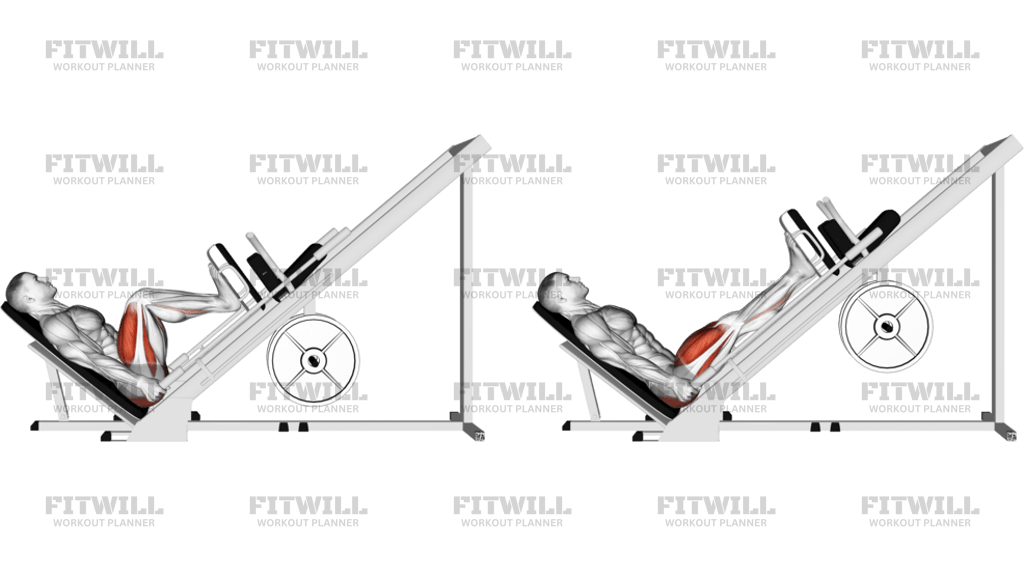
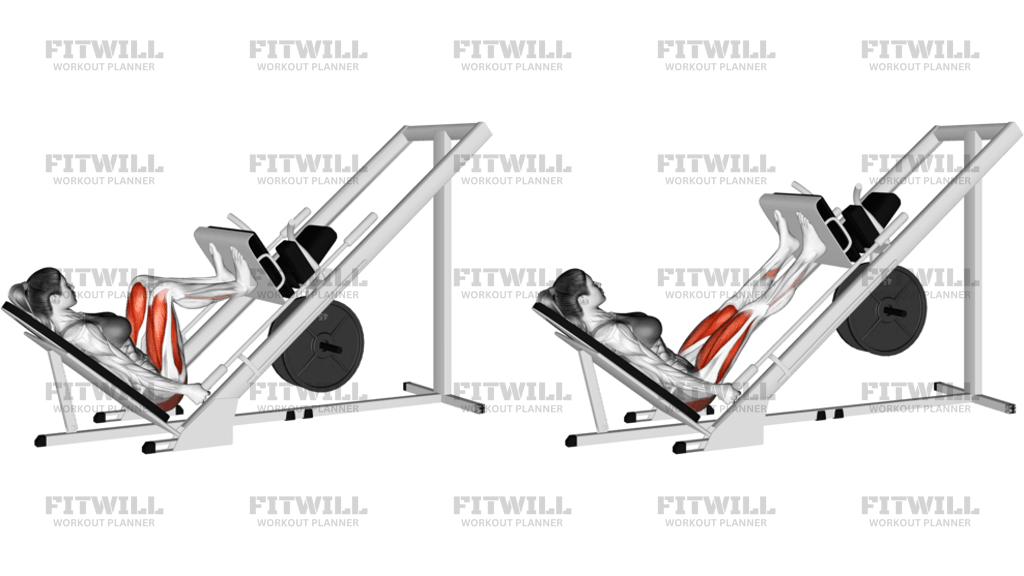
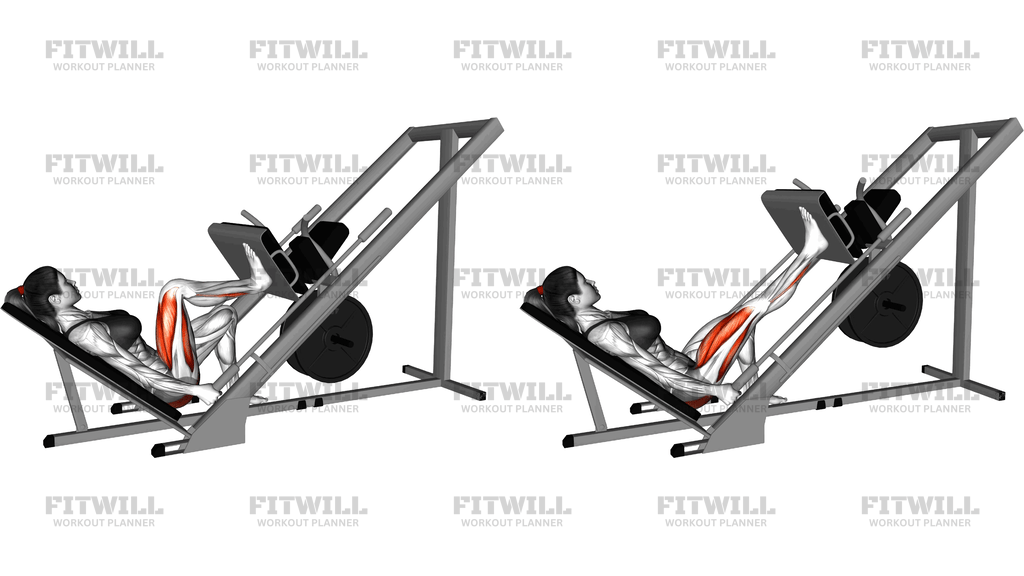
Execution is straightforward once the setup is right. Unrack the sled, bend the knees and let the sled travel down along its rails until your knees reach a deep, comfortable flexion, then drive the floor away through your whole foot to return to the top. Breathe in on the way down, brace, and exhale as you press up. Keep the movement smooth in both directions rather than dropping quickly and rebounding out of the bottom.
Practically, treat the full-depth position as something you earn gradually. If you cannot keep your lower back and glutes on the pad at a given depth, reduce either the depth or the weight until your mobility and control catch up. A slow, controlled deep rep with moderate load will build better legs and healthier knees over time than fast, bouncy heavy reps ever will.
[ Workout Log & Planner ]
Put your next workout in Fitwill
Keep your plan and training log ready when you are.


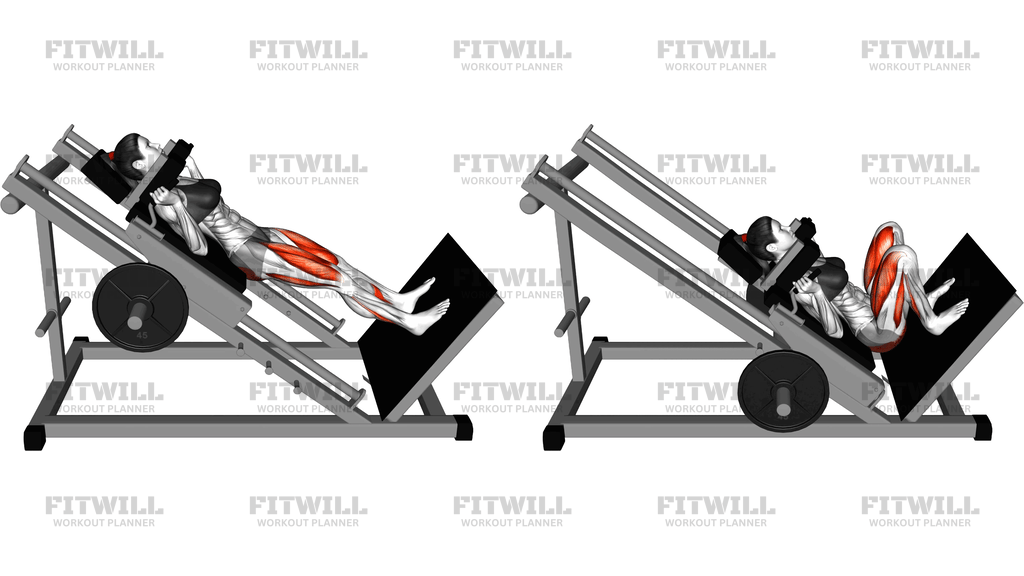
Instructions
- Load the sled with an appropriate weight and position yourself on the machine so your back and hips rest fully against the angled pad.
- Place your shoulders squarely under the shoulder pads, take hold of the side handles, and set your feet on the platform about shoulder-width apart with toes turned out slightly.
- Push up slightly to release the safety stops and let the sled float free before beginning the set.
- Brace your core and keep your head neutral against the pad, eyes forward.
- Bend your knees and lower the sled along its rails, letting the knees travel over the toes in line with the feet.
- Descend until the knees reach a deep flexion, close to full bend, while keeping the glutes and lower back on the pad.
- Press through your whole foot to extend the knees and drive the sled back up the rails without locking out hard at the top.
- Exhale as you press up and inhale as you lower each rep.
- Complete the set, re-engage the safety stops, and step out from under the pads carefully.
Tips & Tricks
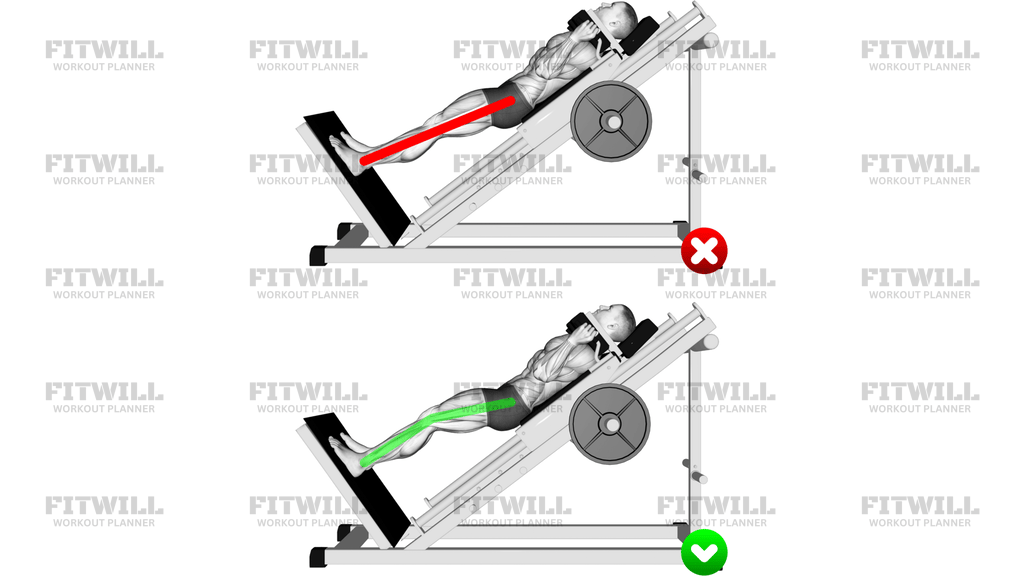
- Keep your hips and lower back glued to the pad at the bottom. If they curl under, the depth is beyond your current mobility or the weight is too heavy.
- Push through the middle of your foot and your heels rather than letting your heels lift off the platform, which shifts stress awkwardly onto the knees.
- Avoid bouncing out of the deep position. Let the quads control the reversal; the rebound may feel stronger but it removes the hardest work from the movement.
- Do not lock the knees violently at the top. Stop just short of full lockout so tension stays on the thigh muscles.
- Start with a lighter load than you expect to need. The sled's fixed path makes deep reps feel different from free squats, and the bottom position is where most people get humbled.
- Keep your grip on the side handles relaxed but firm; pulling hard on the handles tends to twist the torso and lift one shoulder off the pad.
- Point your knees in the same direction as your toes throughout the descent so the joint tracks cleanly under load.
- If your heels rise at depth, widen your stance slightly or move your feet a little higher on the platform rather than forcing the depth.
- Treat the first set as a rehearsal: use it to find your foot position and bottom depth before adding meaningful weight.
Frequently Asked Questions
Which muscles does the Sled Full Hack Squat work the most?
The quadriceps do the majority of the work, especially when the feet are placed lower on the platform. The glutes and hamstrings assist strongly in the deep range and during the drive back up.
How deep should I go on the Sled Full Hack Squat?
Aim for a deep knee bend where the hamstrings approach the calves, but only as deep as you can go while keeping your glutes and lower back against the pad. If your hips curl off the pad, reduce the depth or the weight.
Is the Sled Full Hack Squat suitable for beginners?
Yes. The sled travels a fixed path on rails and your back is supported, so there is no balance requirement. Start light, learn the bottom position, and progress the load gradually.
Where should my feet be placed on the platform?
A shoulder-width stance with feet lower on the platform targets the quads hardest, while placing the feet slightly higher shifts more of the work to the glutes and hamstrings. Adjust based on which emphasis you want.
Why do my knees ache after hack squats when they don't after leg presses?
The deep knee flexion of a full hack squat loads the quadriceps and knee joint through a much larger range than most leg press reps. Check that your heels stay down, your knees track over your toes, and you are not bouncing out of the bottom, then reduce depth or load if discomfort continues.
Can I use the Sled Full Hack Squat as a substitute for barbell squats?
It can replace most of the leg-building benefit, but it will not train the trunk and stabilizers the same way because the machine guides the load. Many lifters use it alongside or after free squats rather than instead of them.
Should I lock out my knees at the top of each rep?
Stop just short of a hard lockout so the thigh muscles stay under tension. Snapping into full lockout under heavy load puts unnecessary stress on the knee joint and does nothing extra for muscle growth.
How does the Sled Full Hack Squat differ from a 45-degree leg press?
On a hack squat the sled rides on your shoulders and your body moves under the weight, which demands more from the quads at the deep position. A leg press keeps your body fixed and moves the platform instead, generally allowing an easier, more supported push.
How should I breathe during the set?
Inhale and brace as you lower the sled, then exhale steadily as you press back up. On heavy near-maximal reps, holding the brace through the bottom and exhaling on the drive works well.
Is it safe to train the Sled Full Hack Squat alone?
Generally yes, since the machine has safety stops that catch the sled. Use them, keep them engaged while you set your position, and unrack only after confirming the stops are set for your depth.