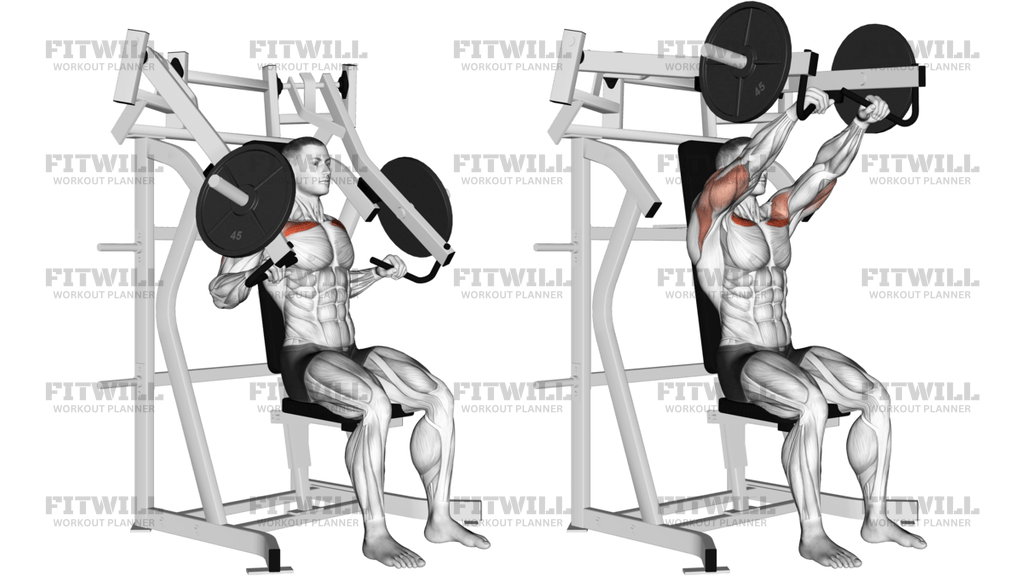
Lever Decline Chest Press
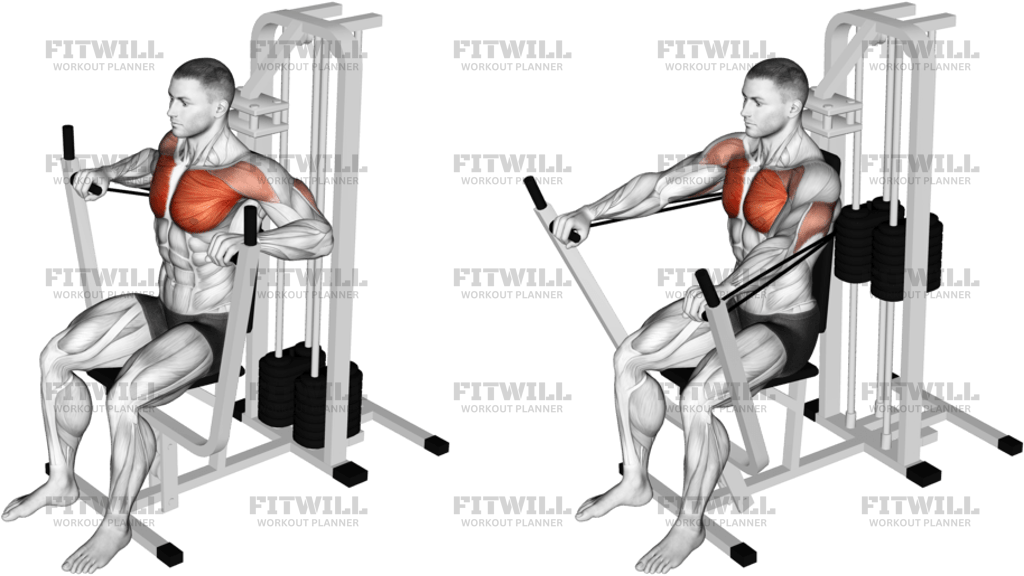
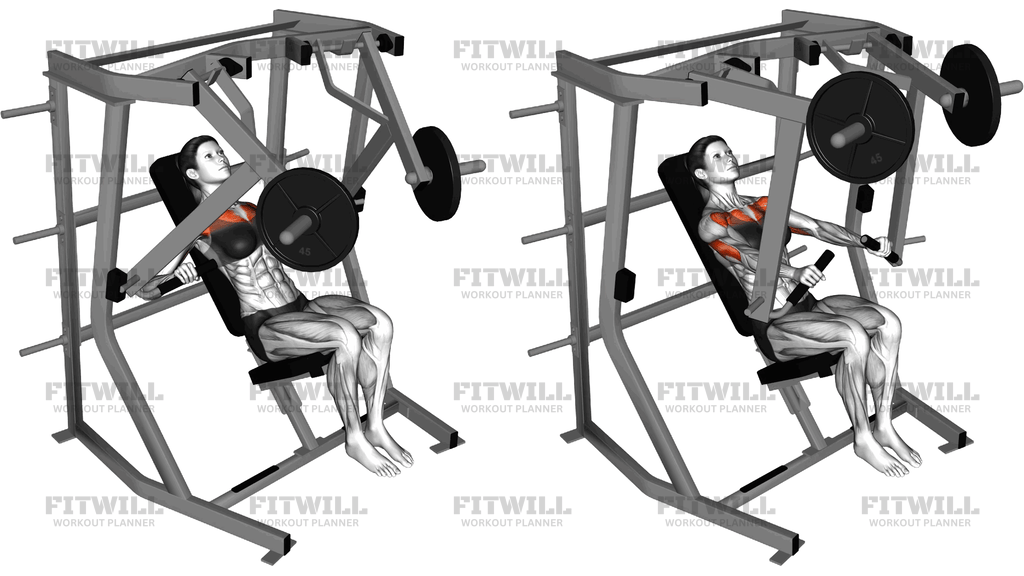
The Lever Decline Chest Press is a plate-loaded machine exercise that pushes the handles forward and slightly downward along a fixed leverage path, mimicking the angle of a decline barbell press without requiring you to balance a free weight. You sit upright against a padded backrest, grip the handles at roughly lower-chest height, and press until the arms extend in front of the torso before controlling the weight back. Because the movement arc is built into the machine, all of your attention can go into pressing hard and squeezing the chest rather than stabilizing the load.
The main target is the lower portion of the chest, specifically the sternal head of the pectoralis major, with the triceps and front delts assisting throughout the press. The decline angle shifts emphasis away from the upper chest and front of the shoulder, which makes this a useful complement to flat and incline pressing in a balanced chest program. Many machines also allow you to work one arm at a time, which helps expose and correct left-to-right strength differences.
This exercise suits a wide range of lifters. Beginners appreciate the guided path and the easy safety profile, since there is no bar to get pinned under the chin or lose balance with. More experienced lifters use it as a heavy compound finisher or as a way to overload the lower chest with fatigue-free intensity at the end of a pressing day, because the machine isolates the press from the stabilizing demands of a free-weight setup.
Setup matters more than most people expect on a lever press. Seat height determines where the handles track relative to your chest: too low and the press turns into mostly a triceps and shoulder movement with the elbows flaring awkwardly; too high and the decline angle is lost. Aim to have the handles line up with the lower part of your chest when your elbows are bent at the start, with your back, shoulders, and hips firmly against the pads and your feet flat on the floor.
To execute well, press the handles forward and slightly down in a smooth arc, exhaling as you push, and stop just short of locking the elbows so tension stays on the chest. Lower under control until your elbows are roughly level with or slightly behind your torso, feeling a comfortable stretch across the lower pecs before driving into the next rep. Keep the wrists straight and the elbows at a natural angle rather than forcing them wide or tucking them completely.
A few practical points will keep the exercise productive. Add plates symmetrically so the lever arms stay balanced, keep your lower back in contact with the pad instead of arching into the press, and let the seat settings do the work of positioning rather than sliding your hips forward to reach the handles. If the machine's path feels uncomfortable at the shoulder, adjust the seat height before changing the load, and stop the set if you feel pinching at the front of the shoulder joint.
[ Workout Log & Planner ]
Put your next workout in Fitwill
Keep your plan and training log ready when you are.


Instructions
- Load equal weight plates onto both lever arms and insert the securing pins so the arms stay balanced.
- Adjust the seat height so the handles sit level with the lower portion of your chest when your elbows are bent.
- Sit with your back, shoulders, and hips flat against the pads and place your feet flat on the floor about hip-width apart.
- Grip the handles with a neutral or slightly forward-facing grip and brace your core to keep your torso from shifting.
- Press the handles forward and slightly downward along the machine's arc until your arms are nearly straight in front of your lower chest.
- Pause briefly with the elbows just short of lockout and squeeze the chest at the end of the press.
- Inhale as you slowly let the handles travel back until your elbows are slightly behind your torso and you feel a stretch across the lower chest.
- Keep the wrists straight and the elbows tracking at a comfortable angle rather than flaring high or pinning to the ribs.
- Complete all reps with steady control, then let the lever arms return fully to rest before releasing the handles or changing the load.
Tips & Tricks
- If the handles start above your chest line, the seat is too low; raise it until the press tracks across the lower chest instead of toward the neck.
- Do not slam the weights down at lockout. Stopping an inch short of full elbow extension keeps continuous tension on the lower chest and protects the elbow joints.
- A common mistake is pushing the head forward against the backrest to finish a heavy rep. Keep the back of your head on the pad and let the chest do the pressing.
- Watch for the hips sliding forward off the seat as fatigue sets in. Reset your position between reps rather than compensating with a shorter range.
- If one side finishes before the other, try the machine's single-arm option so the weaker side sets the pace for the whole set.
- Because the lever arms swing on a fixed pivot, avoid trying to add your own curve to the path; guiding the handles off-track only adds shoulder strain.
- Breathe out on the press and in on the return. Holding your breath through the sticking point tends to collapse the torso against the pad.
- Warm up with a light plate on each side for a higher-rep set first, since the decline angle can feel unfamiliar on the shoulders if you go straight to a working weight.
Frequently Asked Questions
Which muscles does the Lever Decline Chest Press work?
The primary muscle is the lower chest, or sternal head of the pectoralis major. The triceps and front delts assist as the elbows extend and the shoulders contribute to the press.
How is the Lever Decline Chest Press different from a flat machine chest press?
The handles travel forward and downward instead of straight ahead, which shifts the emphasis toward the lower portion of the chest and away from the upper chest and front delts.
Is the Lever Decline Chest Press good for beginners?
Yes. The fixed leverage path removes the balance and stabilization demands of free weights, so a beginner can focus on pressing mechanics and build pressing strength safely.
How high should I set the seat on a Lever Decline Chest Press?
Set the seat so the handles line up with the lower part of your chest when your elbows are bent at the start. If the handles press toward your neck or belly, the seat height needs adjusting before you load more weight.
Should I lock out my elbows at the end of each press?
Stop just short of full lockout so the chest stays loaded and the elbow joint is not loaded at its end range. Full, hard lockout with heavy plates swinging on the levers offers no extra chest benefit.
Why do my shoulders feel this exercise more than my chest?
This usually means the handles are starting too high or the elbows are flaring excessively during the press. Lower the seat position slightly and keep the elbows at a moderate angle so the lower chest drives the movement.
Can I replace decline barbell presses with the Lever Decline Chest Press?
It is a solid substitute when you want the same decline pressing angle without a spotter or free-weight balance demands. The tradeoff is less carryover to stabilizing a barbell, so many lifters use both.
How should I load the plates on this machine?
Put the same weight on both lever arms and seat the plates fully on the sleeves. Uneven loading makes one arm travel differently and can twist your torso off the backrest.
Is the Lever Decline Chest Press safe for people with shoulder discomfort?
The guided arc is often easier on the joints than free weights, but the decline angle still loads the front of the shoulder. Use a moderate range, avoid pressing into any pinching sensation, and adjust the seat or reduce the range until the movement feels clean.
Where should the Lever Decline Chest Press fit in my workout?
It works well as your main lower-chest pressing movement on a chest day, or as a heavy finisher after flat and incline pressing when the stabilizers are already fatigued.