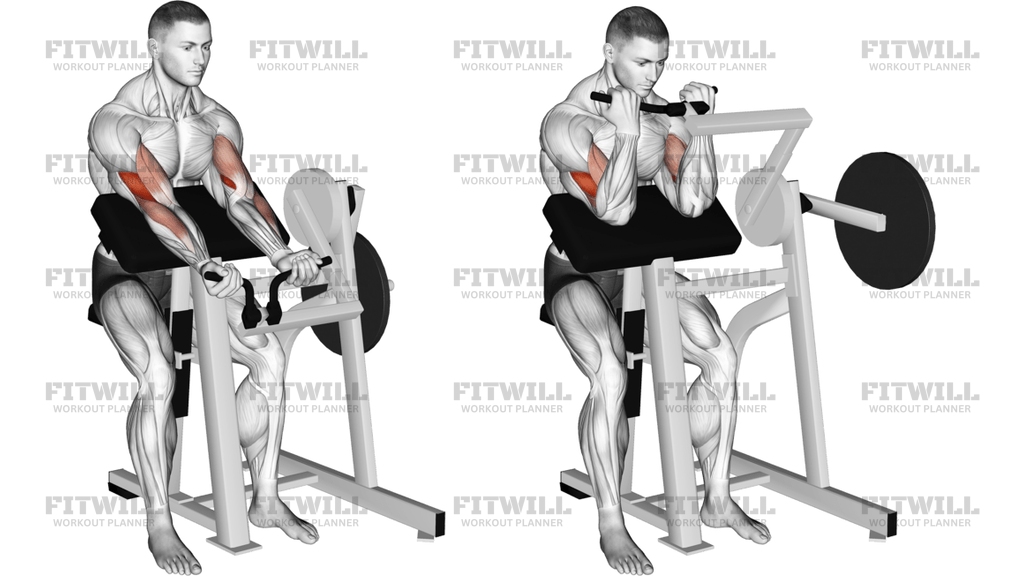
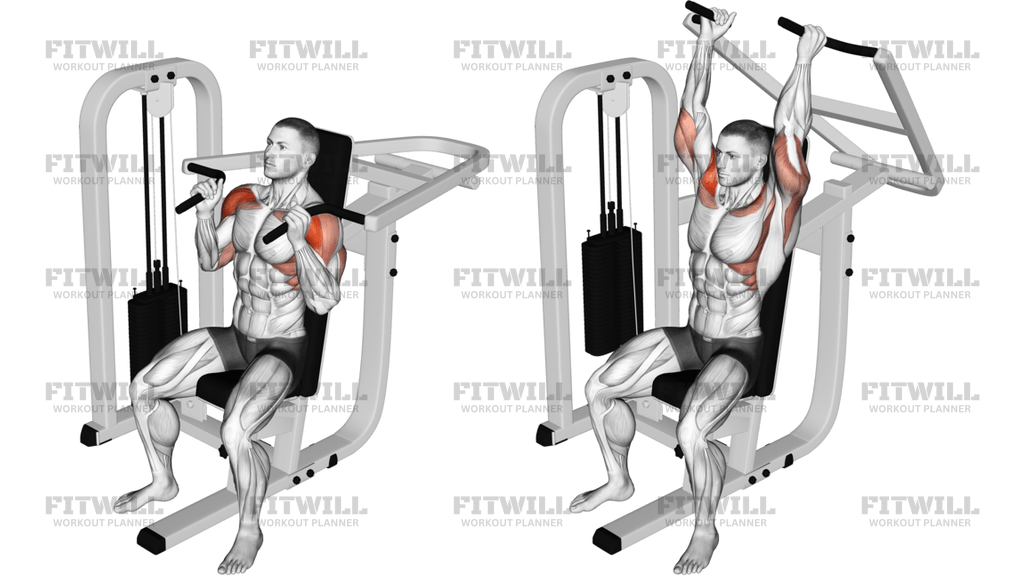
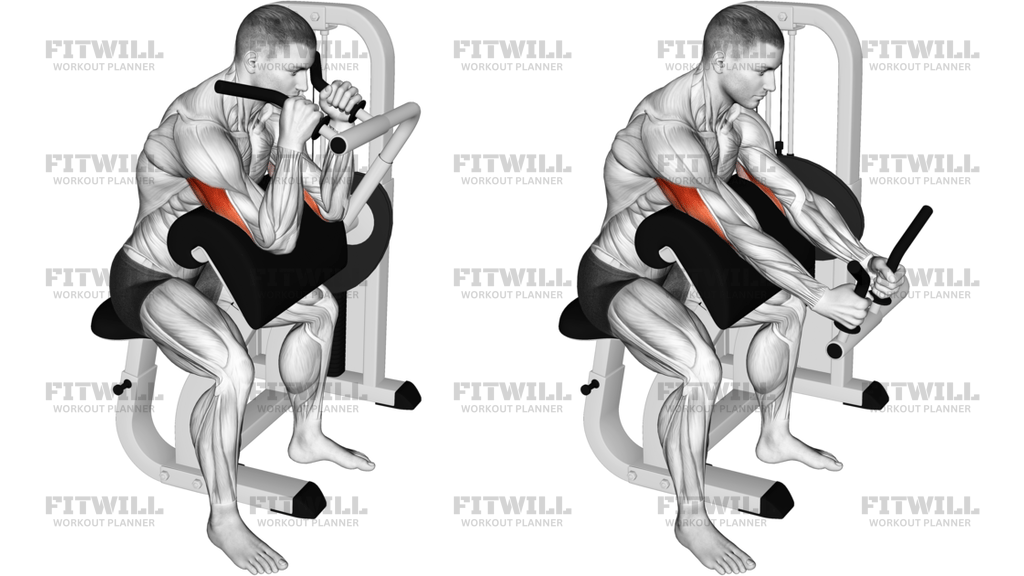
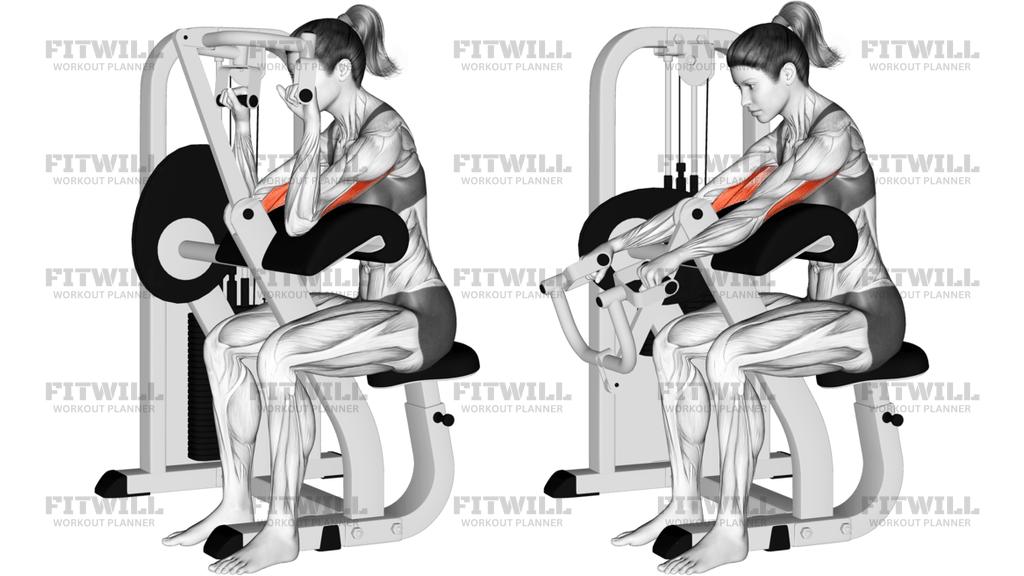
Lever Seated Single Arm Triceps Extension (Plate)
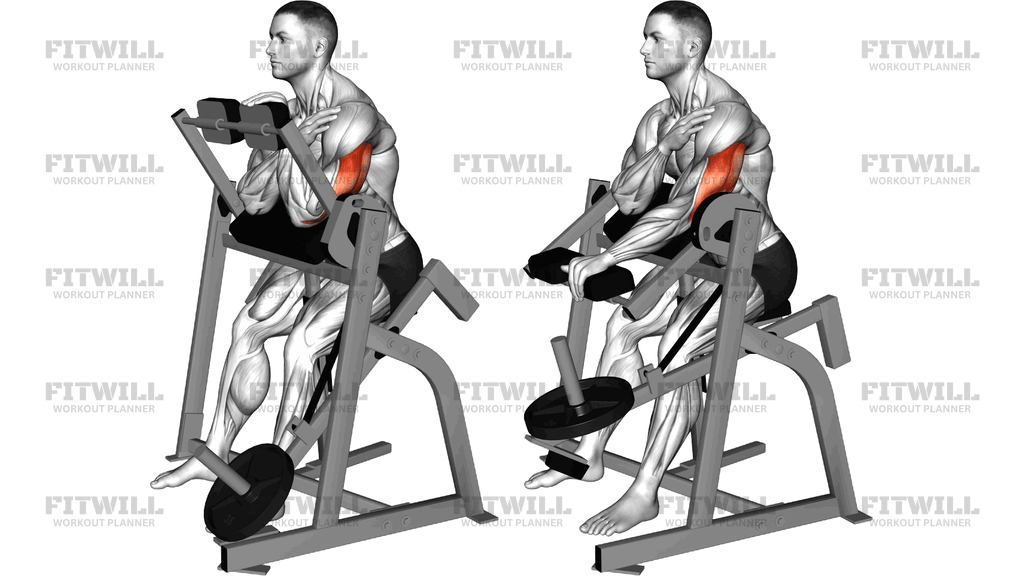
The Lever Seated Single Arm Triceps Extension (Plate) is a machine-based isolation exercise for the triceps, performed one arm at a time on a plate-loaded leverage machine. You sit with your chest supported against the pad, rest the back of your working upper arm on the angled arm pad, and press the padded lever down and away by straightening your elbow. The lever arm carries a weight sleeve, so you load the movement with standard weight plates rather than a pin stack.
Because the machine fixes the position of your upper arm and controls the arc of the lever, the elbow joint is the only moving part in this exercise. That makes it one of the cleanest ways to train the triceps without the shoulder movement or momentum that often creeps into free-weight extensions. The resistance path also changes slightly through the range, typically peaking where the lever arm is hardest to move, so the triceps stay loaded from the bent position through lockout.
Working one arm at a time is the defining feature here. It lets you spot and fix side-to-side strength differences, lets your non-working hand rest near your chest or shoulder for stability, and usually allows a better mind-muscle connection than two-arm versions because you can focus entirely on one triceps contracting. It is a good fit for lifters who want extra triceps volume after pressing work, for people rehabbing around a cranky elbow who need a stable, controlled path, and for anyone whose gyms have a leverage triceps or biceps/triceps combo station.
Setup matters more than it looks. The height of the seat and the position of your upper arm on the pad determine whether the stress lands on the triceps or drifts into the shoulder and neck. Your elbow should stay pinned to the pad for the whole set, roughly in line with the lever's pivot, and your torso should stay upright and braced against the chest pad. If you have to lean, shrug, or roll the shoulder forward to finish a rep, the weight is too heavy for the position.
To execute it well, straighten your elbow fully at the bottom of the press without snapping the joint, pause briefly with the triceps contracted, then lower the lever back under control until your forearm approaches the pad again. Breathe out on the press and in on the return, and finish all planned reps on one arm before switching sides so both arms get the same work.
Keep the loads honest. Leverage machines feel smooth, which makes it tempting to pile on plates and push with the torso. Treat this as a strict isolation movement: moderate weight, full range, and a deliberate pause at extension will do more for your triceps than heavy half reps that blur into chest and shoulder pressing.
[ Workout Log & Planner ]
Put your next workout in Fitwill
Keep your plan and training log ready when you are.


Instructions
- Adjust the seat so that when you sit down, your chest rests comfortably against the pad and your working upper arm lies flat on the angled arm pad with the elbow close to the lever's pivot.
- Load the appropriate plates onto the weight sleeve on the lever arm, securing them with a collar if one is available.
- Grip the padded end of the lever with one hand, palm facing down or inward depending on the machine's pad, and let your free hand rest near your chest or on the opposite shoulder for support.
- Sit tall, press your back lightly into the pad, brace your core, and pin the back of your upper arm against the arm pad so the elbow cannot lift or drift.
- Start with your elbow bent so your forearm sits near the pad, then press the lever down and forward by straightening your elbow until your arm is fully extended.
- Squeeze the triceps hard at full extension and hold for a brief pause before any movement back.
- Lower the lever slowly, resisting the weight as your forearm rises, and stop just before your forearm touches the pad so tension stays on the triceps.
- Exhale as you press into extension and inhale as you control the lever back to the start.
- Complete all repetitions on one arm, then reposition and perform the same number of reps with the other arm, keeping the seat and pad settings identical.
- When finished, release the lever gently, let it settle, and unload the plates before leaving the machine.
Tips & Tricks
- If your shoulder hikes up during the press, the weight is pulling you out of position — reduce the load and consciously keep the upper arm glued to the pad.
- Do not let the elbow roll off the arm pad as the lever moves; a rolling elbow turns the exercise into a partial press and shifts stress toward the shoulder.
- Chasing a full lockout matters here, but straighten the elbow with control rather than snapping it open, especially with heavier plates on the sleeve.
- The padded grip means your hand position is fixed by the machine — avoid twisting your wrist to cheat the pad down, which only irritates the joint.
- Start with your weaker arm first and match the reps with your stronger arm; this is one of the simplest ways to balance left-right triceps strength.
- If your forearm touches the pad between reps, you are losing tension at the bottom; stop the descent a few degrees short so the triceps stay loaded.
- Keep your feet flat on the floor and your hips planted — driving through the legs or leaning into the chest pad means the set has become a body press.
- Because the sleeve loads quickly, add plates in small jumps; leverage machines often feel lighter at the start of the range than at the sticking point.
- Warm up the elbow with a lighter set or a few free-body extensions before your working weight, since the joint is isolated with nowhere to hide.
Frequently Asked Questions
Which muscles does the Lever Seated Single Arm Triceps Extension (Plate) work?
The triceps brachii is the prime mover, including the long head because the upper arm is fixed overhead-leaning on the pad. The forearm and shoulder stabilizers work only to hold position, not to move the weight.
Why is this done one arm at a time instead of with both arms?
Single-arm work exposes and corrects side-to-side strength differences and lets you concentrate fully on one triceps. It also makes it easier to keep the elbow pinned to the pad, since the load is lighter per rep.
Is the Lever Seated Single Arm Triceps Extension (Plate) good for beginners?
Yes. The machine fixes the arm path and the pad supports the upper arm, so a beginner can learn what a proper elbow-only extension feels like before moving to dumbbell or cable versions.
How should I position my elbow on the machine's arm pad?
Rest the back of your upper arm flat on the pad with the elbow roughly in line with the lever's pivot, and keep it there for every rep. If your elbow lifts or slides during the set, the seat height or weight needs adjusting.
My shoulder lifts off and my neck tenses during the press. What is wrong?
That is usually a sign the load is too heavy or the elbow is drifting off the pad. Drop a plate, keep the upper arm pressed into the pad, and let your free hand rest on your chest for stability.
Should I lock out my elbow completely on each rep?
Straighten fully and squeeze the triceps at the end, but extend under control instead of snapping into lockout. A short pause at full extension is what makes the triceps work, not the speed of the press.
What can I substitute if my gym has no leverage triceps machine?
A single-arm cable pushdown with a handle, or a dumbbell single-arm overhead or seated triceps extension, trains the same muscles. The cable version is closest because the elbow also stays fixed while the forearm moves.
How do I load the machine correctly with plates?
Slide plates onto the weight sleeve on the lever arm and secure them with a collar. Start light, because the leverage point means the effort at the hardest part of the range is noticeably higher than the plate count suggests.
Is this exercise safe for sore or sensitive elbows?
The supported arm and fixed path make it gentler on the elbow than many free-weight extensions, but irritation can still occur with heavy loads or snapping lockouts. Use a controlled tempo, moderate weight, and stop if you feel sharp pain rather than muscle effort.
Where should this exercise sit in my workout?
Use it after your main pressing movements as focused triceps volume, when the elbow can work in strict isolation. It pairs well with one heavier compound press earlier in the session and one other triceps finisher.