Stability Ball Front Plank
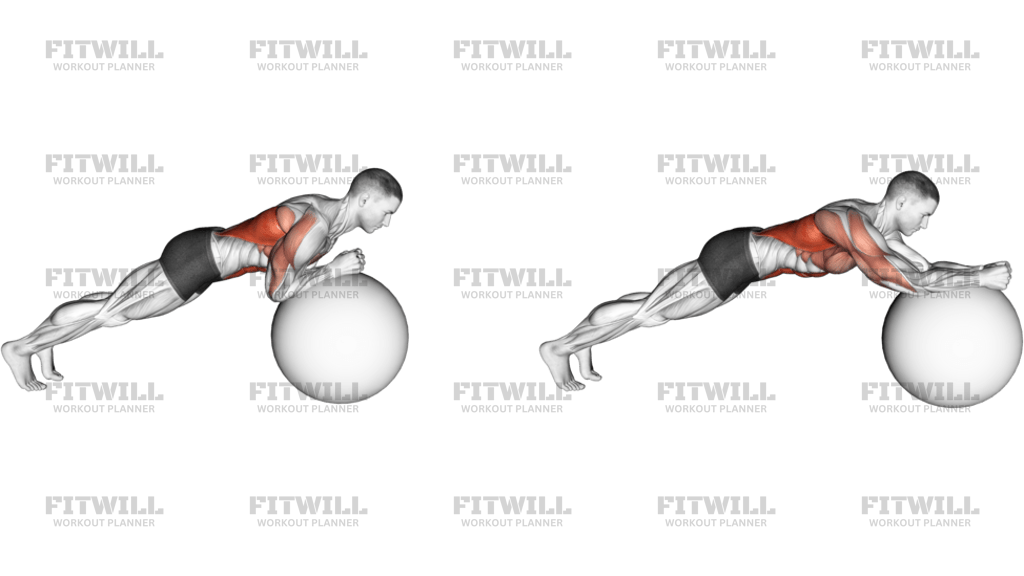
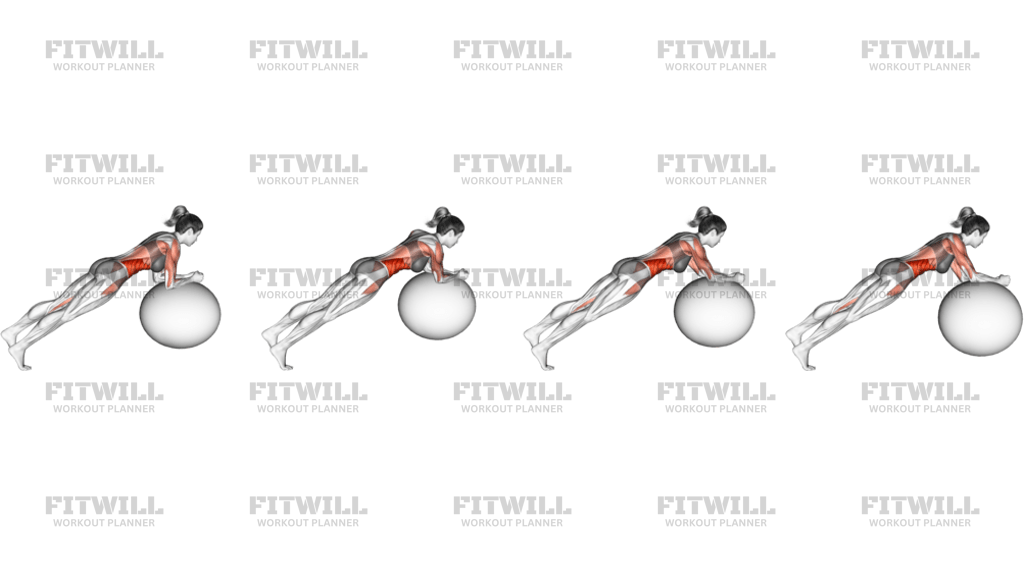
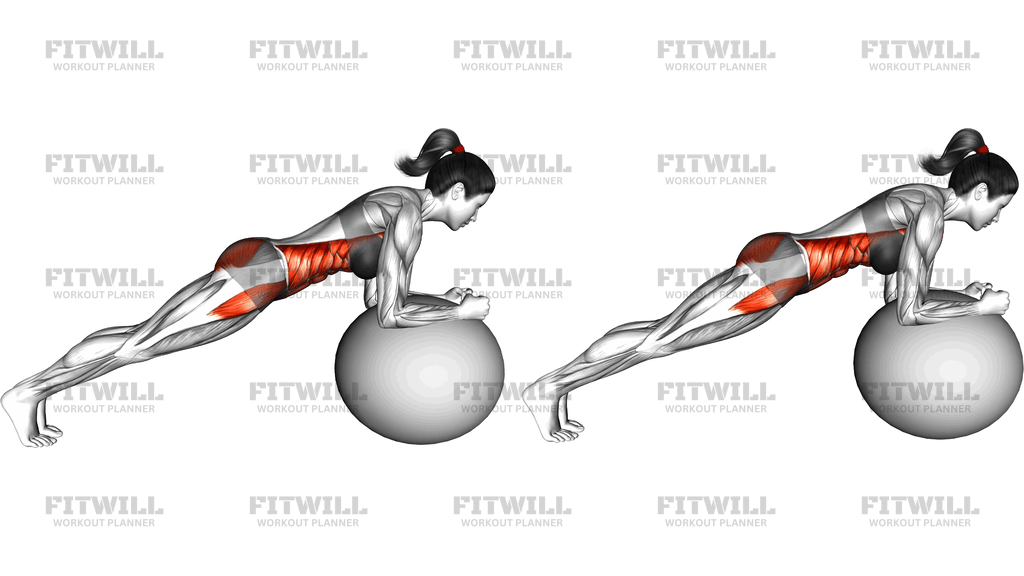
The Stability Ball Front Plank is a front plank performed with your forearms resting on an inflated stability ball while your feet stay on the floor behind you. Because the ball shifts and rolls slightly under your forearms, your trunk has to work far harder to hold a straight line than it does in a standard floor plank. What looks like a simple hold is really an ongoing fight against small, constant wobbles in every direction.
This exercise is useful for anyone who has outgrown the basic plank or wants to build trunk control that carries over to real movement. Lifters use it to brace harder under the bar, runners and field-sport athletes use it to transfer force between legs and arms more cleanly, and general trainees use it to build core endurance without loading the spine with external weight. It fits well at the end of a workout as a finisher or early in a session as an activation drill.
The main work comes from the abs and deep core muscles that wrap the trunk, with steady support from the shoulders, chest, and glutes. The shoulder stabilizers work overtime here because your forearms are on an unstable surface, and the quads and glutes stay active to keep the hips from sagging. Compared with a floor plank, the demand shifts toward control and coordination rather than pure holding time.
Setup matters more than usual because everything starts from where you place the ball. Position it so your elbows sit roughly under your shoulders when you settle into the plank, and keep your feet about hip-width apart for a stable base. If the ball is too far forward, your shoulders will collapse; too far back and the hold becomes either too easy or unmanageably hard. Take a moment to brace before every rep instead of dropping into position.
To execute it well, press your forearms firmly into the top of the ball, squeeze your glutes, and push the floor away with your toes so your body forms one straight line from head to heels. Breathe steadily and shallowly through your trunk rather than holding your breath. Hold for a set time, step one foot in, and roll the ball away carefully rather than collapsing off it.
The most common fault is letting the hips sag or pike as fatigue builds, followed closely by shrugging the shoulders up toward the ears. If your hips drift or the ball starts sliding forward, end the set, reset, and go again with a shorter hold. Quality of position beats duration every time with this movement.
[ Workout Log & Planner ]
Put your next workout in Fitwill
Keep your plan and training log ready when you are.


Instructions
- Kneel in front of a stability ball and place both forearms on top of it, elbows bent and hands relaxed or loosely clasped.
- Walk your feet back until your body forms a straight line and your elbows sit roughly under your shoulders, feet about hip-width apart with toes tucked under.
- Press your forearms down into the ball and gently pull your elbows toward your toes to engage the shoulders and upper back.
- Brace your trunk as if preparing for a light push to the stomach, then squeeze your glutes to lock the pelvis in a neutral position.
- Hold this front plank position, keeping your head in line with your spine and your eyes on the floor slightly ahead of the ball.
- Resist every small roll of the ball by staying rigid through the trunk — do not chase the wobble with your hips.
- Breathe in a steady, shallow rhythm through your nose and mouth; avoid holding your breath as the hold gets harder.
- Continue holding for your target time, ending the set as soon as your hips start to sag or your lower back arches.
- To finish, step one foot forward toward the ball, let your knees come down, and roll the ball away under control before standing up.
Tips & Tricks
- If the ball keeps rolling away from you, set it against a wall or in a corner for your first few sessions until your brace is solid.
- Sagging hips are the number-one fault here — film yourself from the side once, because from your own viewpoint a sagging line often feels level.
- Keep your elbows slightly in front of the top of the ball rather than behind it; the further the ball sits toward your hands, the more your shoulders will dump into a shrug.
- Start with 15-20 second holds and add time gradually; on an unstable surface, a short rigid hold trains more than a long sagging one.
- Actively push the ball down and slightly away with your forearms throughout the hold — this keeps the shoulder blades from collapsing toward each other.
- If your wrists or forearms ache, check that the ball is inflated firmly; a soft ball folds under your forearms and changes the elbow angle.
- Progress by nudging the ball an inch further forward so your body extends into a longer lever, or by bringing your feet closer together.
- Do not look up or forward during the hold — lifting the head usually opens the chest and breaks the line from neck to heels.
- If your feet slide on a smooth floor, place them against a wall or wear shoes with grip instead of widening your stance to compensate.
Frequently Asked Questions
What muscles does the Stability Ball Front Plank work?
The abs and deep core muscles do most of the work holding your trunk rigid, while the shoulders, chest, and glutes stabilize the rest of the line. Because the ball moves, the shoulder stabilizers work noticeably harder than in a floor plank.
Why is the Stability Ball Front Plank harder than a regular front plank?
Your forearms rest on an unstable surface that shifts in every direction, so your trunk has to constantly correct small movements instead of holding one static position. The same hold that takes minutes on the floor can become challenging in under 30 seconds on the ball.
How long should I hold the Stability Ball Front Plank?
Start with 15-20 second holds and build toward 45-60 seconds as your control improves. Once you can hold a clean position for a minute, progress by extending the ball forward or narrowing your feet rather than adding more time.
Where exactly should my elbows be on the ball?
Aim for your elbows directly under your shoulders, resting on the top third of the ball. If the ball sits too far toward your hands, your shoulders will shrug and fatigue early; too far toward the elbows and the position becomes unstable in a different way.
My hips sag or pike halfway through — what should I change?
Both are signs the set is over, not cues to push through. End the hold, rest, and use shorter sets while squeezing your glutes harder at the start; a strong glute squeeze locks the pelvis level and delays the sag.
Is the Stability Ball Front Plank suitable for beginners?
Beginners should first master a solid 45-60 second floor plank, then try the ball version with the ball placed near a wall and their feet wide. The unstable surface rewards a well-established brace, so it works best as a step two rather than a starting point.
How do I get on and off the ball safely?
Kneel down, lay your forearms on the ball first, then walk your feet back into position. To finish, step one foot forward, lower your knees to the floor, and roll the ball away — never try to stand up while your weight is still on the ball.
What can I use instead of a Stability Ball for this plank?
A pair of Valslides or towels under your forearms on a smooth floor, a Bosu ball dome-side down, or a suspension trainer set at forearm height all create a similar instability. If no equipment is available, a floor plank with slow shoulder taps is a reasonable substitute.
Should my lower back feel sore during or after this exercise?
The hold should be felt across the front of your trunk, not in your lower back. Lower back discomfort usually means the hips have sagged and the spine is arching — stop the set, reset with a stronger glute squeeze, and shorten your hold time.