Dead Bug With Stability Ball
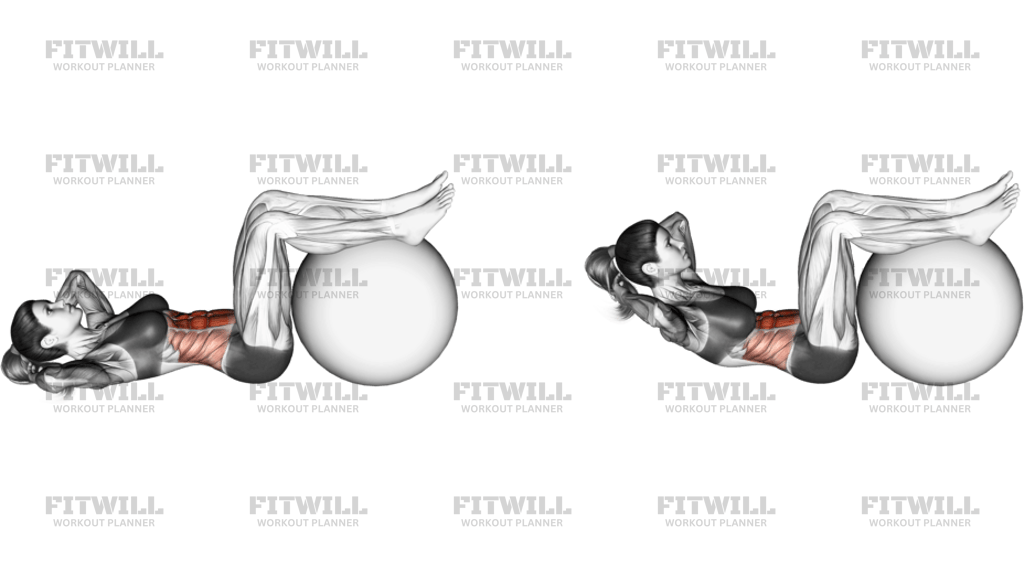
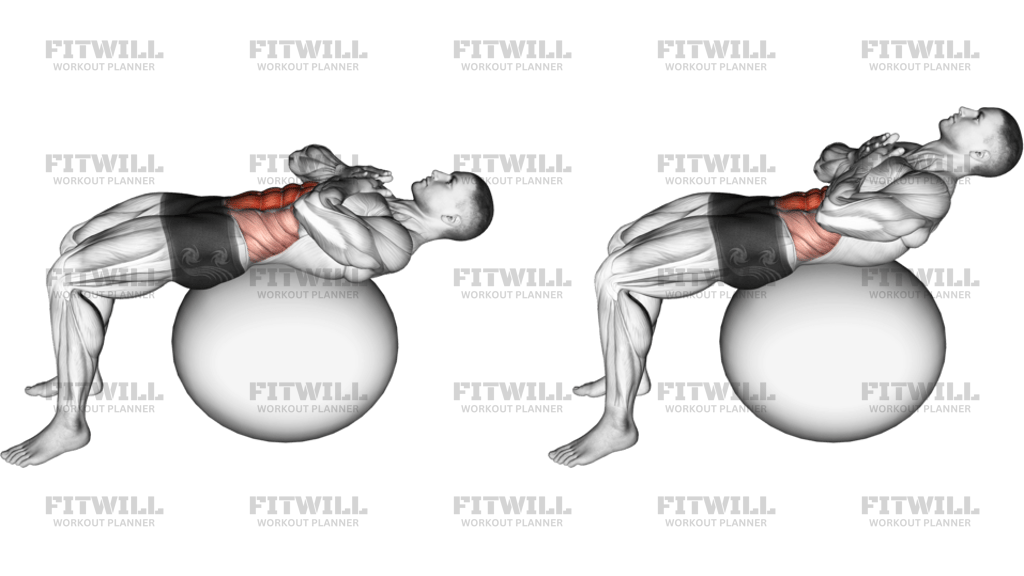
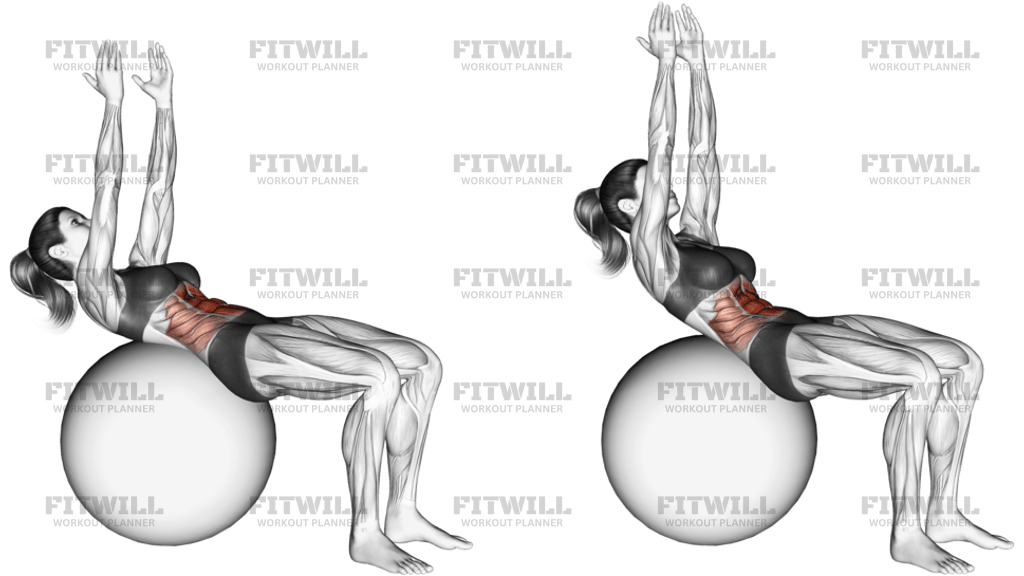
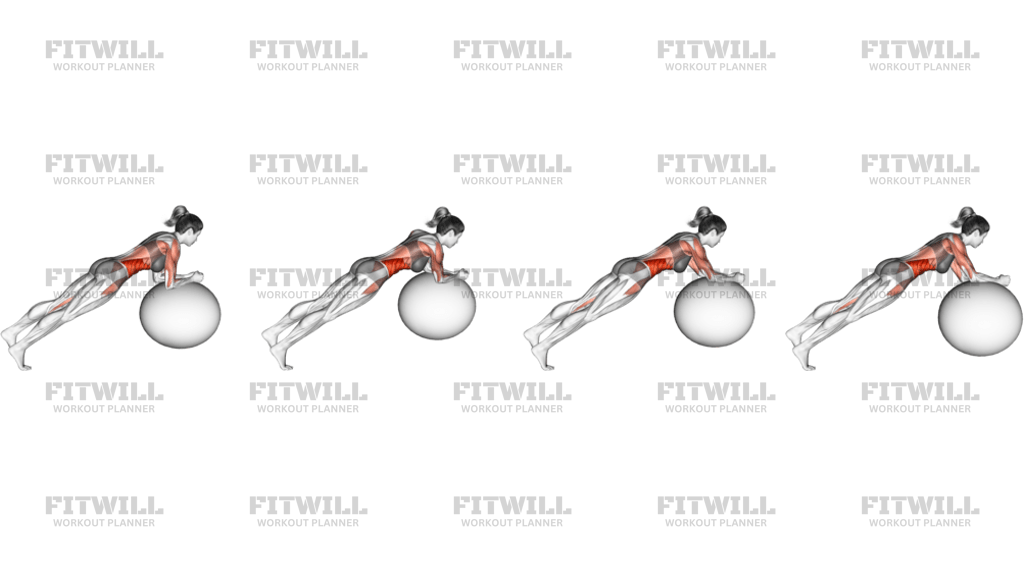
The Dead Bug With Stability Ball is a core stability exercise performed lying on your back while you squeeze a stability ball between your hands and knees. From that stacked position, you extend one arm overhead and the opposite leg out long, passing or holding the ball against your body while your limbs move away from center. The ball acts as a live feedback tool: the moment your ribcage lifts or your lower back arches, the ball drifts and you feel it immediately.
This version of the dead bug is especially useful for people who have mastered the basic floor dead bug and need a new challenge, or for anyone rehabbing or prepping the trunk for heavier work. Because the ball ties your hands and knees together, your brain has to coordinate two jobs at once — pressing into the ball and controlling the moving limbs — which forces the deep trunk muscles to work harder than they would in the standard version.
The main targets are the deep core, particularly the transverse abdominis, along with the lower abs and obliques. The hip flexors work to control the extending leg, and the shoulders and chest stay active pressing into the ball. The lower back should stay flat against the mat the entire time, which is what makes this a spinal-stability exercise rather than a back exercise.
Setup matters more here than in most floor core work. Lie with your head, shoulders, and hips square, knees stacked over hips at roughly 90 degrees, and arms straight up toward the ceiling. The ball should rest between your palms and knees with a firm, even squeeze. If the ball is too large or too small for your body, the squeeze becomes awkward and your lower back tends to compensate, so take a moment to get that contact right before you start moving.
To execute well, brace your trunk gently as if bracing for a light poke, then exhale slowly as one arm reaches overhead and the opposite leg reaches long, staying just above the floor. Keep the ball pressed between the remaining hand and knee without letting it slip or drop. Return the extended limbs to the ball, re-establish the squeeze, then switch sides. Move slowly; the value comes from the control, not the reps.
This movement shows up in warm-ups, postpartum and back-health programming, and athletic training blocks where anti-extension control is the goal. If your lower back peels off the floor as the leg extends, shorten the range by not lowering the leg as far. Stop the set when you can no longer keep the ball steady — that is the honest limit of the exercise.
[ Workout Log & Planner ]
Put your next workout in Fitwill
Keep your plan and training log ready when you are.


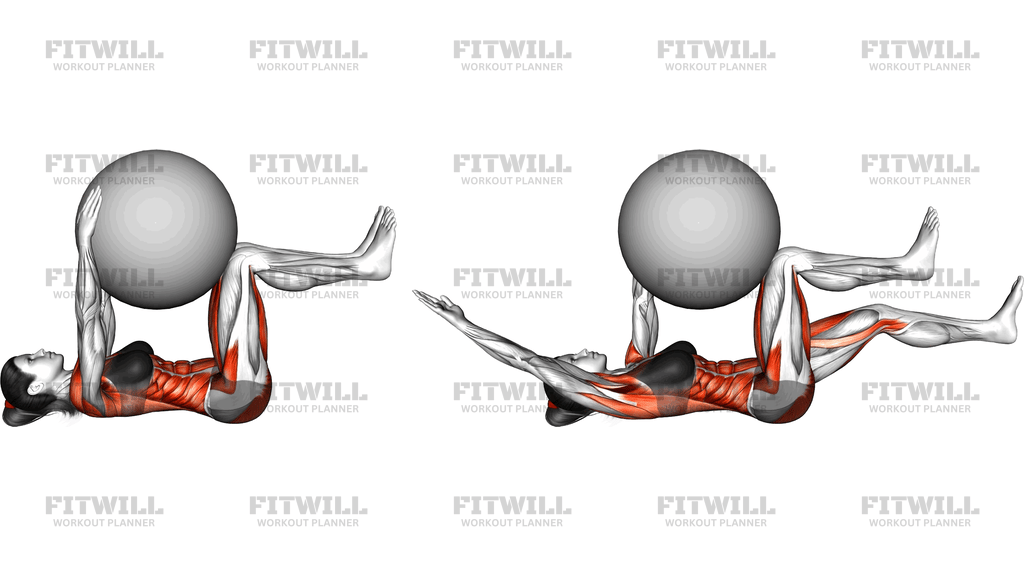
Instructions
- Lie on your back on an exercise mat with your head, shoulders, and hips facing straight up.
- Bend your knees to about 90 degrees and stack them directly over your hips so your shins are parallel to the floor.
- Place a stability ball between your palms and knees, then squeeze your hands and knees into the ball with even pressure so it sits securely.
- Brace your trunk gently and press your lower back lightly into the mat before any movement begins.
- Exhale slowly as you extend one arm overhead and the opposite leg out long, keeping the limb just above the floor.
- Keep the ball pressed between the other hand and knee the entire time — do not let it drift, tilt, or drop.
- Hold the extended position for a brief moment with your ribs down and lower back still flat.
- Inhale as you draw the extended arm and leg back to the ball and re-establish the firm squeeze.
- Repeat on the other side, alternating limbs for the desired number of reps.
- Between reps, reset your brace and check that the ball contact is even before extending again.
Tips & Tricks
- If the ball keeps slipping toward one side, your squeeze is uneven — press harder through the palm and knee on the lighter side rather than gripping with your fingers.
- The most common fault is the lower back arching as the leg extends. Stop the leg higher and shorten the range until you can keep it flat.
- Keep the extension slow, around two to three seconds out and two seconds back; rushing turns this into a hip flexor exercise instead of a core one.
- Watch that your ribs stay down. If they flare toward the ceiling as your arm reaches overhead, reduce the reach until your trunk holds still.
- Your neck should stay relaxed. Rest your head lightly on the mat and look straight up rather than tucking or lifting it.
- Ball size changes the feel significantly. If the squeeze forces your knees toward your chest or strains your shoulders, switch to a smaller or larger ball.
- Breathe out during the extension, not before it. Holding your breath usually means the brace has turned into a full-body strain.
- If you feel the work mostly in the front of your hips, extend the leg with less knee bend and move it slightly slower so the trunk, not the hip flexors, does the stabilizing.
- Quality beats volume here — when the ball starts wobbling or dropping, end the set even if reps remain.
Frequently Asked Questions
What muscles does the Dead Bug With Stability Ball work?
It primarily trains the deep core, especially the transverse abdominis, along with the lower abs and obliques. The hip flexors control the extending leg, and the shoulders assist by pressing into the ball.
Is this exercise suitable for beginners?
It is best treated as a step up from the basic dead bug. If you can keep your lower back flat and ribs down for a full set of standard dead bugs, the ball version is a natural progression; otherwise start without the ball.
Why use a stability ball instead of doing a regular dead bug?
The ball links your hands and knees, so pressing into it while moving the opposite limbs demands more coordination and trunk control. It also gives you instant feedback — if the ball tilts or drops, your position has broken down.
How hard should I squeeze the ball?
Firm enough that it will not slip or tilt, but not so hard that your shoulders and neck take over. Aim for a steady, even press with both the palm and the knee.
How low should I lower the extending leg?
Only as far as you can keep your lower back pressed into the mat. For most people that means stopping just above the floor; if the back arches, stop higher.
The ball keeps rolling away from me — what am I doing wrong?
Usually the squeeze is uneven or the ribs are flaring as the limbs extend. Re-center the ball, press evenly through palm and knee, and shorten your reach until the contact stays consistent.
What can I use if I do not have a stability ball?
A medicine ball or a small rolled towel squeezed between hands and knees can replicate the effect, though a ball gives the clearest feedback because it moves when your pressure shifts.
How many reps should I do?
Start with 5 to 8 slow alternating reps per side, focusing on control rather than speed. Two to three quality sets are enough, since the exercise loses value the moment the ball becomes unstable.
Is the Dead Bug With Stability Ball safe for lower back issues?
It is often used in back-friendly programming because the spine stays supported on the floor, but comfort varies by individual. Keep the range short, move slowly, and stop if the movement causes discomfort rather than muscular effort.