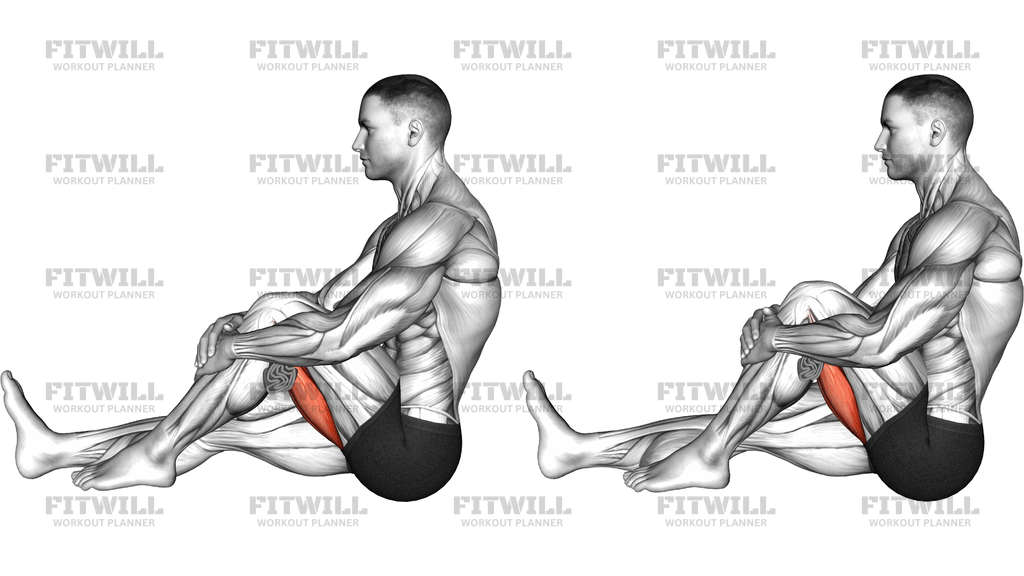
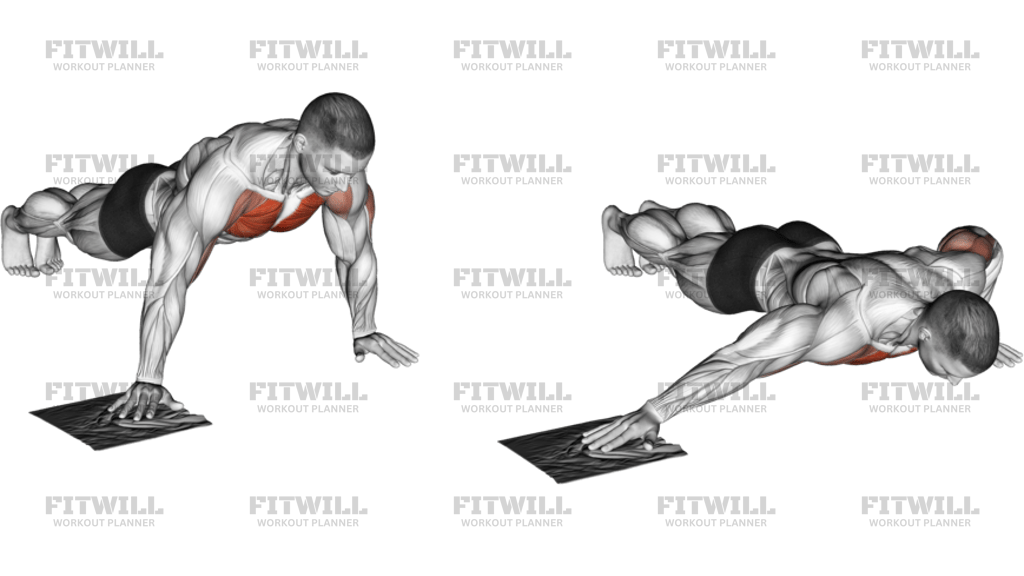
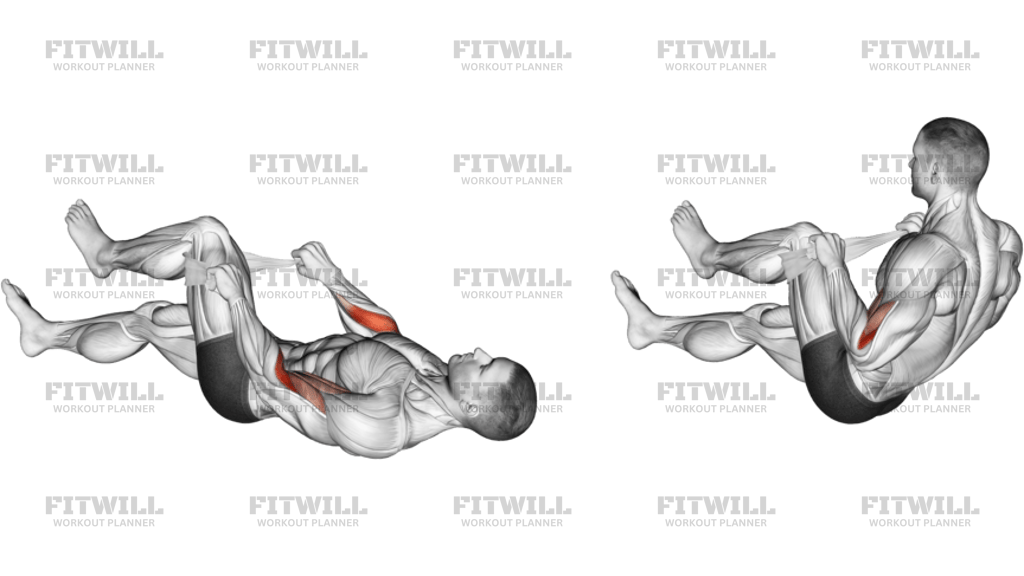
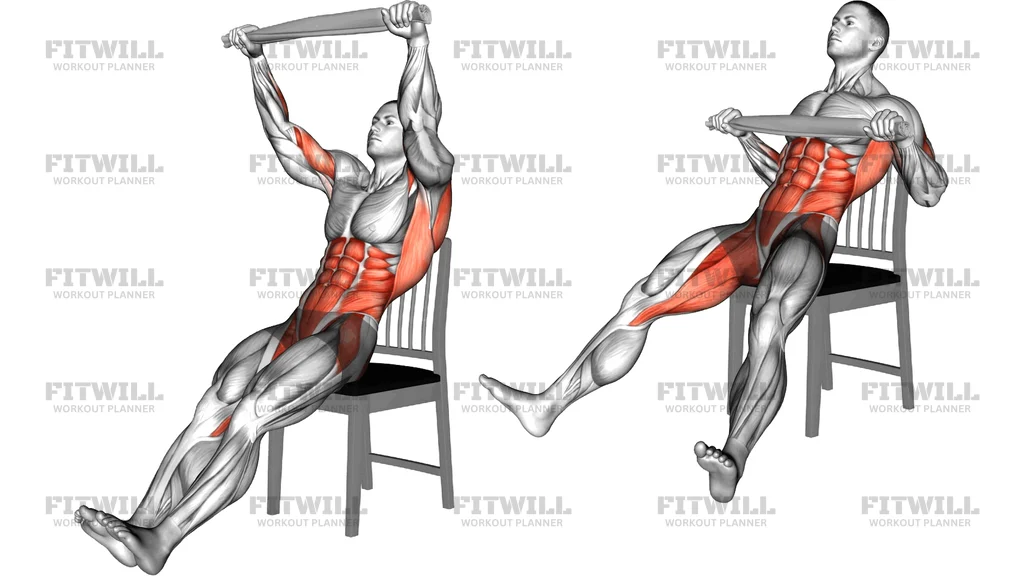
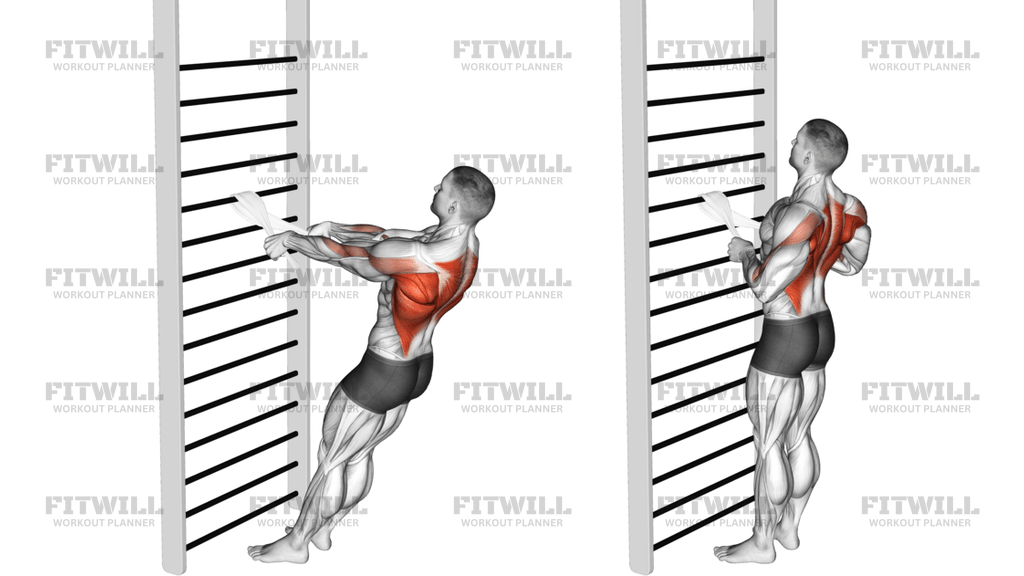
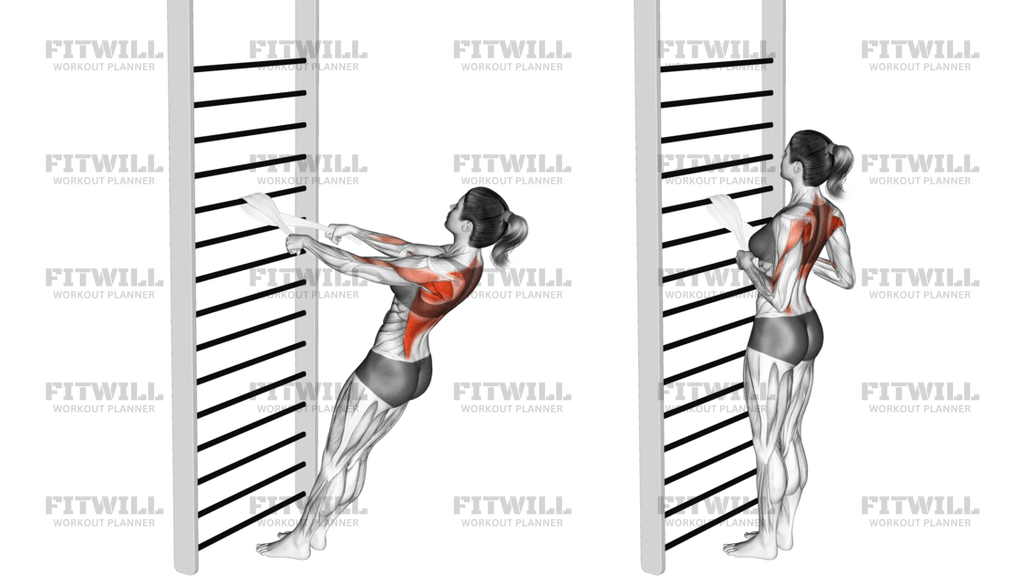
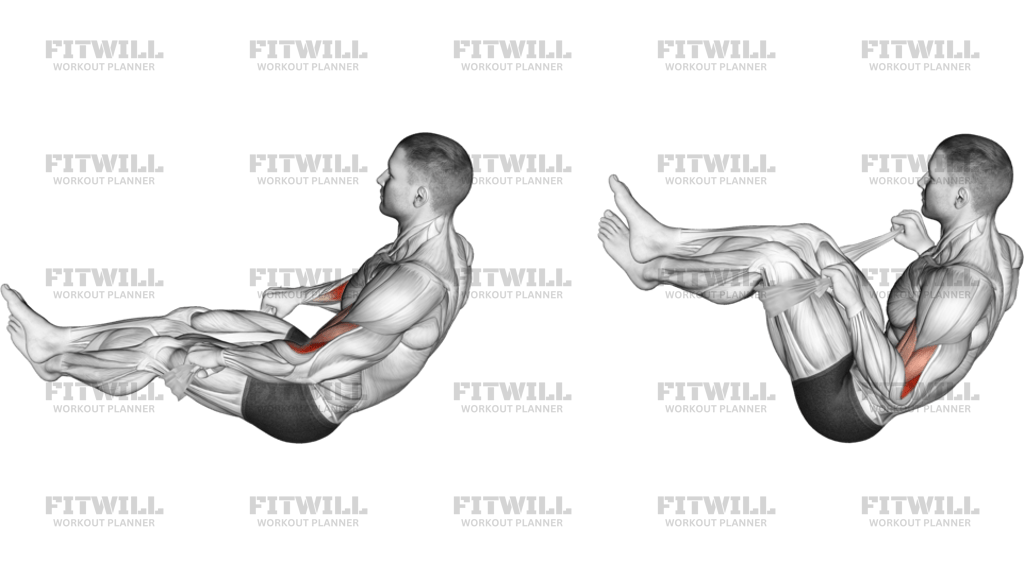
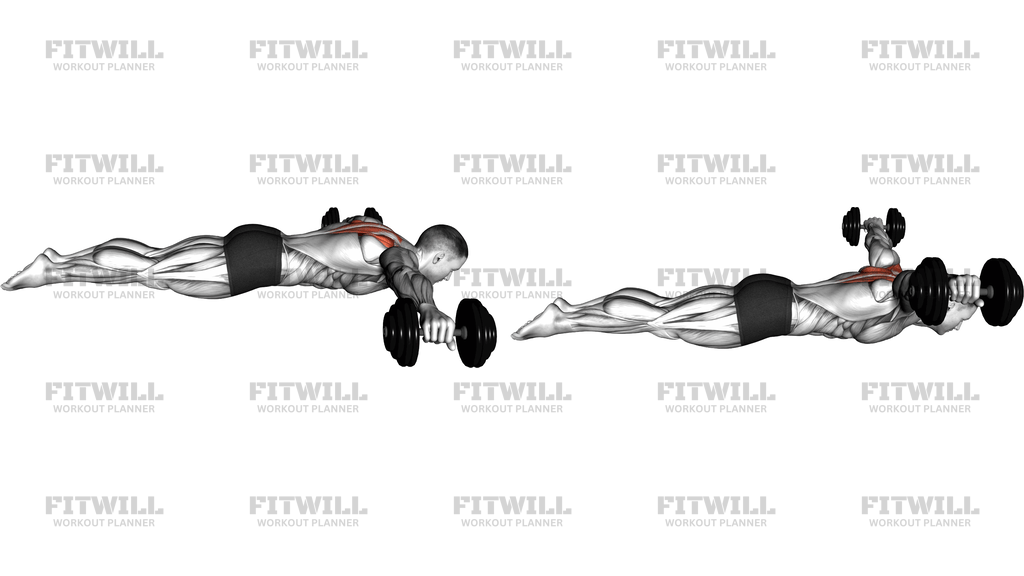
Standing Forward Slide Press With Towel
The Standing Forward Slide Press With Towel is a low-friction pressing exercise that uses a towel gliding across a smooth surface to load the chest and triceps with your own body weight. You stand upright next to a sturdy box, counter, or similar elevated surface, rest your hands flat on a towel placed on top, and slide your hands forward and away from your body while pressing down into the surface. The towel removes most of the friction, so your upper body has to control the glide rather than fight the surface.
What makes this movement interesting is the way the resistance changes as you travel. When your hands are close to your body, your triceps and front shoulders carry most of the load. As the towel slides forward and your torso leans toward the surface, the demand shifts into the pectorals, which work hard to press down and control your body weight against the sliding motion. The highlighted musculature in the reference position reflects exactly this: the chest and triceps do the bulk of the work, with the serratus anterior and stabilizers around the shoulder keeping your hands planted and your torso steady.
This exercise suits people who train at home or in minimal setups, since a towel and any smooth, stable surface around waist height are all you need. It is also a smart option for lifters with cranky elbows or shoulders, because the angle is gentle, there is no external load, and the pressing arc keeps the arms in a comfortable, extended position rather than bending deeply under weight. Anyone rehabbing pressing capacity or looking for a burnout finisher after heavier pressing work will find it useful as well.
Setup matters more than it looks. The surface should be smooth enough for the towel to slide but solid enough that it will not tip when you lean into it. Stand close enough that your arms extend naturally without shrugging, and keep the towel flat under your palms throughout. If the towel bunches, twists, or slides off line, the path becomes uneven and your shoulders end up absorbing stress they should not have to manage.
To execute well, press your palms firmly down and slightly inward as you slide your hands forward, letting your shoulders travel ahead of your hips so your body weight loads the chest. The end position should feel like a strong pec squeeze with your arms extended, not a passive reach. Pause briefly, then drag or press the towel back toward your body under control rather than letting the return happen on its own. Move smoothly and stay tall through the spine the whole time.
Two practical safety points are worth keeping in mind. First, keep the towel under control at all times; a sudden slip forward can throw your weight into the surface awkwardly. Second, stop short of any position where your shoulder feels pinched or your lower back starts to arch to compensate. The movement should feel like a press and a squeeze, never a strain.
[ Workout Log & Planner ]
Put your next workout in Fitwill
Keep your plan and training log ready when you are.


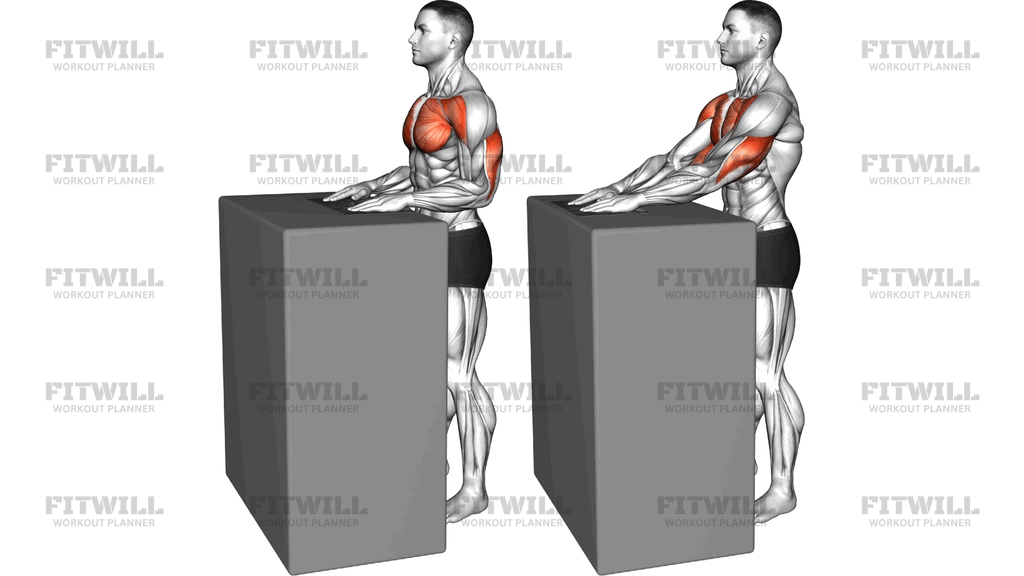
Instructions
- Place a towel flat on the smooth top of a sturdy box, bench, or counter that sits around waist to lower-chest height and will not tip or slide.
- Stand facing the long side of the surface with your feet roughly hip-width apart, about one step back from the edge so your arms can extend without your hips jammed against it.
- Lay both palms flat on the towel, shoulder-width apart, fingers pointing forward, with your arms nearly straight and elbows soft.
- Stand tall, brace your core lightly, and press your palms firmly down and slightly inward into the towel so your shoulders are already engaged before you move.
- Slide the towel forward along the surface in a smooth arc, letting your shoulders travel ahead of your hips as your torso leans toward the surface.
- Continue until your arms are fully extended in front of you and you feel a firm contraction across your chest, as if pressing the surface away and squeezing your palms toward each other.
- Pause for a beat in the extended position while keeping downward pressure through your hands and the towel flat against the surface.
- Press down and pull or slide the towel back toward your body under control, returning your torso upright to the starting position.
- Exhale as you slide forward and press, inhale as you return.
- Complete your repetitions, then lift your hands off the towel and step away to reset before the next set.
Tips & Tricks
- If the towel shoots forward too fast, you are not pressing down hard enough; increase palm pressure so your arms and chest steer the slide instead of gravity.
- A common mistake is letting the hips drift forward and the lower back arch at the end of the slide; keep your glutes engaged and move from the shoulders instead.
- Watch that the towel stays flat and untwisted; a bunched towel creates a dead spot in the resistance and pulls your hands off their parallel path.
- Do not lock your elbows hard or shrug toward your ears; keep the elbows soft and the shoulder blades drawn slightly down so the chest, not the traps, does the pressing.
- The pressure down-and-inward with your palms is what turns this into a chest exercise; if you only slide your hands forward with light contact, you are just moving your arms.
- If your shoulders feel pinched at full extension, stand slightly closer so your hands do not travel as far, or reduce how far forward you slide before returning.
- Slowing the return is where a lot of the triceps work happens; resist the urge to snap back quickly between reps.
- On slippery floors, brace one foot slightly back so your body has a stable base as your weight shifts toward the surface on each rep.
- Use a cotton towel on a laminate, polished wood, or smooth metal surface; on rubber or textured tops the friction defeats the point of the towel.
Frequently Asked Questions
Which muscles does the Standing Forward Slide Press With Towel work?
The chest is the primary mover, especially in the extended position where your body weight presses through the pectorals. The triceps and front shoulders assist throughout, and the serratus anterior helps stabilize the shoulder blades as your hands travel forward.
How high should the surface be for the Standing Forward Slide Press With Towel?
A sturdy box, bench, or counter around waist to lower-chest height works best. Too high and your shoulders shrug; too low and you end up folding at the hips instead of pressing forward.
Is this exercise good for beginners?
Yes. The towel provides almost no external load, the path is guided by the surface, and you can limit how far you slide to match your comfort. It is one of the gentler ways to learn pressing mechanics.
Why use a towel instead of just sliding my hands on the surface?
Bare skin or clothing drags on most surfaces, which makes the movement jerky and shifts work into the joints. The towel creates a smooth, consistent glide so the chest and triceps control the motion instead of friction.
What is the most common mistake in the Standing Forward Slide Press With Towel?
Sliding forward without pressing down. Without firm palm pressure, the arms just reach out and the chest gets almost no stimulus, and the towel may slip out from under your hands.
Can I substitute this exercise if I have no towel?
Sliding discs, paper plates on a smooth floor-height surface, or a folded plastic bag can work in the same way. Anything that glides while letting you press down into the surface will replicate the movement.
How far forward should I slide my hands?
Slide until your arms are nearly fully extended and you feel a clear contraction across your chest, with your shoulders a little ahead of your hips. Stop short if your shoulder feels pinched or your back starts to arch.
Is the Standing Forward Slide Press With Towel safe for sore elbows?
Often, yes, because the arms stay extended rather than bending deeply under load like in a push-up or bench press. Keep the elbows soft rather than locked, and reduce the range if anything feels sharp or uncomfortable.
How many repetitions should I do?
Because the resistance comes only from your body position and pressing pressure, higher-rep sets of 10 to 20 with a slow, deliberate return tend to work best. Focus on constant downward pressure rather than speed.