Bodyweight Standing Row With Towel
Bodyweight Standing Row With Towel is a horizontal pulling exercise that uses a fixed towel anchor and your own body angle to challenge the upper back, traps, lats, and biceps. The standing setup makes it easy to adjust difficulty by stepping your feet closer or farther from the anchor, so the same movement can work as an activation drill, a moderate strength accessory, or a higher-rep back builder.
Because your hands are connected to a towel instead of a rigid handle, the exercise rewards a strong grip and a stable torso. The pull should feel like you are drawing your chest toward the anchor while the shoulder blades travel back and slightly down, not like you are yanking with your arms alone. That combination is what makes the row useful for posture, scapular control, and back-focused training.
The starting position matters a lot. The towel should be wrapped securely around a fixed support at about chest height, and your body should lean back with straight arms, planted feet, and a firm line from heels to head. If your stance is too narrow or your lean is too aggressive, the row turns into a fight for balance instead of a clean pull. A solid setup lets the elbows track back smoothly and keeps the ribcage from flaring forward.
On each rep, pull your elbows back until the towel reaches the sides of your chest or upper ribs, then lower yourself under control until the arms are long again. Keep the neck relaxed, keep the chest open without over-arching the low back, and breathe out as you row. The best reps look smooth and repeatable, with the body staying rigid while the upper back does the work.
This movement is especially useful when you want back volume without weights, when equipment is limited, or when you need a row variation that trains body tension and grip together. It also works well in warmups and shoulder-friendly pulling sessions because the load is easy to scale and the motion is simple to control. If the towel slips, the anchor feels unstable, or the shoulders creep toward the ears, stop and reset before continuing.
Fitwill
Log Workouts, Track Progress & Build Strength.
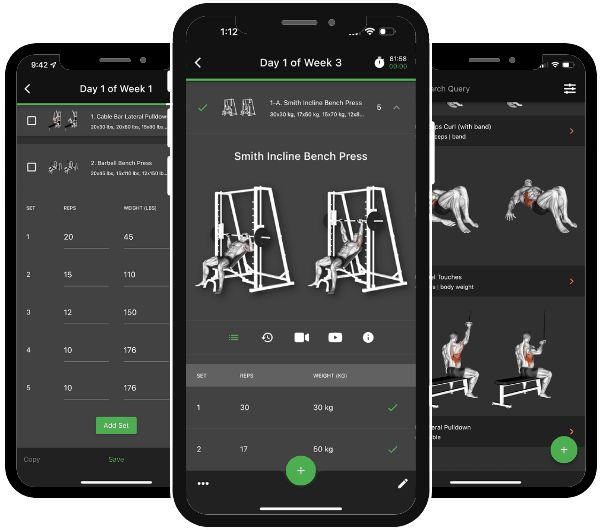
Achieve more with Fitwill: explore over 5000 exercises with images and videos, access built-in and custom workouts, perfect for both gym and home sessions, and see real results.
Start your journey. Download today!


Instructions
- Loop a towel securely around a fixed anchor at about chest height, then stand facing it with both hands holding the ends and your feet planted hip-width apart.
- Walk your feet forward and lean back until your arms are straight, your body is one long line, and the towel is taut without stretching your shoulders forward.
- Set your shoulders down away from your ears, brace your midsection, and keep your heels rooted so your body stays rigid before the first pull.
- Pull your elbows back along the sides of your torso and draw your chest toward the towel until the handles reach your lower chest or upper ribs.
- Squeeze your shoulder blades together at the top without shrugging or letting your lower back arch hard.
- Lower yourself slowly until your arms are fully extended again and the towel stays under control.
- Keep breathing with a strong exhale as you row and a controlled inhale as you return.
- Reset your stance if the towel loosens, your feet slide, or your body starts twisting, then continue for the planned reps.
Tips & Tricks
- A higher anchor makes the pull more row-like, while a lower anchor usually makes you work harder to keep the towel path level.
- If your shoulders shrug toward your ears, think about sliding them into your back pockets before each pull.
- Keep your body in one plank-like line; bending at the hips turns this into a shaky partial curl instead of a standing row.
- Step your feet farther from the anchor only if you can still finish each rep without losing the lean or cracking at the low back.
- Pull until the elbows pass your torso, not just until your hands move a few inches, so the upper back gets the full contraction.
- Use a deliberate lowering phase because the towel row gets much less useful when you drop back to the start.
- If your grip gives out before your back does, shorten the set or use a thicker towel only if the anchor stays secure.
- Stop the set when the towel starts slipping or the anchor shifts; this exercise depends on a stable setup.
Frequently Asked Questions
What muscles does Bodyweight Standing Row With Towel work most?
It emphasizes the traps and upper back, with the lats and biceps assisting during the pull.
Is Bodyweight Standing Row With Towel beginner-friendly?
Yes, as long as the towel is anchored securely and you keep enough distance to control the lean without losing balance.
How do I make Bodyweight Standing Row With Towel harder or easier?
Step your feet closer to the anchor to make it easier, or farther away to increase the body angle and make the row more demanding.
Where should the towel hit at the top of the rep?
Aim to bring the towel toward your lower chest or upper ribs while keeping your elbows close to your sides.
Should my shoulders move during the row?
They should travel back and slightly down as you pull, but they should not shrug up toward your ears.
Why does my lower back feel like it is doing most of the work?
You are likely leaning back too far or arching to finish the rep; shorten the angle and keep your ribs stacked over your pelvis.
Can I use this instead of a cable row?
Yes, it is a good bodyweight row variation when you want a horizontal pull without a machine, though the load curve is different.
What should I do if the towel slips in my hands?
Stop the set and reset the anchor before continuing; this exercise only works well when the towel stays fixed and the grip is secure.