Lyine Prone T Raise
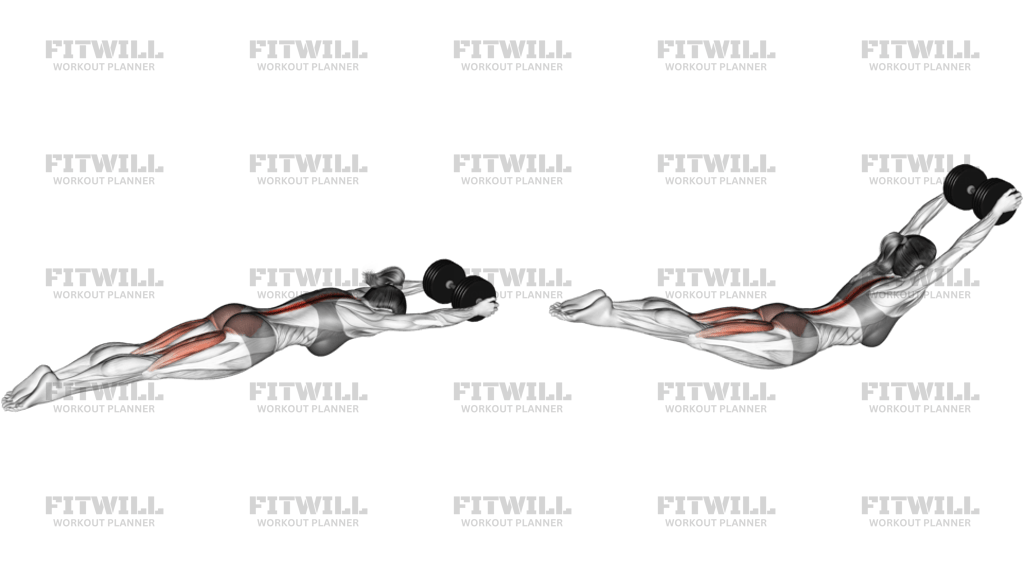
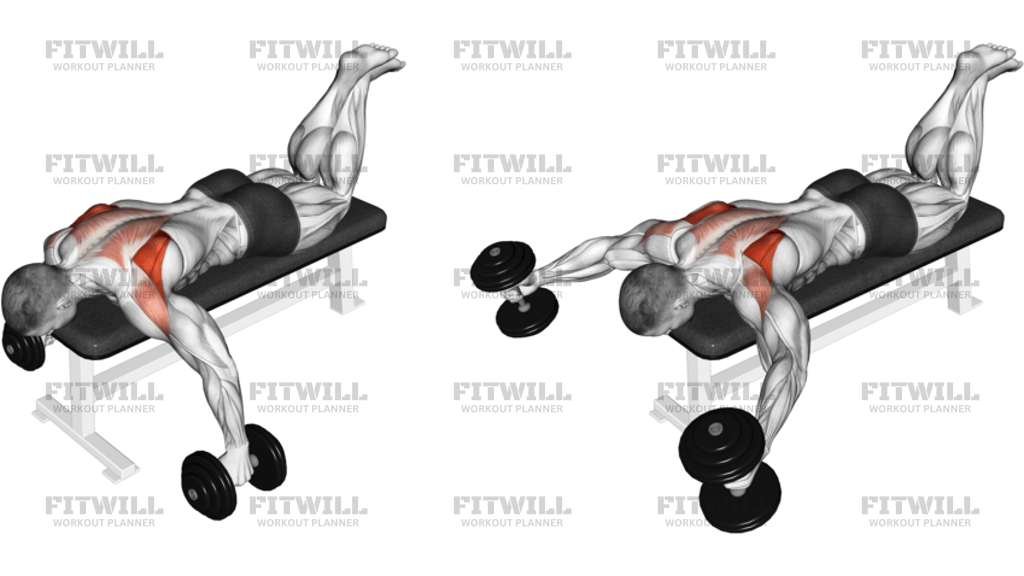
The Lying Prone T Raise is a dumbbell movement performed face down on the floor with the arms extended straight out to the sides, forming a T shape with the torso. From that position you lift both dumbbells up toward the ceiling by squeezing the shoulder blades together, then lower them back down under control. Because the arms stay locked at roughly ninety degrees to the torso throughout, the work concentrates almost entirely on the rear shoulders and the muscles that pull the shoulder blades back — an area most lifters chronically undertrain.
This movement is especially useful for people who spend long hours at a desk or who do a lot of pressing work. Slouched shoulders and a forward head posture usually come with weak mid-back musculature, and the prone T Raise directly trains the rhomboids and middle and lower traps responsible for drawing the shoulder blades together. Powerlifters and bench-focused lifters also use it as a balancing movement, since strong rear delts help stabilize the shoulder girdle under a bar.
The prone position is what makes this exercise distinctive. Lying face down removes all momentum and any chance of leaning back or cheating with the legs, so the upper back has to do the work on its own. It also puts the arms at an angle that matches the line of pull of the rear delts and mid-back better than many standing or seated variations, which is why the raise feels harder than the relatively light dumbbells suggest.
Setup matters more than weight here. Because the arms travel straight out to the sides, even a small range of motion in the wrong direction shifts tension away from the target muscles. Keep the forehead lightly supported or hovering off the floor, the neck long, and the chest barely lifted so the shoulders — not the lower back — drive the arms up.
A typical set runs eight to fifteen reps with light dumbbells, held briefly at the top of each rep. Expect the burn to sit between the shoulder blades and across the back of the shoulders rather than in the arms. If you feel it mainly in the neck or lower back, the weight is too heavy or the chest is lifting too high.
Like most prone raises, this one rewards patience. It is not a heavy lift, and treating it as one usually costs you the very muscle engagement that makes it worthwhile. Used two or three times a week at the end of an upper-body session, it is one of the simplest ways to build the rear shoulder and upper back detail that pressing alone never provides.
[ Workout Log & Planner ]
Put your next workout in Fitwill
Keep your plan and training log ready when you are.


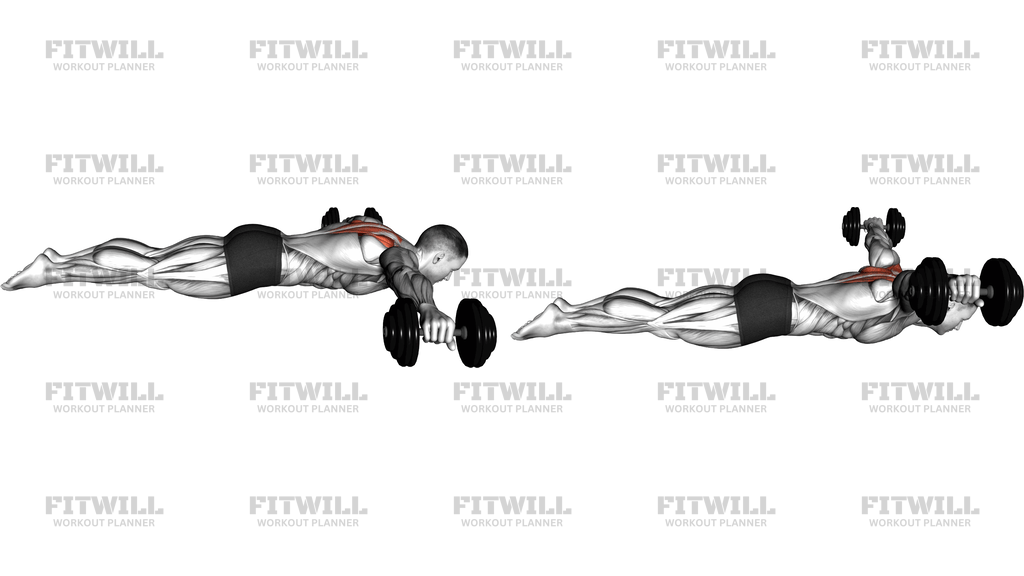
Instructions
- Place two light dumbbells on the floor within easy reach, then lie face down with your legs straight behind you and your toes turned slightly out.
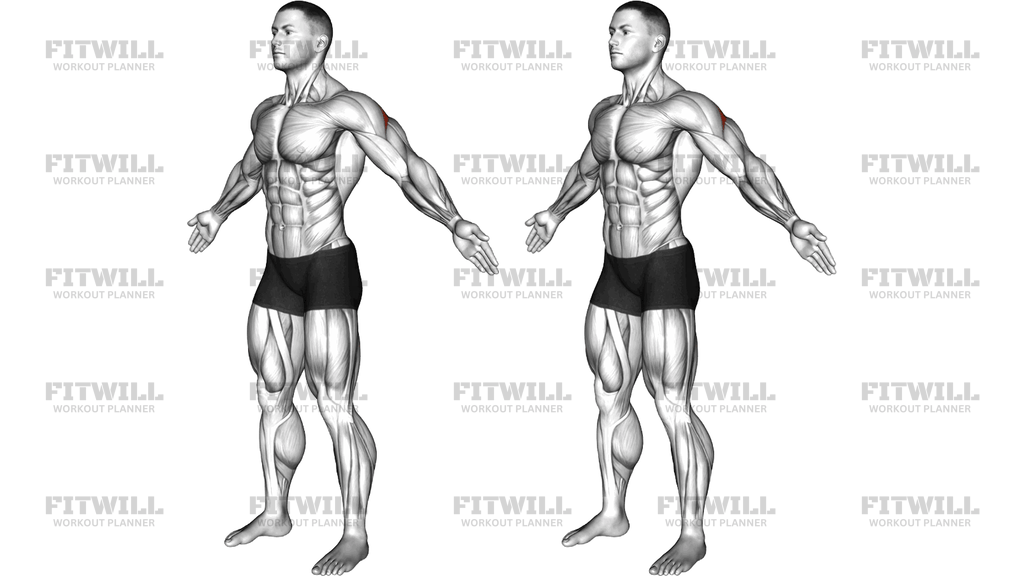
- Pick up a dumbbell in each hand and extend both arms straight out to the sides so your body forms a T shape, palms facing the floor and thumbs pointing up.
- Rest your forehead lightly on the floor or hover it just above it, and keep your neck in line with your spine rather than craning it upward.
- Brace your core gently and let your chest stay close to the floor — only a small lift, not an exaggerated arch.
- Exhale and raise both arms straight up toward the ceiling, leading with the thumbs and squeezing your shoulder blades down and together at the top.
- Hold the top position for a one- or two-second count while keeping the elbows straight and the shoulders relaxed away from your ears.
- Inhale and lower the dumbbells back toward the floor in a slow, controlled path along the same line, stopping just before your hands touch down.
- Complete your reps with the arms staying in the T position the entire time, then set the dumbbells down carefully before rolling over to stand up.
Tips & Tricks
- Use far lighter dumbbells than you think you need — five to ten pounds per hand is realistic for most people, and anything heavier usually turns the rep into a shrug.
- The most common mistake is bending the elbows and turning the T into a rear-delt row, which shifts work away from the mid-back; check that your arms stay straight at the top.
- If your shoulder blades ride up toward your ears, drop the weight slightly and think about pulling them down toward your hips before each lift.
- Lifting the chest too high off the floor turns this into a lower-back extension — keep only a slight lift and let the arms do the moving.
- Lead with the thumbs pointing upward rather than letting the palms rotate down; this keeps the rear shoulders in their strongest line of pull.
- Do not let the dumbbells drift forward past shoulder level — arms in line with the shoulders keeps the rhomboids and middle traps working instead of the lats.
- Pause for a beat at the top of every rep; the hold is where most of the mid-back recruitment happens on this exercise.
- If lying flat on the floor bothers your shoulders or ribs, slide a folded towel under your chest instead of shortening the arm path.
- Breathe out on the lift and in on the way down — holding your breath tends to make the neck tense on this movement.
Frequently Asked Questions
Which muscles does the Lying Prone T Raise work?
The primary movers are the rear shoulders and the rhomboids, with strong support from the middle and lower trapezius in the upper back. The lower back works lightly to hold your chest position against gravity.
How is the Lying Prone T Raise different from a lateral raise?
A lateral raise is done standing with the arms lifting out to the side against gravity, mainly training the side shoulders. The prone T Raise is performed face down with the arms already out to the sides, so the lift happens behind you and targets the rear shoulders and mid-back instead.
Is the Lying Prone T Raise good for beginners?
Yes — the floor removes momentum and makes the movement easy to control, so beginners can learn to feel their shoulder blades working. Start with very light dumbbells or even no weight to learn the path first.
Why do my arms not lift very high in the prone T position?
That is normal. Because the arms move perpendicular to your torso against gravity, the range is naturally short, and stopping a few inches off the floor is a complete rep. Height matters less than squeezing the shoulder blades together at the top.
How heavy should the dumbbells be for the Lying Prone T Raise?
Far lighter than for rows or presses — most people do well with three to ten pounds per hand. If you cannot pause at the top without shrugging or bending the elbows, the weight is too heavy.
I feel this in my lower back instead of my upper back — what should I change?
You are probably lifting your chest too high. Keep only a small lift off the floor and focus the effort on moving the arms, not raising the torso. A thin towel under the chest can also reduce the demand on the lower back.
Can I do the Lying Prone T Raise on a bench instead of the floor?
You can, lying chest-down on a flat bench with the arms hanging out to the sides, though the arms can travel a little lower before the rep starts. The floor version is simpler and just as effective for most people.
What can I substitute if I do not have dumbbells?
You can perform the same T-position lift with no weight or with light resistance bands held in each hand. Body weight alone still trains the scapular muscles when the arms are raised deliberately and held at the top.
How many sets and reps should I do?
Two to four sets of eight to fifteen reps, placed near the end of an upper-body or shoulder session, works well for most lifters. Keep rest short, around forty-five to sixty seconds, since the load is light.
Is the Lying Prone T Raise safe for the shoulders?
For healthy shoulders it is a low-risk movement because the load is light and the arms stay in a controlled path. If a shoulder injury or pain is present, reduce the range, work without weight, and check with a qualified professional before continuing.