Standing Arms Swing
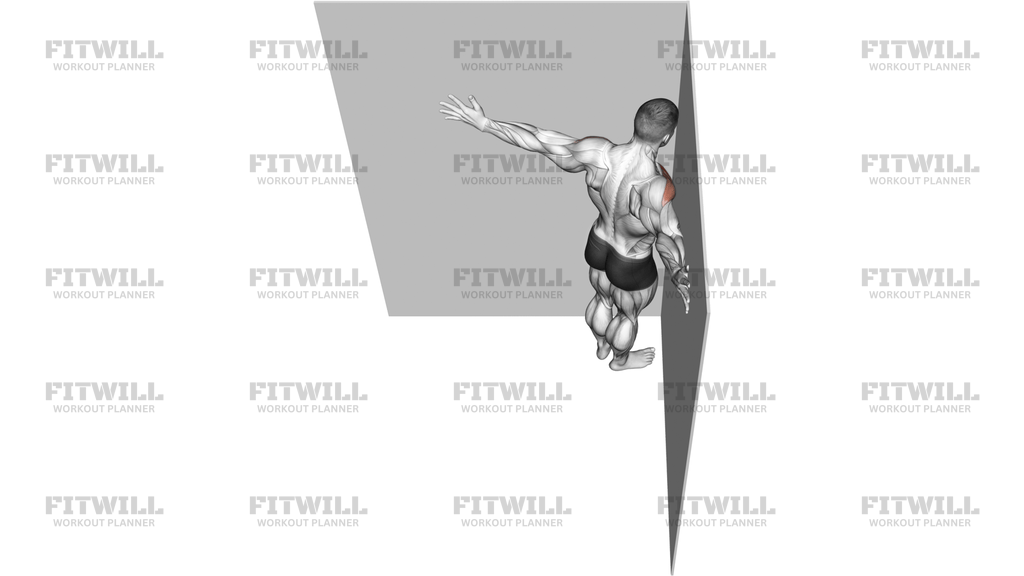
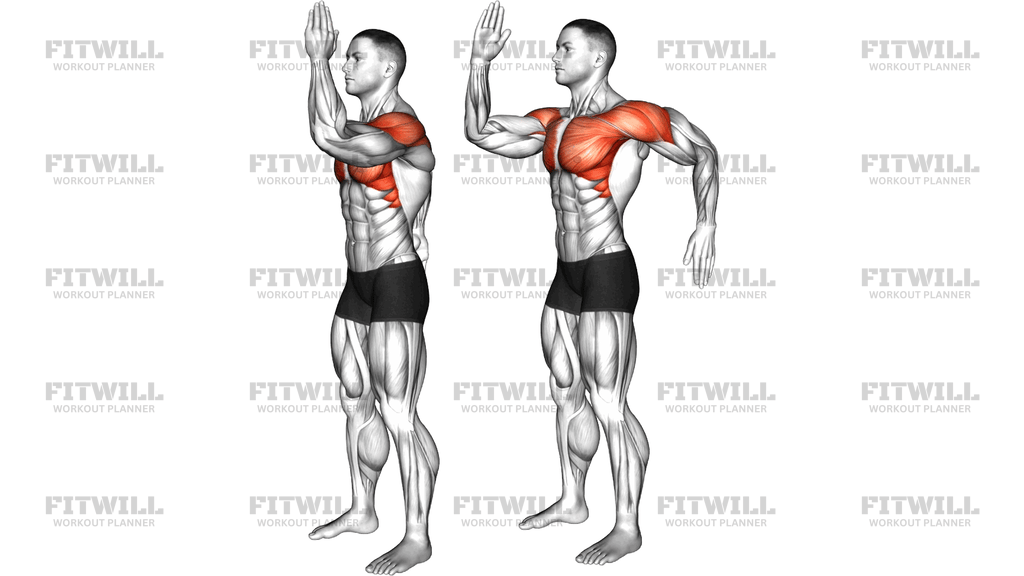
The Standing Arms Swing is a simple dynamic movement where you stand tall and swing both arms forward and backward through a comfortable arc, alternating directions so one arm travels forward while the other travels back. It requires no equipment and very little space, which makes it one of the easiest ways to wake up the shoulder joints and loosen the chest and upper back before training or after long periods of sitting.
This movement is especially useful as part of a warm-up before upper-body workouts, pushing or pulling sessions, throwing sports, racquet sports, and swimming. It also works well as a mid-day reset for anyone whose shoulders have crept forward at a desk. Because the arms swing rhythmically, blood flow increases through the shoulders, and the pectoral muscles and the muscles between the shoulder blades get alternately lengthened and shortened in a gentle, controlled way.
Setup matters more than it might seem. Your feet should be about hip-width apart with your weight balanced over the whole foot, knees soft rather than locked, and your torso upright. If your torso leans or twists as you swing, you lose the clean shoulder arc and start substituting lower-back rotation for arm movement, which defeats the purpose and can leave your spine doing work your shoulders should be handling.
To execute it well, keep the motion driven from the shoulders rather than the hands. Let the arms rise to roughly chest or shoulder height in front, then swing back behind you as far as feels comfortable without forcing the range. The rhythm should feel smooth and continuous, closer to a brisk walk with exaggerated arm action than a ballistic throw. Breathing stays relaxed and steady the whole time.
A common use case is performing 20 to 40 seconds of continuous swinging, or roughly 15 to 30 swings per side, at the start of a warm-up. You can scale the range gradually, starting with smaller arcs and letting them grow as the shoulders loosen. Because the movement is low-load and self-paced, it suits beginners, older adults, and experienced lifters equally well.
The main safety points are to stay tall, keep the swing within a pain-free range, and avoid snapping the arms forcefully at the top of the arc. The goal is controlled momentum, not whipping the joints to their end range. If you feel pinching at the front of the shoulder, reduce the height of the forward swing rather than pushing through discomfort.
[ Workout Log & Planner ]
Put your next workout in Fitwill
Keep your plan and training log ready when you are.


Instructions
- Stand with your feet hip-width apart, weight spread evenly across both feet, and your arms hanging relaxed at your sides.
- Soften your knees slightly, brace your core lightly, and lift your chest so your torso is upright without arching your lower back.
- Swing your right arm forward and up to about chest or shoulder height while your left arm swings backward behind you at the same time.
- Reverse the direction smoothly so the arms pass one another near your hips and swap positions in a continuous, alternating rhythm.
- Let the movement come from the shoulder joint itself, keeping the arms relatively relaxed rather than rigid.
- Keep your torso facing forward and minimize twisting through the spine as the arms swing.
- Breathe naturally and steadily throughout, avoiding breath-holding as the pace increases.
- Continue for 20 to 40 seconds or a set number of swings, gradually increasing the arc as the shoulders warm up.
- To finish, slow the swing progressively over a few repetitions, let the arms settle back to your sides, and stand still for a moment before your next exercise.
Tips & Tricks
- If your shoulders creep up toward your ears during the swing, consciously relax them down; the swing should come from the shoulder joint, not a shrugged posture.
- A frequent mistake is whipping the arms to full height right away. Start with a small arc and let the range grow naturally over the first several reps.
- Watch for trunk rotation. If your chest or hips turn with each swing, slow the tempo down and picture your torso as a fixed post the arms swing around.
- Keep the arms slightly bent but not locked; fully straight, tense arms make the swing feel jerky and stress the elbow joints.
- If you feel a pinch at the front of the shoulder on the forward swing, lower the end height to chest level rather than forcing the arm higher.
- Stand in front of a mirror occasionally to confirm your shoulders stay level; one side often swings bigger than the other without you noticing.
- Use this swing before pressing or pulling exercises to raise shoulder temperature, but keep it brisk and dynamic rather than slow and held, which changes its effect.
- If balance is an issue, stand near a wall or sturdy support at first, since the arm momentum can gently pull you off center.
- Match the arm swing to a natural rhythm, similar to an exaggerated walking gait, instead of counting rapid reps.
Frequently Asked Questions
What muscles does the Standing Arms Swing work?
It primarily moves and warms up the deltoids around the shoulders, while the chest muscles lengthen on the backswing and the upper back muscles assist as the arms travel behind the body. It is a mobility and warm-up movement rather than a strength builder.
Is the Standing Arms Swing good for beginners?
Yes. It requires no equipment, loads the joints minimally, and the range is entirely self-determined, so almost anyone can start with a small, comfortable arc and progress from there.
How high should my arms swing during the Standing Arms Swing?
Aim for roughly chest to shoulder height in front and as far back behind you as feels comfortable without forcing it. Let the range increase gradually as your shoulders loosen, and stop short of any pinching sensation.
Should my arms be straight or bent during the Standing Arms Swing?
Keep a soft, slight bend in the elbows. Completely rigid, straight arms make the swing feel choppy, while overly bent arms shorten the arc and reduce the mobility benefit at the shoulder.
Why does my lower back twist when I do the Standing Arms Swing?
That usually means the arms are moving faster or wider than your shoulder mobility allows, so your spine is compensating. Slow the tempo, reduce the arc, and keep your chest facing forward throughout the swing.
How long should I perform the Standing Arms Swing in a warm-up?
Around 20 to 40 seconds of continuous swinging, or roughly 15 to 30 alternating swings, is enough to raise shoulder temperature and loosen the chest and upper back before upper-body training.
Can I use the Standing Arms Swing as a cooldown or stretch?
Yes, at a slower tempo with a smaller arc it works as a gentle way to keep the shoulders moving after training. For a true static chest stretch, however, a doorway stretch holds the tissues longer.
What can I substitute for the Standing Arms Swing?
Arm circles, torso rotations with relaxed arms, or a controlled pendulum arm swing all target similar shoulder mobility. The Standing Arms Swing is unique in combining forward and backward arm travel with a standing, upright torso.
Is it safe to do the Standing Arms Swing every day?
For most people, yes. It is a low-load, self-paced movement, so daily use as a morning mobility routine or desk break is generally fine as long as you stay within a pain-free range.