Chest Dip
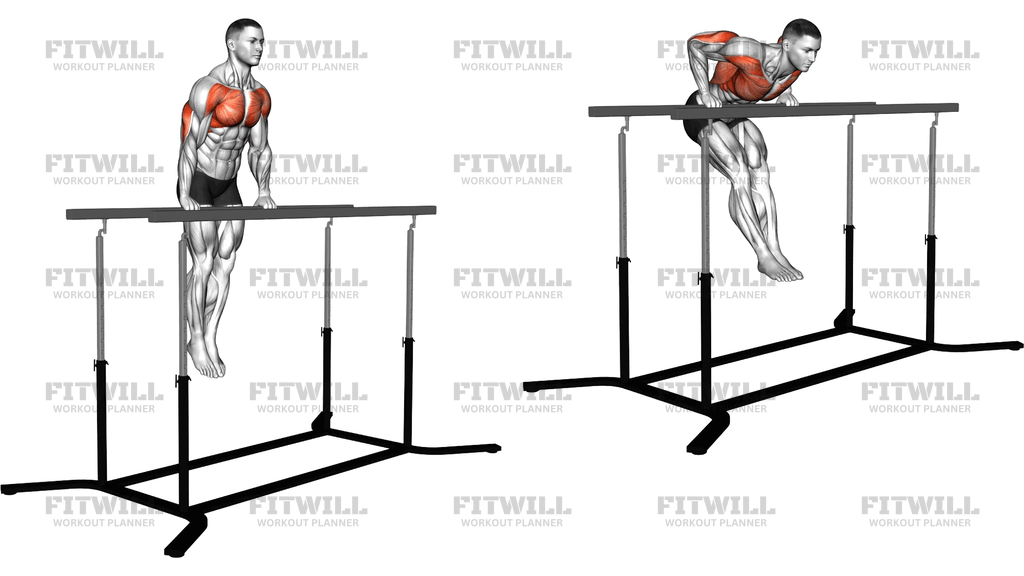
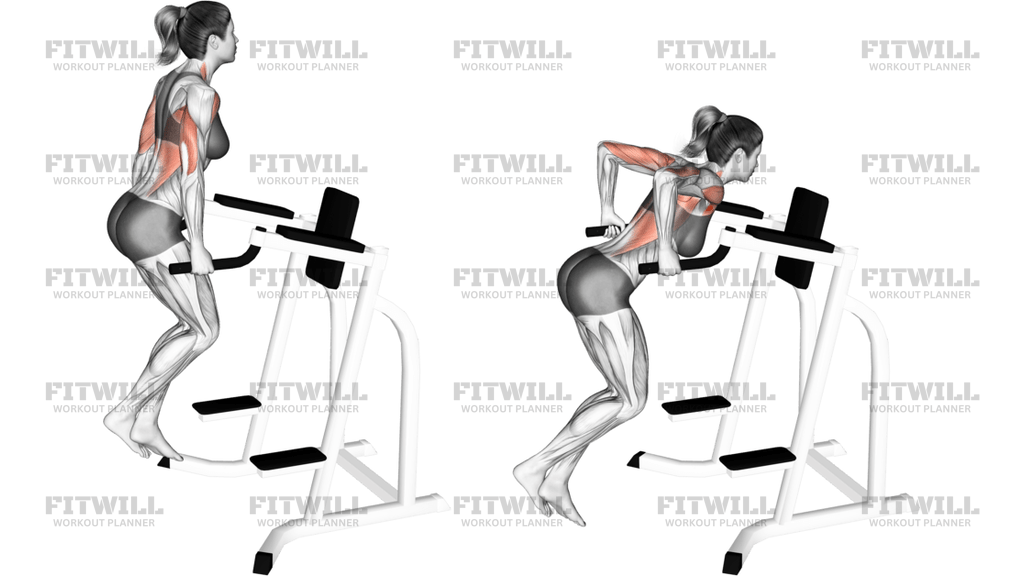
Chest Dip is a bodyweight pressing exercise performed on parallel bars or a dip station, with the torso leaning slightly forward to bias the chest. It asks you to support your full body weight through the shoulders and arms while keeping the trunk organized, which makes setup and control more important than speed. When it is done well, the movement gives the chest a deep stretch at the bottom and a strong contraction as you press back to the top.
The main training effect comes from the pectorals, with the triceps and front delts helping to finish each rep and stabilize the shoulder joint. In anatomy terms, the exercise centers on the Pectoralis major and also recruits the Anterior deltoid, Triceps brachii, and Rectus abdominis. That makes Chest Dip useful when you want a challenging compound press that builds both upper-body strength and controlled pressing mechanics.
The setup determines how the exercise feels. Grip the bars firmly, support yourself on straight arms, and let the shoulders stay down instead of shrugging toward the ears. A slight forward lean and bent knees or crossed ankles help keep the body quiet, while a taller torso shifts more work toward the triceps. The goal is to find a stable position before the first descent so the repetition starts under control rather than with a swing.
On each rep, lower by bending the elbows and allowing the chest to travel slightly forward between the handles. Keep the forearms close to vertical and the elbows tracking back rather than flaring hard to the sides. Descend only as far as your shoulders can stay comfortable and packed, then drive the handles down to press yourself back up with a smooth path and no bounce at the bottom.
Chest Dip works well as a primary accessory press, a strength movement, or a bodyweight option when you want to train the chest without a bench. It can be progressed by adding load with a belt or vest, or regressed with assistance and a shorter range of motion. Because the shoulders are loaded in a deep pressing position, clean depth and smooth scapular control matter more than chasing an extra rep that turns into a shoulder shrug or a swing.
[ Workout Log & Planner ]
Put your next workout in Fitwill
Keep your plan and training log ready when you are.


Instructions
- Grip the parallel bars and step up so your arms are straight, your shoulders are pressed down, and your body is fully supported.
- Lean your torso slightly forward, bend your knees or cross your ankles behind you, and keep your ribcage stacked over your pelvis.
- Set your chest high and your neck long before you start the first descent.
- Lower yourself by bending the elbows and letting the chest travel forward between the bars.
- Keep the elbows angled back and the forearms close to vertical as you descend.
- Stop the bottom position when your shoulders still feel stable and you have a deep chest stretch without pinching.
- Drive the handles down and back to press yourself up until the elbows are straight again.
- Exhale on the way up, inhale as you lower, and keep the movement smooth instead of bouncing.
- Repeat for the planned reps, then step down carefully and reset before another set.
Tips & Tricks
- A slight forward lean shifts more stress onto the chest; a more upright torso makes the triceps do more of the work.
- Keep the shoulders depressed throughout the set so the movement comes from the press, not from shrugging at the top.
- If your elbows flare hard to the sides, the shoulder usually takes over and the chest loses tension.
- Do not chase depth beyond a pain-free stretch; shoulder comfort matters more than an extra few centimeters.
- Crossing the ankles or bending the knees helps stop leg swing and keeps the rep strict.
- Think about pushing the bars down and apart as you rise to keep the chest active through the whole press.
- A slower lowering phase usually makes Chest Dip feel better and exposes weak control at the bottom.
- If your wrists or forearms feel crowded, re-grip the handles so the wrist stays neutral and stacked over the bar.
- When bodyweight reps become easy, add load with a belt or vest instead of speeding up the reps.
Frequently Asked Questions
What muscle does Chest Dip target most?
The chest is the main target, especially the Pectoralis major, with the triceps and front delts helping to finish each rep.
Can beginners perform this exercise?
Yes, but many beginners need assistance or a shortened range first. If you cannot hold the top position without shrugging, use an assisted dip setup or regress the exercise until the shoulders stay stable.
How far should I lower myself on Chest Dip?
Lower until you feel a strong chest stretch and your shoulders still feel packed. If the front of the shoulder starts to pinch, stop higher and work within that pain-free range.
Should my torso stay upright or lean forward?
A slight forward lean is the chest-biased version shown here. Staying very upright shifts more of the work toward the triceps and usually reduces the chest stretch.
Why do my shoulders feel this more than my chest?
You are probably staying too upright, shrugging at the top, or dropping too deep. Set the shoulders down, lean forward a bit, and use a range you can control without pinching.
What is the best hand position on the bars?
Use a firm neutral grip with the wrists stacked over the handles. That keeps force moving straight through the arms and makes it easier to control the bottom of the rep.
How can I make Chest Dip easier?
Use an assisted dip machine, band support, or a smaller range of motion. You can also keep the torso a little more upright until your strength and shoulder control improve.
How do I progress this exercise?
Add weight with a dip belt or vest, then build reps while keeping the same depth and torso angle. Better control at the bottom is a better progression than just bouncing through more reps.