Cable Overhead Tricep Extension Sz Bar
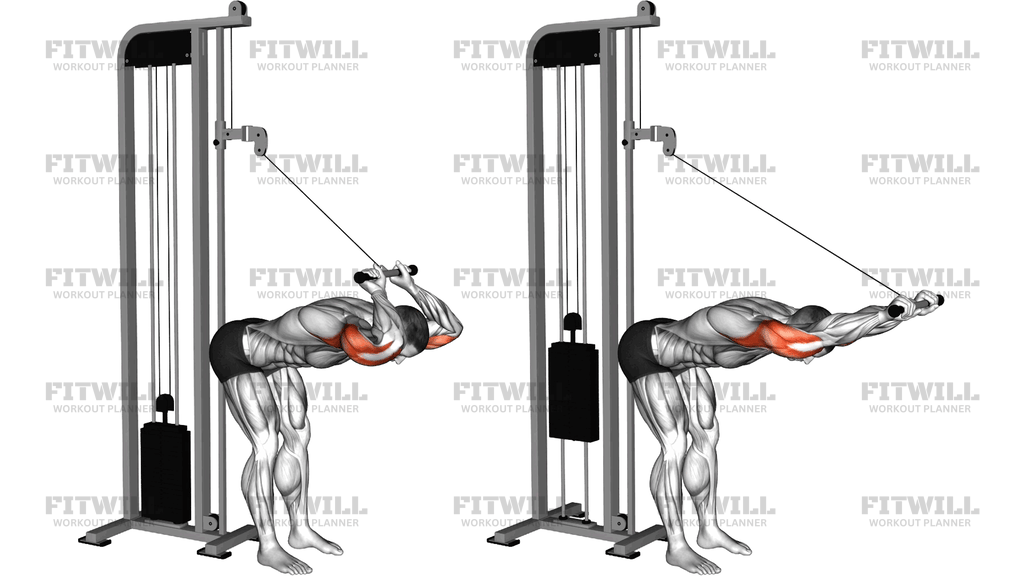
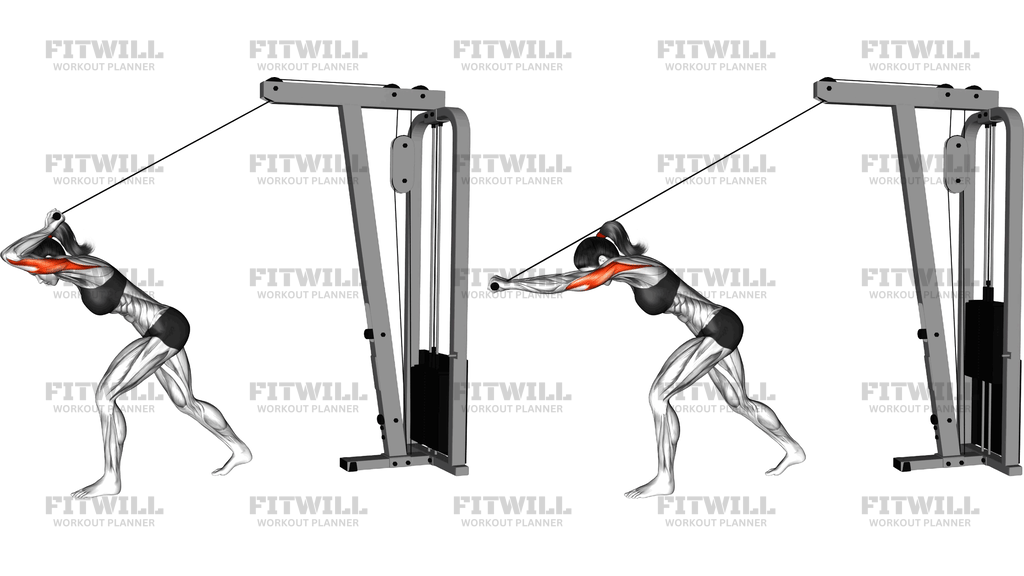
The Cable Overhead Tricep Extension Sz Bar is a standing triceps exercise performed on a low pulley cable machine. You face away from the stack, take a straight bar (SZ bar) attachment behind your head, and press it up overhead by extending your elbows. Because the cable runs from low behind you, the resistance pulls your arms back and down, which keeps constant tension on the triceps through the entire range, including the stretched position behind the head where traditional barbell extensions often go slack.
The overhead position is what sets this movement apart. With your upper arms raised beside your head, the long head of the triceps, which crosses the shoulder joint, is placed in a full stretch before you extend. That stretched lengthening under load is difficult to replicate with pushdowns, making this a strong choice for building overall triceps size, particularly the back of the upper arm. The front delts and stabilizing muscles around the shoulder and trunk also work to hold the position steady.
Setup matters a lot here. The pulley should be set low, close to the floor, and you stand far enough forward that the cable is taut before you begin, with a slight forward lean from the hips and one foot staggered to brace against the pull. A loose cable or an upright torso changes the angle of resistance and can let the weight rest rather than load the triceps.
To execute well, keep your upper arms close to your head and let them stay fixed while only the elbows hinge. Bend at the elbows to lower the bar behind your head until you feel a deep but comfortable stretch, then drive the bar up overhead without flaring your elbows out or leaning back to cheat. The torso lean visible in the standard form is intentional: it keeps your center of gravity over the cable line so you are not fighting the weight with your lower back.
This exercise fits well as a second or third triceps movement on an arm or push day, after heavy close-grip pressing or pushdowns. It is also useful for anyone whose elbows feel irritated by straight-bar pushdowns, since the overhead angle often feels smoother. Because you are standing and bracing, expect your core and legs to contribute more than they would in a seated dumbbell overhead extension.
Keep loads moderate. The overhead position combined with a cable pulling you backward puts your shoulders and lumbar spine in a demanding position, so a weight you can lower under control for the full stretch beats a heavy bar moved with half the range.
[ Workout Log & Planner ]
Put your next workout in Fitwill
Keep your plan and training log ready when you are.


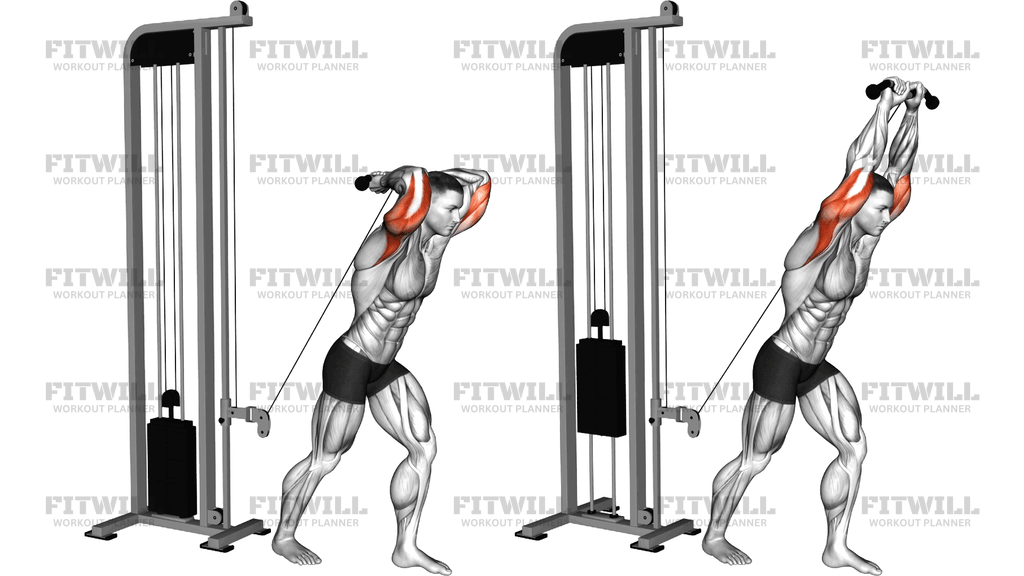
Instructions
- Attach a straight bar (SZ bar) to the low pulley of a cable machine and select your weight.
- Grab the bar with an overhand, shoulder-width grip and step forward so you face away from the machine with the cable running between your legs and under your body.
- Take a staggered stance, one foot slightly ahead of the other, and hinge forward a few degrees at the hips so your torso leans toward the machine and the cable stays taut.
- Raise the bar overhead and bend your elbows to let the bar sink behind your head until your forearms rest toward the back of your shoulders; keep elbows pointing up and close to your head.
- Brace your core and keep your ribs down so the forward lean comes from your hips, not an arch in your lower back.
- Press the bar up and slightly forward by extending your elbows until your arms are straight overhead with the bar above and a little in front of your head.
- Pause briefly at the top, squeezing the triceps without locking out harshly.
- Lower the bar behind your head slowly, controlling the cable tension all the way to the stretch.
- Exhale as you press up, inhale as you lower the bar behind your head.
- Complete the set, then walk the bar back to the stack with a hand still on it before letting go, and release the weight gently rather than letting the stack slam.
Tips & Tricks
- If the cable goes slack at the top, you are standing too far from the machine; step back slightly until tension holds even at full extension.
- Elbows drifting out to the sides is the most common fault here; think about keeping them tracking toward the ceiling and about shoulder-width apart.
- Do not turn this into a standing press by pushing with your chest and shoulders. If the bar moves in a big arc forward, the weight is too heavy and your elbows are no longer the pivot.
- The forward lean is not fatigue posture. Set it deliberately at the start and hold it; straightening up mid-set shifts the load to your lower back.
- Let the bar travel genuinely behind your head. Cutting the descent short robs you of the deep long-head stretch that makes this exercise worth doing over pushdowns.
- A staggered stance with your front foot slightly forward keeps you anchored against the backward pull of the low pulley; a square stance makes you rock backward under load.
- If your shoulders complain at the bottom, shorten the stretch a few inches rather than forcing the bar lower.
- Use a full grip on the bar, thumbs wrapped, since a slippery or thumbless hold overhead is where grips fail.
- Warm up your shoulders first with a lighter set; going straight to a heavy overhead stretch with cold shoulders is where people get into trouble.
- Rest about 60 to 90 seconds between sets. Constant cable tension makes each rep harder than the same weight would feel on a dumbbell variation.
Frequently Asked Questions
Which muscles does the Cable Overhead Tricep Extension Sz Bar work?
The triceps are the prime movers, with particular emphasis on the long head because the arms are overhead and the shoulder is stretched. The front delts and trunk stabilizers assist in holding the leaning stance, but the elbow extension is the triceps' job.
Why does this exercise use a low pulley instead of a high one?
With the cable anchored low behind you, resistance pulls your arms down and back, so your triceps must work to extend overhead and control the bar back into the stretch. A high pulley would create a completely different, mostly downward resistance direction.
Why do I lean forward during the Cable Overhead Tricep Extension Sz Bar?
The lean from the hips lines your body up over the cable line and braces you against the backward pull of the low pulley. It also keeps tension on the triceps rather than letting your torso absorb or redirect the load.
Is the Cable Overhead Tricep Extension Sz Bar suitable for beginners?
Yes, but start with a light weight to learn the lean, the staggered stance, and the elbow path before adding load. The overhead stretch position takes a few sessions to feel comfortable, so progress gradually.
How is this different from a cable tricep pushdown?
A pushdown keeps your upper arms at your sides, while the overhead version raises them beside your head, which stretches the long head of the triceps far more. The two complement each other well on the same arm day.
Why does my lower back feel this exercise?
That usually means the forward lean has collapsed into an arch, or you are straightening up as you press to help the weight. Hinge at the hips from the start, brace your core, and reduce the load until your torso stays still.
What can I substitute for the Cable Overhead Tricep Extension Sz Bar?
A rope overhead cable extension, a seated or standing dumbbell overhead tricep extension, or an EZ bar overhead extension all train the same overhead pattern. The cable keeps tension at the stretched position, which the dumbbell versions do not.
Should my elbows stay together or can they flare out?
Keep them close to your head and pointing up. Flaring elbows outward lets the shoulders take over and shortens the triceps' effective range, especially at the bottom of the stretch.
How deep should I lower the bar behind my head?
Lower until you feel a solid stretch along the back of the upper arm without pinching or discomfort in the shoulder. For most people that puts the bar near or just behind the back of the head; a few inches of controlled depth matters more than maximum depth.
How many sets and reps should I do?
Two to four sets of 10 to 15 reps works well as an accessory movement after your main pressing or pushdown work. The constant cable tension makes moderate weights feel demanding, so there is little need to go heavy.