Suspension Arm Curl-to-Ears
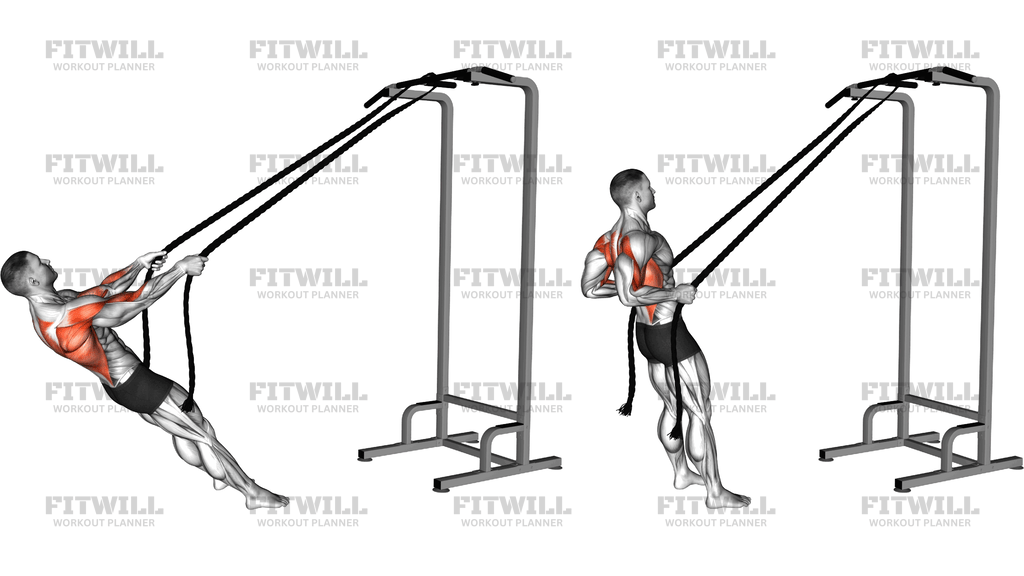
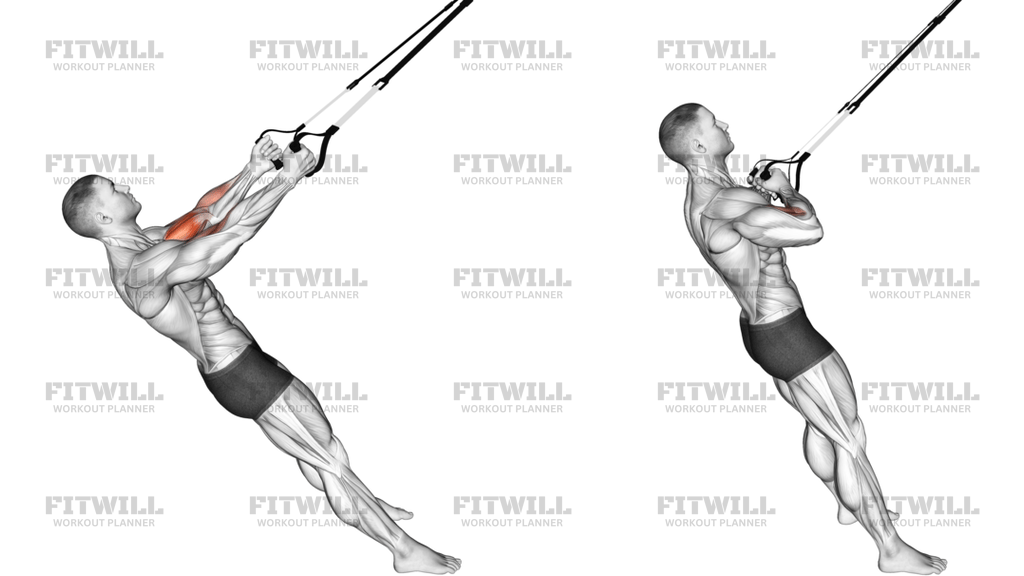
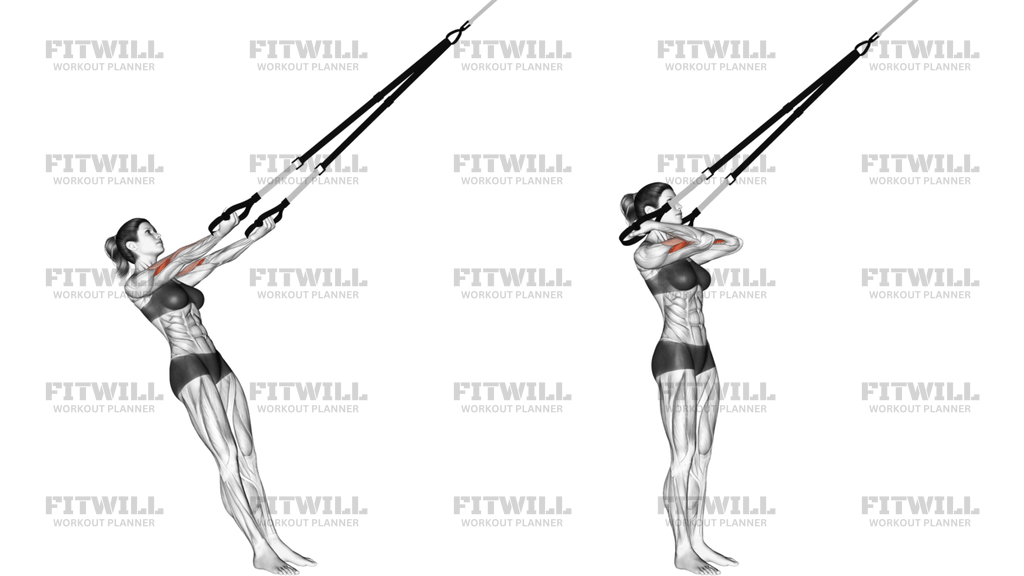
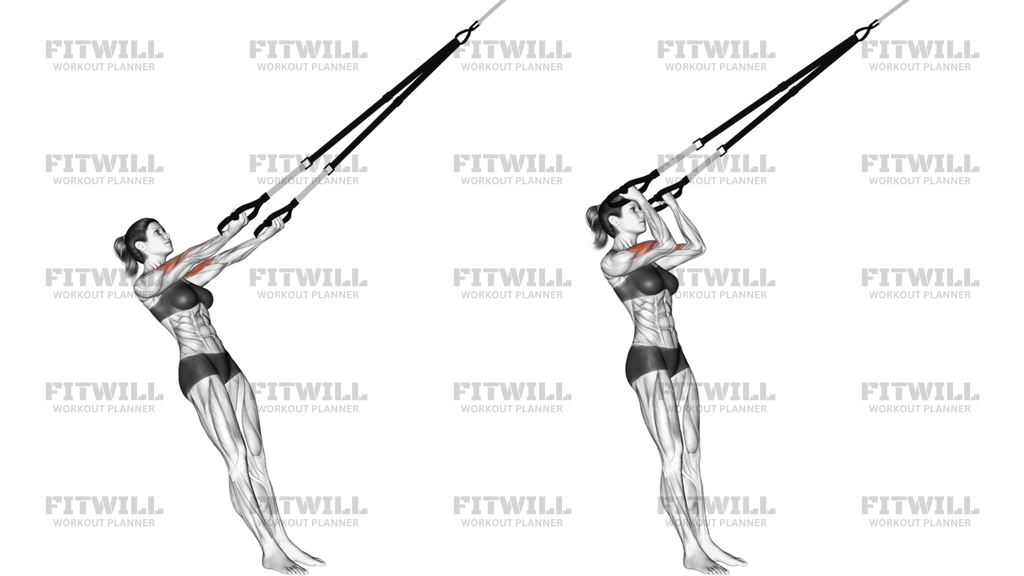
Suspension Arm Curl-To-Ears is a standing suspension-trainer curl that loads the biceps, brachialis, brachioradialis, and forearms while the shoulders and trunk work hard to keep the body in line. The image shows a lean-back position with the straps angled overhead and the hands traveling from straight arms to the sides of the face, so the exercise is less about swinging and more about holding a clean body angle while the elbows bend.
The movement is useful when you want arm flexion work that still demands posture, grip, and scapular control. Because the straps are unstable, the upper arms and shoulders must stay organized as you curl, which makes small errors show up quickly. If the ribcage flares, the hips drift forward, or the shoulders shrug, the load shifts away from the biceps and into compensation.
Set the straps so you can start with straight arms and a controlled backward lean. Your feet stay planted, your body stays long, and your hands should travel toward the ears or temples rather than collapsing inward. The strongest reps keep the elbows high enough that the upper arms do not swing behind the torso, and the wrists stay neutral so the forearms can help without taking over the motion.
This is a good accessory exercise for upper-body conditioning, arm-focused training, or any session where you want a lighter-to-moderate pulling pattern that still challenges stability. It can also work well as a warmup for arm day if you keep the tempo slow and the range crisp. The key is that the set should look the same on rep one and rep ten: same body angle, same strap tension, same finish near the ears.
Use it with enough control that you can pause briefly at the top and lower smoothly without losing the line from ankles to head. If you have to yank your torso forward to finish the curl, the setup is too hard or the straps are too low. Keep the motion strict, breathe steadily, and treat every repetition as a controlled pull rather than a bodyweight row.
Fitwill
Log Workouts, Track Progress & Build Strength.
Achieve more with Fitwill: explore over 9600 exercises with images and videos, access built-in and custom workouts, perfect for both gym and home sessions, and see real results.
Start your journey. Download today!




Instructions
- Face the suspension anchor, hold the handles, and lean back until your arms are straight and the straps are tight.
- Plant your feet hip-width apart and keep your body in one long line from head to heels.
- Set your shoulders down and slightly forward so the straps start under tension without shrugging.
- Keep your palms neutral and your wrists straight before you begin the curl.
- Exhale and bend your elbows to pull the handles toward the sides of your face or ears.
- Keep your upper arms lifted and avoid letting the elbows drop behind your torso.
- Pause briefly when the handles are close to ear level and the biceps are fully shortened.
- Lower the handles slowly back to the start while keeping the lean-back position and strap tension.
- Reset your posture between reps if the ribs flare, the hips drift, or the shoulders start to shrug.
Tips & Tricks
- Choose a body angle that lets you curl without turning the movement into a squat or row.
- Keep the elbows high and slightly in front of the ribs so the biceps do the curling instead of the lats.
- Think about bringing your knuckles to your temples, not yanking the handles toward your chest.
- If your shoulders rise toward your ears, reduce the lean or shorten the set.
- A slow lowering phase makes this exercise much harder than speeding through the return.
- Keep the feet grounded so the straps, not your hips, create the resistance.
- Neutral wrists help the forearms assist without irritating the elbows.
- Stop the set when the handles start drifting away from the ears or your torso begins to swing forward.
Frequently Asked Questions
What muscles does Suspension Arm Curl-To-Ears train?
It primarily trains the biceps, with strong help from the brachialis, brachioradialis, and forearm flexors.
How close should the handles come to my head?
Bring them close to the sides of the face or ears without cranking the neck forward or collapsing the wrists.
Should my upper arms move a lot during the curl?
No. The elbows should stay lifted and relatively steady so the movement stays focused on elbow flexion.
Why does this exercise feel so much harder than a normal curl?
The suspension straps add instability, so your grip, shoulders, and trunk must control the rep while the biceps curl.
Can beginners use this exercise?
Yes, but they should start with a more upright body angle and a shorter range until the position feels stable.
What is the most common mistake with this movement?
The biggest mistake is turning the curl into a body-swing or row by dropping the chest and driving the hips forward.
How do I make the exercise easier?
Step closer to the anchor, stand more upright, or reduce the rep range until you can keep the straps steady.
How do I make it harder without changing the exercise?
Lean back a little more, slow the lowering phase, or add a brief pause near the top while keeping the body rigid.