Suspender Wide-Grip Inverted Row
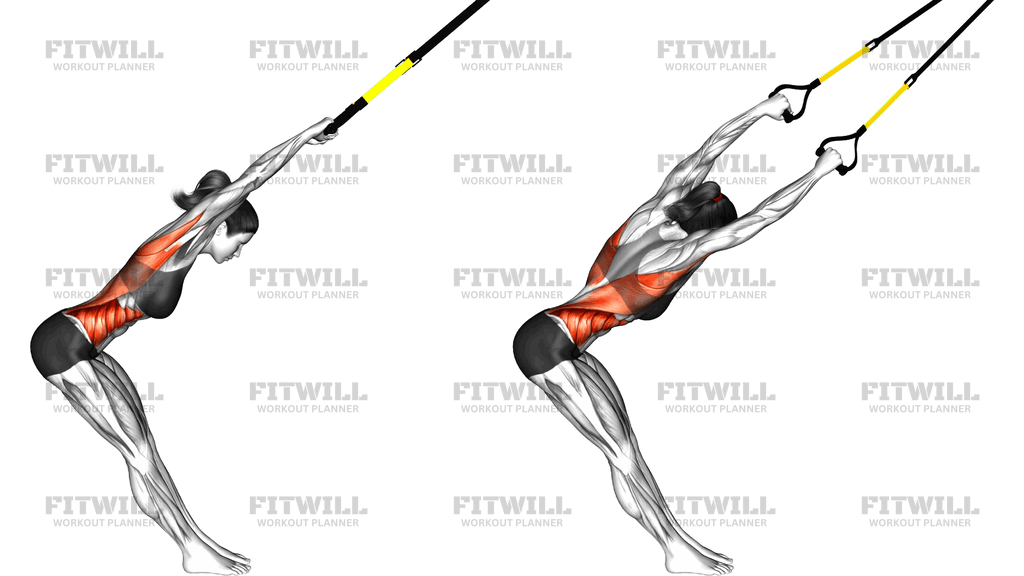
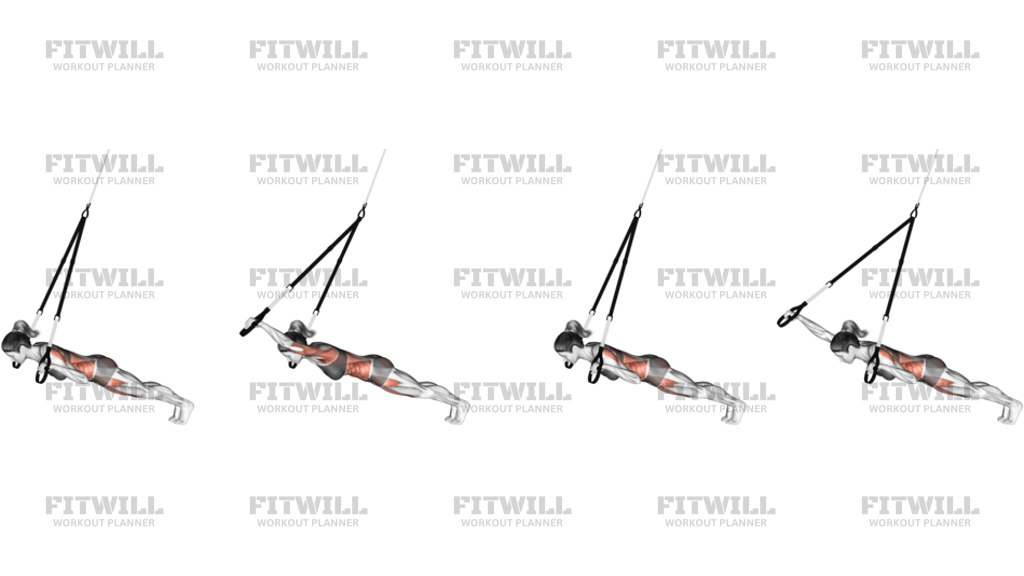
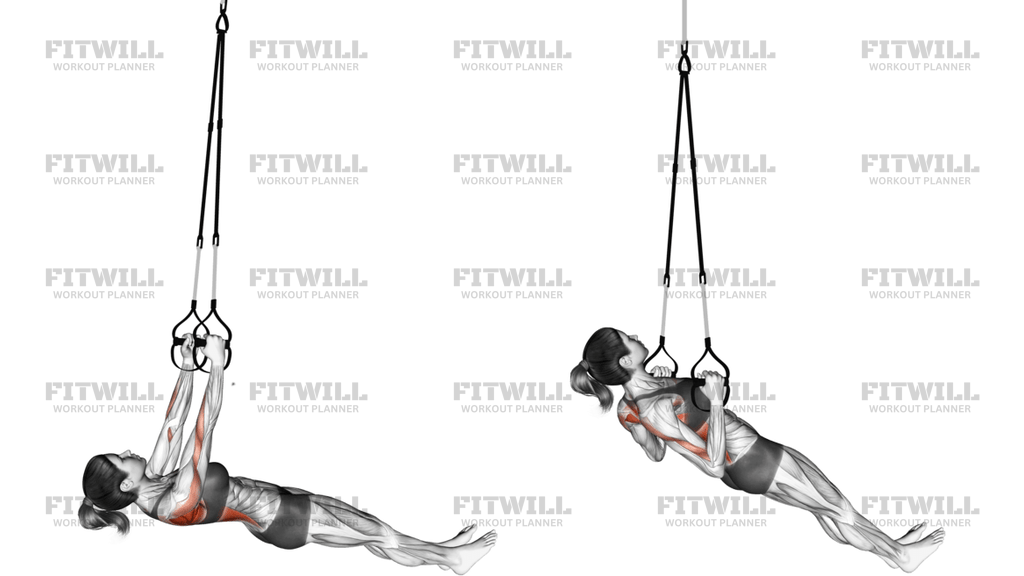
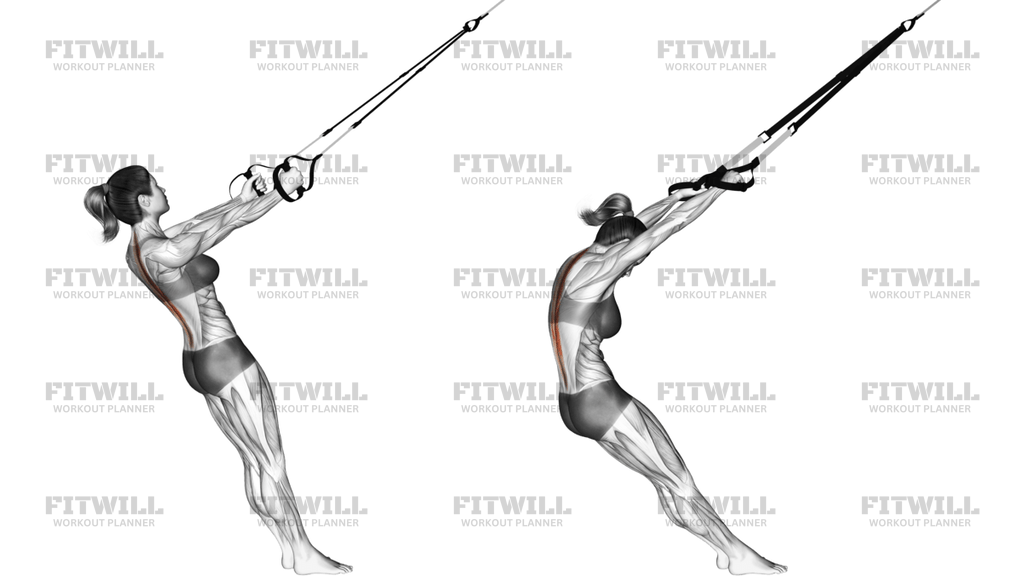
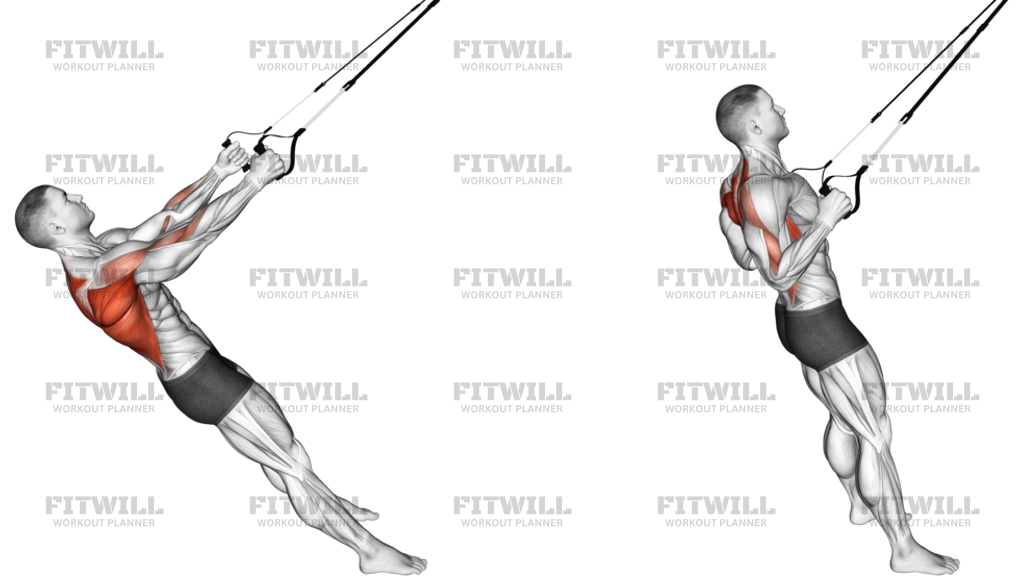
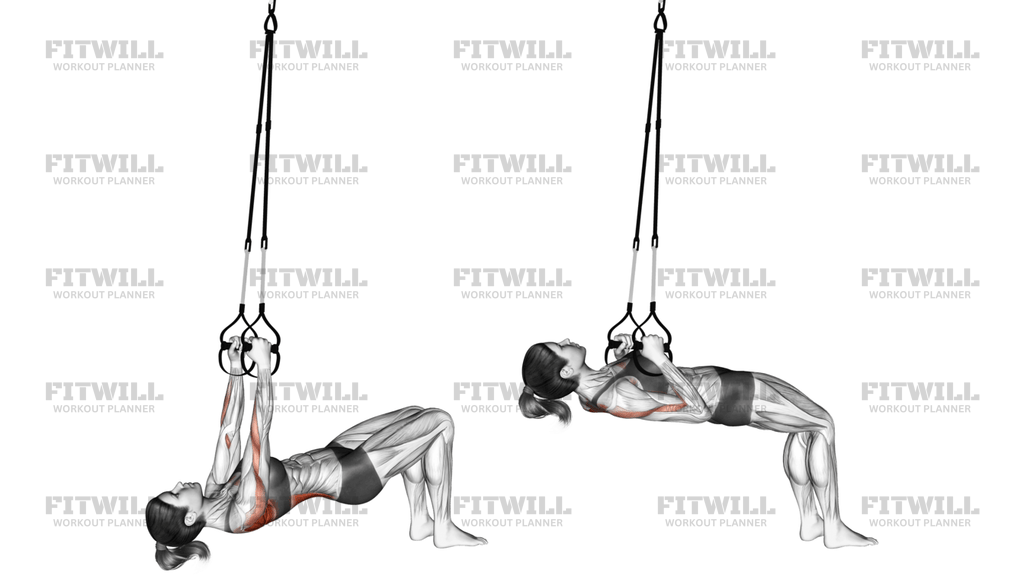
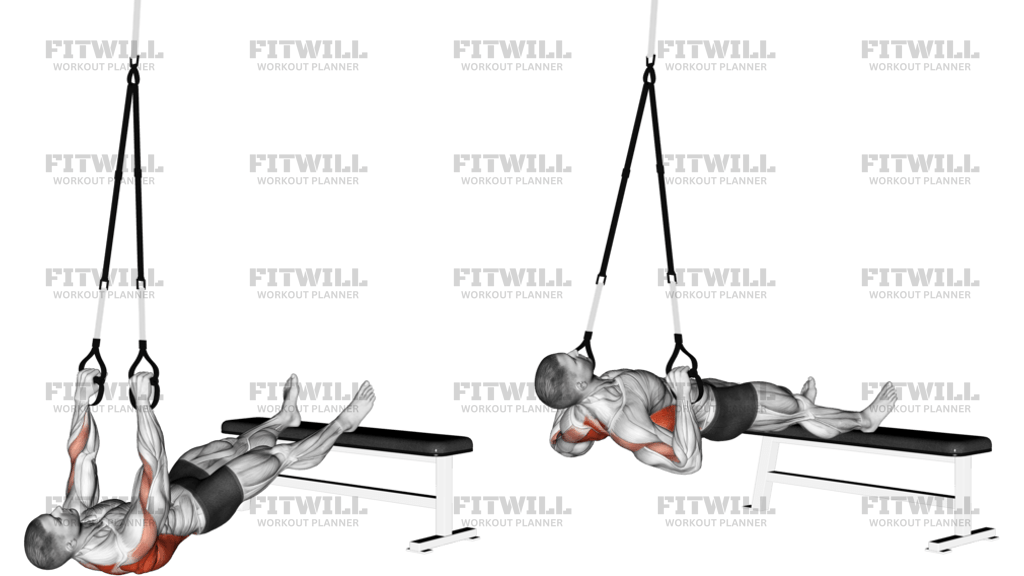
Suspender Wide-Grip Inverted Row is a suspension-based horizontal pulling exercise that trains the back to work while the trunk stays rigid. In the setup shown here, the body is held almost straight with the heels elevated on a bench, which makes the row feel more demanding than a simple upright stance. That position increases the need for whole-body tension, shoulder control, and a clean pull path from the first rep to the last.
The wide grip shifts emphasis toward the lats, rhomboids, rear shoulders, and arm flexors while still asking the core and glutes to keep the torso from sagging or twisting. In anatomy terms, the primary driver is the latissimus dorsi, with help from the rhomboids, biceps brachii, and forearm flexors. The exercise is useful when you want a rowing pattern that builds upper-back strength without a barbell and without letting the legs hide sloppy form.
The setup matters more than it looks. The straps should be even, the hands should start slightly wider than shoulder width, and the body should form one long line from shoulders to heels. Before every rep, set the ribs down, squeeze the glutes, and keep the neck long so the shoulders do not creep toward the ears. Because the feet are supported, it is easy to drift into a half-plank and lose tension through the hips; that usually turns the row into a low-back exercise instead of a back-builder.
Each repetition should begin from a fully controlled hang, then move by pulling the elbows out and back while the chest travels toward the handles. Keep the wrists stacked under the straps, keep the torso steady, and finish with the shoulder blades pulled together without hyperextending the lower back. Lower under control until the arms straighten again, then reset before the next pull. If the body starts to swing, the feet lose pressure on the bench, or the chest can no longer reach the handles without arching, the set is already too hard.
Use this exercise as accessory pulling work, a bodyweight strength movement, or a horizontal pull in a full-body session. It is especially useful for athletes and lifters who need more upper-back control, better scapular awareness, and a stronger row pattern without loading the spine heavily. Make the lever longer by walking the feet farther forward or by elevating the feet more; make it easier by moving the body more upright or lowering the feet. The goal is not to yank higher reps, but to keep the same clean line, same pull path, and same shoulder position on every repetition.
[ Workout Log & Planner ]
Put your next workout in Fitwill
Keep your plan and training log ready when you are.


Instructions
- Set the suspension straps to equal length and take a wide grip that is slightly wider than your shoulders.
- Lie back under the anchor with your heels on a bench or box, arms straight, and your body in one long line from shoulders to heels.
- Set your ribs down, squeeze your glutes, and brace your midsection so your hips do not sag.
- Start from a dead-hang position with the shoulder blades reaching forward and the chest relaxed.
- Pull your chest toward the handles by driving your elbows out and back while keeping your wrists under the straps.
- Keep your body rigid as you row; press your heels into the bench and avoid letting your torso twist or swing.
- Finish the rep with the handles near your upper chest or lower ribs and your shoulder blades squeezed together.
- Lower under control until your arms are straight again, inhale on the way down, and reset before the next rep.
Tips & Tricks
- Set the handles wide enough to feel the upper back, but not so wide that your shoulders pinch at the bottom.
- Keep your chin slightly tucked so the first thing that moves is your chest, not your head.
- Think about pulling the elbows around the ribs instead of trying to shrug the handles upward.
- If your hips drop, shorten the lever by bringing your feet closer or lowering the bench height.
- If the top position turns into a lower-back arch, stop the set there and keep the ribs stacked over the pelvis.
- Press the heels into the bench hard enough to keep the body straight, but do not let the legs take over the pull.
- Use a brief pause at the top to remove momentum and make each rep look the same.
- Exhale as the chest rises toward the handles and inhale as you lower back to the start.
Frequently Asked Questions
What does Suspender Wide-Grip Inverted Row train most?
It mainly trains the lats and upper back, with the rear shoulders, biceps, and forearms helping to control the row.
Can beginners perform this exercise?
Yes, beginners can use it by making the body more upright or by keeping the feet on the floor instead of a bench.
Where should my hands and elbows go in the wide-grip version?
Take the handles slightly wider than shoulder width and pull the elbows out and back, not straight down by your sides.
Should my feet stay on a bench the whole time?
In the elevated-foot version shown here, yes. Keep light pressure through the heels so the body stays in a straight line.
How do I know if the set is too hard?
If your hips drop, you start swinging, or you need to arch your lower back to reach the handles, the angle is too aggressive.
What should I do if the top position hurts my shoulders?
Narrow the grip slightly, reduce how far you pull, and keep the shoulders away from the ears instead of forcing extra range.
What is a good progression for this row?
Walk the feet farther forward, elevate them more, slow the lowering phase, or add a pause at the top.
What is the main mistake to avoid?
Do not turn it into a shrug or a hip-thrust. The row should come from the arms and upper back while the torso stays rigid.