Suspension Biceps Clutch
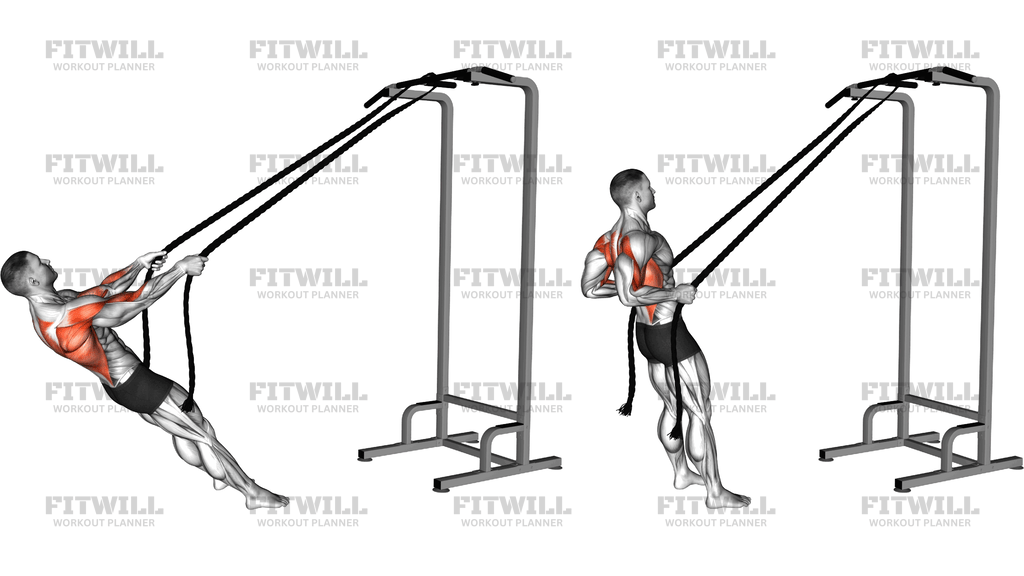
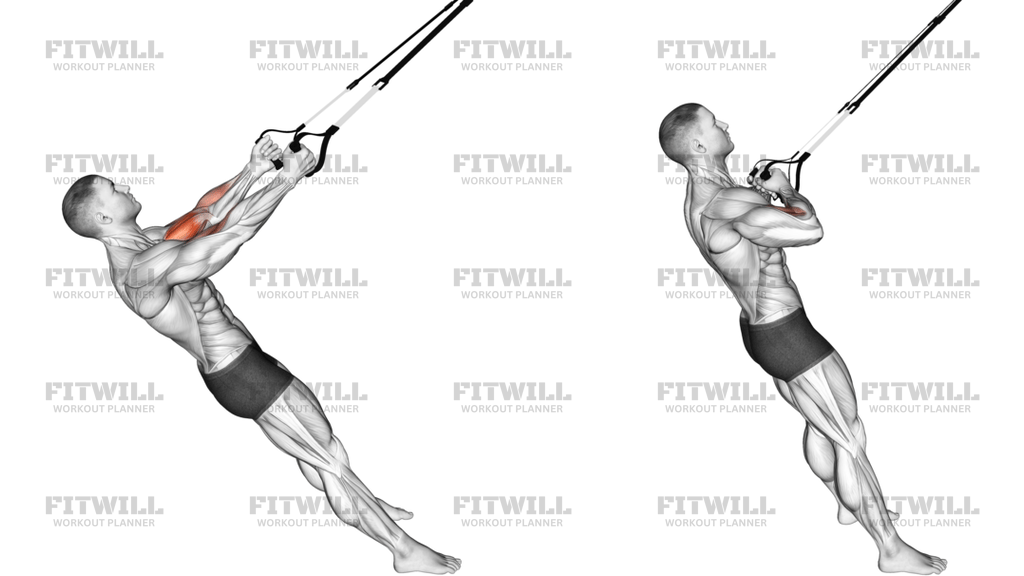
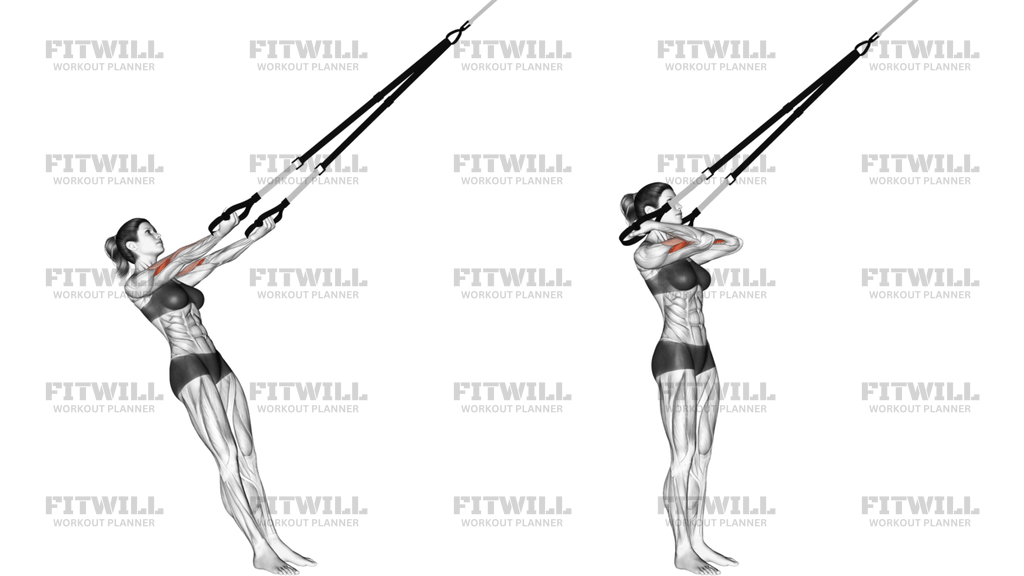
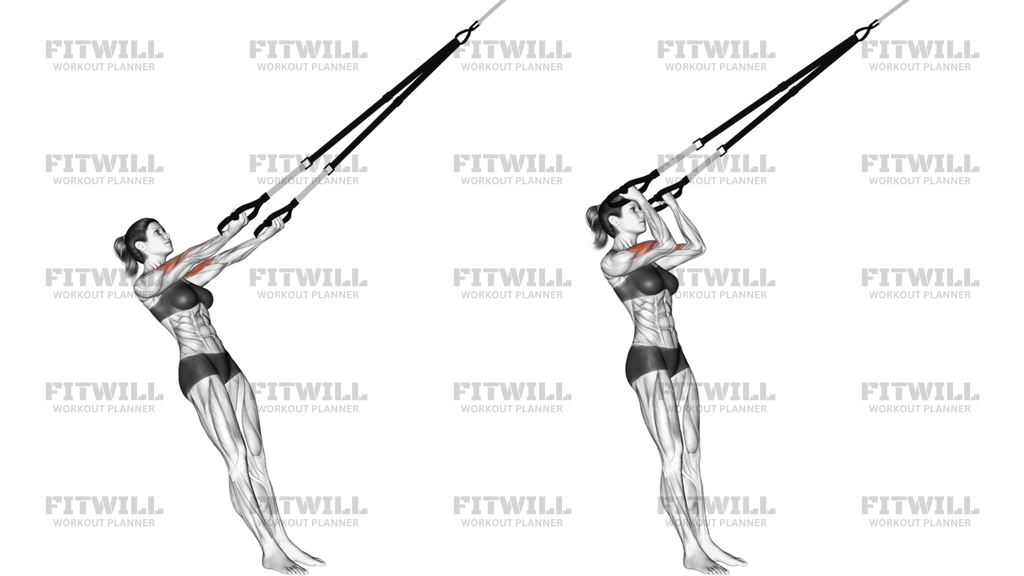
Suspension Biceps Clutch is a suspension-trainer arm exercise that isolates the elbow flexors while the body stays braced against the straps. In the image, the athlete leans back from a high anchor point and curls the handles toward the upper chest by bending the elbows, which makes this a very different stimulus from a standing dumbbell curl. The suspension angle turns body position into part of the load, so every change in foot placement, torso angle, or strap tension changes how hard the rep feels.
This exercise mainly targets the biceps brachii, with brachialis, brachioradialis, and the forearm flexors helping to control the handles and keep the wrists organized. Because the hands are fixed to the straps, the movement demands more shoulder and trunk stability than a free-weight curl. That makes it useful for building arm strength while also practicing posture, scapular control, and tension through the midline.
Good setup matters more here than in many isolated arm exercises. Start with the straps taut, step far enough back that your body forms a straight line from head to heels, and find an angle you can control without sagging at the hips or flaring the ribs. The elbows should stay close to the sides or slightly ahead of the torso as you curl. If the shoulders roll forward or the chest collapses, the biceps lose tension and the rep turns into a body swing.
On each rep, keep the upper arms mostly fixed and bend only at the elbows. Curl the handles toward the front of the shoulders or upper chest, squeeze hard at the top, and lower slowly until the arms are long but not loose. The return should feel deliberate, with the straps still supporting tension instead of going slack. A smooth rhythm and controlled breathing help keep the movement strict and repeatable.
Suspension Biceps Clutch works well as accessory work, arm-focused strength training, or as a lighter pulling variation when you want constant tension without heavy external loading. It is also easy to scale: step farther under the anchor for more resistance, or move more upright for a beginner-friendly version. Keep the rep quality high, because once the torso starts swinging, the exercise stops being an arm isolation pattern and becomes a whole-body cheat curl.
[ Workout Log & Planner ]
Put your next workout in Fitwill
Keep your plan and training log ready when you are.


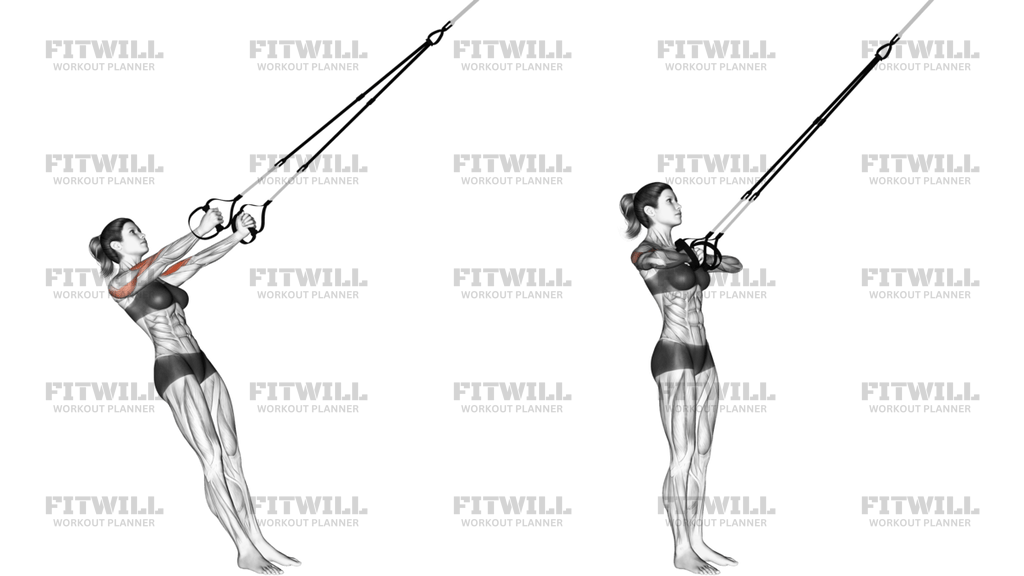
Instructions
- Face the suspension anchor and hold the handles with the straps taut, then walk your feet forward until your body leans back in a straight line from head to heels.
- Set your feet about hip-width apart and keep your weight balanced through the whole foot so you can resist the pull of the straps.
- Let your arms extend while keeping a soft bend in the elbows, and square the shoulders so the chest stays open instead of collapsing forward.
- Brace your midsection and keep the ribs down before you start the curl.
- Bend the elbows to pull the handles toward your upper chest or the front of your shoulders.
- Keep your upper arms mostly still so the elbows act like the only hinge in the movement.
- Squeeze the biceps at the top without shrugging the shoulders or letting the wrists buckle backward.
- Lower the handles slowly until the arms are long again and the straps stay under tension.
- Reset your body line before the next repetition and repeat for the planned number of reps.
Tips & Tricks
- Move your feet closer to the anchor for a more upright, beginner-friendly angle, and farther away only when you can keep the torso rigid.
- Keep the elbows from drifting behind the body, or the shoulders will take over and the curl will feel less like a biceps exercise.
- Think about pulling the hands toward the shoulders rather than yanking the chest toward the straps.
- Do not let the hips pike or sag; the body should stay in one long line while the elbows flex.
- Use a slow lowering phase so the straps never go slack at the bottom.
- Keep the wrists stacked over the forearms instead of cocking them back at the top of the rep.
- Exhale as you curl and inhale as you return so the torso stays braced without holding your breath unnecessarily.
- Stop the set when you start swinging, because momentum usually shows up here before the arms are actually fatigued.
Frequently Asked Questions
What muscle does Suspension Biceps Clutch target most?
The biceps brachii is the main target, with the brachialis and brachioradialis helping throughout the curl.
Is this the same as a suspension biceps curl?
Yes. The name varies, but the movement is the same: a curl performed while leaning back in suspension straps.
How do I set the difficulty?
Change the body angle. Stepping farther under the anchor increases load, while standing more upright makes the curl easier.
Where should the handles travel?
Pull them toward the front of the shoulders or upper chest, not down toward the hips.
Should my elbows move during the rep?
They should stay mostly fixed near the sides. If they drift a lot, the shoulders and torso usually start cheating.
Can beginners do this safely?
Yes, as long as the angle is easy enough to keep the body straight and the curl controlled.
Why do my shoulders feel involved?
A small amount of shoulder work is normal, but if the front of the shoulders dominate, you are probably shrugging or letting the elbows drift.
What is a common mistake with suspension curls?
The biggest mistake is letting the torso swing. Keep the ribs down and the body rigid so the biceps do the work.