Suspension Power Pull
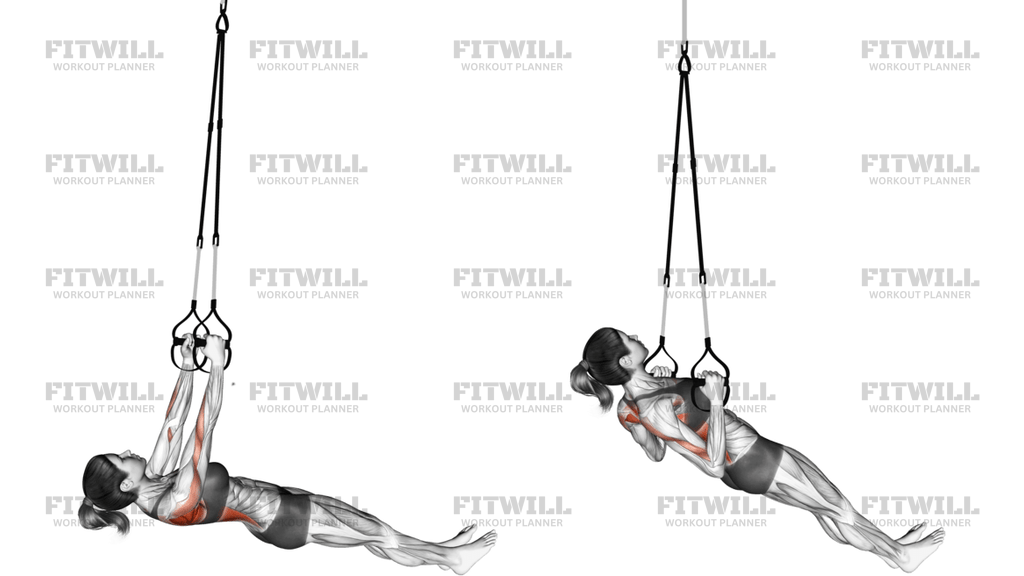
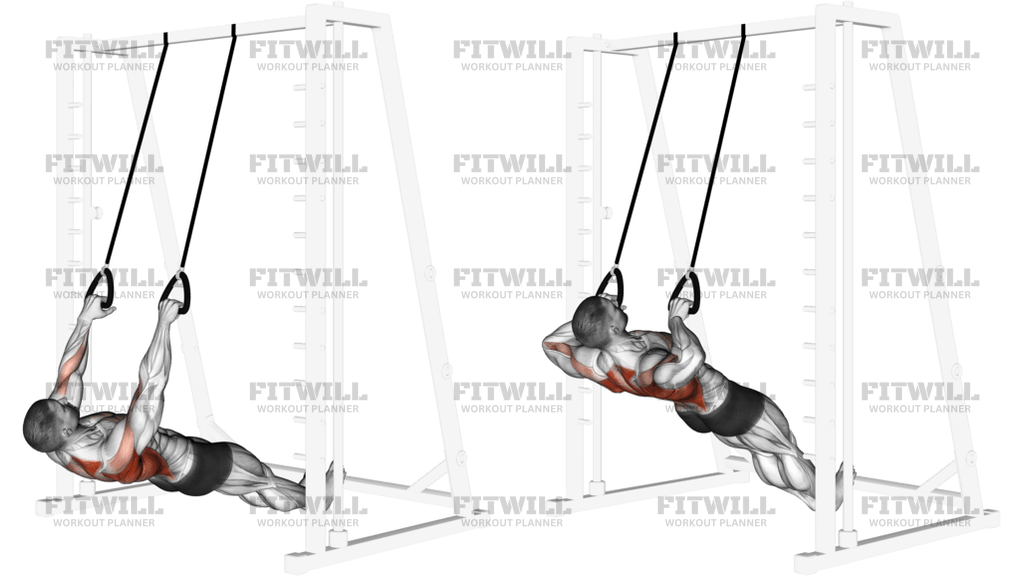
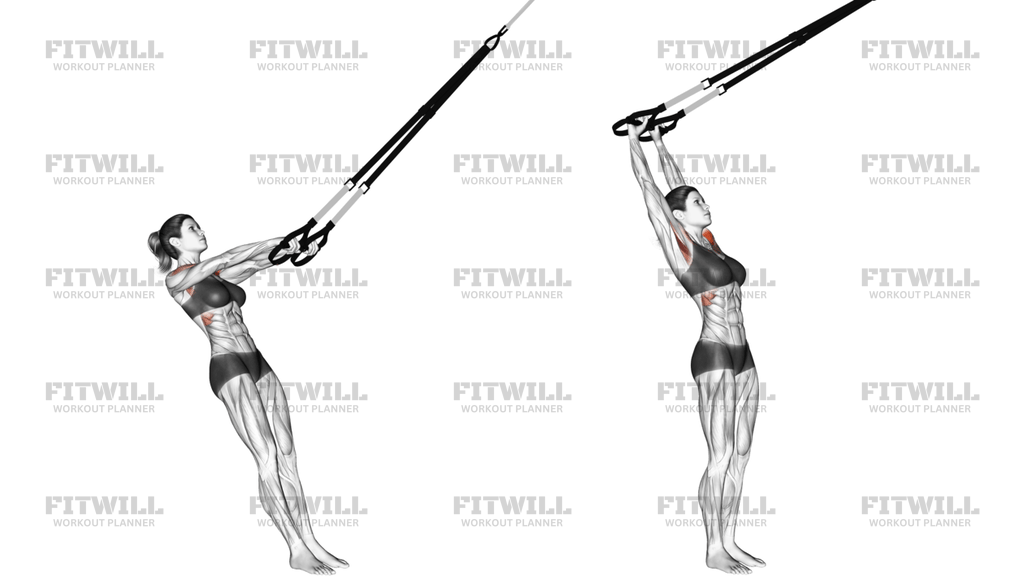
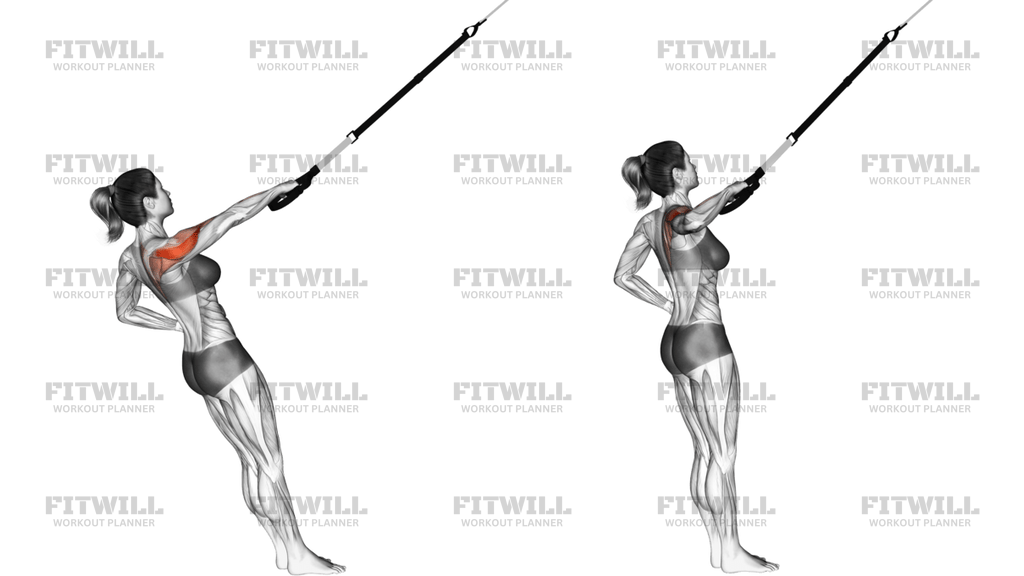
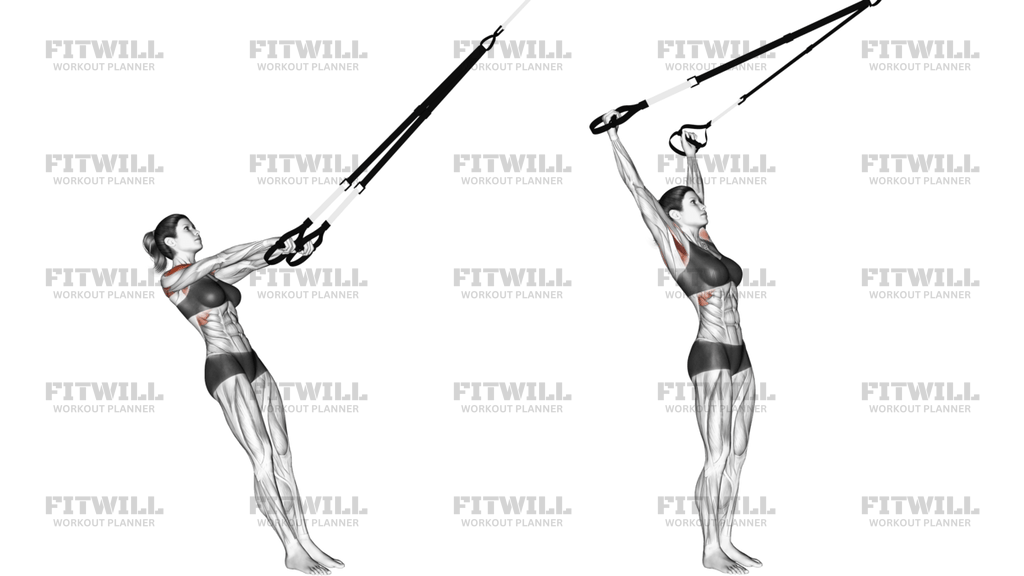
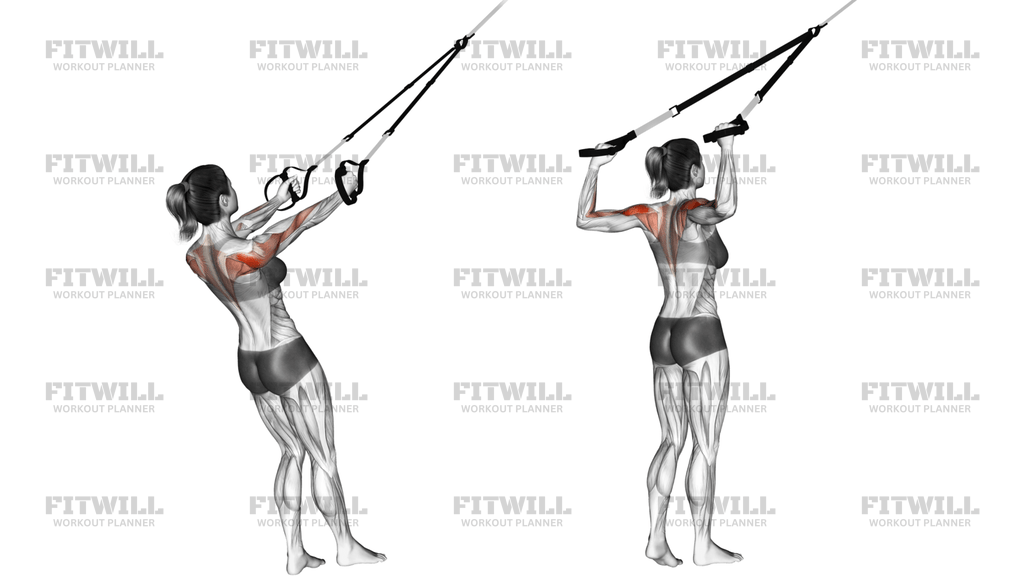
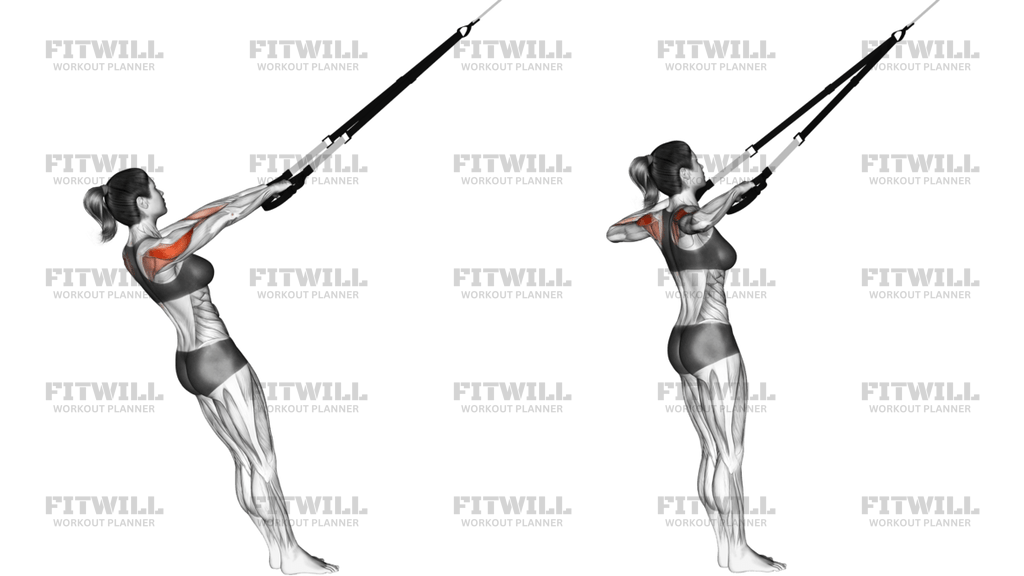
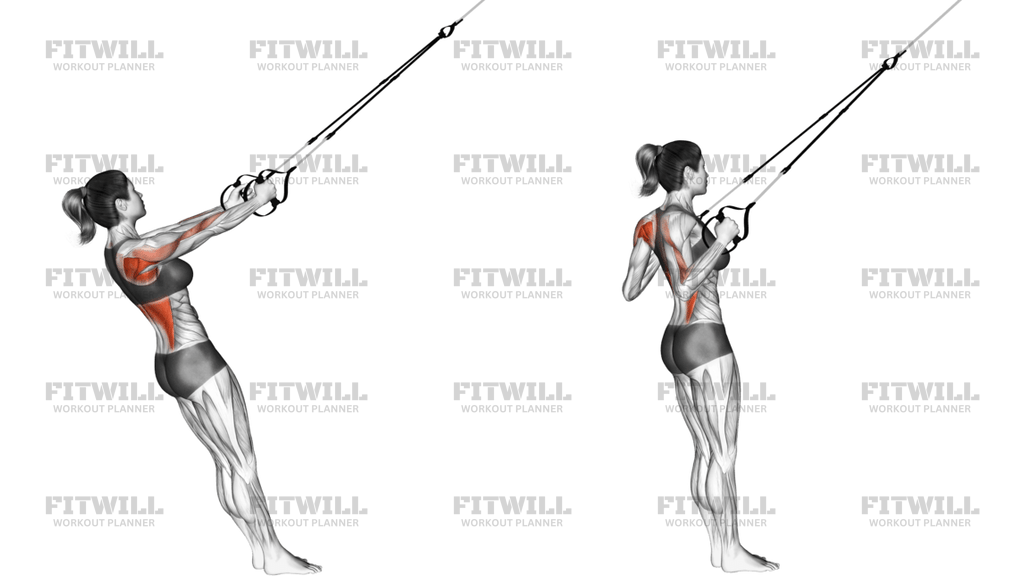
Suspension Power Pull is a one-arm suspension trainer pull with a rotational finish. It asks you to row, open the chest, and control the body as the free arm reaches away from the anchor. The exercise is useful when you want back and shoulder work that also demands anti-rotation control and clean body alignment.
The main emphasis is on the trapezius, with the rhomboids, latissimus dorsi, biceps, rear shoulder, and core helping to keep the rep smooth. Because the straps create a moving line of resistance, the start position matters more than it does in a fixed row. A stable anchor height, a long body line, and a controlled lean determine whether the set feels productive or sloppy.
In the bottom position, the working arm should be long, the shoulder set down away from the ear, and the torso already braced. From there, pull the handle toward the lower ribs or chest while the chest rotates open and the free arm extends wide for balance. The pull should feel like you are leading with the elbow and finishing by setting the shoulder blade, not by jerking the hand backward.
Use the exercise for upper-back strength, shoulder stability, and unilateral control in a warm-up, accessory block, or pulling session. The movement should stay smooth from rep to rep: pull, rotate, pause briefly at the finish, then return under control. If the hips twist, the neck cranes, or the shoulders shrug, the straps are too long, the angle is too steep, or the rep is being forced through momentum.
Suspension Power Pull is also a good regression or progression tool because the difficulty changes quickly with foot position and body angle. Step closer to the anchor for a friendlier version and farther away for more load. Keep the motion pain-free and stop short of any range that causes the shoulder to collapse forward or the low back to over-rotate.
Fitwill
Log Workouts, Track Progress & Build Strength.
Achieve more with Fitwill: explore over 9600 exercises with images and videos, access built-in and custom workouts, perfect for both gym and home sessions, and see real results.
Start your journey. Download today!




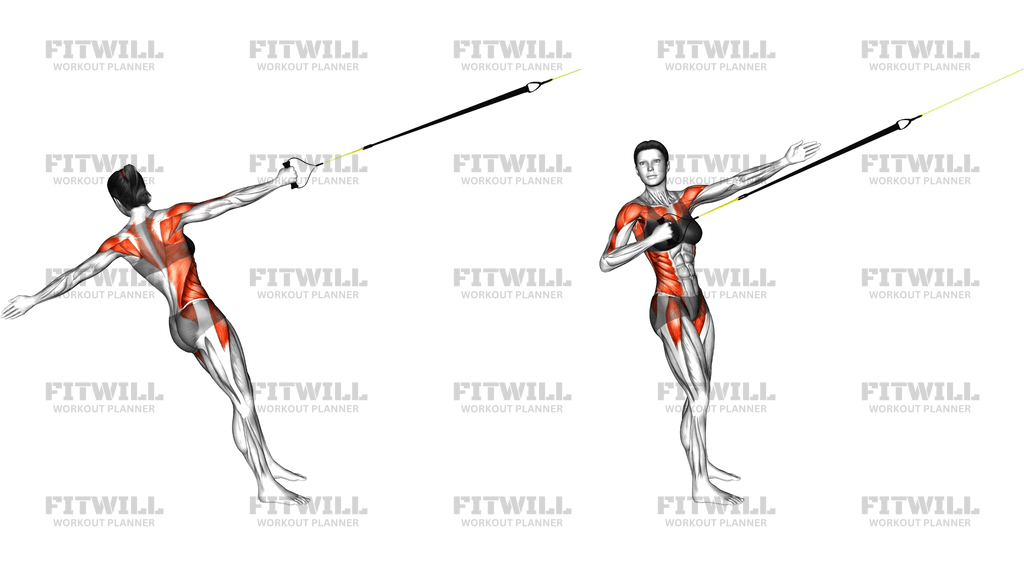
Instructions
- Set the suspension straps at about chest height, grip one handle, and stand facing the anchor until your working arm is fully extended.
- Step back to create a moderate lean, keep your feet staggered or hip-width apart, and build a straight line from head to heel.
- Set the working shoulder down and away from the ear, then reach the free arm forward and slightly out for balance.
- Brace your ribs and glutes before the rep so the torso stays long instead of sagging or twisting through the low back.
- Pull the handle toward your lower ribs or chest by driving the elbow back, not by yanking with the hand.
- As the handle comes in, rotate your chest open and let the free arm sweep wide to match the body turn.
- Finish with the strap close to your body, the shoulder blade set, and the neck relaxed rather than shrugged.
- Lower slowly to the start, allowing the arm to extend and the torso to unwind under control before the next rep.
Tips & Tricks
- A smaller body angle makes the pull easier; walk your feet forward if the shoulder starts to shrug or the hips start to spin.
- Keep the pulling elbow close to the path of the ribs so the work stays on the upper back and lats instead of turning into a wild arm swing.
- If the free arm drifts behind the torso too early, the rotation is taking over before the row is finished.
- Keep the chin slightly tucked and the neck long so the finish comes from the upper back, not from craning the head forward.
- Think of setting the shoulder blade down and back at the top instead of squeezing hard through the neck.
- A brief pause at the finished position makes the rotational control more useful and reduces momentum.
- Let the straps stay taut on the way back; do not drop into the bottom position.
- Stop the set when your hips start to open too far or your lower back arches to fake a bigger rep.
Frequently Asked Questions
What does Suspension Power Pull train most?
It primarily trains the traps, with the upper back, lats, biceps, and rear shoulders doing a lot of support work.
Is this just a suspension row?
No. The row finishes with a chest-opening rotation and a wide reach from the free arm, which makes it more demanding than a basic row.
Where should the handle travel during the pull?
Pull it toward the lower ribs or chest, then settle the shoulder blade without letting the elbow flare away from the body.
How do I know my setup angle is right?
You should feel challenged while still being able to keep a straight line from head to heel and control the return without collapsing.
Can beginners do Suspension Power Pull?
Yes, but they should stand closer to the anchor and keep the rotation small until they can hold the body line steady.
What is the most common mistake?
Shrugging the shoulder and twisting through the low back instead of pulling smoothly through the upper back.
What can I use instead if I do not have suspension straps?
A single-arm cable row with a controlled torso rotation is the closest substitute.
How do I make the exercise harder?
Step farther from the anchor, keep the straps at a tougher angle, or add a longer pause at the finished position.