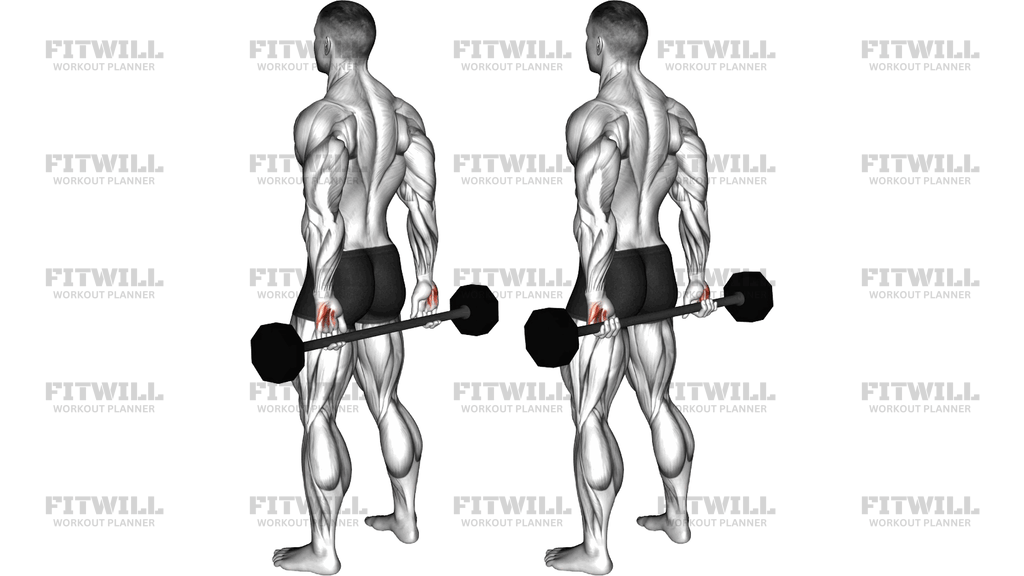
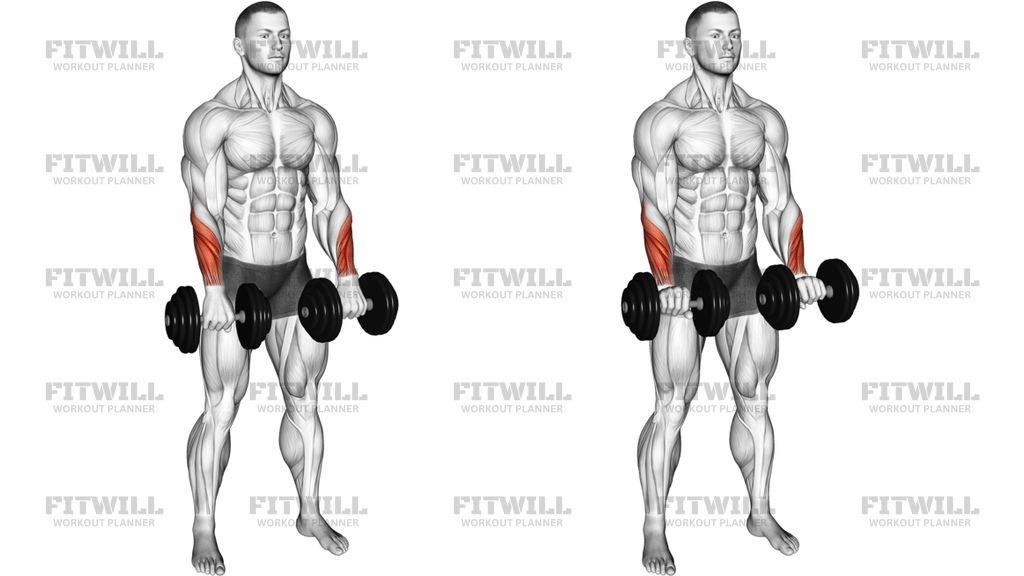
Lever Reverse Wrist Curl
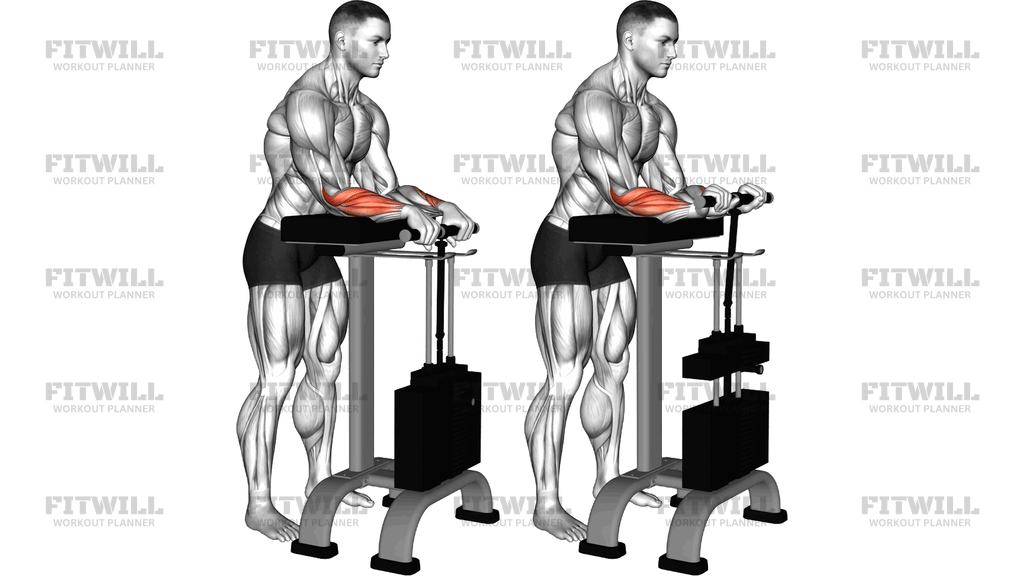
The Lever Reverse Wrist Curl is a machine-based forearm exercise performed from a standing position, with the forearms braced on a padded arm support and the hands gripping a lever handle with the palms facing down. Instead of curling the wrist toward the palm side, you raise the back of the hand upward against the machine's resistance, which directly trains the wrist extensor muscles that run along the top of the forearm. The lever arm and fixed resistance source keep the movement smooth and consistent from rep to rep, which is one of the main advantages over holding a barbell or dumbbell in the same position.
This movement is especially useful for anyone whose training or daily life is heavy on wrist flexion and gripping: pulling exercises, carrying work, racquet sports, and manual labor all load the underside of the forearm far more than the top. That imbalance is a common reason the top of the forearm gets neglected, and the reverse wrist curl is the most direct way to correct it. Climbers, golfers, and lifters bothered by aches at the outside of the elbow often benefit from building up these extensors in a slow, controlled setting.
The padded forearm support is what makes the exercise work. Because the forearms rest firmly on the pad, the wrists are isolated and the elbows and shoulders cannot help swing the weight. The setup also removes the grip endurance demand of a free-weight reverse wrist curl, where the hands often fail before the extensors do. On a lever machine, the target muscles get the full stimulus without the fingers giving out first.
To execute it well, stand close to the pad with the forearms flat and relaxed, hands roughly shoulder-width on the handle, and let the hands hang down at the wrist as your starting point. From there, pull the back of the hands up toward the top of the forearm as far as the wrist will comfortably go, pause briefly, and lower the handle back down under control. The range is short by nature, so the quality of each rep matters far more than how far the handle travels.
Keep the load moderate, especially at first. The wrist extensors are small muscles with long tendons, and they respond better to higher repetitions and strict form than to heavy grinding sets. A typical approach is two to four sets of ten to twenty controlled reps at the end of an upper-body or arm session, moving slowly enough that you can feel the top of the forearm working on every rep.
[ Workout Log & Planner ]
Put your next workout in Fitwill
Keep your plan and training log ready when you are.


Instructions
- Stand facing the lever machine and rest both forearms flat across the padded arm support, with the wrists and hands extending past the front edge of the pad.
- Grip the lever handle with an overhand grip, palms facing down, and set the hands about shoulder-width apart.
- Let the hands bend down at the wrist so the knuckles point toward the floor; this is the starting position.
- Keep the forearms pressed into the pad and the elbows relaxed but stable, with the shoulders down and the torso upright.
- Exhale and pull the back of the hands upward, raising the handle by bending only at the wrist until the knuckles face up as far as the joint allows.
- Squeeze the top of the forearms for a brief pause at the top of the movement.
- Inhale and lower the handle slowly back down until the wrists are fully flexed and the hands hang down again.
- Complete all reps without letting the elbows lift off the pad or the wrists roll sideways.
- After the final rep, release the handle carefully and step back from the machine before adjusting the load.
Tips & Tricks
- The pad does the isolating: if your elbows rise or your forearms lift off during the rep, the weight is too heavy and the wrists are no longer doing the work.
- Keep the hands loose enough on the handle that your fingers are not squeezing white-knuckle tight; on a lever machine the extensors should be the limiting factor, not your grip.
- Do not let the wrists twist or lean to one side as the handle rises. Both hands should travel up evenly, and if one side lags, train each arm separately for a while.
- The range of motion on this exercise is short, so resist the urge to chase height by snapping the wrist. A slow two-second lift with a pause beats a fast flick.
- If the pad digs into your forearms at heavier loads, shift slightly so the pad sits on the meaty part of the forearm rather than right over the bone.
- Warm the wrists up with a few light, fast bodyweight extensions before loading them, especially in cold gyms or early in a session.
- Because the machine provides resistance at a fixed angle, small changes in how far your wrists sit past the pad change the difficulty. Keep the same wrist position set to set.
- If the top of your forearm or the outside of your elbow feels sharp pain rather than muscle effort, stop, reduce the load substantially, and shorten the range before building back up.
Frequently Asked Questions
What muscles does the Lever Reverse Wrist Curl work?
It primarily targets the wrist extensors on the top of the forearm, mainly the extensor carpi radialis and extensor carpi ulnaris, with supporting work from the brachioradialis and the grip muscles holding the handle.
How is the Lever Reverse Wrist Curl different from a regular wrist curl?
A regular wrist curl trains the wrist flexors on the underside of the forearm with the palms facing up, while the reverse version uses an overhand grip and trains the extensors on the top of the forearm by lifting the back of the hand.
Why use a lever machine instead of a barbell for reverse wrist curls?
The machine stabilizes the resistance so the fingers and grip do not give out before the extensors are trained, and the fixed path makes it easier to control the short range of motion and avoid wrist wobble.
Is this exercise good for beginners?
Yes, it is one of the safer ways to train the wrist extensors because the machine supports the forearms and limits the path, but beginners should start light and learn the movement with higher reps before adding weight.
Should my forearms stay glued to the pad the whole time?
Yes. The pad is what isolates the wrists, so if your forearms or elbows lift off, momentum and the upper arms are taking over. If you cannot keep them down, reduce the weight.
How many reps should I do on the Lever Reverse Wrist Curl?
The wrist extensors tend to respond well to moderate loads and higher volume, so somewhere in the range of ten to twenty controlled reps per set works well for most lifters.
Can the Lever Reverse Wrist Curl help with forearm imbalance from pulling exercises?
It can. Exercises like rows, deadlifts, and pull-ups load the wrist flexors heavily, and adding direct extensor work like this helps balance the forearm development around the wrist joint.
What can I substitute if my gym has no lever wrist machine?
A reverse wrist curl with a light barbell or dumbbells, forearms resting on a bench or your thighs with palms down, is the closest free-weight substitute for the same movement.
Is it normal that the range of motion feels very short?
Yes, wrist extension is a small joint action, so the handle will only travel a short distance. Judge your reps by the squeeze at the top of the forearm, not by how far the handle moves.
When should I avoid this exercise?
Skip it or see a professional first if you have an acute wrist injury or sharp pain at the wrist or outside of the elbow during the movement; muscle burn and fatigue are normal, joint pain is not.