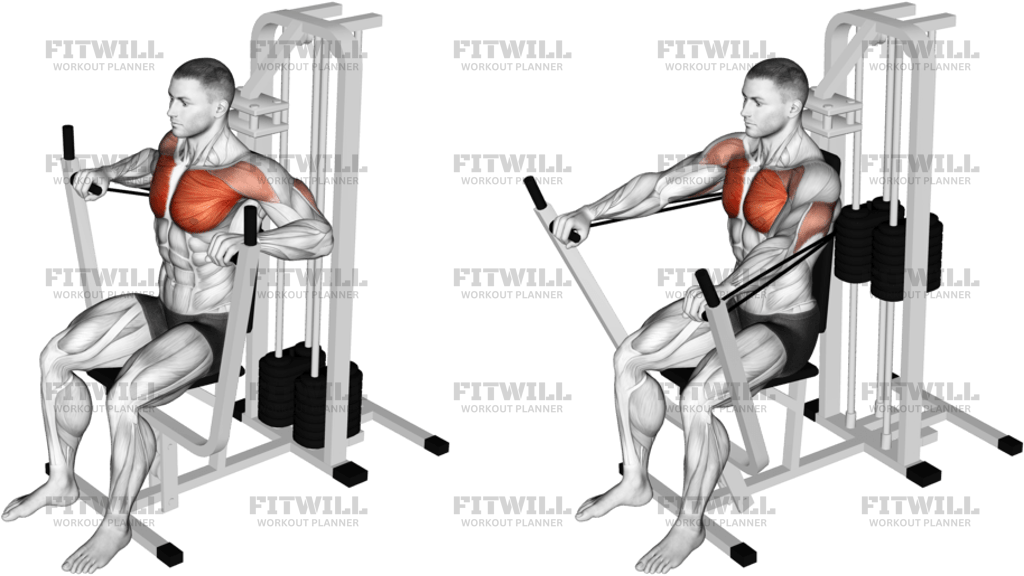
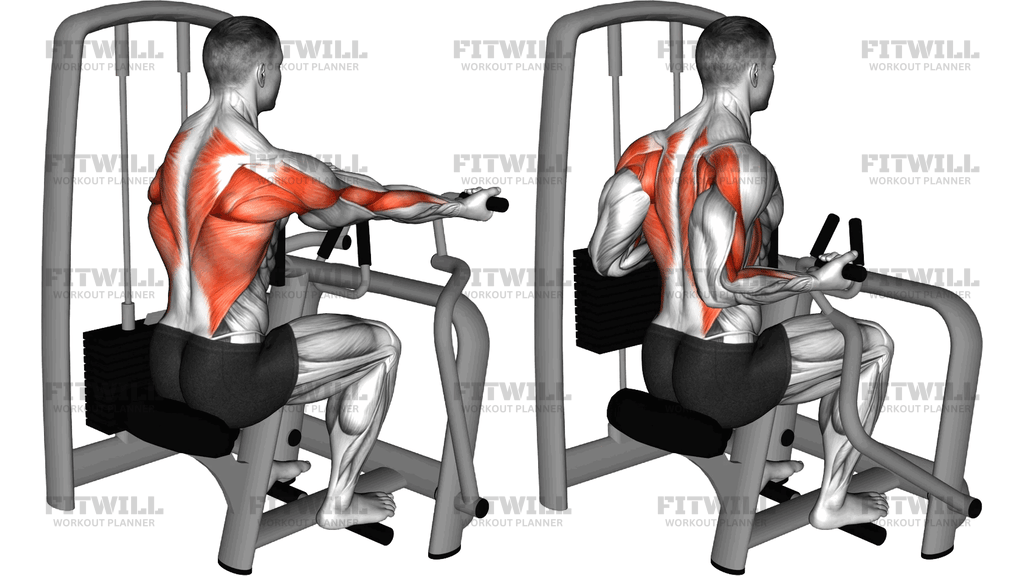
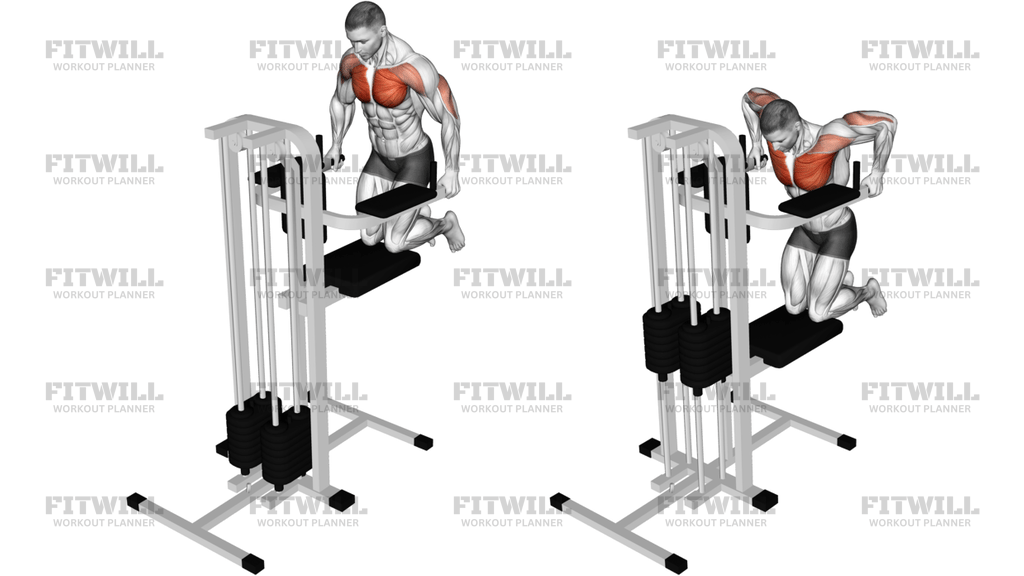
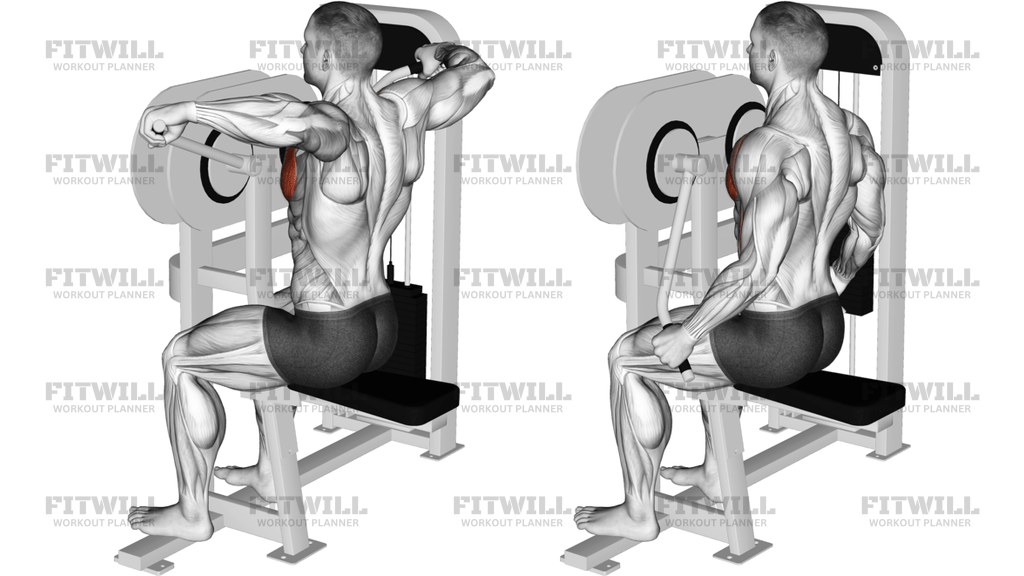
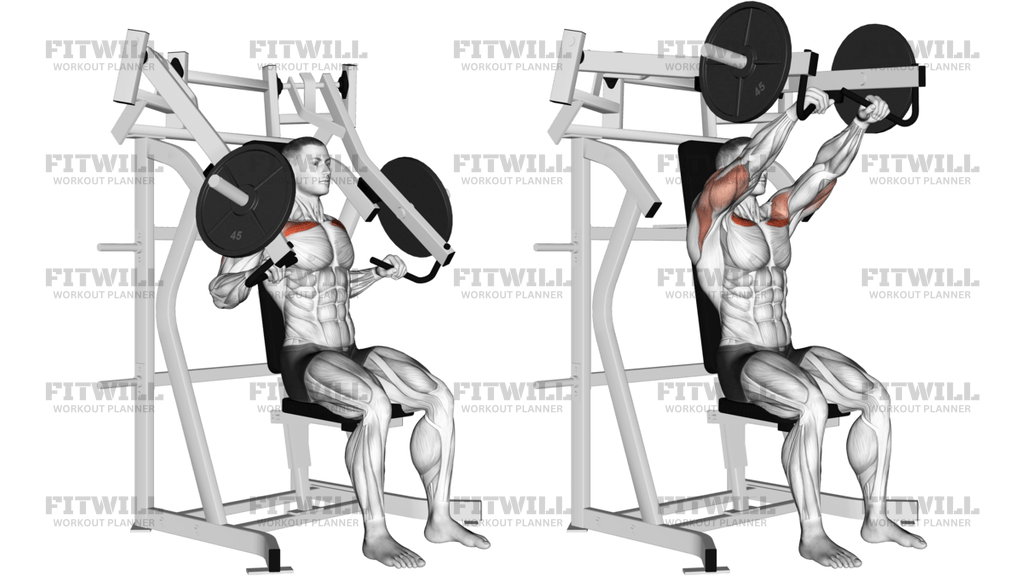
Lever Stack Seated Decline Single Arm Chest Press
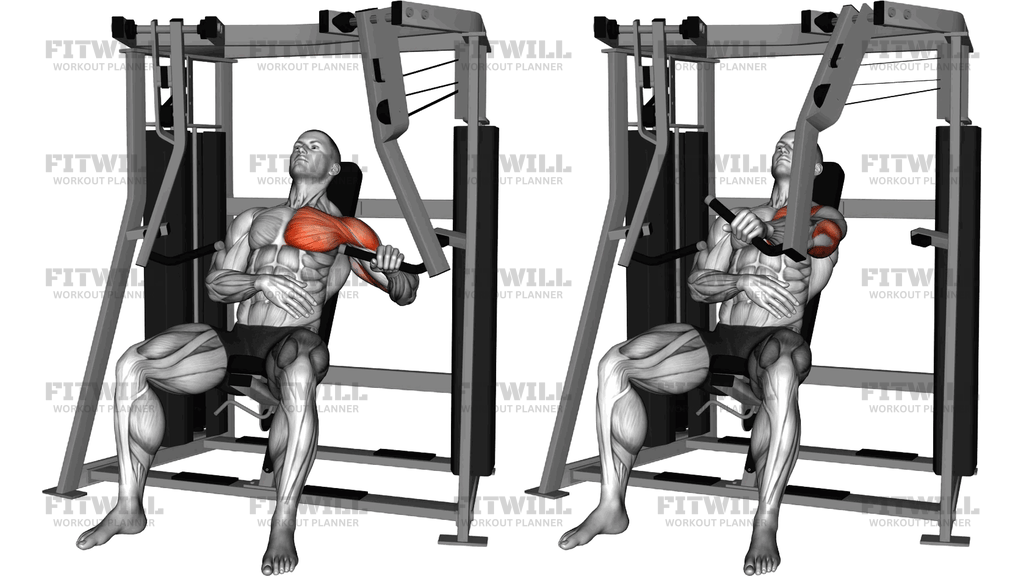
The Lever Stack Seated Decline Single Arm Chest Press is a plate-loaded leverage machine exercise that trains one side of the chest at a time from a seated position. You sit with your back supported against the machine's pad, take hold of a single handle, and press it forward and down along a decline path toward your lower chest. Because the arm travels on a fixed lever arm, the resistance stays consistent through the whole range and your shoulder joint only has to worry about producing force, not stabilizing a free weight.
The unilateral setup is the main selling point. Pressing one arm at a time lets you spot and fix left-to-right strength differences that usually hide behind barbell or machine two-arm pressing. It also frees your non-working hand to rest across your torso, which gives you a physical reference point for keeping your ribcage down and your torso from twisting into the press. The decline angle biases the sternal, lower portion of the pectoralis major, with the front delts and triceps contributing as they would in any pressing movement.
This movement suits lifters who want focused lower-chest work without a decline bench setup, people rehabilitating or returning from a period off training who benefit from the guided path, and anyone who wants to finish a chest session with a strict, fatigue-friendly unilateral burnout. Because the machine controls the arc, you can push close to fatigue without a spotter.
Setup matters more than it looks on this machine. Seat height determines where the handle sits relative to your nipple line and shoulder; too high and the press drifts toward your shoulder, too low and the pec loses its line of pull. Keep your entire back, shoulders, and hips in contact with the pads and plant your feet flat on the floor so your lower body anchors you against the seat. If you slide forward or your hips lift, the decline angle stops working in your favor.
To execute well, think of the press as a slight downward arc, not a straight shove. Start with the handle near your upper chest and elbow roughly at a 45-degree angle from your torso, press until your arm approaches full extension across your body toward your midline, squeeze the pec briefly, then let the lever arm travel back under control until your elbow sits just behind your torso line. Breathe out on the press and in on the return.
The most common errors are pressing too fast and bouncing out of the stretch, twisting the spine toward the working side to help the handle along, and shortening the range so the pec never gets a real stretch at the start. Slow the eccentric down, keep the free hand on your abdomen as a tilt check, and let the machine's fixed path do its job.
[ Workout Log & Planner ]
Put your next workout in Fitwill
Keep your plan and training log ready when you are.


Instructions
- Adjust the seat so that when you sit down with your back flat against the pad, the handle lines up with your lower chest and your working elbow sits slightly below shoulder height.
- Sit with your hips and shoulders square, your entire back against the pad, and both feet flat on the floor about hip-width apart.
- Grip the single handle with one hand in a neutral to slightly turned-in palm position and rest your free hand across your abdomen.
- Select the weight on the stack and brace your core lightly, keeping your ribcage down so your lower back stays against the pad.
- Press the handle forward and down along the machine's decline arc until your arm nears full extension across toward your midline, without locking the elbow hard.
- Squeeze your chest at the end of the press for a brief pause while keeping your shoulder blade from rounding fully forward.
- Inhale as you slowly let the lever arm travel back until your elbow is just behind your torso line and you feel a mild stretch across the lower pec.
- Exhale as you drive the next rep, keeping the movement speed steady rather than explosive.
- Complete all reps on one side, re-grip with the other hand, and match the rep count on the second arm.
- When finished, return the handle to its rest position under control before standing up out of the seat.
Tips & Tricks
- A common mistake is letting the torso rotate toward the pressing arm to finish the rep; keep your free hand on your abdomen and if your shoulders start twisting toward the handle, the weight is too heavy.
- Hips lifting off the seat usually means the decline arc is pulling you out of position; drive your feet into the floor and reset your seat height before adding load.
- Do not let the elbow flare straight out to the side at the start position; keeping it roughly 45 degrees from your torso matches the decline press path and is kinder to the shoulder.
- Control the eccentric for two to three seconds; on a leverage machine the weight returns fast if you let go of tension, and bouncing out of the stretch robs the lower chest of work.
- If your shoulder pinches at the start of the press, nudge the seat up slightly so the handle starts closer to your chest rather than behind your torso line.
- Stop the press just short of a hard elbow lockout; fully snapping the arm straight shifts tension to the joint instead of the pec.
- Start with your weaker arm first and match its rep count with the stronger arm to even out any side-to-side difference.
- Because each arm works alone, keep the rest between sides short, around 30 seconds, so both arms face the same fatigue conditions.
- Avoid shrugging the working shoulder toward your ear as you press; think of pressing your shoulder blade down and slightly back into the pad.
Frequently Asked Questions
What muscles does the Lever Stack Seated Decline Single Arm Chest Press work?
The primary muscle is the lower portion of the pectoralis major, thanks to the decline pressing arc. The front delts and triceps assist, and your core works lightly to keep the torso from rotating during the single-arm press.
Why press one arm at a time on this machine instead of using both handles?
Working unilaterally exposes and corrects strength differences between your left and right sides, since the stronger arm cannot compensate for the weaker one. The free hand also lets you monitor whether your torso is staying square in the seat.
Is the Lever Stack Seated Decline Single Arm Chest Press suitable for beginners?
Yes. The fixed lever path and supported seated position make it one of the more approachable ways to learn a decline pressing angle. Beginners should start light and focus on a smooth, controlled arc before adding meaningful load.
How high should the seat be set for this exercise?
Set the seat so the handle lines up with your lower chest and your elbow sits slightly below shoulder height at the start. If the press feels like it is pulling into your shoulder joint, the seat is usually set too low.
Should my free hand do anything during the press, or just hang?
Rest it across your abdomen as a built-in form check. If you feel your torso twisting toward the working side, that hand position makes it obvious so you can correct it on the next rep.
What is the most common mistake on this machine?
Rushing the return and bouncing out of the stretched position. Because the lever arm carries the weight back on its own, it is easy to lose tension; keep two to three seconds of control on the way back.
Can I substitute the Lever Stack Seated Decline Single Arm Chest Press with a dumbbell decline press?
A single-arm dumbbell press on a decline bench covers similar ground, but you trade the machine's guided arc for a stability demand on the shoulder and core. The machine version is generally the safer choice when training close to fatigue.
Where should this exercise fit in my chest workout?
It works well as a secondary or finishing movement after a main compound press, when you want focused lower-chest work and strict unilateral form. It can also be used early in a session for someone easing back into pressing.
Is it safe to press until the arm is completely straight?
Extend to just short of a hard lockout and keep the squeeze in the chest. Snapping the elbow into full lockout under load shifts stress to the joint without adding meaningful pec work.
How do I know if I am twisting my torso during the press?
Watch whether the shoulder on your non-working side lifts off the pad, or feel whether your hips shift on the seat. Both are signs you are rotating to help the handle, so reduce the weight and keep your back glued to the pad.