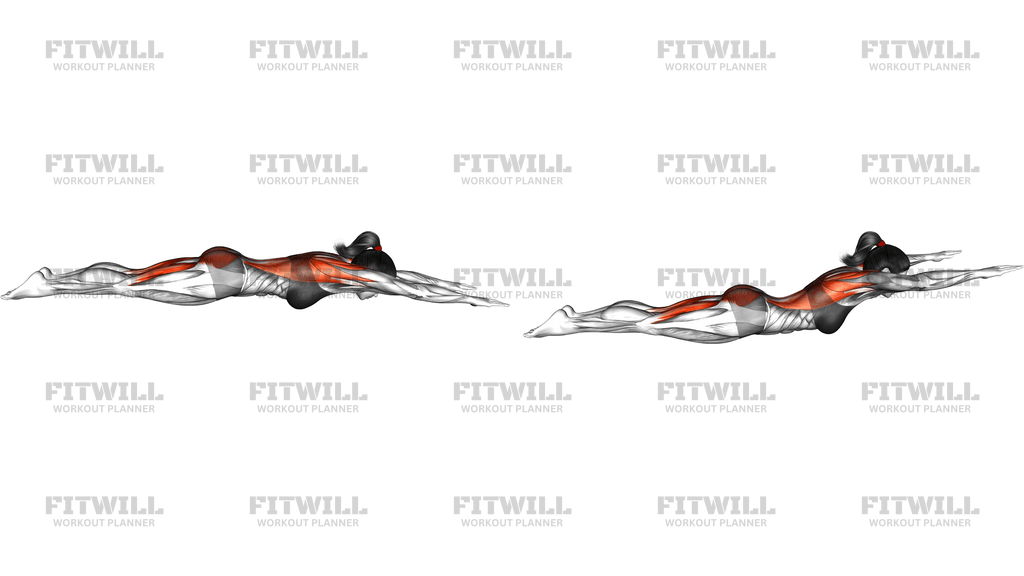
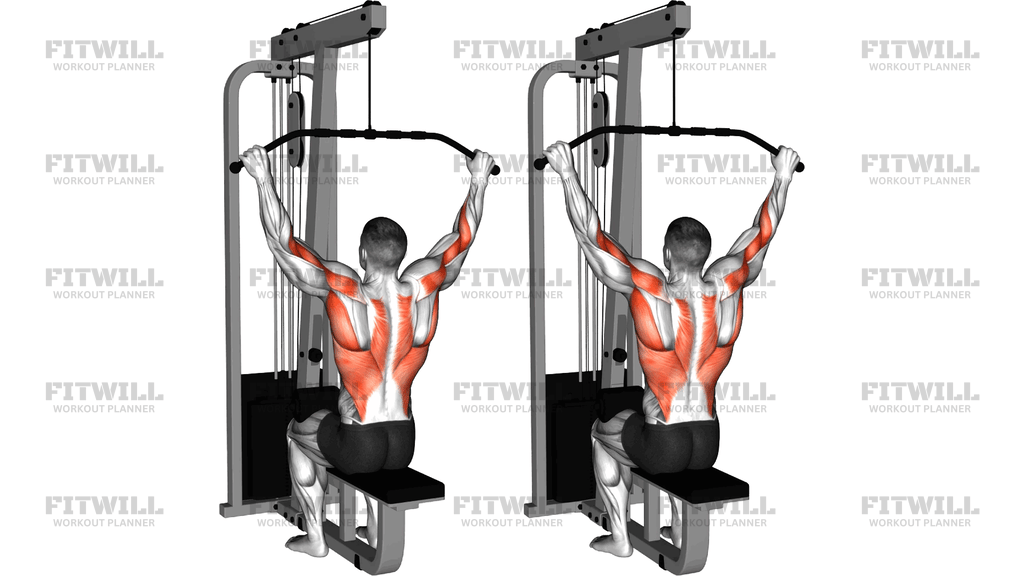
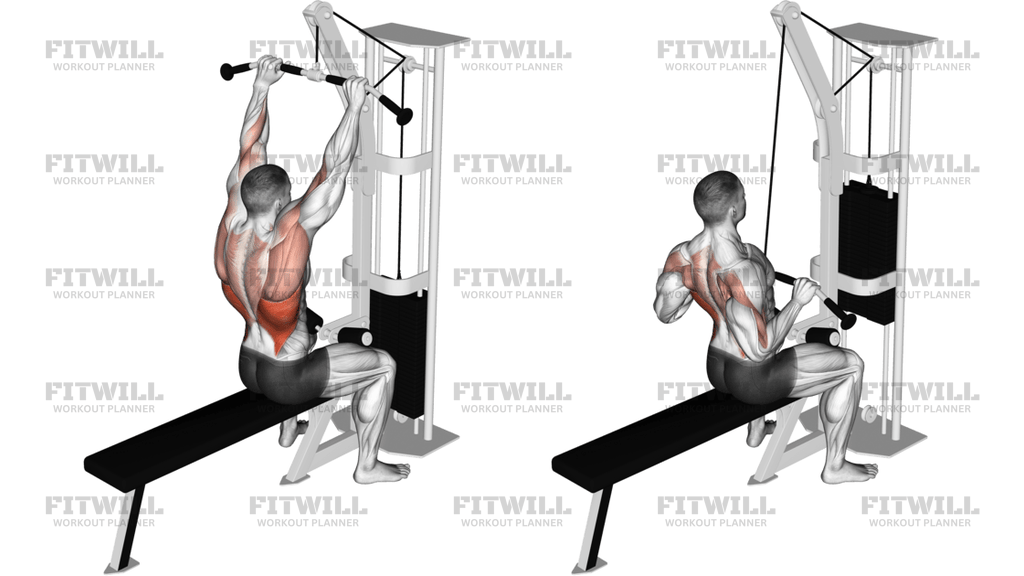
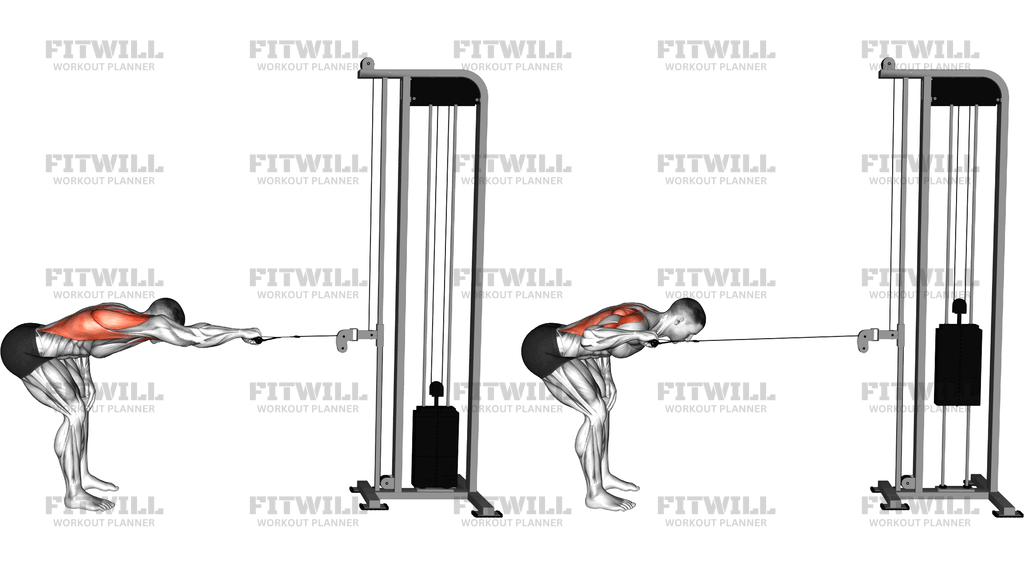
Cable Kneeling Pulldown (Version 3)
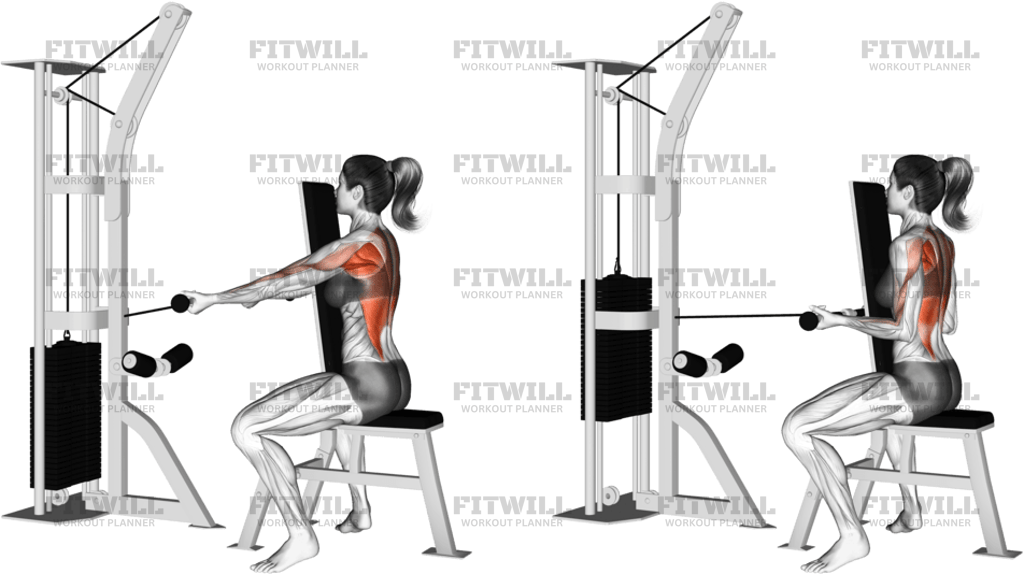
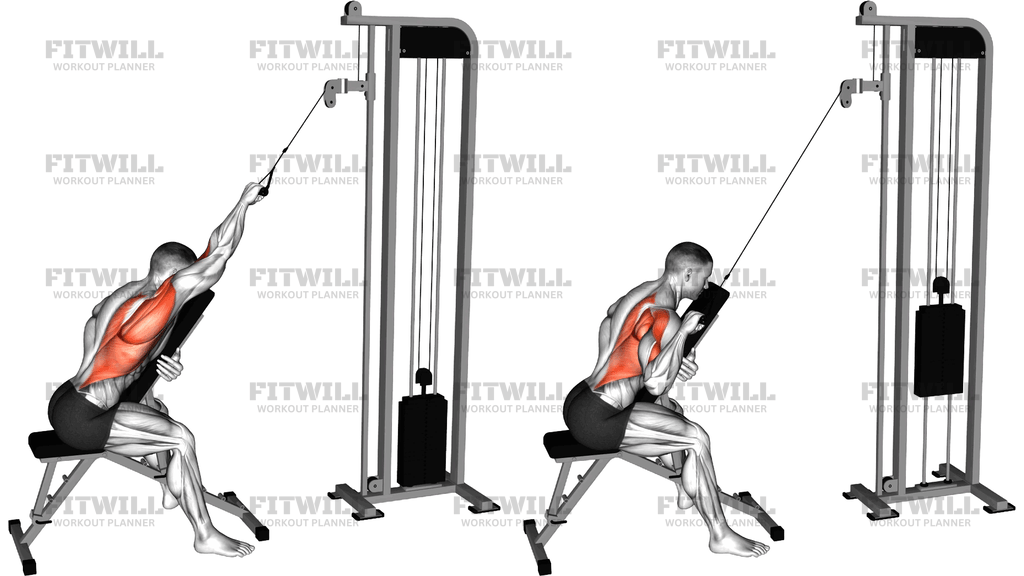
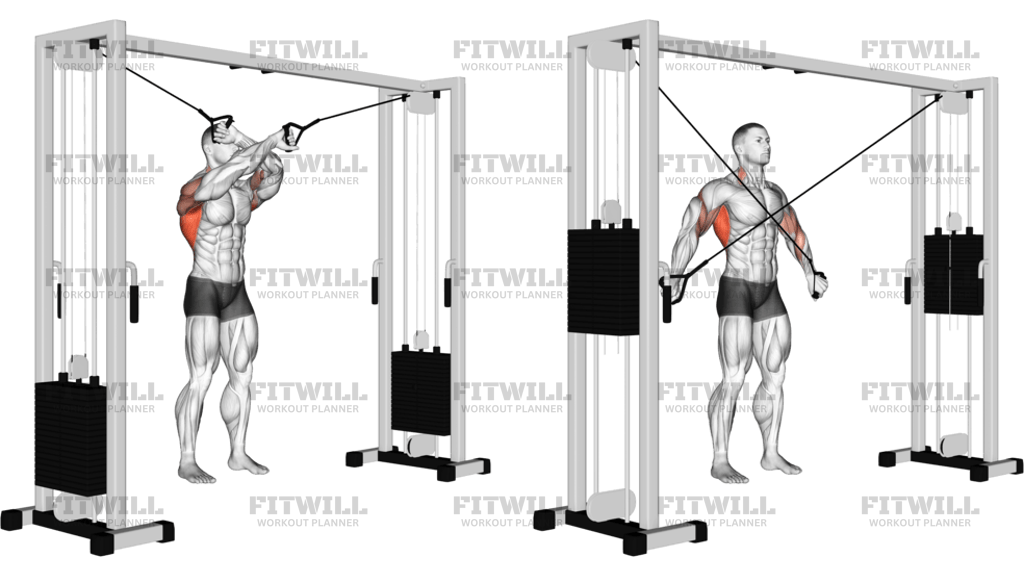
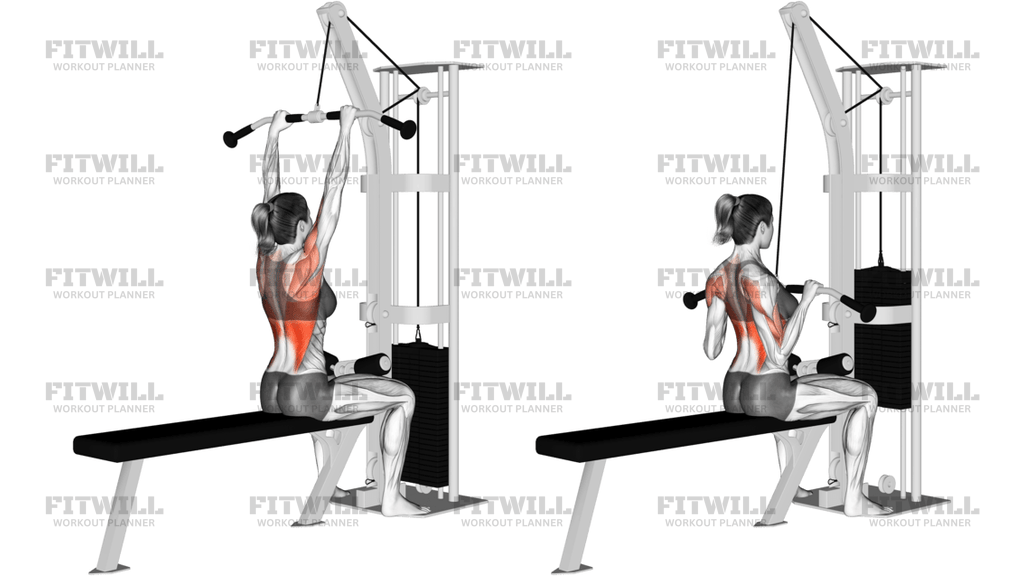
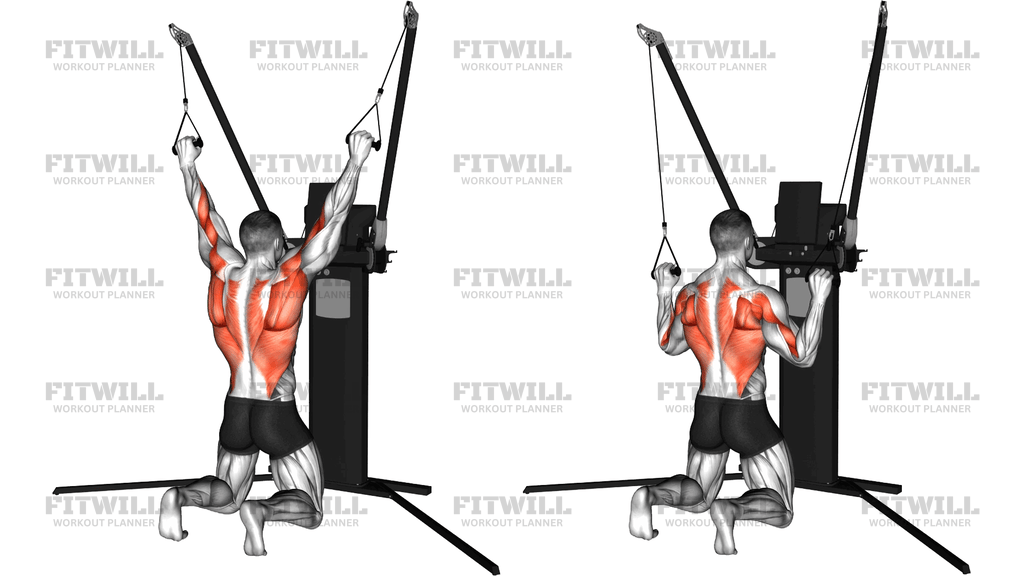
The Cable Kneeling Pulldown is a back exercise performed on a dual-cable stack with a handle in each hand, kneeling upright and facing the machine. From a wide overhead position, you pull both handles down and out toward your shoulders, driving the elbows down past your ribs before letting the arms rise back under control. The kneeling stance is what separates this from a standard seated pulldown: with no seat, thigh pads, or backrest, your torso has to hold itself steady, which turns the movement into a combined lat builder and trunk stability drill.
The main work is done by the lats, which pull the upper arms down and slightly out as the cables converge. Because each cable works independently, the teres major, rear delts, rhomboids, and mid-traps finish the pull and control the shoulder blades as they retract. The biceps and forearms assist, and the entire core works isometrically to keep your ribs stacked over your hips throughout the set.
This setup works well for lifters who want the lat focus of a pulldown without the lower-back loading that heavy lat pulldowns or pull-ups can create, and for anyone whose gym is busy at the pulldown station but open at the cable towers. It also suits trainees working on scapular control, since the kneeling position removes momentum from the hips and makes any torso swing obvious. Beginners can learn it with light weight to groove the pull pattern, and experienced lifters can use it as a strict, high-feel back finisher.
Setup matters here more than in most pulls. Set both pulleys to the highest position, kneel far enough from the tower that the cables angle slightly outward and back toward you, and plant your shins and feet so your hips sit directly over your knees. If you stand too close, the cables crowd your head; too far away, and the resistance drags you forward into your lower back. Grip the handles with a neutral palm facing in, and let the arms reach fully overhead before the first rep.
Execute the pull by starting the movement at the shoulder blades, drawing them down and together, then pulling the handles down until they arrive just outside your shoulders with elbows pointing toward the floor and slightly back. Keep your chest tall and your spine neutral rather than leaning back to help the weight. Return the handles along the same path until the arms are fully extended overhead, letting the shoulder blades elevate slightly at the top for a complete stretch.
Two practical points will protect the quality of every set. First, choose a load you can stop at the bottom without your torso pitching backward — the moment your hips drift behind your knees to cheat the pull, the weight has won. Second, keep the wrists straight and the grip relaxed enough that your forearms do not fail before your lats do. If your grip gives out early, straps are a reasonable option on heavier sets.
[ Workout Log & Planner ]
Put your next workout in Fitwill
Keep your plan and training log ready when you are.


Instructions
- Set both pulleys of the cable tower to their highest position and clip a single handle to each cable.
- Kneel on the floor facing the machine, hips stacked directly over your knees, shins resting on the ground, feet relaxed behind you.
- Grip one handle in each hand with a neutral, palms-facing grip and step or adjust your position so the cables run slightly outward above your shoulders.
- Start with your arms fully extended overhead, shoulder blades stretched upward, chest tall, and ribs down over your hips.
- Brace your core firmly to lock your torso in place before the weight stack moves.
- Initiate the pull by drawing your shoulder blades down and together, then pull both handles down and slightly out until they reach the sides of your head or shoulders, elbows driving toward the floor.
- Pause briefly at the bottom with elbows below shoulder level, squeezing the lats and upper back without shrugging.
- Let the handles travel back up along the same path until your arms are fully straight overhead, allowing the shoulder blades to rise for a full stretch.
- Exhale as you pull down and inhale as the arms extend back up.
- Complete the set, then release one handle at a time and let the stack return gently rather than letting the cables snap you upright.
Tips & Tricks
- If your torso leans back as you pull, the load is too heavy or you are leading with the arms — drop the weight and start each rep from the shoulder blades.
- Do not let your hips drift behind your knees at the bottom of the pull; that shift turns a lat exercise into a momentum-driven row.
- Keep the elbows tracking down and slightly outward toward the sides, not straight in front of your chest — pulling toward the face narrows the path and shifts work away from the lats.
- Avoid gripping the handles with white-knuckle pressure; a firm but loose grip keeps the biceps and forearms from taking over the set.
- Move the handles all the way to full extension at the top — cutting the range short robs you of the lat stretch that makes this kneeling version worthwhile.
- If the cables are pulling you forward at the start of each rep, kneel slightly farther back or use a lighter weight so the first inch of the pull stays controlled.
- Think of pulling with your elbows, not your hands — this cue keeps tension on the lats instead of turning the set into a biceps curl with cables.
- Keep the neck neutral by looking at a fixed point on the tower rather than craning up at the pulleys as the arms rise.
- Because there is no seat or pad, fatigue shows up as trunk wobble first; end the set when your form starts to sway, not when the pull itself fails.
Frequently Asked Questions
Which muscles does the Cable Kneeling Pulldown work the most?
The lats do the bulk of the work, pulling the arms down from overhead. The teres major, rear delts, rhomboids, and mid-traps assist and control the shoulder blades, while the biceps and core support the pull and hold the kneeling posture.
Why kneel instead of sitting for this pulldown?
Kneeling removes the seat and thigh pads, so your torso must stay upright through core strength alone. This eliminates hip-driven momentum and adds a stability demand that the seated version does not have.
Is the Cable Kneeling Pulldown suitable for beginners?
Yes, provided the weight starts light. Beginners should first learn to keep the hips over the knees and pull with the elbows before progressing the load.
Should I use a neutral grip or an overhand grip on the handles?
A neutral, palms-facing grip on single handles is the standard setup and tends to be comfortable for most shoulders and wrists. It also lets the elbows track naturally down and outward along the cable path.
How far should I pull the handles down?
Pull until the handles are just outside your shoulders with your elbows at or slightly below shoulder height. Going deeper usually forces the torso to lean back rather than adding lat work.
What is the most common mistake with this exercise?
Leaning back and swinging the torso to move the weight. Once the hips shift behind the knees, the lats lose tension and the lower back takes over the stabilizing work.
Can I use this exercise if seated pulldown stations are taken?
Absolutely. Any dual-cable tower with high pulleys and single handles allows you to replicate the pulldown pattern, and the kneeling version is arguably stricter because there is no seat to lean against.
How does the Cable Kneeling Pulldown compare to pull-ups?
Both train the lats through a similar overhead pull, but the cable version offers adjustable resistance and independent arm paths, making it easier to scale and to address one side at a time. Pull-ups are harder to unload, so the kneeling pulldown is a common stepping stone toward them.
Is it safe for the lower back?
When performed with an upright torso and controlled weight, the kneeling position generally keeps the spine in a neutral, low-stress position. Problems arise when heavy loads pull the trunk into extension or forward lean, so keep the load honest and the brace tight.