Cable Neutral Grip Wide Pulldown (Version 3)
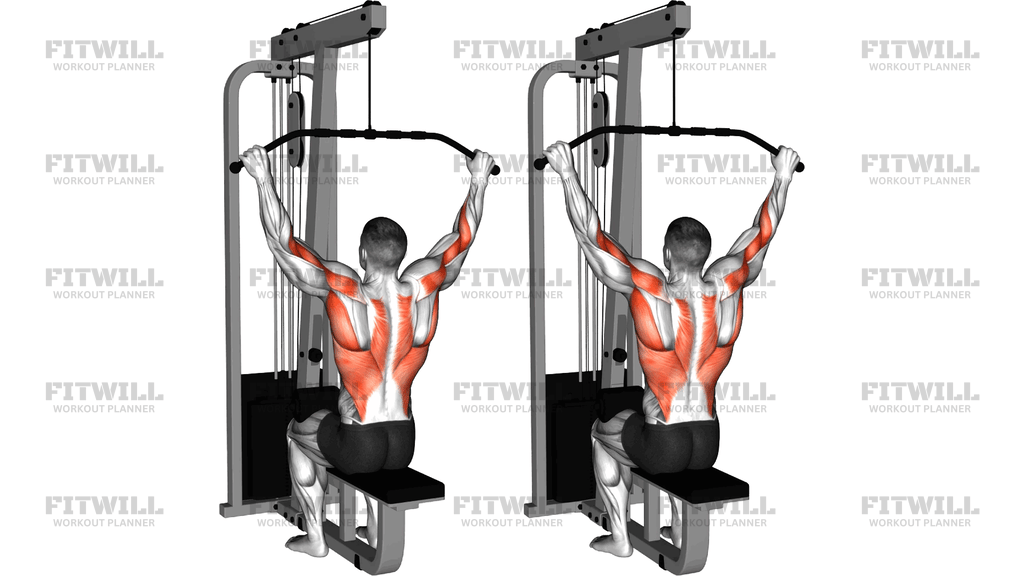
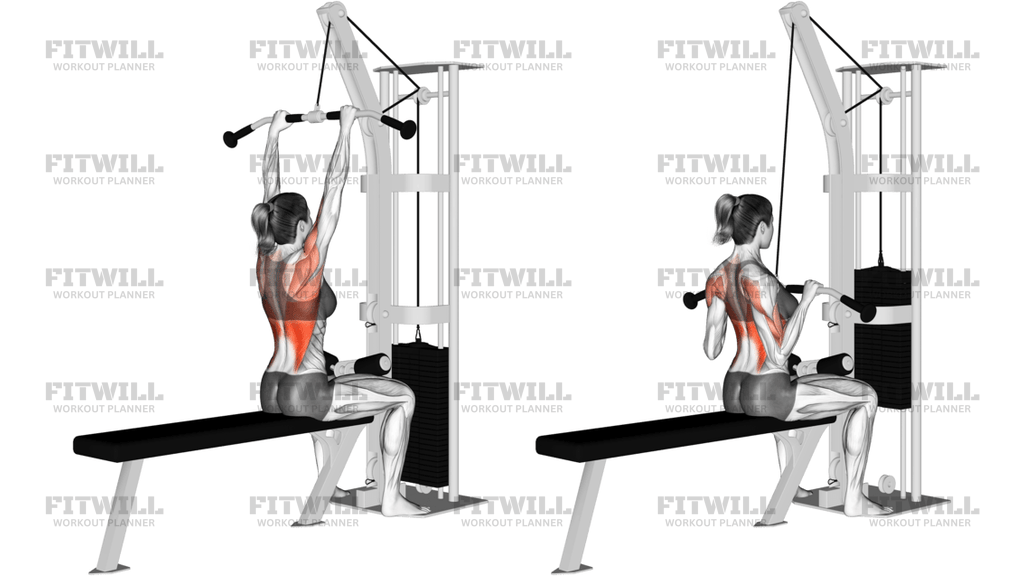
The Cable Neutral Grip Wide Pulldown is a seated vertical pulling exercise performed on a lat pulldown machine using a wide attachment with angled, palms-facing handles. Instead of the traditional straight bar with an overhand grip, the neutral handles let your palms face each other as you pull the bar down to roughly collarbone level. This hand position sits somewhere between a narrow neutral-grip pulldown and a wide overhand pulldown, giving you a wide elbow path with less shoulder rotation than a pronated bar.
The main work is done by the lats, which drive the arms down and back, while the teres major, rhomboids, middle traps, and rear shoulders control the shoulder blades as they pull together and down. The biceps and forearms assist through the pull and work hard on the way back up. Because the thigh pads pin your legs down, your torso stays honest — you can't lean way back and turn it into a row, which is exactly why this setup is useful for people who tend to cheat on pulldowns.
This version suits lifters who want lat work with a friendlier shoulder position than a fully pronated wide grip, as well as anyone who finds their grip slipping on a straight bar during higher-rep sets. The angled handles also make it easier to feel the lats at the bottom of the movement rather than just muscling the weight with the arms.
Setup matters more than most people think. Adjust the thigh pads so your legs are held snugly in place, sit tall with a slight forward lean of the torso, and take a grip slightly wider than your shoulders on the angled handles. Pulling to the upper chest with elbows tracking down and outward keeps tension on the back; pulling to the stomach or yanking with the arms shifts the emphasis away from where you want it.
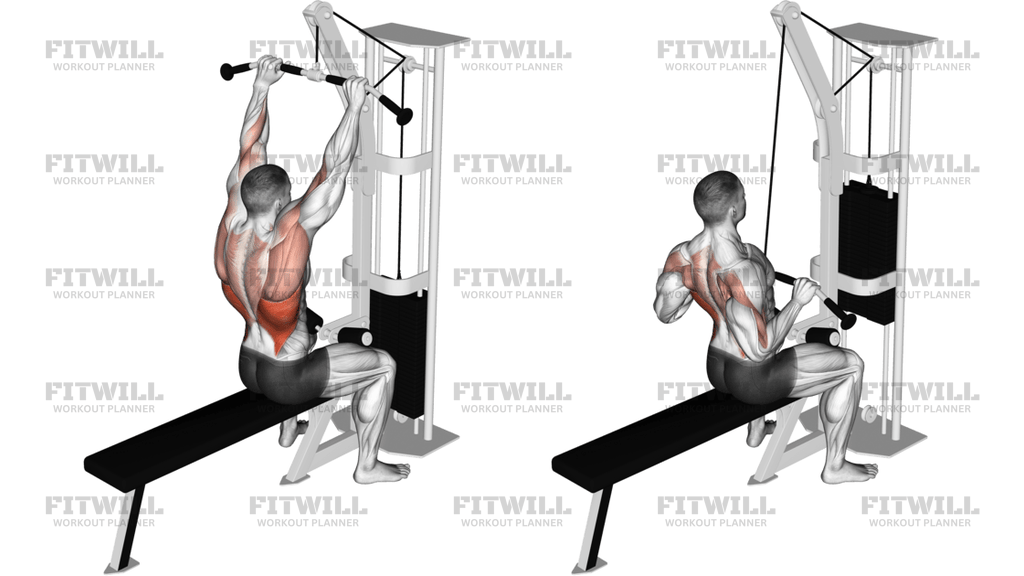
Execute each rep by initiating the pull from the shoulder blades, driving the elbows down toward your sides, and bringing the bar to the top of your chest. Pause briefly at the bottom, then let the bar travel back up under control until the arms are fully extended and the lats are stretched. This controlled return is half the exercise — the cable's constant tension makes the eccentric a genuine training stimulus rather than dead time.
You'll see this movement in back-focused sessions, hypertrophy programs, and as a substitute for pull-ups when bodyweight pulling is not yet available. Keep the load moderate enough that you can complete the full range with your chest up; if your torso starts rocking backward to move the weight, the setup has stopped doing its job.
[ Workout Log & Planner ]
Put your next workout in Fitwill
Keep your plan and training log ready when you are.


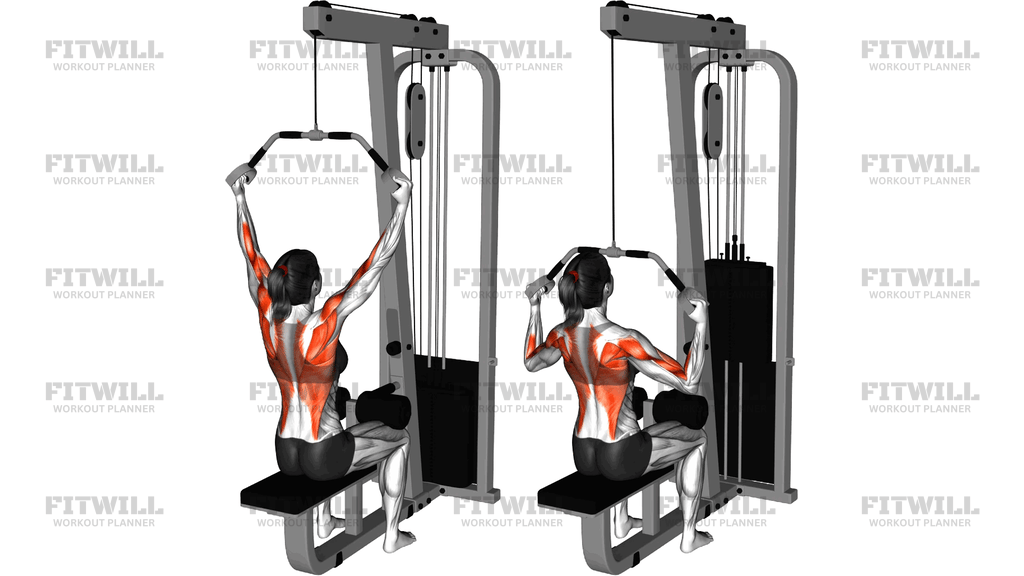
Instructions
- Sit on the pulldown machine's seat and slide your thighs under the pads so your legs are held firmly without pinching; your feet should rest flat on the floor.
- Take hold of the wide attachment's angled handles with a neutral grip, palms facing each other, hands slightly wider than shoulder width.
- Sit tall with a small, stable backward lean of about 10-15 degrees and lift your chest; this is your torso position for the whole set.
- Start each rep with your arms fully extended overhead and let your shoulder blades rise slightly so the lats feel stretched before pulling.
- Exhale and pull the handles down toward your upper chest by driving your elbows down and out to the sides, squeezing your shoulder blades together at the bottom.
- Hold the bar briefly at chest level, keeping the elbows wide rather than tucking them in toward your ribs.
- Inhale as you slowly straighten your arms back up, resisting the weight stack until the elbows are locked out overhead and the lats are lengthened.
- Keep your wrists straight and your grip firm but not crushing, so your forearms don't take over the movement.
- Reset your torso position after each rep if you notice yourself leaning back further, then continue for the planned number of reps before standing up carefully under the lowered bar.
Tips & Tricks
- If you feel the work mostly in your biceps, lighten the load and consciously lead each pull with your elbows — the hands are just hooks connecting you to the machine.
- A common error on this exact setup is pulling the handles down to the sternum or belly, which turns it into a row; aim for the top of the chest so the elbows can travel straight down along a wide path.
- Don't shrug at the start of the pull. If your shoulders creep toward your ears as you begin, the traps are stealing the rep — depress the shoulder blades first, then pull.
- The thigh pads are there for a reason: if you're lifting your hips off the seat or driving your legs up to help, the weight is too heavy for your lats to move honestly.
- Keep your torso lean fixed throughout the set. Increasing your backward lean as fatigue sets in shortens the lat range and shifts work toward the mid-back at angles you didn't plan.
- Let the bar rise all the way on the return until your elbows are straight — cutting the top third of the range removes the stretch phase where much of the lat growth stimulus lives.
- With a neutral grip your wrists should stay stacked over your forearms; bending them backward under heavy load strains the forearm flexors and blunts your pull.
- Grip slightly outside the curve of the handles where your knuckles line up with your forearm, not at the inner bends, to keep the shoulder path smooth.
- If your shoulders pinch at the top of the stretch, reduce the depth of the return slightly rather than bouncing at full extension.
Frequently Asked Questions
Which muscles does the Cable Neutral Grip Wide Pulldown work hardest?
The lats are the primary movers, supported by the teres major and the muscles that pull the shoulder blades together, mainly the rhomboids and middle traps. The biceps and forearms assist throughout, especially on the way back up.
How is the neutral grip different from a standard overhand wide-grip pulldown?
The angled handles keep your palms facing each other, which reduces shoulder rotation and is generally more comfortable for people with cranky shoulders. The elbow path stays wide, so you still train the lats across a broad range rather than narrowing into a close-grip pulldown.
Is the Cable Neutral Grip Wide Pulldown suitable for beginners?
Yes, it's one of the more approachable vertical pulls because the machine stabilizes your torso with the thigh pads and the weight is fully adjustable. Beginners should start light and prioritize the full range from a dead hang stretch to the chest before adding load.
Why does the machine have thigh pads, and how should I set them?
The pads anchor your legs so your torso can't swing backward and turn the pulldown into a momentum-driven row. Adjust them so your thighs are held snugly — you should not be able to lift your hips without effort, but they shouldn't dig into your legs either.
Should I pull the bar to my chest or behind my neck?
Pull to the front, at the top of your chest. Behind-the-neck pulling forces the shoulders into an awkward externally rotated position under load and offers no meaningful advantage for the lats.
What's the most common mistake with this exercise?
Leaning progressively farther back rep after rep and pulling the handles toward the stomach. Keep your lean fixed at a slight angle and target the upper chest so the elbows drive straight down and the lats stay in charge.
Can I use this instead of pull-ups?
Yes, it trains the same vertical pulling pattern with adjustable resistance, making it a practical substitute while you build the strength for bodyweight pull-ups. Once pull-ups are available, the two can coexist, with the machine version useful for controlled volume and higher reps.
How do I stop my forearms from fatiguing before my back?
Grip the handles firmly but don't squeeze them to death, and consider using lifting straps for heavier sets. Slowing down the tempo usually helps too, because rushed reps tend to be pulled with the arms rather than the elbows.
Is it safe to let the weight stack slam down between reps?
No — lower the handles under control so the stack doesn't drop, both to protect your shoulders at full stretch and to keep constant tension on the lats. A hard drop also yanks the cable slack out abruptly at the start of your next rep.