Dumbbell One Arm Hammer Preacher Curl
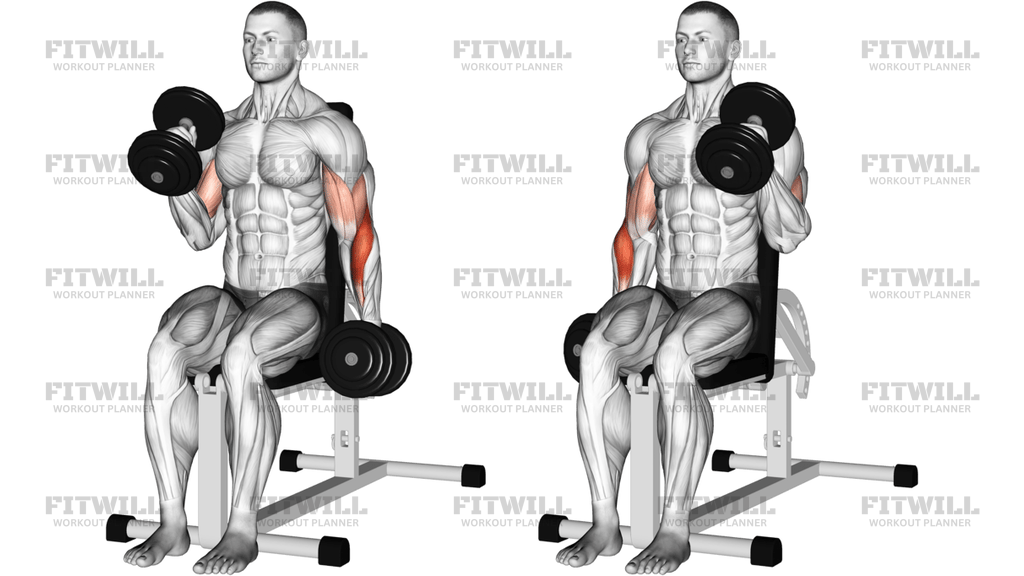
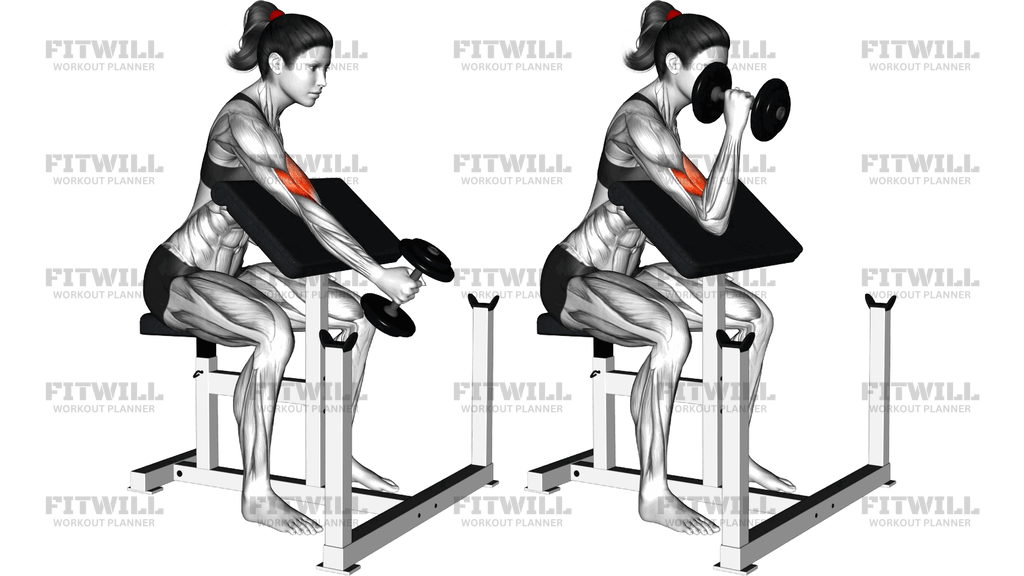
The Dumbbell One Arm Hammer Preacher Curl is a single-arm biceps variation performed on a preacher bench with a neutral, palms-facing grip. Instead of turning the palm up as in a standard curl, you keep the dumbbell vertical throughout the lift, which shifts a large share of the work onto the brachialis and brachioradialis. The preacher bench pins your upper arm against the angled pad, removing the ability to swing or lean, so the elbow flexors do the lifting on their own terms.
This setup is especially useful for lifters who want thicker-looking arms, because the brachialis sits underneath the biceps and pushes them up as it grows. The neutral grip also heavily recruits the brachioradialis, a prominent forearm muscle on the thumb side of the arm, so you get visible forearm development along with the upper arm work. Training one arm at a time lets you spot and fix side-to-side differences, and the isolated position is demanding enough that a modest dumbbell goes a long way.
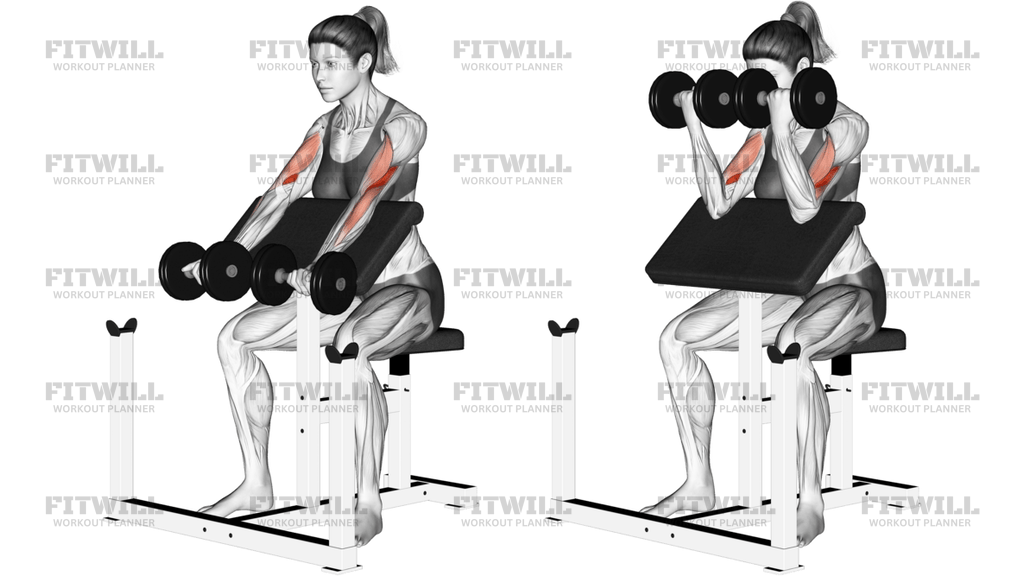
Setup matters more here than in a standing curl. Sit with your armpit snug over the top of the pad, the back of your upper arm resting flat against it, and your elbow slightly below or level with the top edge. If your shoulder is rounded forward or your elbow is floating off the pad, the angle changes and the tension leaks away from the elbow flexors. Keep the working wrist straight and firm rather than bent back, since a neutral grip makes it easy to curl with the forearm instead of the arm.
Execution is straightforward but unforgiving. Curl the dumbbell up along the pad's angle until your forearm presses against your biceps or the dumbbell reaches shoulder height, pause briefly, then lower under control until the arm is nearly straight. Do not let the weight drop at the bottom; the stretch position is where a lot of the growth stimulus lives. Breathe out as you curl, in as you lower, and keep your torso still on the seat.
A common use case is as a second or third biceps exercise after heavier two-arm curls, typically for two to four sets of eight to twelve reps per side. Because the pad locks the arm in place, this is also a good choice for lifters with cranky shoulders who struggle with behind-the-body curl positions, as the supported angle is gentle on the shoulder joint. Choose a weight you can lower slowly for every rep, and switch arms after each set rather than alternating mid-set to keep the work even.
[ Workout Log & Planner ]
Put your next workout in Fitwill
Keep your plan and training log ready when you are.


Instructions
- Sit on the preacher bench and plant both feet flat on the floor, with your hips and back firmly against the seat.
- Grasp a dumbbell in one hand with a neutral grip, palm facing your body, and rest the back of your upper arm flat against the angled pad so your armpit sits just over the top edge.
- Let the arm extend down the pad until the elbow is almost straight, and set your free hand on the bench or your thigh for stability.
- Brace your core, keep your chest up, and squeeze the pad lightly with the back of your arm so the elbow cannot drift forward.
- Curl the dumbbell up by bending only at the elbow, keeping the palm facing inward for the entire rep and the wrist straight.
- Continue until your forearm presses against your biceps near shoulder height, and pause for a beat at the top.
- Lower the dumbbell slowly along the pad, resisting the weight until your arm is nearly straight at the bottom.
- Exhale as you curl up, inhale as you lower, and never hold your breath during the rep.
- Complete all reps on one side, then switch the dumbbell to the other arm and match the rep count.
- When finished, set the dumbbell on the floor rather than dropping it from the extended position.
Tips & Tricks
- Keep the armpit glued over the top of the pad. If your elbow slides down the pad as you fatigue, the angle flattens and the shoulder starts helping, so reset your position or reduce the weight.
- A neutral grip tempts people to curl by flexing the wrist or rolling the dumbbell toward the thumb. Lock the wrist in line with the forearm and think of lifting from the elbow joint only.
- Stop just short of full elbow lockout at the bottom. Slamming into a dead hang under load is the most common way to strain the inner elbow on this exercise.
- Do not lift your shoulder or shrug as the dumbbell rises. If the shoulder creeps up, the weight is too heavy for the arm to curl alone.
- Lower the dumbbell over two to three seconds. Because the pad prevents swinging, the eccentric is where most of the tension is earned, and rushing it wastes the exercise.
- Start with your weaker arm and match the reps with the stronger arm so the imbalance closes instead of grows.
- If the top of the pad digs into your armpit, adjust your seat height or scoot slightly forward until the pad contacts the middle of the upper arm, not the shoulder joint.
- Pick a dumbbell noticeably lighter than your standing hammer curl weight. Removing body english makes the same load feel much harder.
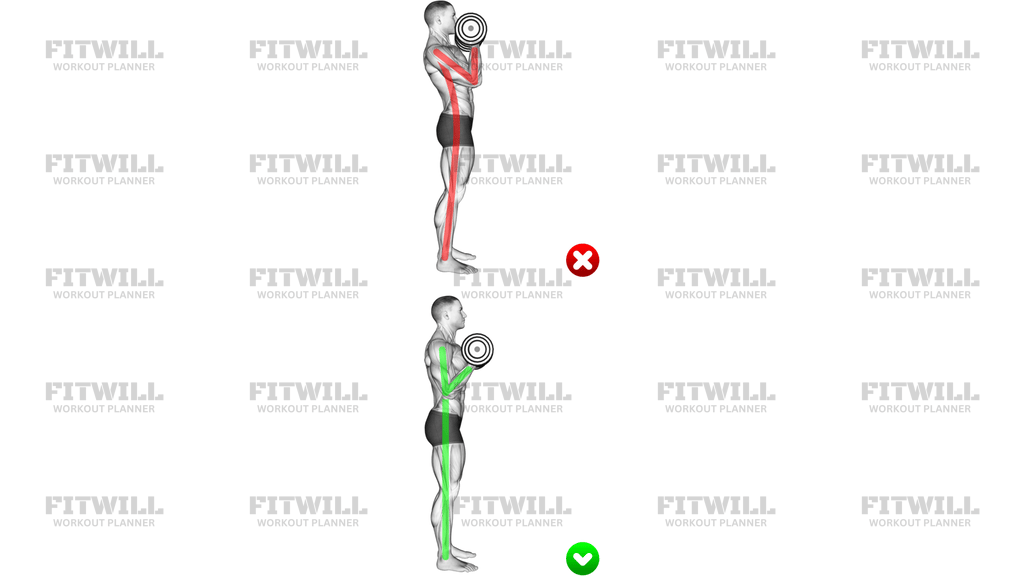
- Keep your feet planted and your torso still. Rocking back to help the weight up turns an isolation exercise into a partial body movement.
Frequently Asked Questions
Which muscles does the Dumbbell One Arm Hammer Preacher Curl work?
The neutral grip and fixed arm angle put the brachialis and brachioradialis in the spotlight, with the biceps brachii assisting and the forearm muscles working to hold the dumbbell steady. It is a brachialis-first exercise rather than a pure biceps builder.
Why use a hammer grip instead of a regular palms-up grip on the preacher bench?
Rotating the palm up shortens the brachioradialis and shifts effort toward the biceps. Keeping the palm facing inward throughout the rep keeps those forearm-side flexors loaded and builds thickness in the lower arm and under the biceps.
Can beginners do the Dumbbell One Arm Hammer Preacher Curl?
Yes, and the preacher bench actually helps beginners because the pad prevents swinging and cheating. Start with a light dumbbell in the 5 to 10 kg range and focus on a slow, controlled lowering phase before adding load.
Why does one arm feel stronger than the other on this exercise?
Small side-to-side differences are normal, and the single-arm setup simply exposes them. Always start with the weaker arm and match its rep count with the stronger arm so the gap narrows over time instead of widening.
How high should I curl the dumbbell at the top?
Curl until your forearm presses against your biceps and the dumbbell is around shoulder height, without letting the elbow leave the pad. Curling higher than that requires the shoulder to lift the arm forward, which takes work away from the elbow flexors.
My elbow hurts on the inside during this curl. What should I check?
The most common cause is lowering into a full dead hang with a heavy weight, which strains the inner elbow. Keep a slight bend at the bottom, slow the eccentric, and drop the load; if discomfort persists, stop and get it assessed.
What can I use if I do not have a preacher bench?
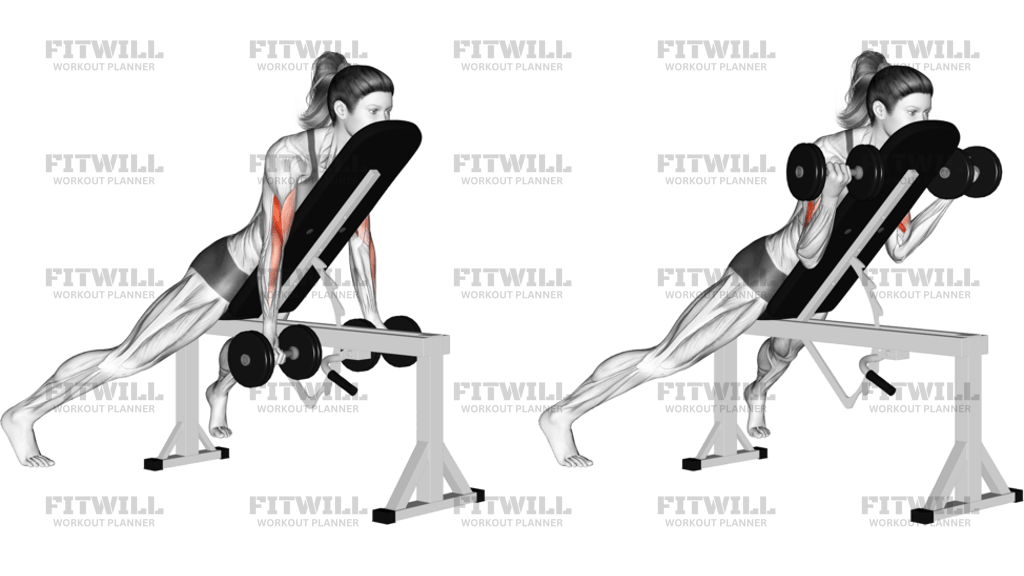
You can brace the back of your upper arm against an incline bench set to a steep angle, or do a seated one-arm hammer curl with your elbow braced against the inside of your thigh. Both mimic the fixed-arm position, though with slightly less stability.
How many sets and reps should I do?
Two to four sets of 8 to 12 reps per arm works well as a secondary arm exercise. Because the brachialis responds to controlled tempo, prioritize a two to three second lowering phase over chasing heavier dumbbells.
Should I alternate arms during the set or finish one side first?
Finish all reps on one arm before switching. Alternating mid-set adds rest for each arm and makes it harder to match effort and reps evenly between sides.