Dumbbell Alternate Seated Hammer Curl
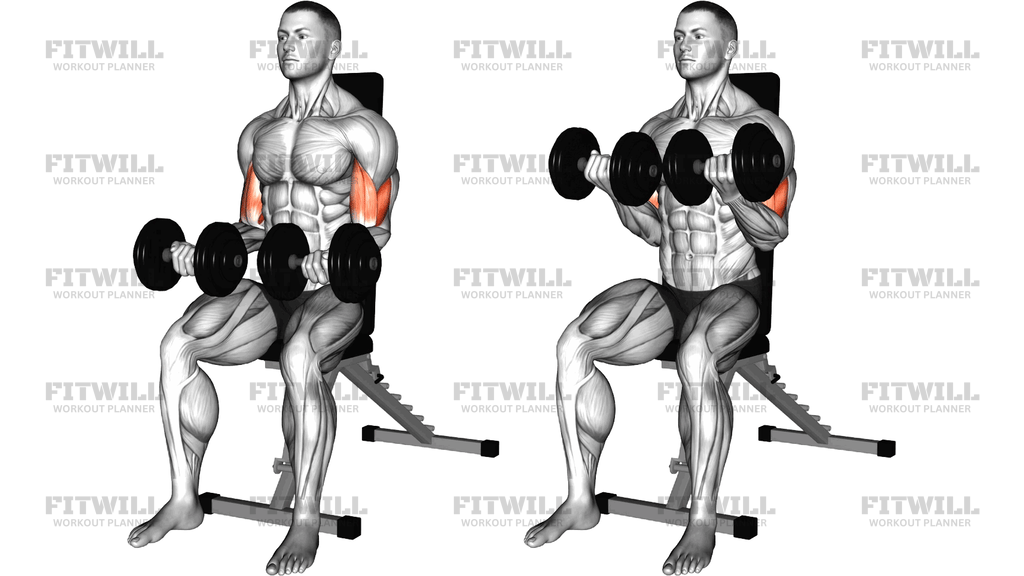
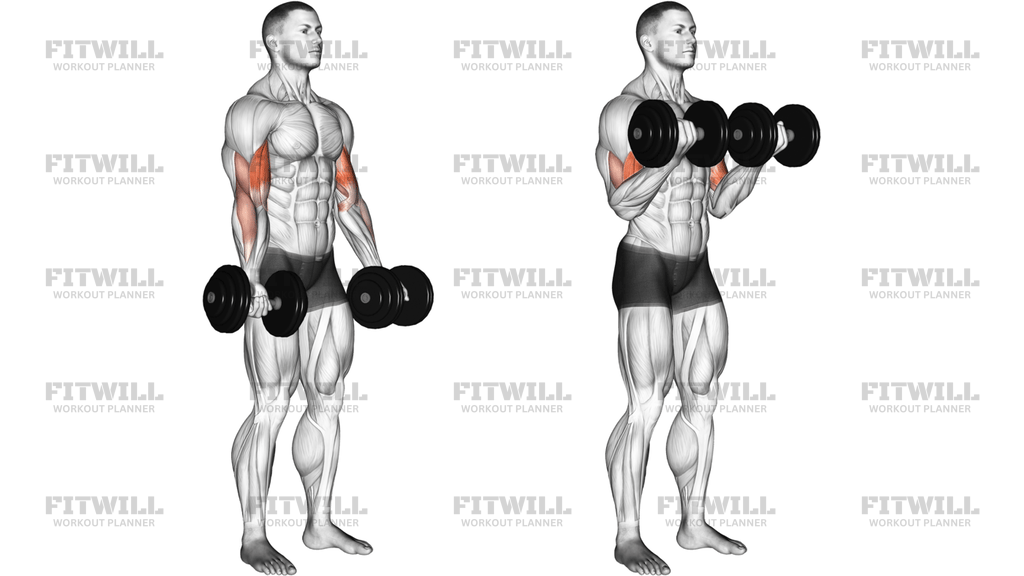
Dumbbell Alternate Seated Hammer Curl is a seated dumbbell arm exercise that trains the upper arms and forearms through a neutral-grip curl. With one arm working at a time, it keeps the set honest: the torso stays still, the elbow tracks close to the side, and the non-working hand rests while the other arm finishes its rep. That alternating pattern makes it useful for building strict elbow-flexion strength without relying on swing or body English.
The main training effect is on the biceps, but the hammer-grip position shifts a lot of work to the brachialis and brachioradialis as well. Those muscles help thicken the upper arm and improve strength in a neutral wrist position. If the curl starts turning into a shoulder raise or a leaning heave, the load is too heavy or the bench position is not set up well enough.
The seated setup matters because it removes a lot of the help you could get from your hips and legs. Sit tall with both feet planted, chest open, and the dumbbells hanging by your sides with palms facing each other. From there, curl one dumbbell toward the front of the shoulder while keeping the wrist straight and the elbow pinned near the ribcage. Lower it under control, then repeat on the other side.
A good rep looks smooth rather than explosive. The forearm should travel on a clean arc, the shoulder should stay quiet, and the top position should feel like a strong squeeze rather than a shrug. Use the full range you can control without letting the shoulder roll forward or the elbow drift ahead of the body. Because each arm alternates, the tempo is easy to rush, so the lowering phase should stay deliberate.
This exercise fits well in arm-focused sessions, upper-body accessory work, or as a simple curl variation for people who want less wrist rotation than a classic supinated curl. It is generally beginner-friendly when the weight is kept modest, but it still rewards precision: if the bench, grip, and elbow path are organized from the start, the set stays targeted and the joints take less unnecessary strain.
[ Workout Log & Planner ]
Put your next workout in Fitwill
Keep your plan and training log ready when you are.


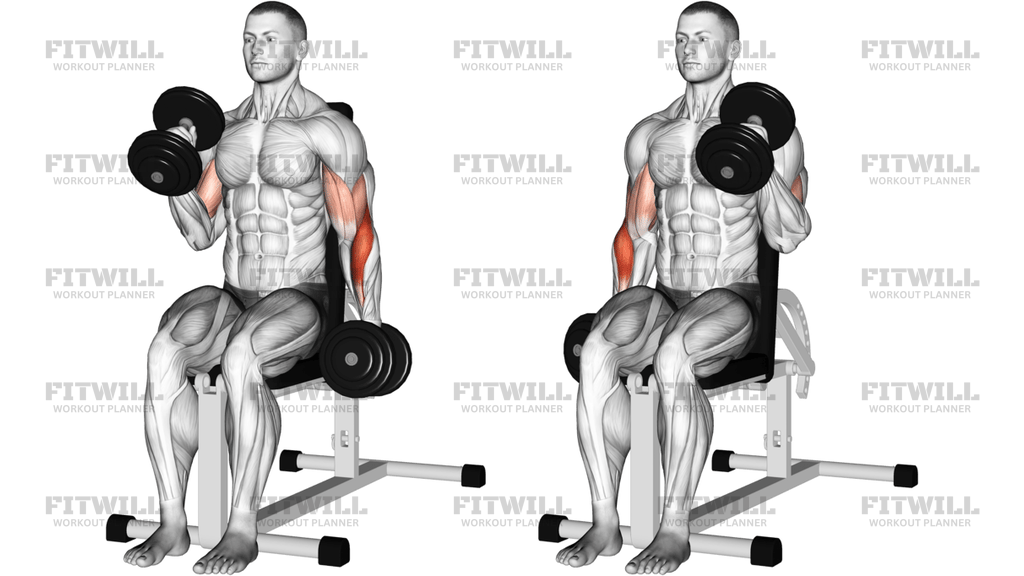
Instructions
- Sit on a bench with your feet flat, torso tall, and a dumbbell in each hand hanging at your sides with palms facing in.
- Keep your shoulders down, chest lifted, and elbows tucked close to your ribs before you start the first curl.
- Curl one dumbbell up with a neutral grip until the forearm is close to vertical and the hand reaches about shoulder height.
- Keep the upper arm still and avoid leaning back or swinging the dumbbell as it rises.
- Squeeze briefly at the top while the wrist stays straight and the shoulder remains quiet.
- Lower the dumbbell slowly until the arm is fully extended without locking the elbow aggressively.
- As one arm comes down, begin the next curl with the other arm and keep the alternation smooth.
- Continue alternating for the planned reps, then lower both dumbbells to your sides before standing up.
Tips & Tricks
- Keep both sit bones planted on the bench; if you have to bounce or slide forward, the dumbbells are too heavy.
- Think about lifting the knuckles toward the shoulder instead of pulling the elbow forward.
- A neutral grip should stay neutral the whole time; do not turn the palm up at the top like a standard curl.
- Let the non-working arm hang relaxed instead of tensing it up and helping the torso sway.
- Stop just short of shrugging the shoulder forward at the top; the curl should come from the elbow, not the upper trap.
- Use a slower lowering phase than lifting phase to keep tension on the brachialis and forearm flexors.
- If your wrist bends back, reduce the load and keep the dumbbell stacked over the forearm.
- Breathe out as you curl and inhale as you lower so your torso stays quiet through the alternation.
Frequently Asked Questions
What muscle does Dumbbell Alternate Seated Hammer Curl target most?
The biceps are the main target, with strong help from the brachialis and brachioradialis because of the neutral grip.
Can beginners perform this exercise?
Yes. Beginners usually do well with light dumbbells and a strict seated setup that removes body swing.
Should I rotate my wrist during the curl?
No. Keep the palms facing in from start to finish so it stays a hammer curl, not a supinated curl.
Why alternate arms instead of curling both at once?
Alternating lets you focus on one side at a time and makes it easier to keep the torso still and the elbow path clean.
What should I watch for at the top of the rep?
The elbow should stay near your side and the shoulder should not roll forward or shrug up.
Is it normal to feel this in the forearms?
Yes. The brachioradialis and forearm flexors work hard in the neutral grip, especially if you lower the dumbbell slowly.
What is the most common mistake with this curl?
Using momentum from the back or shoulders instead of letting the elbow flex the dumbbell in a controlled arc.
How many reps should I use?
It works well in moderate to higher rep ranges, as long as each side stays strict and the lowering phase stays controlled.