Cable Kneeling One Arm Lat Pulldown
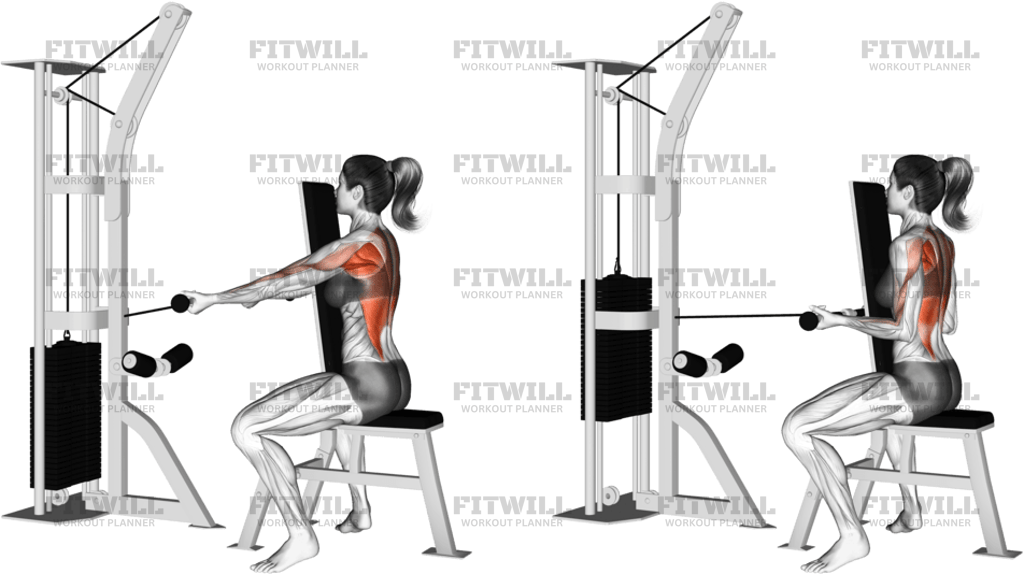
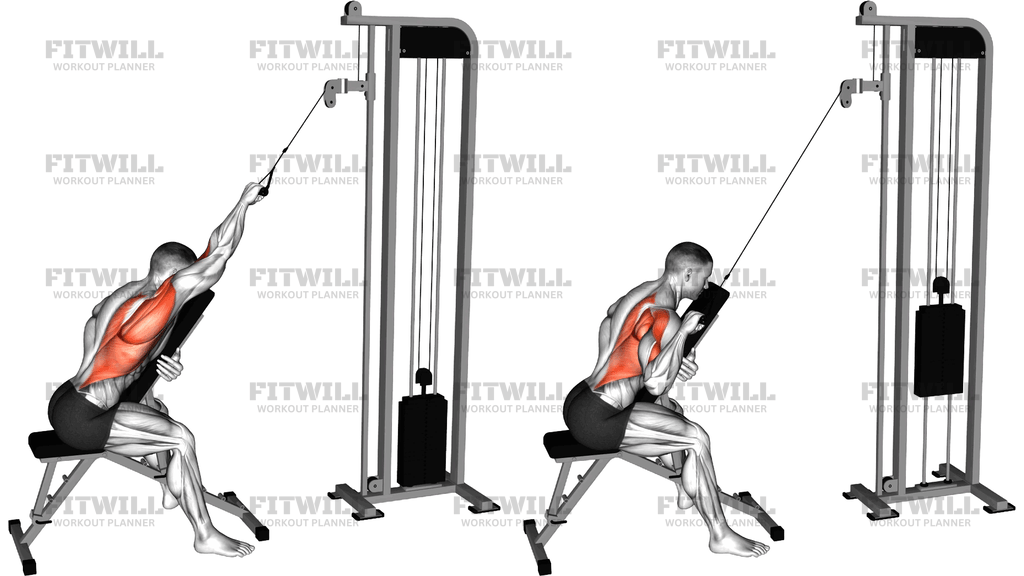
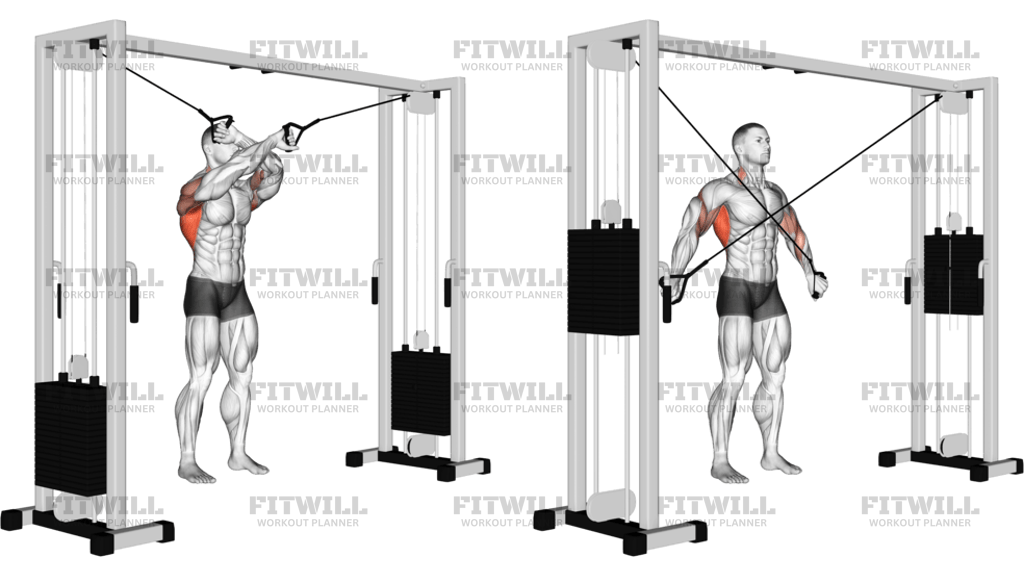
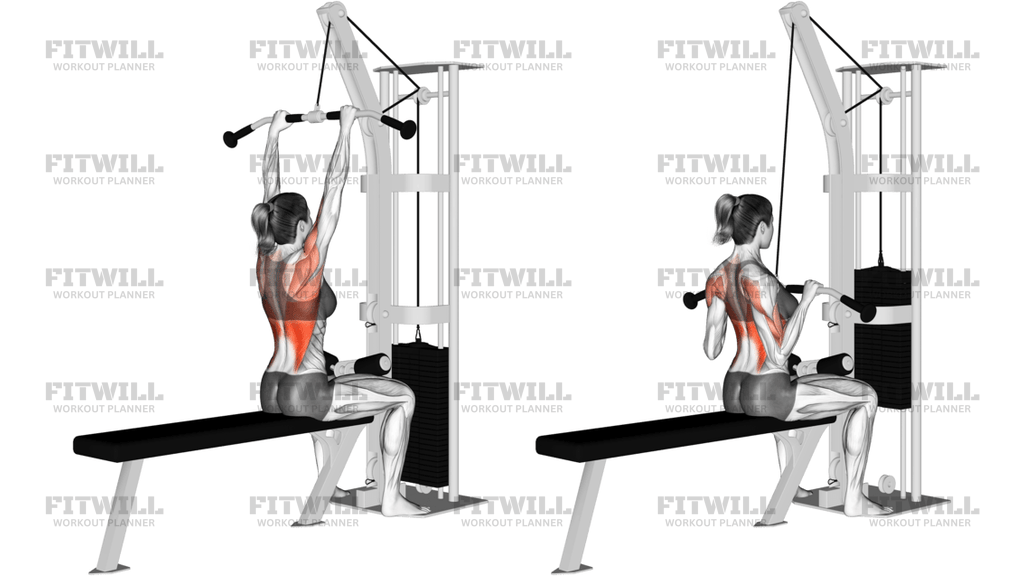
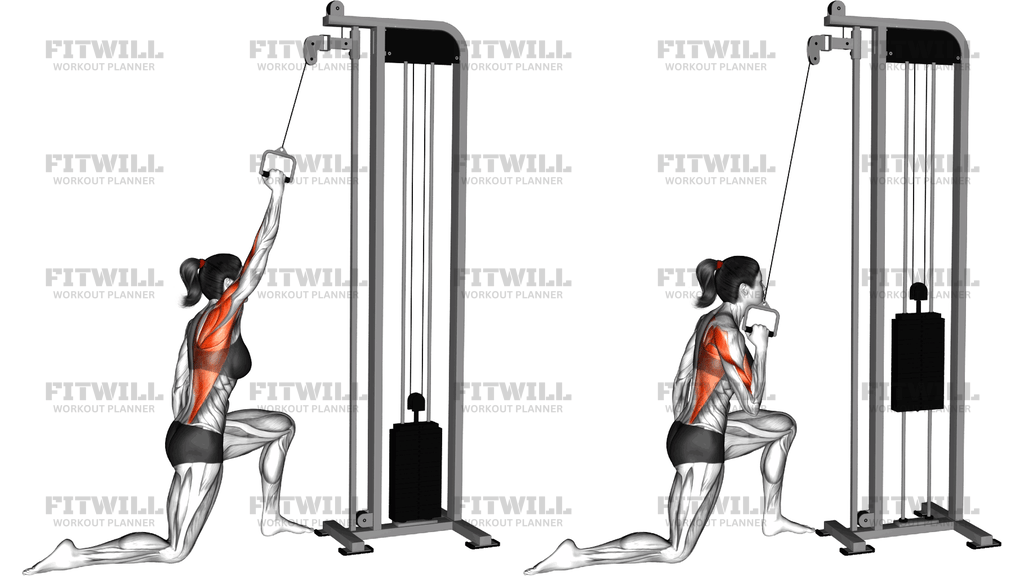
Cable Kneeling One Arm Lat Pulldown is a unilateral back exercise performed from a half-kneeling position, pulling a single handle attached to a high cable pulley down toward your shoulder. The kneeling stance is what sets it apart from a standard seated pulldown: with one knee down and the other foot planted forward, your hips and spine have less external support, so your core has to work to keep your torso upright and square while your arm does the pulling.
The primary muscle at work is the latissimus dorsi on the working side, which drives the arm down and back through the pull. Supporting roles go to the biceps as elbow flexors, the rear deltoid and teres major as they assist shoulder extension, and the mid-back muscles as the shoulder blade retracts toward the spine at the bottom of the rep. The kneeling position also quietly trains the core and hip stabilizers, since nothing is braced against a seat pad.
This setup is especially useful for a few situations. If one side of your back is weaker or less developed than the other, single-arm work lets the lagging side catch up without the stronger side compensating. If your shoulder bothers you on a fixed bar path, the single handle lets you adjust the arc and wrist angle to something that feels natural. And if you do not have access to a lat pulldown seat, you can kneel in front of almost any high pulley and get very similar training value.
Setup matters more here than in a seated version because your base is smaller. Position the cable so the handle starts directly above your working shoulder, not off to the side. If the pulley line drifts out of alignment, the cable pulls you into rotation and the lats lose the clean line of pull. A slight forward lean from the hips is fine and actually helps the lats, but leaning should come from the hip hinge, not from rounding the lower back or twisting the chest toward the cable.
To execute well, think of driving your elbow down toward your hip rather than pulling with your hand. The handle should finish near your shoulder or upper chest with your elbow close to your ribs, and the shoulder blade should move back as the arm finishes. Control matters most on the way up: let the arm lengthen fully overhead until you feel the lat stretch, but keep the cable tension and your torso position intact. If the weight stack slams down between reps or your torso swings, the load is too heavy for your lats to own the movement.
Common use cases include lat hypertrophy work, fixing left-right asymmetries, rehab-friendly upper body pulling after a barbell or pull-up bar feels too demanding, and adding anti-rotation core demand to a back day without extra exercises. Start light, learn the kneeling position first, and add load only when you can keep your hips level and your torso quiet through every rep.
[ Workout Log & Planner ]
Put your next workout in Fitwill
Keep your plan and training log ready when you are.


Instructions
- Set a single handle on the high pulley of a cable machine and select a light starting weight.
- Kneel facing the machine in a half-kneeling stance: your working side's knee on the floor behind you, the opposite foot flat on the floor in front with the knee bent about 90 degrees.
- Grip the handle with an overhand or neutral grip on the arm closest to the machine, arm extended overhead, and shuffle your knee position so the cable runs straight down from the pulley to your hand.
- Brace your core, level your hips, and lean forward slightly from the hips so your torso is stable before the first pull.
- Exhale and pull the handle down by driving your elbow toward your lower ribs, letting your shoulder blade slide back as the arm comes down.
- Finish with the handle beside your shoulder or upper chest, elbow close to your body, and squeeze the lat briefly at the bottom.
- Inhale and let the handle rise slowly back overhead, controlling the cable until the arm is fully extended and you feel the lat stretch.
- Keep your hips and shoulders square to the machine throughout; do not twist toward or away from the working arm.
- Complete all reps on one side, switch your kneeling stance, and perform the same number of reps with the other arm.
- When finished, let the stack settle gently before releasing the handle and standing up out of the kneeling position.
Tips & Tricks
- A very common mistake is pulling the handle to the middle of your chest with a flared elbow, which shifts work to the shoulder and biceps. Aim the elbow toward your hip pocket to keep the lat doing the bulk of the work.
- If your torso rotates toward the cable on each rep, the weight is too heavy. Drop the load until you can keep your chest facing forward for every rep.
- Keep the front foot flat and the front knee stacked over the ankle. Letting the front knee cave inward destabilizes the whole kneeling base.
- Do not let the shoulder shrug up toward your ear at the start of the pull. Depress the shoulder slightly first, then pull, so the lat starts from a stretched and set position.
- Moving from a tall kneeling spine to a slight hip hinge is helpful, but hinging too far forward turns this into a row. Keep the lean modest so the arm still travels from overhead to shoulder height.
- Pause for a half second at the bottom of each rep. This brief squeeze is where the single-arm setup earns its keep, because the lat can fully shorten without the other side limiting range.
- Control the eccentric for two to three seconds. Because the kneeling position removes backrest support, fast returns tend to pull the torso forward and rob the lat of the stretch.
- If your kneeling knee is uncomfortable on a hard floor, pad it, but avoid kneeling on something so soft that your hips tilt to one side.
- Match reps and load between arms exactly, and always start with your weaker side so it sets the standard for the stronger one.
Frequently Asked Questions
Which muscles does the Cable Kneeling One Arm Lat Pulldown work?
The latissimus dorsi on the working side is the prime mover. The biceps, rear deltoid, teres major, and mid-back muscles assist, while the core and hip stabilizers keep you steady in the half-kneeling stance.
Why kneel instead of sitting for a one-arm pulldown?
Kneeling removes the seat and backrest support, which forces your trunk to stabilize against the cable's pull. It also makes the setup easier to align with any high pulley and lets you use a fuller overhead stretch than many seated stations allow.
Is the Cable Kneeling One Arm Lat Pulldown suitable for beginners?
Yes, as long as the weight starts light. The main learning challenge is staying square in the kneeling position, so beginners should master the stance with a modest load before progressing.
Should I use an overhand or neutral grip on the handle?
Either works, since the single handle lets you choose. A neutral grip with the palm facing in often feels more comfortable at the shoulder, so start there and rotate to overhand if you prefer the feel.
How far should I lean forward during the pull?
A slight hip hinge of maybe 10 to 15 degrees is enough to help the lats. Leaning far forward changes the exercise into something closer to a row and reduces the overhead stretch.
My torso twists toward the cable on every rep. How do I fix that?
Reduce the weight and think about keeping your chest and hips facing the machine the whole time. Bracing the core hard before each pull and slowing the eccentric usually eliminates the rotation.
Can I substitute this with a seated one-arm cable pulldown or a single-arm dumbbell pullover?
A seated one-arm pulldown keeps the same arm path but removes the core demand, and a single-arm dumbbell pullover trains the lat with a different resistance angle. Both are reasonable, but the kneeling cable version uniquely combines the vertical lat line of pull with anti-rotation stability.
How many reps and sets should I do?
For muscle growth, 3 sets of 8 to 12 reps per side works well. Because balance is a limiting factor early on, slightly higher reps with moderate weight tend to produce better quality reps than heavy, grindy sets.
Is it safe for my knees to kneel during this exercise?
For most people the half-kneeling position is comfortable and low risk, especially with a pad under the down knee. If kneeling causes knee discomfort, choose a seated pulldown variation instead rather than pushing through pain.