Lever Standing Viking Press
The Lever Standing Viking Press is an overhead pressing exercise performed on a plate-loaded leverage machine with a pivoting arm and parallel handles. Unlike a barbell press, the handles travel along a fixed arc set by the machine's lever, so you get the overhead pressing pattern with a more stable, guided path. You stand facing the machine, grip the handles at roughly shoulder height, and press them up and slightly forward until your arms are fully extended overhead.
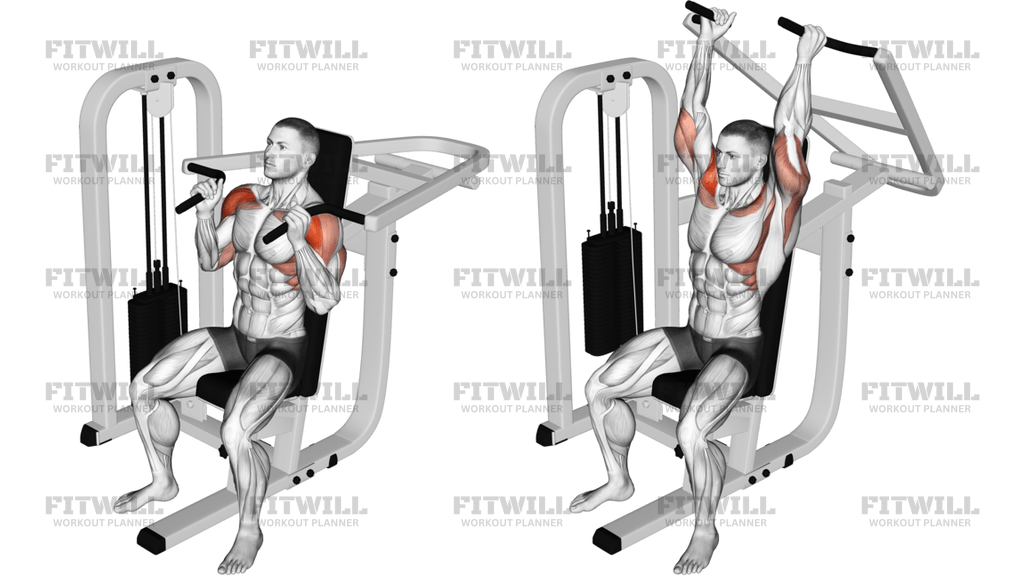
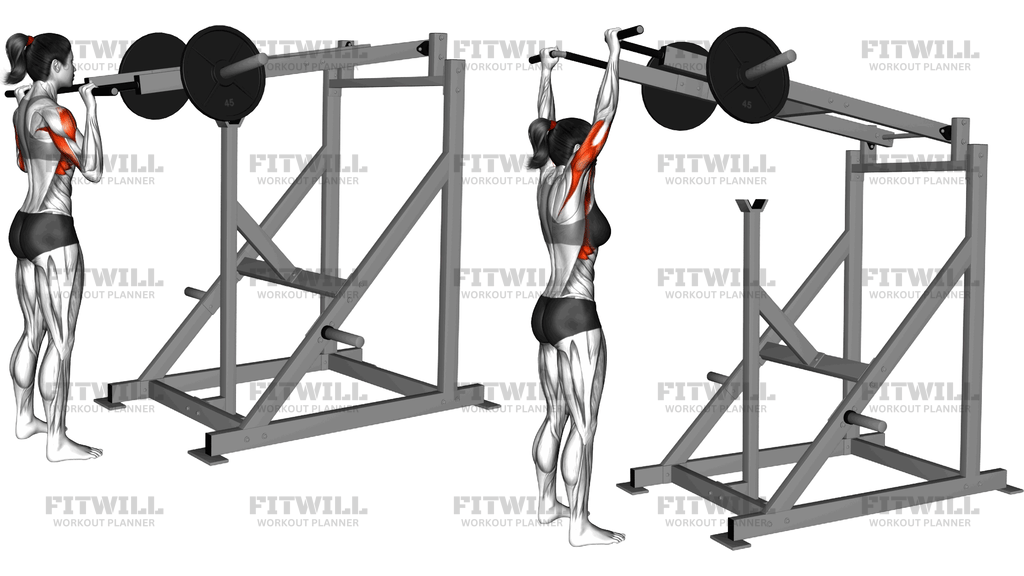
The highlight image shows the working muscles in red: the shoulders carry most of the load, with the triceps extending the elbows at the top and the upper back and traps stabilizing the shoulder girdle throughout. Because the resistance comes from plates loaded on the opposite end of the lever, the weight feels smooth at the bottom and slightly harder as the arm swings through its arc, which many lifters find friendlier on the shoulder joints than a strict barbell press.
This movement suits a wide range of lifters. Beginners appreciate the fixed path and the fact that there is no balance requirement with a heavy bar overhead. More experienced lifters use it as a volume or accessory press after heavier barbell or dumbbell work, or as a joint-friendly alternative during periods when overhead barbell pressing feels uncomfortable. Because you're standing, your legs, glutes, and trunk also work isometrically to keep your torso upright and square to the machine.
Setup matters more than it looks. Stand close enough that the handles start near your collarbone level with your elbows stacked under or slightly in front of them, and keep both feet flat on the floor about hip-width apart. If you stand too far back, you'll lean and turn the press into a semi-incline movement; too far forward and you'll fight the machine's arc at the top. Adjust your distance, not your spine, until the path feels natural.
To execute well, brace your trunk, press the handles up along the machine's arc until your elbows are locked out overhead in line with your ears, then lower under control until the handles return to shoulder height. Avoid bouncing out of the bottom and let the lever's momentum do the work for you. Breathe in as you lower, exhale as you press.
In practice, the Lever Standing Viking Press is most often programmed for 3-4 sets of 8-15 reps as a primary or secondary shoulder movement. It pairs well with lateral raises and rows for balanced shoulder development, and the fixed lever makes it easy to progress in small plate increments week to week.
[ Workout Log & Planner ]
Put your next workout in Fitwill
Keep your plan and training log ready when you are.


Instructions
- Load the appropriate weight plates onto the sleeve at the end of the machine's lever arm and make sure the retaining clip is secure.
- Stand facing the machine with your feet hip-width apart, toes pointing forward, positioned so the handles sit at about collarbone or upper-chest height.
- Grip the parallel handles firmly with your palms facing forward or slightly inward, elbows bent and tucked close to your sides at shoulder level.
- Brace your abdominals, keep your ribcage down, and pull your shoulder blades slightly back and down to set a stable upper back.
- Press the handles up and slightly forward along the machine's fixed arc, extending your elbows until your arms are straight overhead.
- At the top, your arms should be in line with or just behind your ears, with your shoulders shrugged slightly up to support the locked-out position.
- Pause briefly at full extension, then lower the handles back down along the same arc until they return to shoulder height and your elbows are back at your sides.
- Inhale as you lower the handles, exhale forcefully as you press them up.
- Keep both feet flat and your torso upright throughout; do not lean back or drive with your legs, since the machine's path is meant to isolate the press.
- Complete all reps, then let the lever arm settle and the plates come to rest before letting go of the handles.
Tips & Tricks
- If the handles drift behind your head at lockout, you're standing too far back; step a few inches closer so the arc finishes in line with your ears.
- Elbows flaring straight out to the sides at the bottom changes the shoulder angle and can pinch the joint; keep them angled slightly forward and under the handles.
- Don't shrug aggressively at the start of the press — a small trap contraction at lockout is fine, but shrugging early shifts work away from the deltoids.
- Bouncing out of the stretched position lets the swinging lever arm do the lifting. Take a half-second pause at the bottom of each rep to keep tension on the shoulders.
- Because the lever arm amplifies plate weight on one side, expect the first plate to feel heavier than a comparable dumbbell press; start lighter than you think and build up.
- If your lower back arches as the weight gets heavy, tighten your glutes and abs before each rep rather than leaning back to finish the lockout.
- Keep a full grip on the handles with your wrists stacked over your forearms; cocked wrists are a common issue when the load gets challenging.
- Never release the handles at the top while the lever is loaded — control the arm down and let it settle on its stop before stepping away.
Frequently Asked Questions
What muscles does the Lever Standing Viking Press work?
The shoulders are the primary movers, especially the front and side heads of the deltoids. The triceps extend the elbows at lockout, while the upper back, traps, and core stabilize the torso and shoulder girdle.
Is the Lever Standing Viking Press good for beginners?
Yes. The fixed lever path removes the balance and stabilization demands of a barbell overhead press, so beginners can focus on pressing technique with a low risk of the weight drifting off course.
How is a Viking Press different from a regular standing barbell press?
The Viking Press uses a pivoting lever with fixed handles, so the bar travels along a predetermined arc instead of a free vertical path. It also sits slightly in front of the body, which many lifters find easier on the shoulder joints than pressing a bar directly overhead.
Where should my elbows be at the start of each rep?
At collarbone height, bent and tucked close to your sides with your forearms roughly under the handles. This mirrors the bottom position of a strict press and keeps the shoulders in a strong, safe angle.
Why do I feel the Viking Press more in front of my shoulders than on the sides?
The handles travel up and slightly forward along the lever's arc, which biases the anterior deltoid. To involve the side delts more, keep the press path as vertical as your setup allows and avoid leaning into the machine.
Can I use leg drive during this exercise?
It's best not to. The machine's guided path is designed to isolate the upper-body press, so drive the weight with your shoulders and triceps while your legs simply keep you stable. If you need leg drive to complete a rep, the load is too heavy.
What can I substitute if my gym doesn't have a Viking Press machine?
A standing dumbbell overhead press is the closest alternative, or a landmine press, which shares the same slightly forward pressing arc. Both train the shoulders and triceps with a similar joint-friendly angle.
How heavy should I go on the Lever Standing Viking Press?
Start with a single small plate or less and complete 10-12 clean reps before adding weight. The lever arm changes how plate loading translates to resistance, so judge the load by how the press feels, not by comparing it to your barbell numbers.
Is it safe to press overhead with a history of shoulder discomfort?
The guided arc and slightly forward pressing angle make this one of the more forgiving overhead pressing options, but you should still use a light weight and a pain-free range. Stop and consult a qualified professional if pressing consistently causes discomfort.
Should I stand directly facing the machine or at an angle?
Face the machine squarely with both feet flat and your hips level. Angling your body twists the spine under load and pulls the press off the handles' intended path.