Lever Bicep Curl
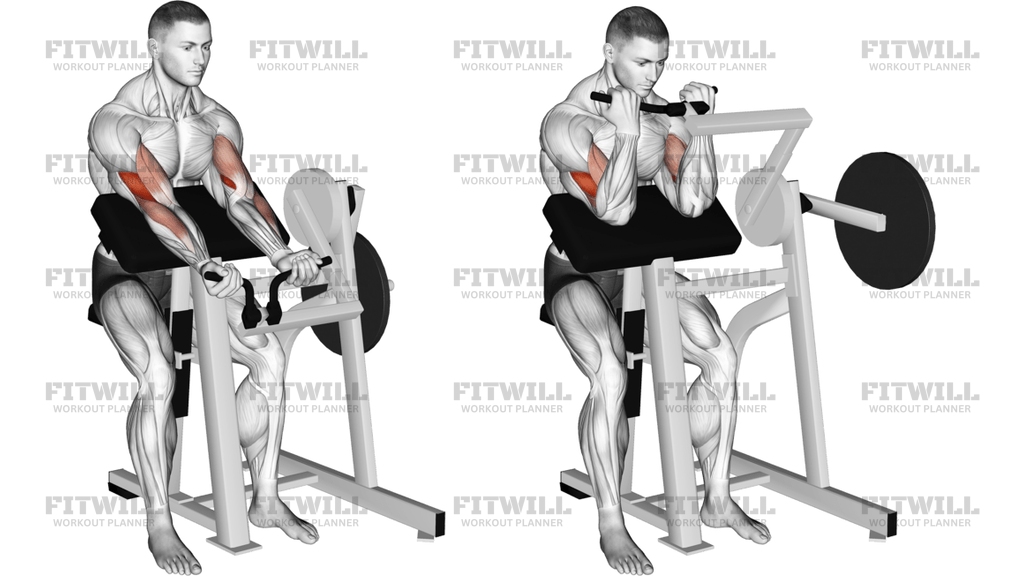
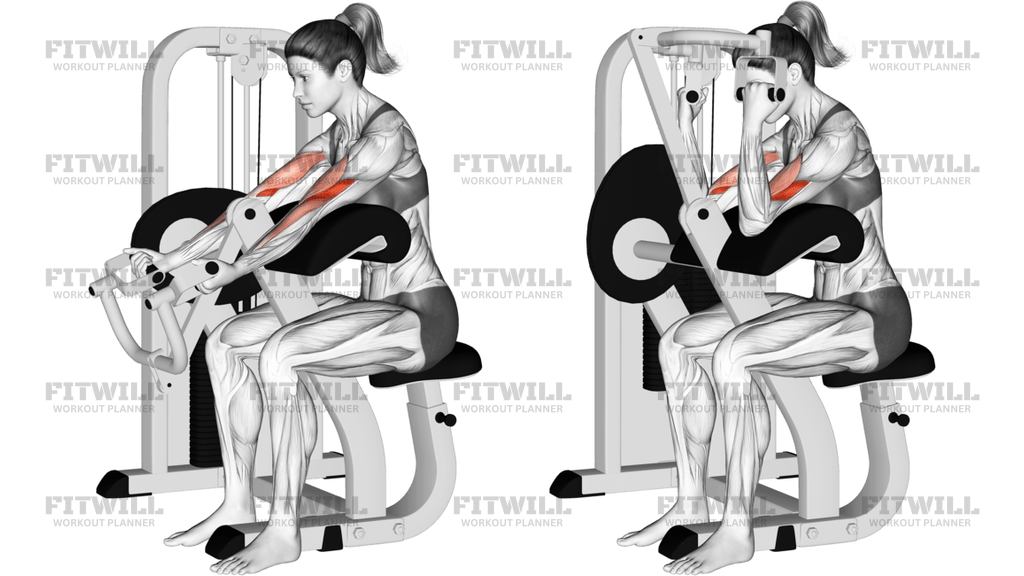
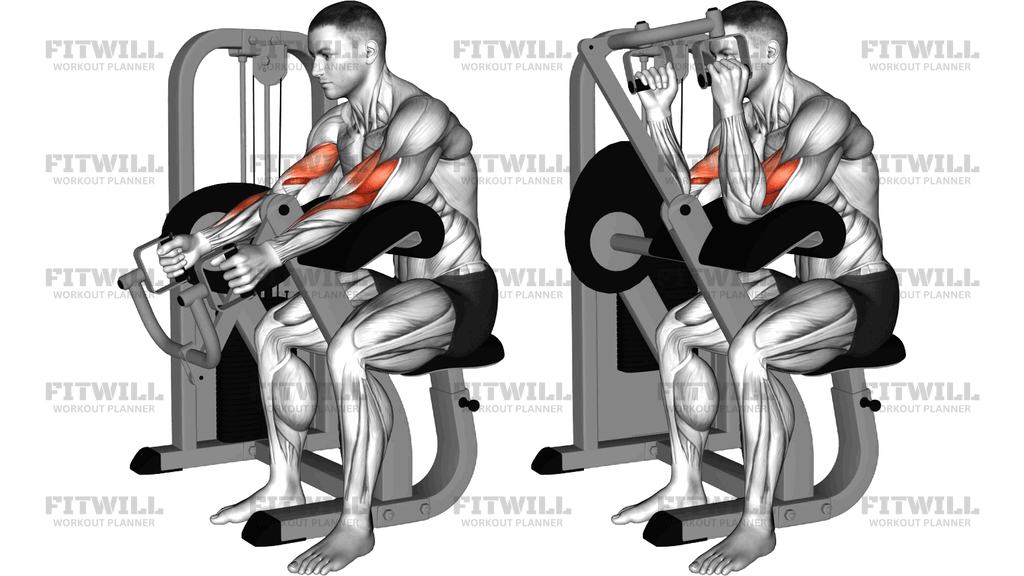
The Lever Bicep Curl is a seated machine exercise performed on a plate-loaded or selectorized leverage machine. You sit with your back against the upright pad, place your upper arms on the angled arm supports, and grip the fixed handles. As you curl, the machine's lever arm swings through a fixed arc, so the resistance stays directed against your forearms from start to finish.
This setup is especially useful for lifters who struggle to keep their elbows still during free-weight curls. Because the arm pads lock your upper arms in place, cheating with shoulder swing or leaning back becomes nearly impossible. That makes it a strong choice for beginners learning what a strict curl feels like, and for more experienced lifters who want to fatigue the biceps without stabilizing a barbell or dumbbells.
The primary muscle worked is the biceps brachii on the front of the upper arm, with the brachialis underneath and the brachioradialis of the forearm assisting. Your grip and wrist stabilizers also stay active as you hold the handles through the arc. Since the machine controls the path, the tension on the biceps is fairly consistent whether the arms are extended or fully flexed.
Setup matters more on this machine than most people expect. Adjust the seat so your upper arms rest flat on the pads with your chest tall and shoulders stacked over your hips. If the seat is too low, your elbows drift off the pads at the top; if it is too high, you never get a full stretch at the bottom. Take a minute to get this right and every rep that follows will be more productive.
To perform the movement, curl the handles up in a smooth arc until your elbows are fully flexed, squeeze briefly, then lower under control until your arms are almost straight. Keep your wrists neutral and let the machine's fixed path do the guiding. Breathe out as you curl and in as you lower, and avoid letting the weight stack or lever slam down between reps.
In practice, the Lever Bicep Curl fits well as a finishing movement after heavier barbell or dumbbell work, or as a main curl variation for anyone with cranky elbows or wrists who prefers the guided arc of a machine. Typical programming is 2 to 4 sets of 8 to 15 reps, focusing on a deliberate tempo rather than maximum load.
[ Workout Log & Planner ]
Put your next workout in Fitwill
Keep your plan and training log ready when you are.


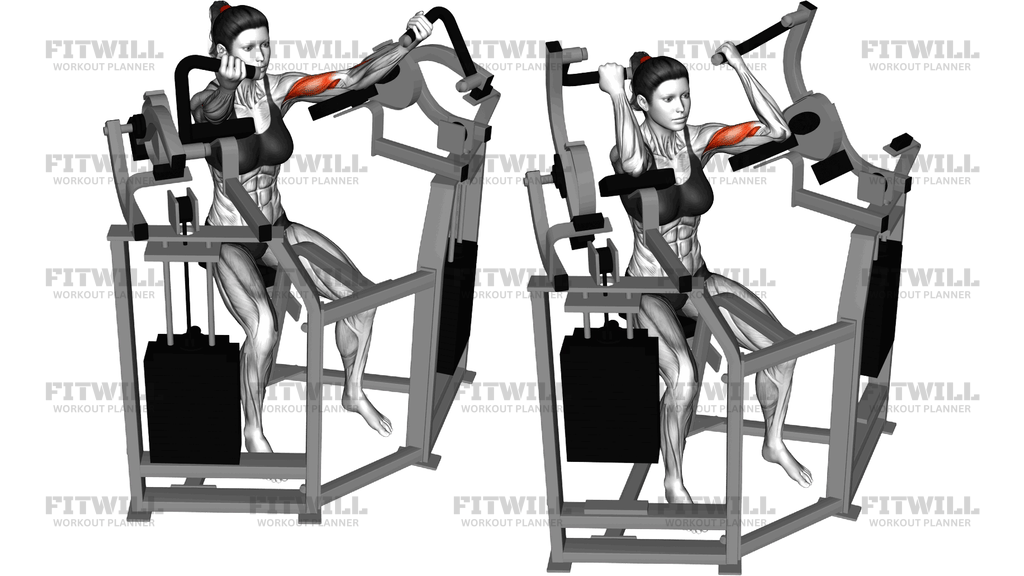
Instructions
- Sit down on the leverage machine and adjust the seat height so your upper arms rest flat on the angled arm pads with your shoulders relaxed and stacked over your hips.
- Grip the machine's handles with an underhand grip, wrists straight, and place your upper arms and the backs of your arms firmly against the pads.
- Plant your feet flat on the floor about hip-width apart and brace your trunk lightly against the back pad.
- Let the lever arm lower until your elbows are nearly straight and you feel a mild stretch across the biceps.
- Curl the handles up and slightly back in a smooth arc, keeping your upper arms glued to the pads and your elbows fixed in place.
- Continue until your elbows are fully flexed and the handles are near shoulder height, then squeeze the biceps for a brief pause at the top.
- Lower the handles slowly along the same arc, resisting the weight on the way down instead of letting the lever drop.
- Exhale as you curl up and inhale as you lower the handles back down.
- Complete your reps with a steady tempo, then set the lever down fully before letting go of the handles and standing up.
Tips & Tricks
- If your elbows lift off the pads as you curl, the seat is likely too high or the weight is too heavy — lower the seat one notch or reduce the load so the elbows stay planted.
- Do not grip the handles with bent wrists; a cocked or flexed wrist shifts tension to the forearm flexors and can irritate the elbow over a long set.
- Stop each rep just short of fully locked-out elbows at the bottom so the biceps keep tension without stressing the elbow joint.
- The fixed lever path means you cannot swing the torso to finish a rep — if the last rep stalls halfway up, the set is over, which is exactly how it should be.
- Try a 2-second lift and 3-second lowering tempo; the eccentric on a machine curl is easy to rush and it is where much of the growth stimulus lives.
- Because the arm pads isolate the elbows, this machine exposes a strength difference between arms — if one side lags, consider single-arm reps on the same machine.
- Keep your chest against the pad and shoulders pulled down; shrugging the shoulders toward the ears as you curl recruits the upper traps and steals work from the biceps.
- Warm up with one light set of 12 to 15 reps before your working weight, since the fully stretched bottom position can feel abrupt when cold.
Frequently Asked Questions
Which muscles does the Lever Bicep Curl work?
The biceps brachii is the prime mover, with the brachialis and brachioradialis assisting, and the forearms working to hold the handles. Because the arms are braced on the pads, almost all of the work is concentrated at the elbow joint.
Is the Lever Bicep Curl good for beginners?
Yes. The machine fixes the arc of movement and supports the upper arms, so a beginner can learn what a strict curl feels like without worrying about swinging or stabilizing a bar.
How do I set the seat height correctly for the Lever Bicep Curl?
Adjust the seat so your upper arms rest flat on the angled pads with your shoulders relaxed over your hips. When your elbows stay on the pads through the entire rep and you can fully straighten your arms at the bottom, the height is right.
Why do my elbows lift off the pads during the curl?
This usually means the load is too heavy or the seat is set too high, forcing the elbows to drift to finish the range. Reduce the weight or lower the seat and focus on keeping the backs of your arms pressed against the pads.
How is the Lever Bicep Curl different from a barbell curl?
A barbell curl lets the elbows drift forward and the torso swing, while the machine pins the upper arms and controls the path. You trade some carryover to stabilization for stricter isolation and more consistent tension.
Can I use the Lever Bicep Curl as my only biceps exercise?
It can work on its own, but pairing it with a free-weight curl gives you both strict isolation and the stabilizer demand that machines lack. Many lifters use the machine as a finisher after barbell or dumbbell curls.
Should I fully straighten my arms at the bottom of each rep?
Go to just short of full lockout so the biceps stay under tension and the elbow joint is not slammed at end range. A controlled stop with a slight bend is enough to get the stretch.
Are machine curls safe for the elbows and wrists?
For most people they are joint-friendly because the handles and fixed arc reduce wrist rotation and elbow strain. Keep your wrists neutral and avoid bouncing the lever at the bottom, and stop if you feel sharp pain rather than muscle effort.