Lever Reverse-Grip High Row Plate Loaded
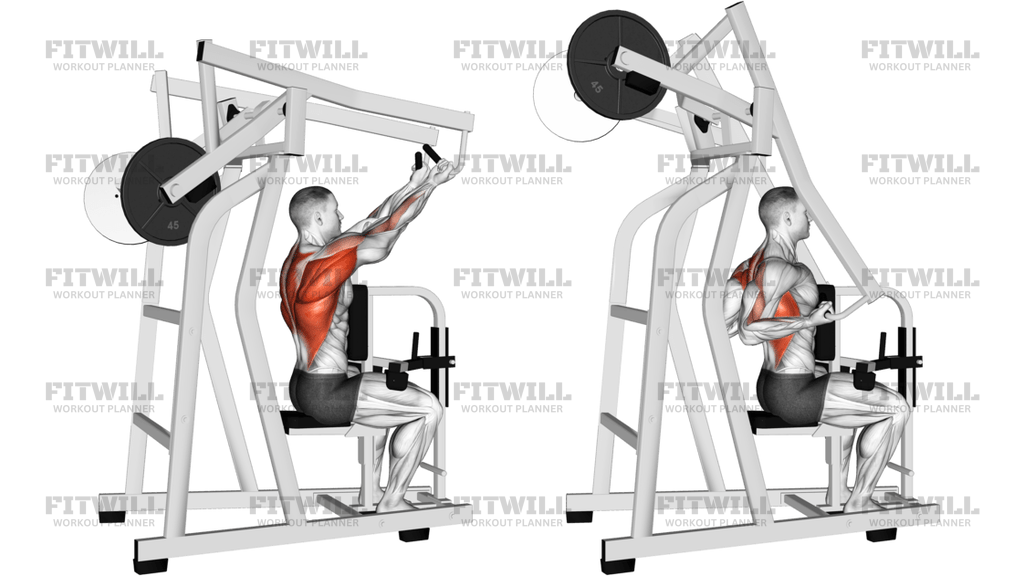
Lever Reverse-Grip High Row Plate Loaded is a chest-supported rowing exercise on a leverage machine that trains the upper back through a guided pulling path. With the underhand grip, the elbows travel down and back as the handles come toward the upper ribs and lower chest, giving the movement a strong combination of lat, rear-delt, and mid-back work. The machine path helps you load the row without having to balance a free weight, so the quality of the repetition depends mostly on setup, body position, and how cleanly you control the pull.
The reverse grip changes the feel of the row compared with a standard overhand high row. It usually lets the elbows stay closer to the torso and encourages a smoother path into scapular retraction and shoulder extension. That makes Lever Reverse-Grip High Row Plate Loaded useful when you want back training that is demanding but still easy to repeat with consistent form. The chest pad and seated position reduce torso swing, so you can focus on the working muscles instead of turning the rep into a body English movement.
Good setup matters because the machine should fit your body before the first pull begins. Set the seat height so the handles line up with the line of your shoulders and upper chest, plant both feet, and keep your chest pinned to the pad. If the seat is too high or too low, the elbows will drift into an awkward angle and the shoulders will take over. A solid setup also helps you keep the neck long, the ribcage steady, and the low back from arching to cheat the rep.
During the pull, drive the elbows down and back until the handles reach the upper ribs or lower chest, then squeeze the shoulder blades without shrugging. The goal is a strong squeeze across the upper back, not a yanked finish with the wrists or biceps. On the way back, let the arms lengthen under control until you feel a stretch through the lats and upper back, but keep the chest supported and the shoulders from rolling forward aggressively. Breathing should stay rhythmic: exhale as you pull, inhale as you return.
This exercise works well in a back-focused session, an upper-body pull day, or as accessory work after heavier vertical pulls and rows. It is especially useful for lifters who want machine stability, a chest-supported row pattern, and a grip that shifts emphasis toward the upper-back line of pull. Keep the load honest, keep the reps smooth, and stop the set if you have to lean back, shrug hard, or shorten the return just to move the stack.
[ Workout Log & Planner ]
Put your next workout in Fitwill
Keep your plan and training log ready when you are.


Instructions
- Adjust the seat so the handles sit roughly in line with your upper chest, then sit tall with your chest pressed firmly into the pad.
- Place both feet flat on the platform and set your knees or thighs under the support so your body stays anchored.
- Reach up and take the reverse grip on the handles with palms facing you and wrists straight.
- Let your arms extend forward until your shoulders feel a mild stretch, but keep your chest against the pad.
- Brace your midsection and keep your neck long before the first pull.
- Pull the handles down and back toward your upper ribs or lower chest by driving your elbows behind you.
- Squeeze your shoulder blades together without shrugging your shoulders toward your ears.
- Pause briefly at the end of the row, then lower the handles forward under control.
- Keep the return smooth until your arms are long again and the machine is loaded, not swinging.
- Repeat for the planned reps and finish by setting the handles back in a controlled position.
Tips & Tricks
- Set the seat height first; if the handles start too high, you will shrug to get them moving.
- Keep your chest glued to the pad so the row stays strict and does not turn into a half-leaning pull.
- Think about driving your elbows down, not just pulling with your hands.
- Keep the wrists stacked so the underhand grip does not collapse into wrist extension.
- Stop the pull when the shoulders finish retracting; do not force extra range by arching the low back.
- Use a load that lets you control the return for the full stretch instead of dropping the handles.
- If you feel the biceps taking over, slow the tempo and keep the elbows slightly closer to your torso.
- Keep the neck relaxed and avoid craning your head forward to chase the handles.
- Exhale through the pull and inhale on the way back to keep the torso from bracing too hard.
Frequently Asked Questions
What muscles does Lever Reverse-Grip High Row Plate Loaded work?
It primarily trains the upper back, especially the lats, rear delts, rhomboids, and mid-traps, with the biceps helping on the pull.
Is Lever Reverse-Grip High Row Plate Loaded beginner-friendly?
Yes, the machine path and chest support make it a good option for beginners as long as the load stays light enough to keep the shoulders down and the return controlled.
Where should the handles finish on this row?
Aim to bring the handles to your upper ribs or lower chest, not up toward your shoulders and not so low that you lose the high-row path.
What is the most common mistake on this machine?
The biggest mistake is shrugging and leaning back to fake the pull. Keep your chest on the pad and let the elbows drive the motion.
Should I keep my elbows tucked or flared?
Keep them slightly tucked and drive them back in a natural line; that usually fits the reverse-grip high row path better than a wide flare.
Why use a reverse grip instead of an overhand grip?
The underhand grip usually makes the pull feel more lat-dominant and keeps the elbows moving closer to the torso.
How do I know if the seat height is correct?
When the seat is right, you can reach the handles without shrugging and can row by driving the elbows back while the chest stays pinned to the pad.
Can I use this after pull-ups or lat pulldowns?
Yes, it fits well as an accessory row after vertical pulling when you want extra upper-back and lat volume without adding much lower-back fatigue.