Cable Twin Handle Reverse Grip Lat Pulldown
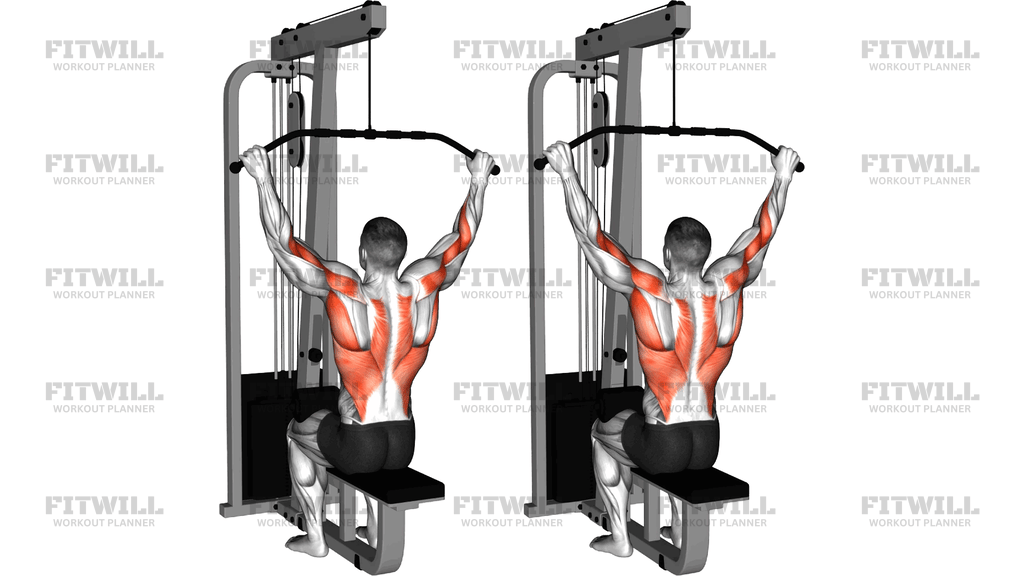
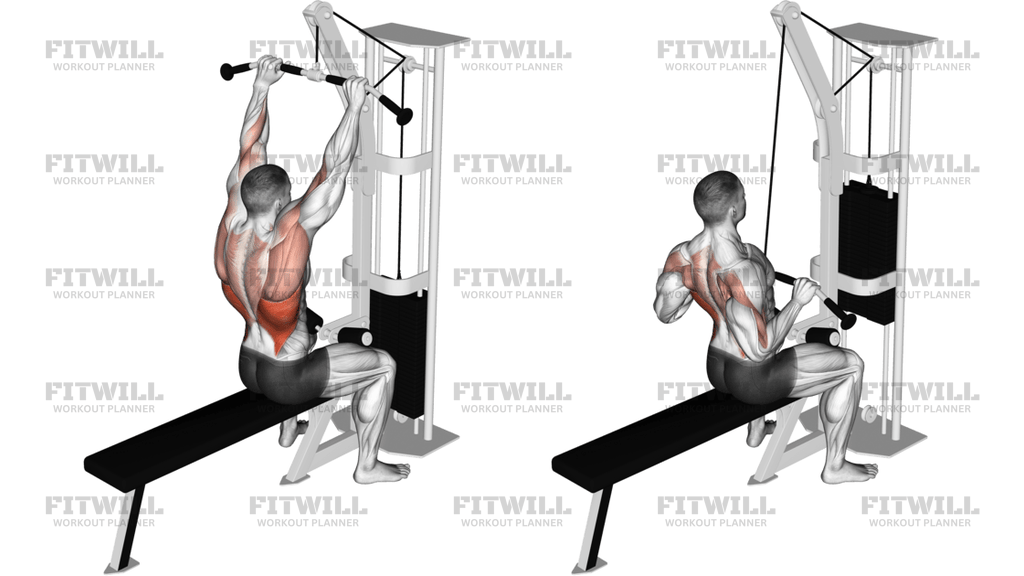
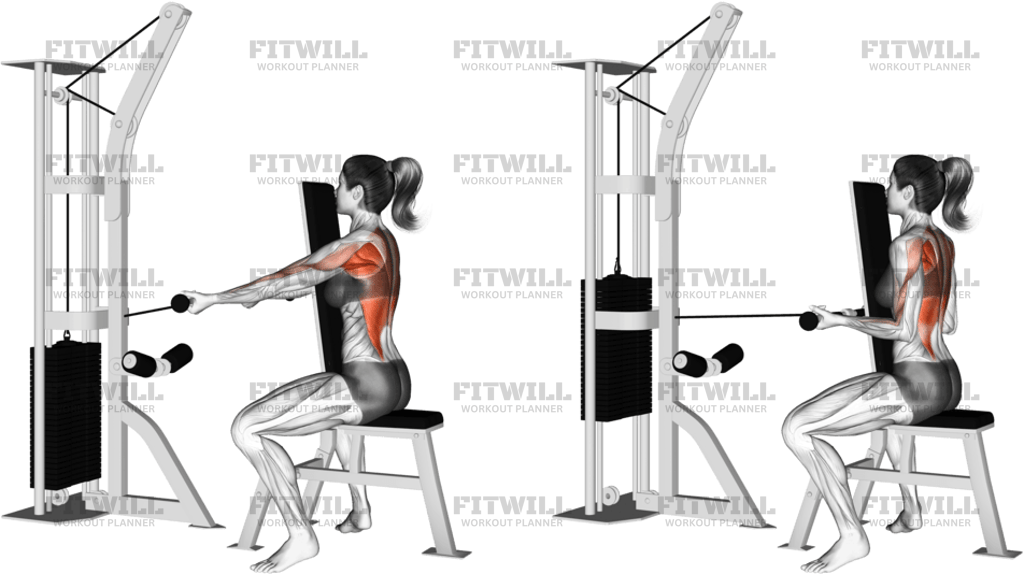
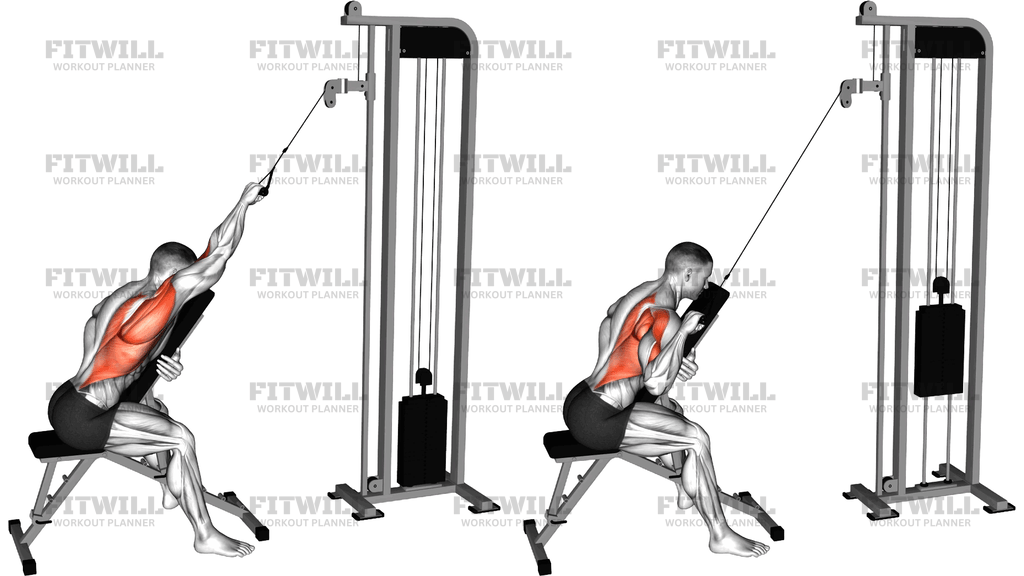
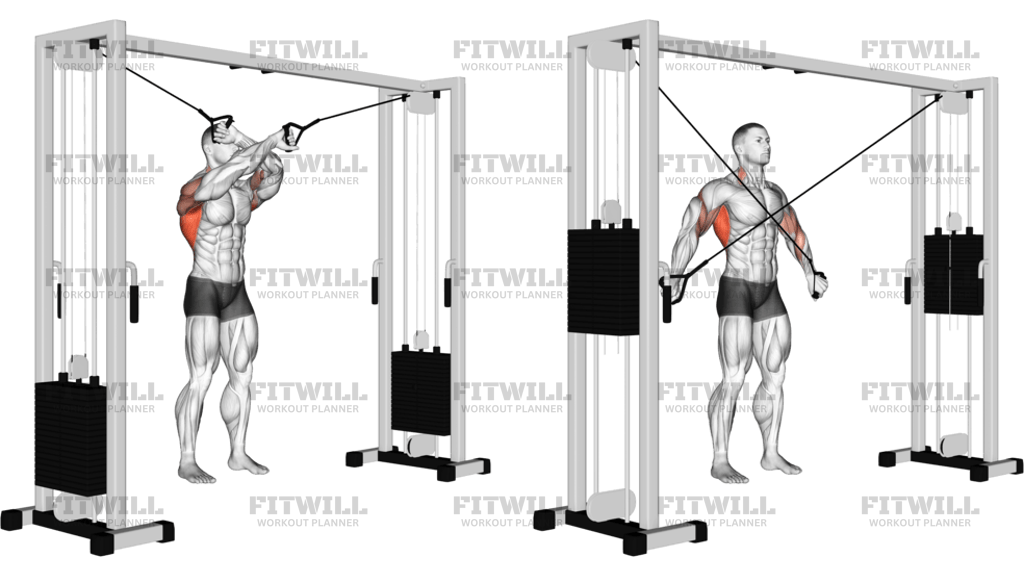
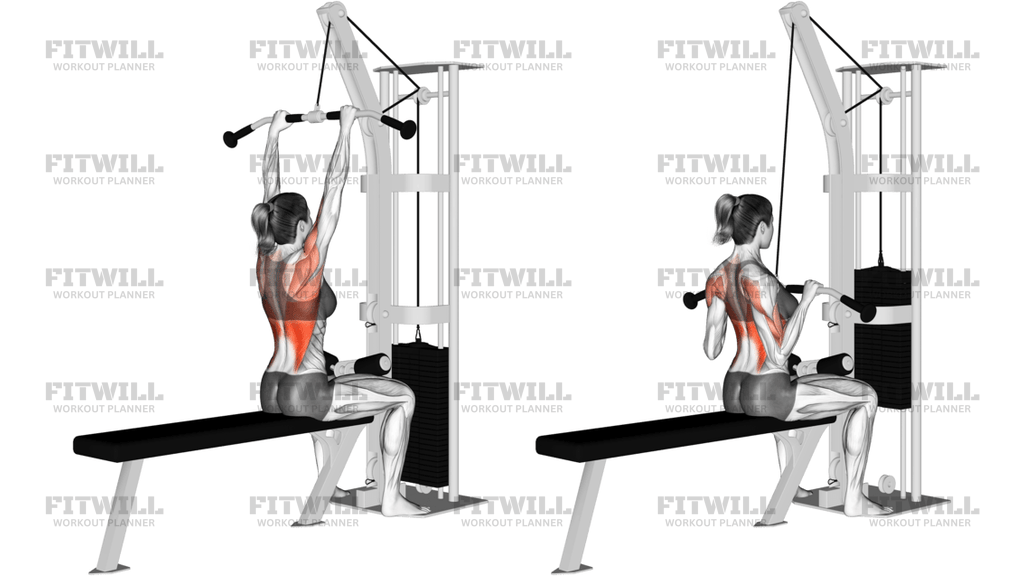
The Cable Twin Handle Reverse Grip Lat Pulldown is a seated vertical pulling exercise performed on a dual-pulley cable machine. Instead of a fixed wide bar, you hold a single handle in each hand attached to the two high pulleys, with your palms facing you — the reverse or supinated grip that gives this variation its name. From a seated position facing the machine, you pull both handles down to roughly shoulder height, driving your elbows down and back before controlling the weight back to the full overhead stretch.
The split-handle setup is the main reason to choose this version over a standard lat pulldown bar. Each arm works on its own cable, so the load path can track slightly outward and down along your sides rather than in a single fixed line in front of your chest. That freedom lets you find a natural elbow path, and it also means your weaker side can't hide behind the stronger one. The supinated grip changes the arm angle as well: because your palms face you and your elbows stay closer to your ribs than in a wide overhand pull, the biceps contribute more, and the pull leans slightly toward the lower lats and the area around the lower shoulder blade.
This movement suits a wide range of lifters. Beginners can use it to learn vertical pulling with manageable, adjustable weight and independent feedback from each cable. More experienced lifters often use it as a volume exercise after pull-ups or heavy rows, or as a way to address left-right differences in back development. Because you're seated and braced against a bench with your feet on the floor, the setup removes most balance demands and lets you concentrate on the pull itself.
Muscularly, the lats are the prime movers, assisted by the teres major, the muscles between the shoulder blades, and the rear portion of the shoulders as the handles come down. The biceps act as strong elbow flexors in this grip, which is normal and expected — just make sure the shoulders, not the arms, initiate the movement. The core works quietly to keep your torso upright and stop you from swinging back as the weight gets heavy.
Good execution comes down to a few details: sit tall, lean back only a few degrees, start each rep from a genuinely stretched overhead position, and lead with the elbows rather than the hands. Pull the handles down to about collarbone height with your elbows pointing down toward your hips, pause briefly, and let the cables draw your arms back up under control. Avoid turning it into an arm exercise by yanking with the biceps, and avoid leaning so far back that it becomes a row.
Keep the load honest. With two separate cables and a supinated grip, it's tempting to go heavier than your shoulders and elbows appreciate, especially at the stretched position at the top. Choose a weight you can stop smoothly at full extension for every rep, and keep your wrists straight so the handles sit in your fingers rather than buried deep in your palms.
[ Workout Log & Planner ]
Put your next workout in Fitwill
Keep your plan and training log ready when you are.


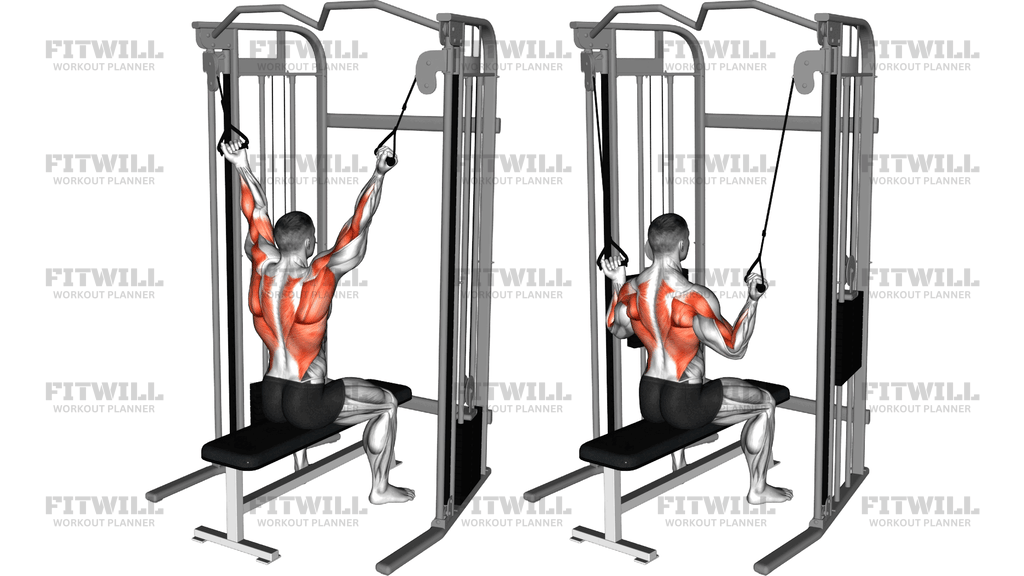
Instructions
- Set the two pulleys of the cable machine to their highest position and clip a single handle to each cable.
- Sit on the bench facing the machine and grip each handle with a reverse grip — palms turned toward you — with your hands roughly shoulder-width apart.
- Plant your feet flat on the floor with knees bent, and sit tall with a slight backward lean of about 10 to 15 degrees.
- Let your arms rise fully overhead and feel a stretch across your lats before the first rep; keep your ribcage down and brace your core.
- Pull both handles down and slightly out to the sides, leading with your elbows so they drive down toward your hips.
- Bring the handles down to around collarbone height, squeezing your shoulder blades down and together at the bottom.
- Pause for a beat in the contracted position without shrugging your shoulders up toward your ears.
- Slowly let the handles travel back up along the same path until your arms are fully extended overhead and the lats are stretched again.
- Exhale as you pull down and inhale as you return the weight to the top.
- Complete your set, then stand and return the handles to the rest position before letting the weight stack settle.
Tips & Tricks
- Think 'elbows to hips, not hands to chest' — if the biceps are burning first, you're pulling with your arms instead of driving your elbows down.
- Don't let the top position become a partial rep; if you can't reach full overhead extension on every rep, the weight is too heavy for the cables to track smoothly.
- The reverse grip lets the elbows tuck closer to the body than a wide overhand pull — use that path rather than flaring your elbows out to the sides.
- Because each cable moves independently, watch that both hands travel the same distance; a common fault is one side shortening the range while the stronger side does the work.
- Keep the lean constant. If your torso angle changes as you fatigue, you're converting a pulldown into a row and unloading the lats at the top.
- Grip the handles with fingers wrapped and wrists in line with your forearms; cocking the wrists back under the handle shifts stress away from the lats and toward the forearms and elbows.
- Avoid shrugging at the bottom of the pull — if your shoulders creep toward your ears, drop the weight slightly and reset your shoulder blades down before each rep.
- Set the bench so the cables pass just outside your shoulders; sitting too close makes the handles collide with your body and shortens the pull.
Frequently Asked Questions
What muscles does the Cable Twin Handle Reverse Grip Lat Pulldown work?
The lats are the primary movers, supported by the teres major, the muscles of the upper back between the shoulder blades, and the rear shoulders. Because the palms face you, the biceps are also heavily involved in bending the elbows.
Why use a reverse grip instead of an overhand grip on this pulldown?
The supinated grip lets your elbows stay closer to your sides and places the biceps in a stronger line of pull. Many lifters feel it more in the lower lats and find the wrist position more comfortable than a fixed overhand bar.
Is the Cable Twin Handle Reverse Grip Lat Pulldown good for beginners?
Yes. The seated position removes balance demands, the weight is easy to adjust, and the two separate cables give instant feedback if one side is doing more work than the other.
How far should I lean back while pulling the handles down?
A small lean of roughly 10 to 15 degrees is fine and helps you keep a strong chest position. Anything more turns the movement into a row and reduces the stretch on the lats at the top.
How high should I pull the handles at the bottom of each rep?
Bring them down to about collarbone or upper-chest height with your elbows pointing toward your hips. Pulling to your lap usually means the torso is rocking back to finish the range instead of the lats doing the work.
My biceps fatigue before my back — how do I fix that?
Focus on initiating each rep by drawing the shoulder blades down first, then driving the elbows down. Lightening the load also helps, since heavy weights encourage you to yank with the arms on a supinated grip.
What can I substitute if my gym has no dual-pulley cable machine?
A close-reverse-grip lat pulldown on a single-stack machine with a short straight bar is the closest match. Supinated-grip pull-ups or a reverse-grip machine pulldown also train a very similar pattern.
Should I fully straighten my arms at the top of every rep?
Yes, in a controlled way. Letting the arms extend overhead restores the lat stretch and gives each rep a consistent range, but don't let the weight yank your shoulders upward at the top.
Is this exercise safe for the shoulders and elbows?
For most people it's a joint-friendly pull because the independent cables allow a natural arm path and the seat stabilizes the torso. Use a controlled tempo at the stretched top position and stop if you feel pinching at the front of the shoulder.