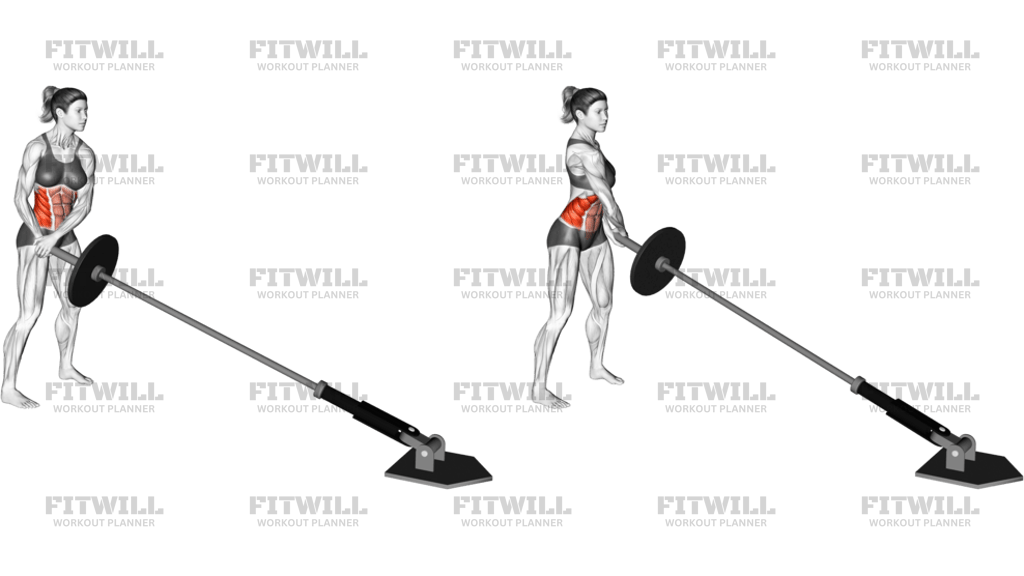
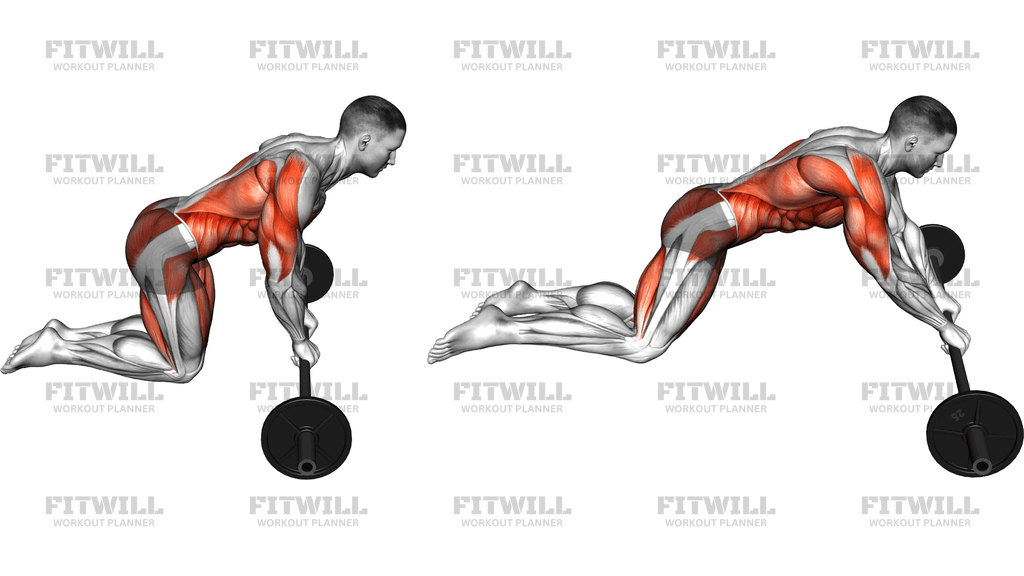
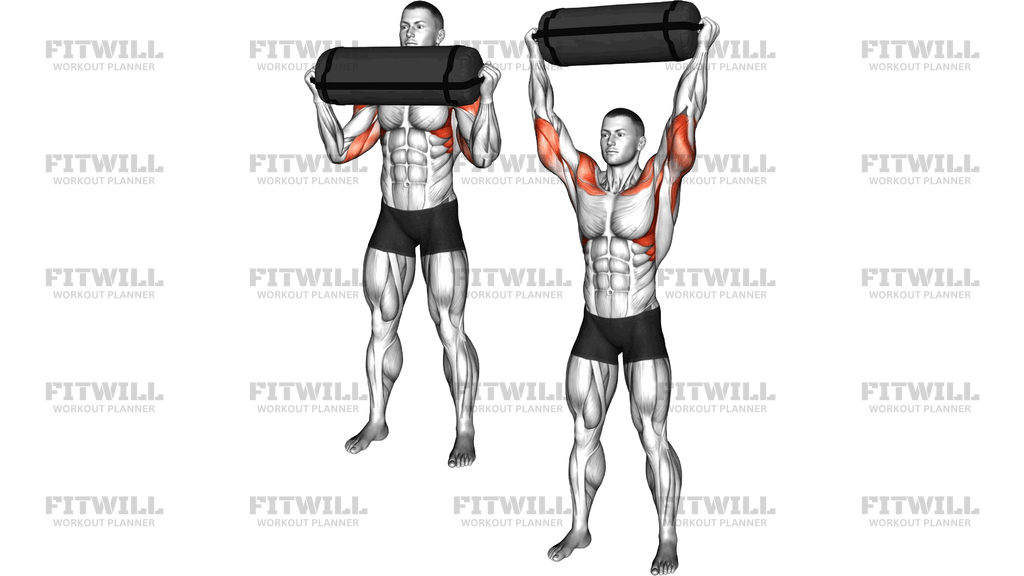
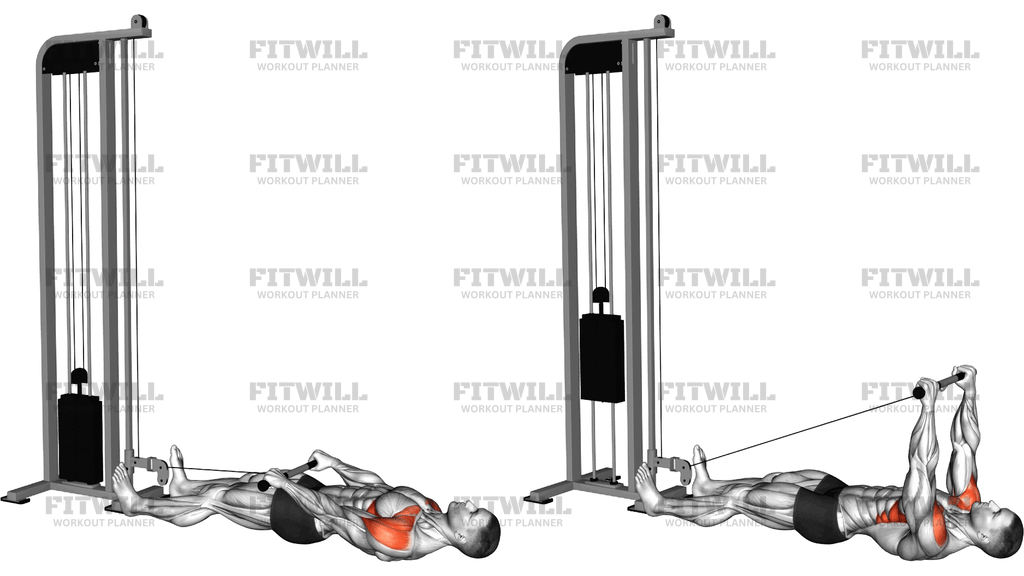
Weighted Front Plank
The Weighted Front Plank is a straight-arm-free, forearm-supported hold with an external load resting on your upper back. Instead of extending the standard plank by chasing longer times, you add resistance — typically a weight plate — so your trunk has to fight a stronger downward pull. It converts an endurance hold into a genuinely demanding strength exercise, letting you progress with weight rather than minutes on the clock.
This movement suits lifters who have already built a solid unweighted plank and find bodyweight holds too easy to be productive. It is common in off-season strength work, combat sport and team sport conditioning, and general core programming where you want measurable progression. Because the load sits on your back rather than hanging from your hips, it also challenges the shoulder girdle and the muscles that keep your ribcage from collapsing toward the floor.
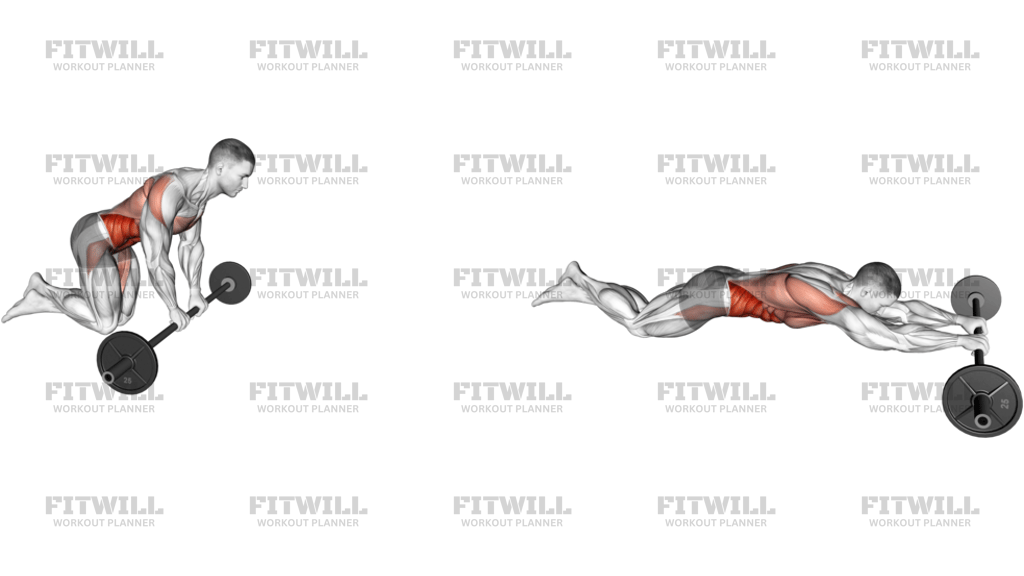
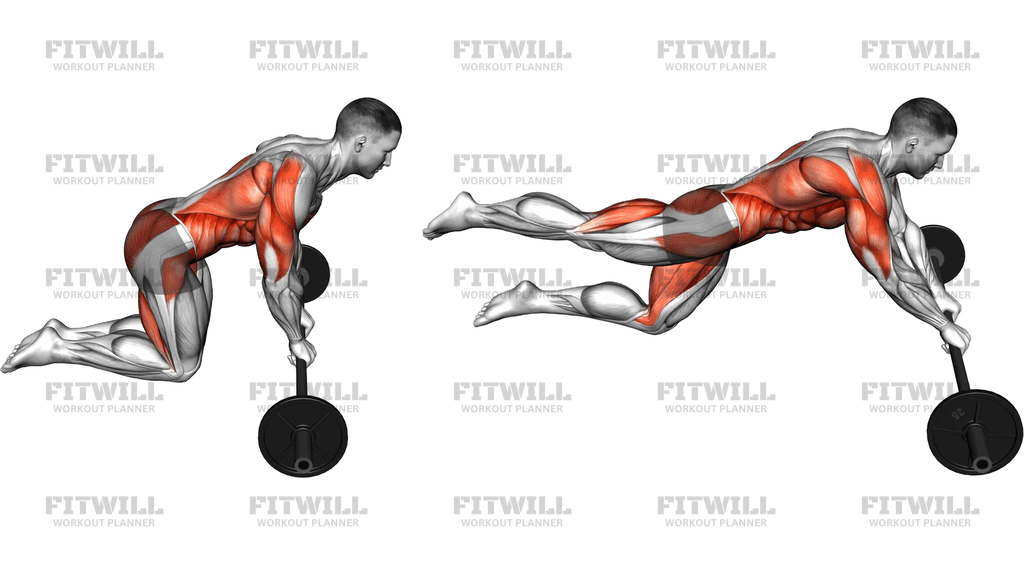
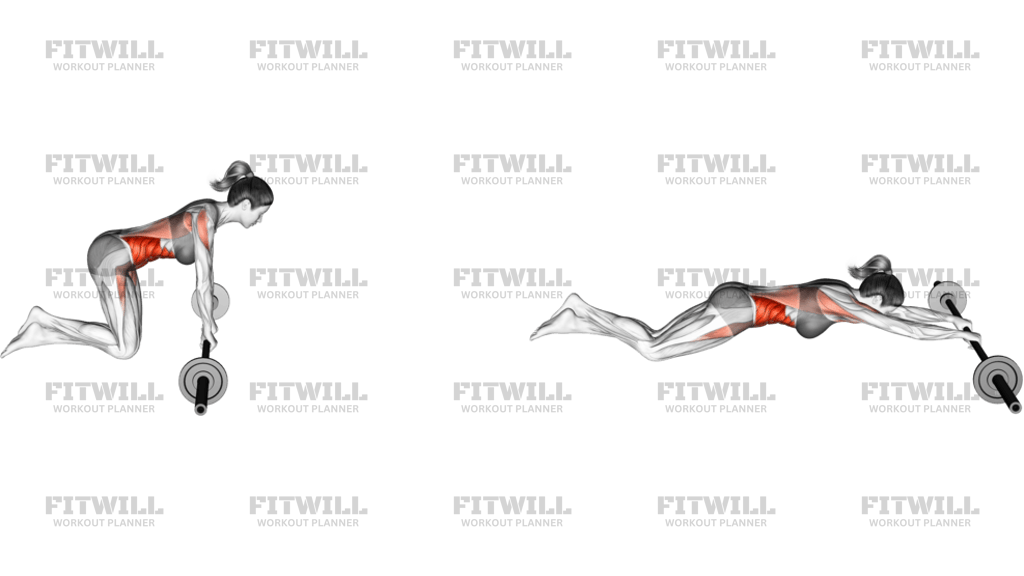
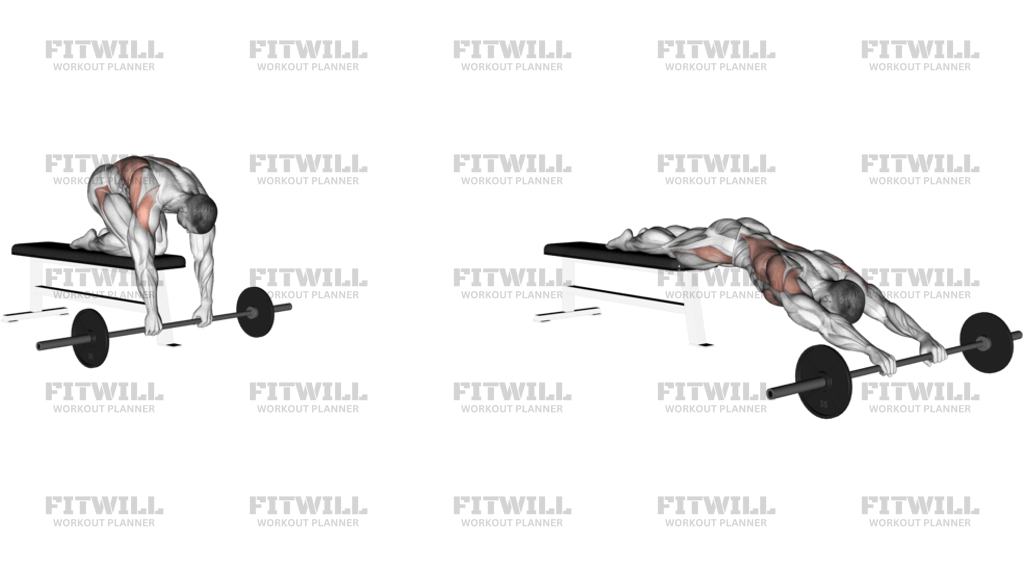
The main work is done by the rectus abdominis and the deep core muscles that pressurize your trunk, with strong support from the obliques, the lower back stabilizers, the glutes, and the shoulders, which hold your upper body rigid under the plate. The weighted front plank highlighted in the anatomy view shows exactly that pattern: intense activation through the abdominal wall and hip region while the rest of the body stays braced and quiet.
Setup matters more here than in most core exercises because the plate sits on a curved, moving surface — your upper back. Your elbows must be stacked directly under your shoulders, your body must form one straight line from head to heels, and the plate must rest at or just below the shoulder blade line. If your hips sag or pike even slightly, the load amplifies the fault instead of the training effect, which is how lower backs get irritated on an otherwise safe exercise.
Execution is simple but strict: set your brace before the weight goes on, breathe shallowly into your ribcage without losing tension, and hold for a fixed number of breaths or seconds. The moment your hips drop below your shoulders or you feel the load shifting, the set is over — end it, remove the plate, and reset rather than grinding out ugly reps.
Used well, one or two weighted holds at the end of a session replaces several minutes of unweighted planking. Start light — even a 2.5 to 5 kg plate changes the exercise considerably — and only add load when you can hold a rigid line for the full target time with steady breathing.
[ Workout Log & Planner ]
Put your next workout in Fitwill
Keep your plan and training log ready when you are.


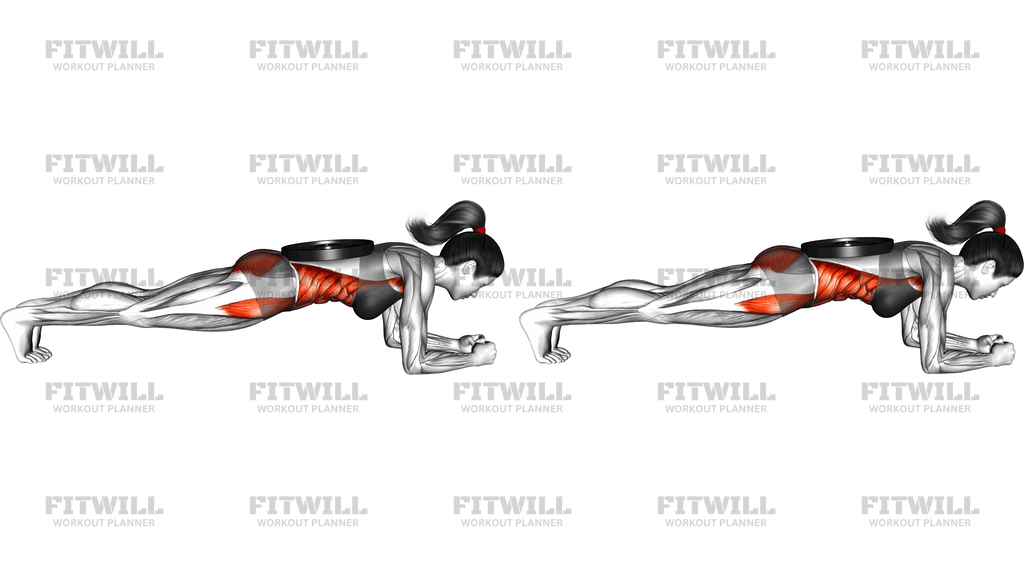
Instructions
- Set a light weight plate and, if the floor is hard, an exercise mat where you plan to hold the plank, with the plate within arm's reach of your shoulder line.
- Kneel down and position your forearms on the floor parallel to each other, elbows stacked directly under your shoulders, hands relaxed or lightly clasped.
- Step your feet back one at a time until your legs are straight and your body forms a single line from head through hips to heels, feet about hip-width apart.
- Before any weight is added, brace your trunk: squeeze your glutes, tuck your pelvis slightly, and tighten your abs as if bracing for a light punch to the stomach.
- Carefully place the plate flat on your upper back between the shoulder blades — or have a partner set it there — keeping it centered so it does not slide off to one side.
- Re-grip the floor with your forearms, push them gently away from the ground, and hold the straight line while breathing shallowly and evenly through your nose and mouth.
- Hold for your target time, typically 15 to 40 seconds, aborting the set immediately if your hips sag below your shoulders or the plate starts to shift.
- To finish, lower your knees to the floor first so your back flattens and the plate cannot slide, then lift or slide the plate off with one hand and rest.
Tips & Tricks
- Place the plate between your shoulder blades, not on your lower back — the thoracic area is flatter and more stable, and loading the lumbar spine directly in a plank is a common way people end up with an achy lower back.
- If you train alone, set the plate on a low bench or stack beside you and slide it on from the side once you are braced, instead of twisting awkwardly to grab it from behind.
- A small towel between the plate and your back reduces sliding on sweaty skin, but check that the plate still sits flat rather than balancing on an edge.
- Sagging hips are the most frequent fault once weight is added; film yourself from the side or have a partner watch, because the extra load makes small positioning errors hard to feel.
- If you feel it in your shoulders or neck rather than your abs, your elbows have drifted forward of your shoulders — reset them directly under the shoulder joints before adding weight again.
- Keep your neck in line with your spine by looking at a spot on the floor about a hand-length in front of you; craning up or letting the head drop both loosen the brace.
- Progress with time before weight: once you can hold a rock-solid 40 seconds, add a small plate increment and drop back to 15 to 20 seconds.
- Breathe shallowly but continuously — holding your breath for the whole set spikes tension briefly and then causes a collapse, especially with a plate pressing on your ribcage.
- Stop the set the instant the plate shifts position; a tilting plate means your trunk is rotating, and chasing the hold trains the fault instead of the core.
Frequently Asked Questions
What muscles does the Weighted Front Plank work?
It primarily targets the abs and deep core muscles that hold the trunk rigid, with strong support from the obliques, lower back stabilizers, glutes, and the muscles around the shoulders that keep the upper body fixed under the plate.
Where should the weight plate sit on my back during the Weighted Front Plank?
Flat on your upper back, between or just below the shoulder blades. This keeps the load over your strongest, most stable area; placing it on the lower back strains the lumbar spine and makes the plate far more likely to slide.
How heavy should the plate be for a Weighted Front Plank?
Start with 2.5 to 5 kg even if unweighted planks feel easy, and build only when you can hold a perfectly straight line for your full target time. A plate that forces your hips to sag is too heavy to be useful.
Is the Weighted Front Plank safe for beginners?
Beginners should first be able to hold an unweighted forearm plank for around 45 to 60 seconds with clean form. Once that is consistent, a very light plate is a reasonable next step, ideally with a partner watching hip position.
How long should I hold the Weighted Front Plank?
Most lifters get more out of 15 to 40 second holds under load than from long unweighted sets. If your form breaks before 15 seconds, reduce the weight; if you pass 40 seconds comfortably, it is time to add a little more.
How do I get the plate on and off my back safely by myself?
Set the plate within reach on the floor or a low bench, get into the plank and brace first, then place or slide it on. To finish, always drop your knees to the floor before removing it so your back is flat and the plate cannot slide off mid-movement.
Why do my shoulders shake more than my abs during the Weighted Front Plank?
The plate adds direct downward pressure through the shoulder girdle, so the front shoulders and upper back fatigue quickly. Check that your elbows are stacked under your shoulders and your forearms are not drifting forward, which loads the joint instead of the trunk.
What can I use instead of a weight plate for the Weighted Front Plank?
A weight vest works well and stays put without help, a small sandbag distributes pressure comfortably, or a partner can apply hand pressure to your upper back. Avoid odd objects that can roll or slide off during the hold.
Should I stop the set if my hips start to sag?
Yes. Sagging hips under load shift the demand to your lower back and make the plate unstable, so the safe and productive choice is to end the set, remove the weight, and rest before the next attempt.
How does the Weighted Front Plank differ from a regular plank?
The external load turns a long endurance hold into a shorter, higher-tension strength hold, letting you progress by adding weight instead of stacking minutes. The setup and body position are otherwise the same — elbows under shoulders, one straight line, glutes engaged.