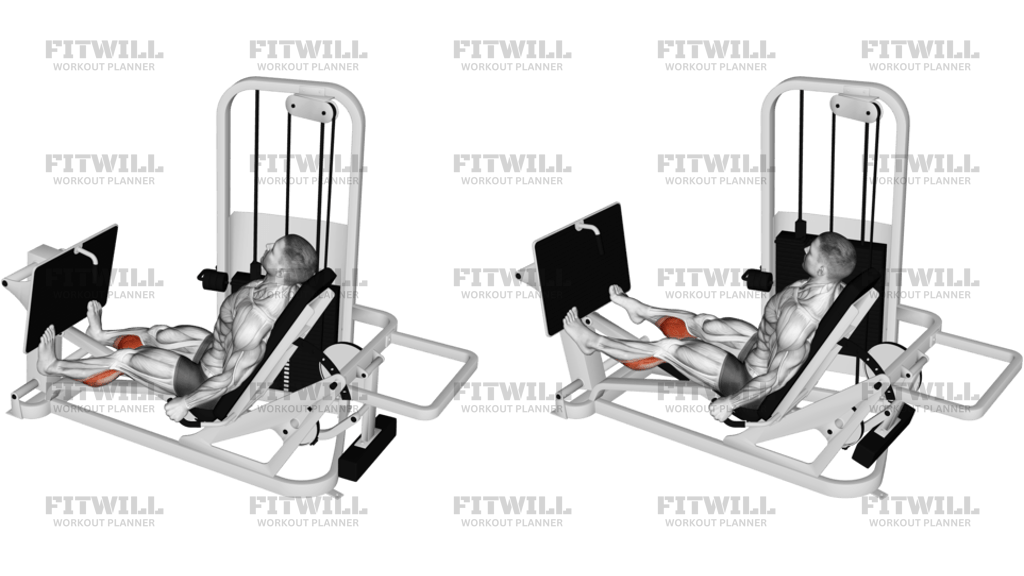
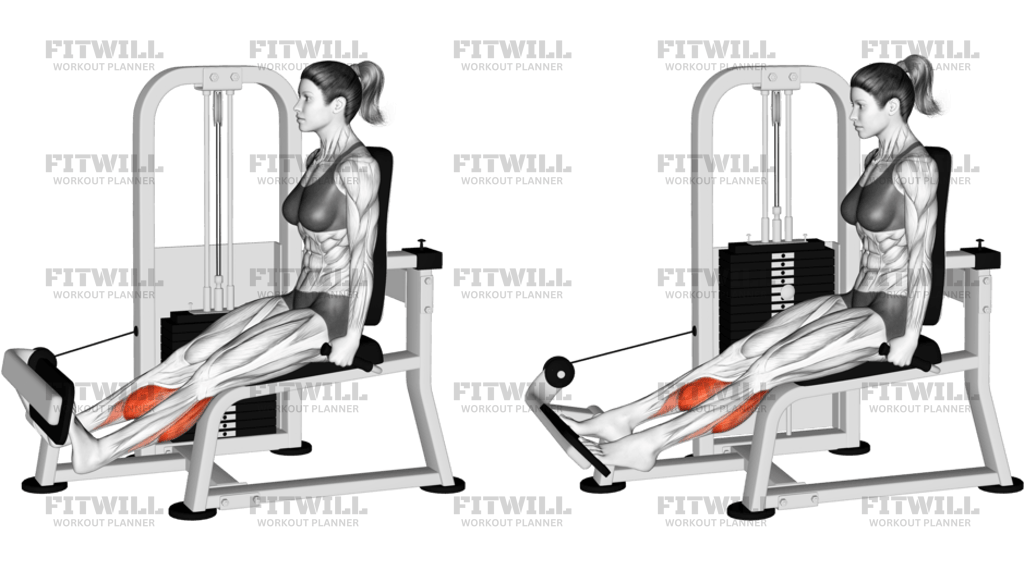
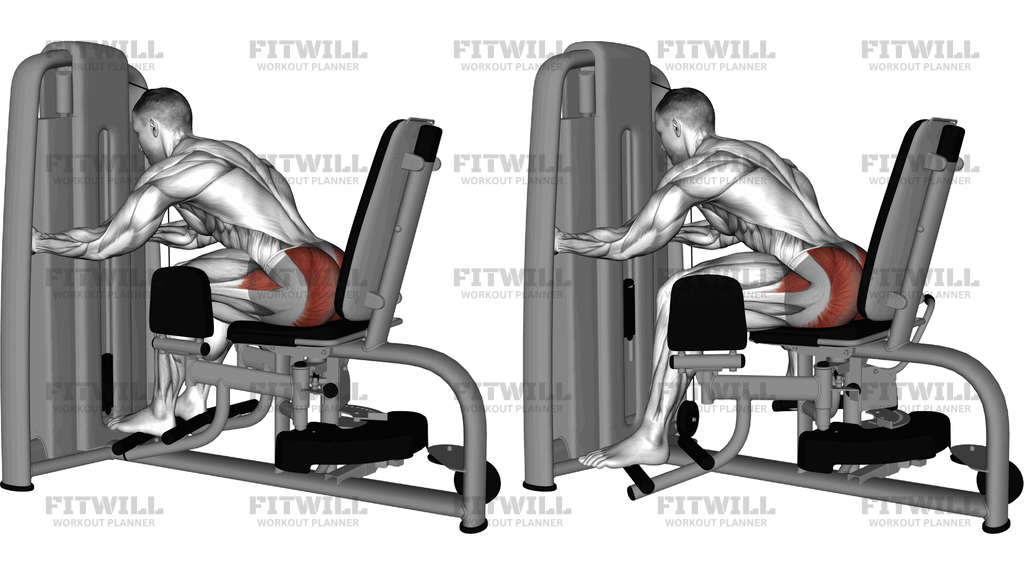
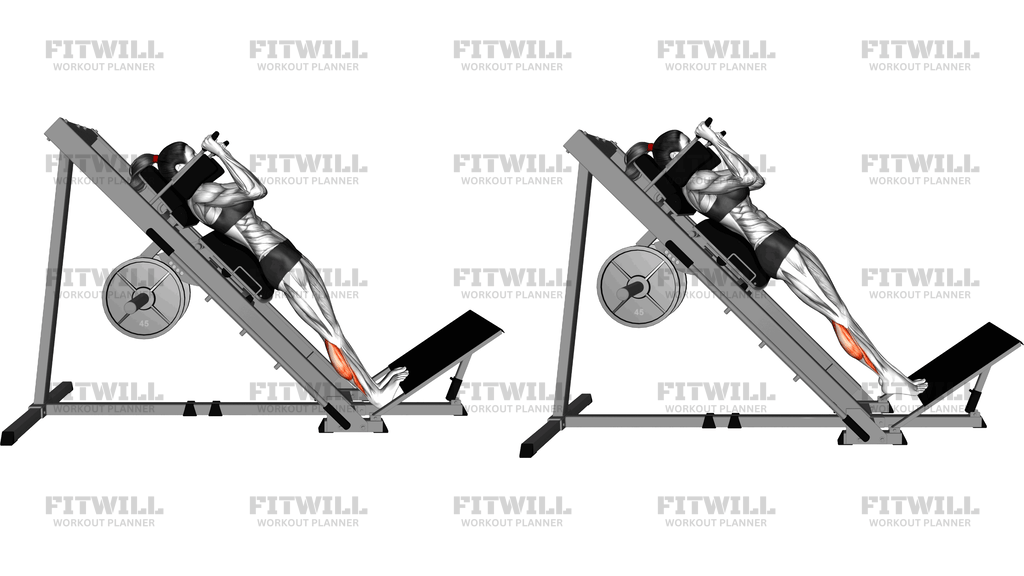
Lever Seated One Leg Calf Raise
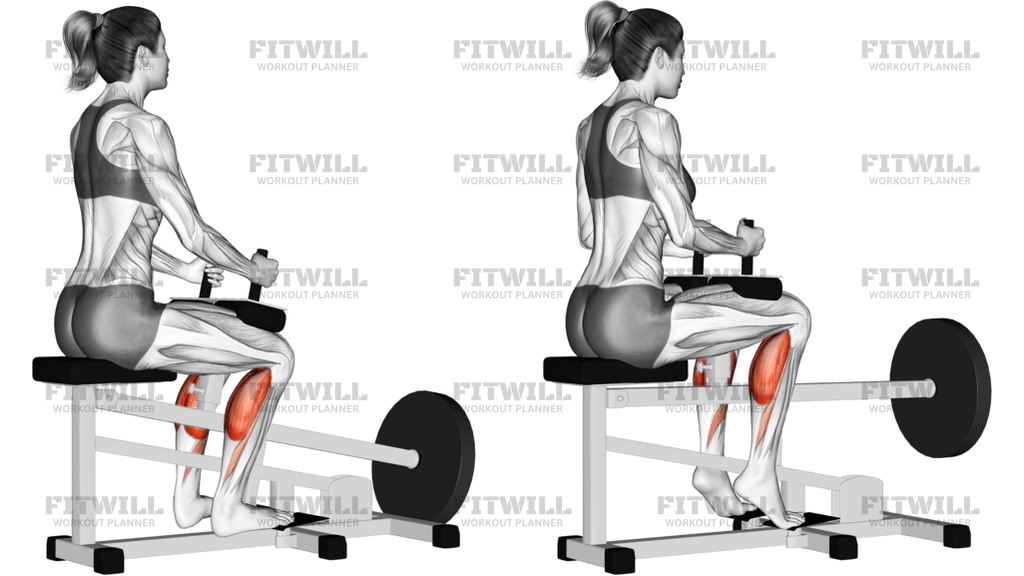
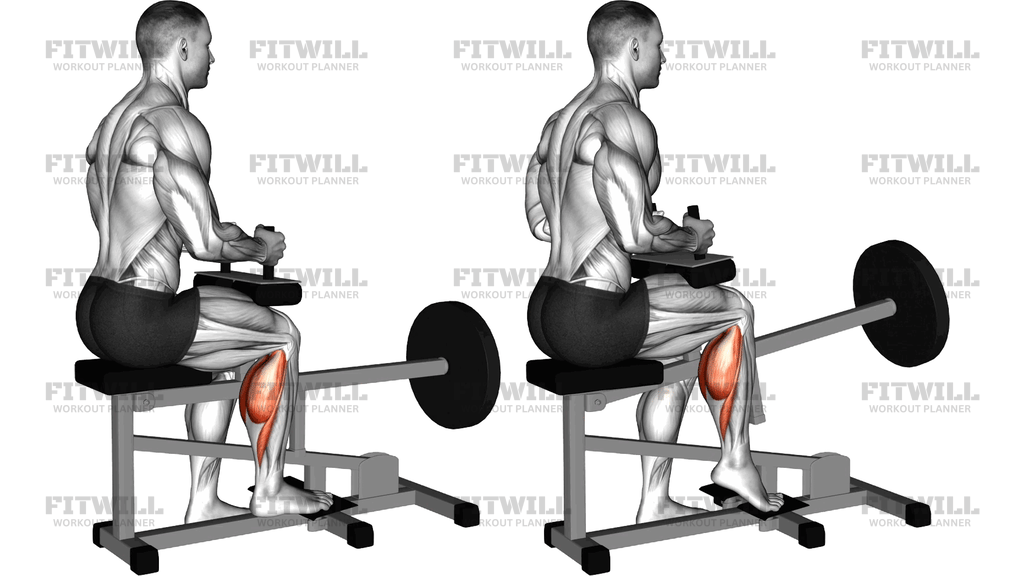
Lever Seated One Leg Calf Raise is a single-leg calf exercise done on a seated leverage machine with the knee bent and the thigh supported under a pad. The bent-knee position shifts a lot of the work toward the soleus while still training the full calf complex, which makes the exercise useful when you want direct calf work without loading the spine or relying on standing balance.
The machine gives you a fixed path, but the rep still depends on a clean ankle action. Set the ball of one foot on the platform, keep the heel free to travel, and let the pad rest on the thigh of the working leg. From there, the calf should raise the heel as high as you can control and lower it until the ankle reaches a deep stretch without bouncing off the bottom.
Because the movement is isolated and single-sided, setup matters as much as effort. Keep the torso tall, hips square, and the working knee lined up under the pad so the load stays centered over the foot. The non-working leg should stay relaxed and out of the way, and the torso should not rock to help finish the rep. If the machine position is off, the set turns into a hip shift instead of a calf raise.
Use this exercise when you want direct calf hypertrophy, improved calf endurance, or a controlled accessory movement after squats, leg presses, runs, or jumps. It is also a good choice for side-to-side calf imbalances because each leg works independently. The best reps are smooth, full, and deliberate, with a pause near the top and a controlled lower back to the stretch.
[ Workout Log & Planner ]
Put your next workout in Fitwill
Keep your plan and training log ready when you are.


Instructions
- Sit on the machine with one thigh under the pad and place the ball of the working foot on the platform so the heel can move freely.
- Keep the non-working leg relaxed and out of the way, and set your hips square so you are not twisting to one side.
- Hold the handles or seat edges for balance, then brace lightly through your midsection before the first rep.
- Start with the heel lowered into a controlled stretch, not slammed against the bottom of the machine.
- Drive through the ball of the foot to raise the heel as high as you can without letting the ankle roll outward or inward.
- Pause briefly at the top and squeeze the calf before reversing the rep.
- Lower the heel slowly until you feel a full calf stretch under the thigh pad.
- Keep the motion smooth and one-sided for the full set, then switch legs and repeat.
Tips & Tricks
- Keep the ball of the foot planted on the platform; if the toes drift off the edge, the heel drive becomes unstable.
- Do not let the working knee slide forward or backward once the pad is set, or the load will shift away from the calf.
- Use a short pause at the top instead of bouncing through the ankle joint for extra reps.
- Lower under control for 2-3 seconds so the stretched portion of the calf does real work.
- Choose a load that lets you reach a clean, noticeable heel rise on every rep rather than a half range with momentum.
- Keep the free leg quiet; swinging it for balance usually makes the torso lean and shortens the calf range.
- If the top of the rep feels cramped in the Achilles, reduce the load and keep the range smooth instead of forcing a hard lockout.
- Exhale as you raise the heel and inhale as you lower into the stretch to keep the rep rhythm steady.
Frequently Asked Questions
What muscle does Lever Seated One Leg Calf Raise target most?
It targets the calf complex, with the seated, bent-knee position placing a strong emphasis on the soleus.
Can beginners perform this exercise?
Yes. It is a good beginner calf exercise as long as the load is light enough to keep the heel path smooth and controlled.
Where should my foot sit on the platform?
Place the ball of the working foot on the platform with the heel hanging free so it can drop into a stretch and rise through a full calf contraction.
Why is the knee bent in this calf raise?
A bent knee reduces the contribution of the gastrocnemius and shifts more work to the soleus, which is the main reason this seated version feels different from standing calf raises.
What is a common mistake on the lever machine?
Letting the heel bounce at the bottom or using hip sway to fake a bigger range are the two biggest form leaks.
How do I know the pad is set correctly?
The thigh pad should feel secure on the working leg without pinching, and your hips should stay level while the ankle moves.
Should I train one leg at a time or both legs together?
This version is meant to be unilateral, which makes it useful for fixing side-to-side calf strength differences.
What tempo works best here?
A controlled lower with a brief pause at the top usually works best because it keeps tension on the calf instead of the machine swinging the rep for you.