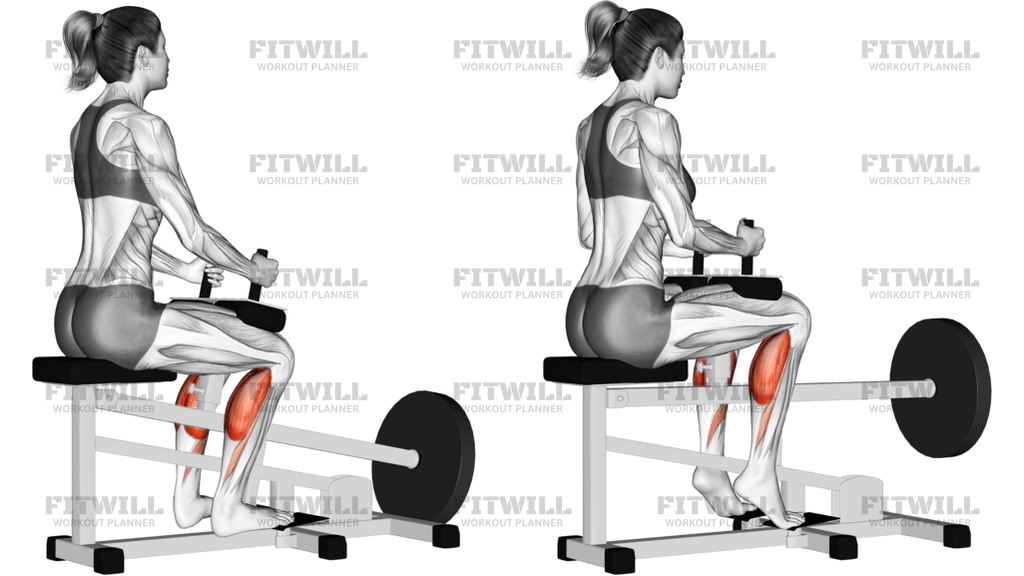
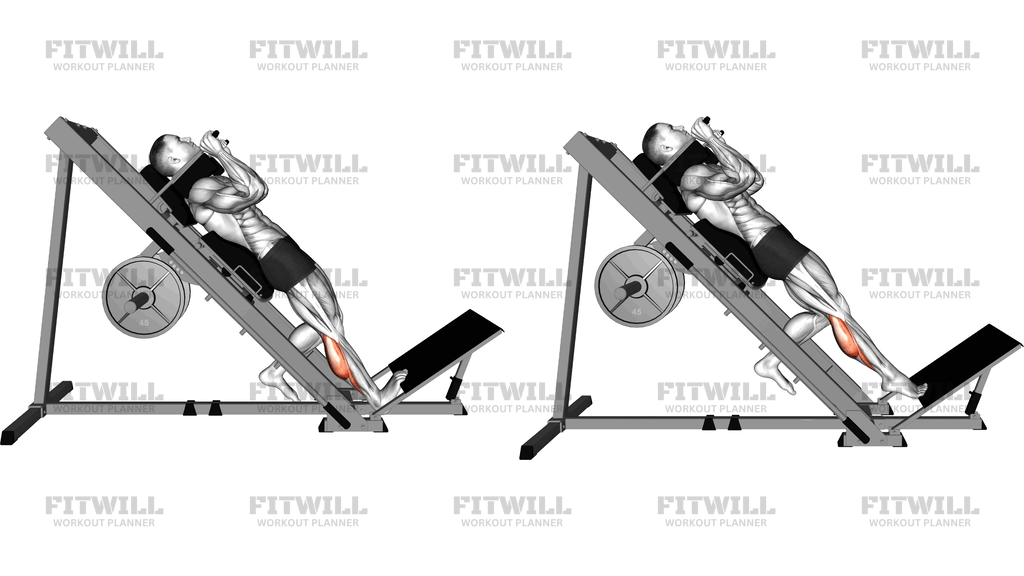
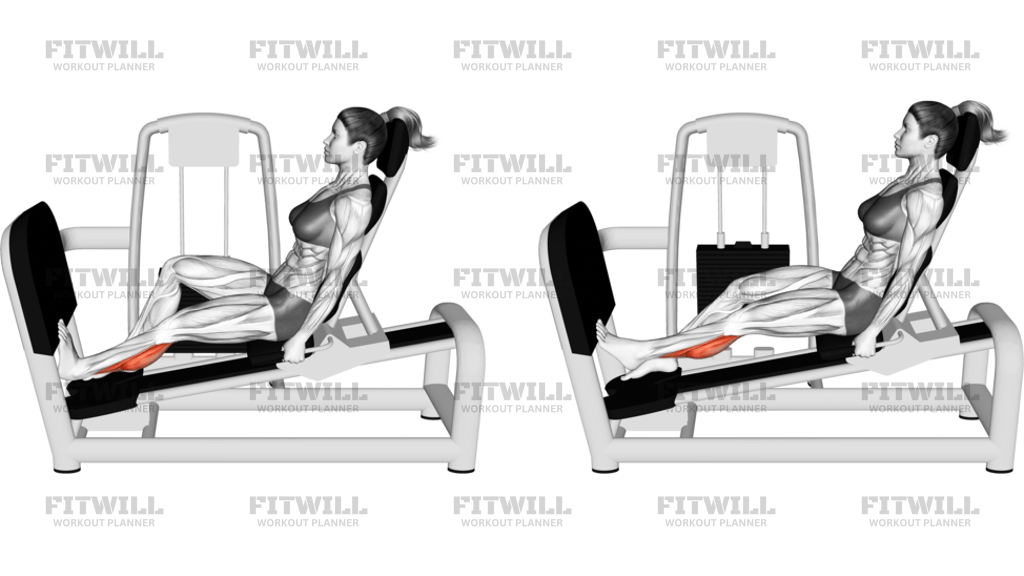
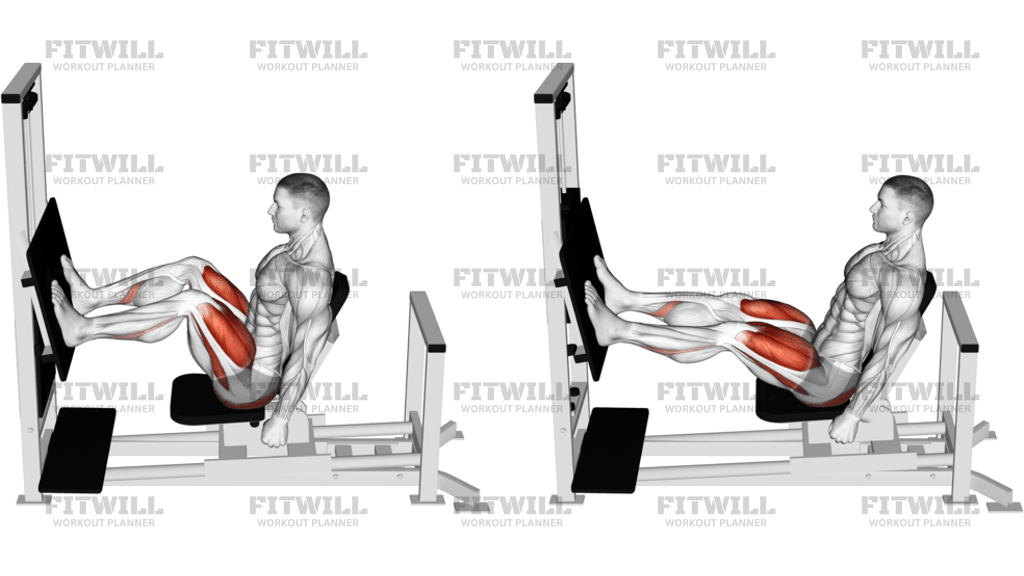
Lever Donkey Calf Raise
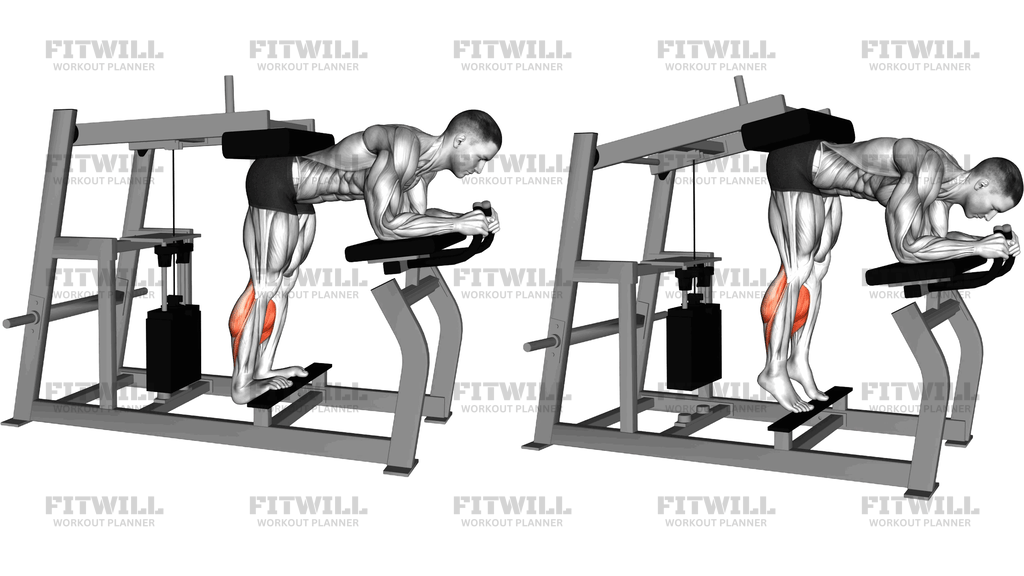
Lever Donkey Calf Raise is a machine-based calf exercise built around a bent-forward standing position and a fixed lever arm. It loads the lower legs through a full ankle range while the torso is supported by the machine, which helps keep the repetition focused on the calves instead of turning into a balance drill. The setup is simple, but it matters: foot placement, hip position, and how firmly you brace against the pads all change where the tension goes.
This movement is most useful when you want direct calf work with a stable platform. The gastrocnemius does most of the visible work, while the soleus and smaller stabilizers around the ankle help control the heel path and keep the foot from collapsing inward or outward. Because the knees stay mostly extended and the body is hinged forward, the calves can work hard through both the stretched bottom position and the strong peak contraction at the top.
A clean Lever Donkey Calf Raise starts with the balls of the feet set on the platform and the heels free to drop below it. Bring the hips and upper body under the support pads, rest the forearms or hands on the front support, and keep the spine long rather than rounding aggressively. That forward-supported position lets you drive the heels straight up and down with very little cheat. If the machine feels cramped or stretched out, adjust your stance before the set begins so the ankles can move smoothly.
The rep itself should feel deliberate. Press through the forefoot to rise as high as you can without bouncing, squeeze the calves briefly at the top, then lower under control until you feel a strong stretch through the lower leg. The machine should not yank you through the motion; you should own the tempo from start to finish. Breathing should stay steady, with an exhale on the effort and a controlled inhale as the heels descend.
Lever Donkey Calf Raise is a solid accessory choice for leg days, lower-body finishing work, or calf-focused sessions when you want repeatable tension and a clear range of motion. It also works well for beginners because the machine supports the body and reduces the skill demand compared with free-standing donkey variations. Keep the load honest, the movement smooth, and the ankles organized so each rep builds calf strength without unnecessary strain on the feet, knees, or lower back.
[ Workout Log & Planner ]
Put your next workout in Fitwill
Keep your plan and training log ready when you are.


Instructions
- Stand on the foot platform with the balls of your feet on the edge and your heels hanging free behind it.
- Lean forward into the machine so your hips and torso sit under the pads and your forearms or hands rest on the front support.
- Set your feet about hip-width apart, keep your knees soft but not deeply bent, and lengthen your spine before the first rep.
- Brace your midsection and let the lever settle so your body feels supported instead of crowded against the pads.
- Drive through the big toe and second toe to raise your heels as high as you can without rocking your body.
- Pause briefly at the top and squeeze the calves before the weight starts to drop.
- Lower your heels slowly below the platform until you feel a strong stretch through the lower legs.
- Keep the ankles tracking evenly and repeat for the planned number of reps.
- Step off carefully and reset the machine before leaving the station.
Tips & Tricks
- Set the platform height and body angle so the heels can drop without the machine pinching the Achilles tendon at the bottom.
- Keep pressure through the big toe and second toe instead of letting the arches collapse inward as you rise.
- Use a small pause at the top; bouncing off the stack usually turns this into a shorter, easier rep.
- Keep the knees nearly straight, but do not lock them out hard enough to shift tension out of the calves.
- If the torso slides forward on the pads, reduce the load before the set gets sloppy.
- A slower lowering phase usually works better here than chasing extra weight or speed.
- Let the heels travel below platform level only as far as your ankle mobility allows without losing control.
- Keep the neck relaxed and look down instead of craning the head to finish the rep.
- Stop the set when the ankles start wobbling or the machine begins to bounce under you.
Frequently Asked Questions
What muscles does Lever Donkey Calf Raise work most?
The calves do most of the work, especially the gastrocnemius, with the soleus and ankle stabilizers helping control the heel path.
How do I set my feet on the Lever Donkey Calf Raise platform?
Place the balls of your feet on the edge of the platform so the heels can drop freely below it. Keep the pressure centered through the forefoot instead of shifting to the toes.
Should my knees be bent during Lever Donkey Calf Raise?
Keep the knees softly unlocked, not deeply bent. A small bend helps comfort and balance, but too much knee flexion reduces the calf stretch.
Where should my hips and torso sit on the machine?
Lean forward so the hips and upper body rest under the pads while the forearms or hands stay on the front support. That position keeps the torso stable and lets the calves drive the movement.
How low should I lower my heels?
Lower only as far as you can keep control and feel a strong calf stretch. If the heels drop so far that the ankles wobble or the machine shifts, shorten the range.
Is Lever Donkey Calf Raise good for beginners?
Yes. The machine support makes it easier to learn than a free-standing donkey variation, especially if you start with light load and a slow tempo.
What is the biggest mistake on Lever Donkey Calf Raise?
Bouncing through the bottom or top usually turns the set into momentum work. Use a brief squeeze at the top and a controlled lowering phase instead.
Can I use this instead of standing calf raises?
Yes. It is a good substitute when you want more torso support and a more fixed path, especially for higher-rep calf work.