Medicine Ball Chest Push With Run Release
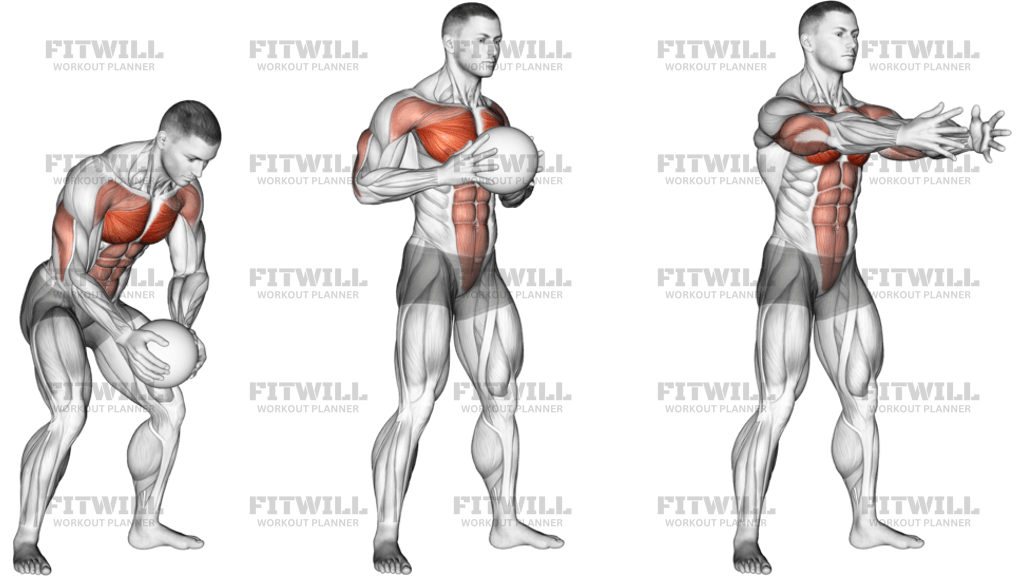
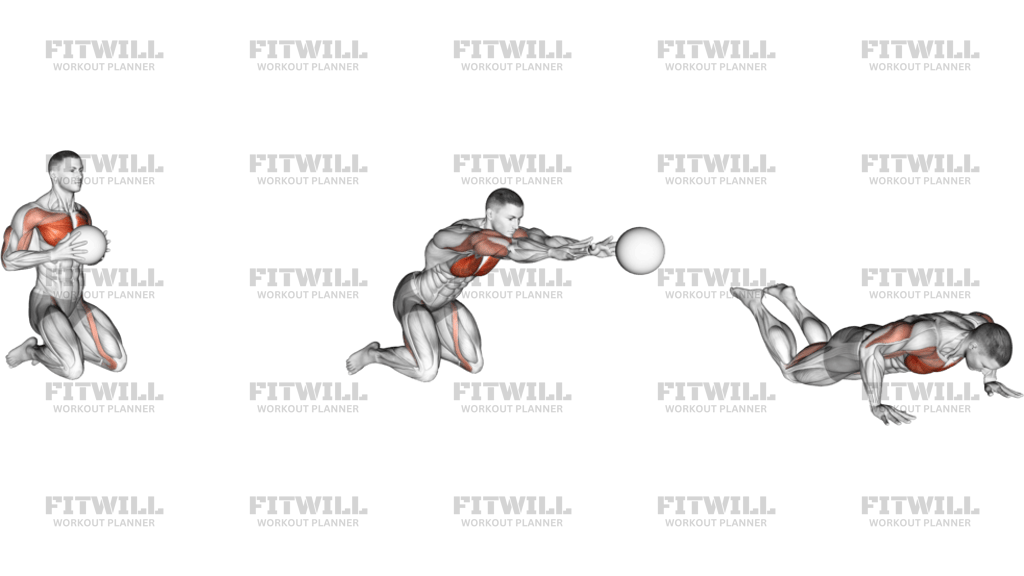
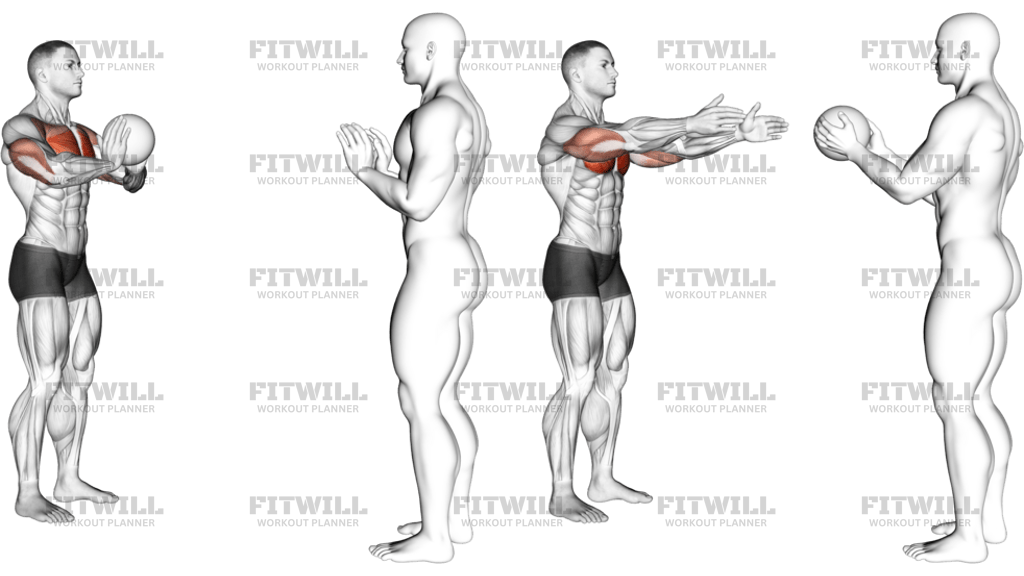
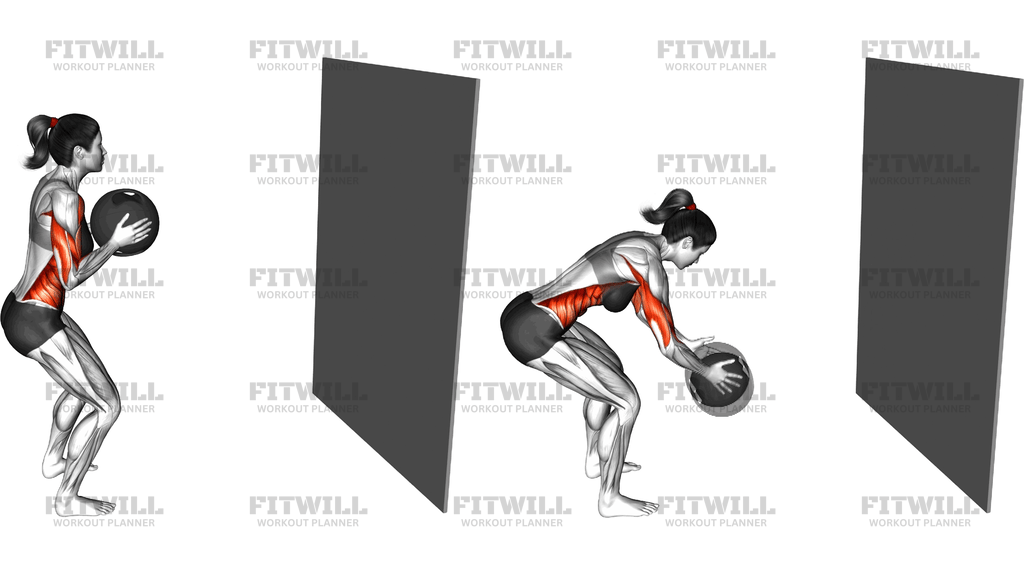
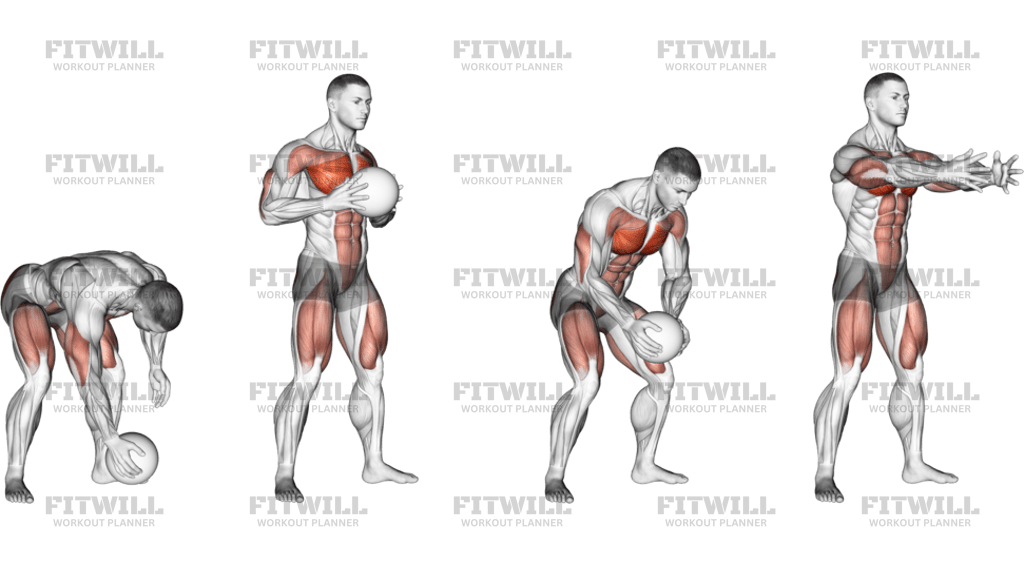
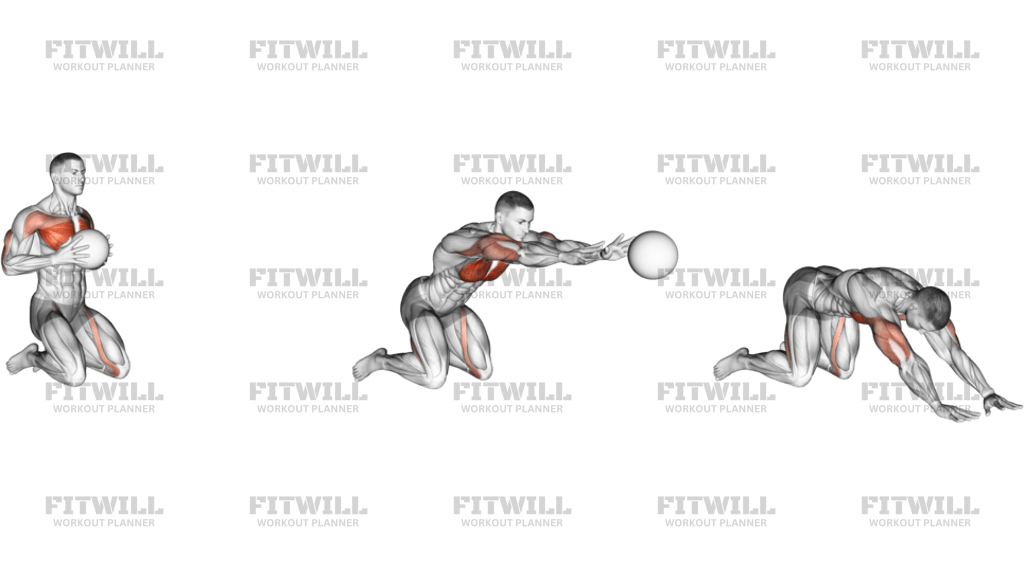
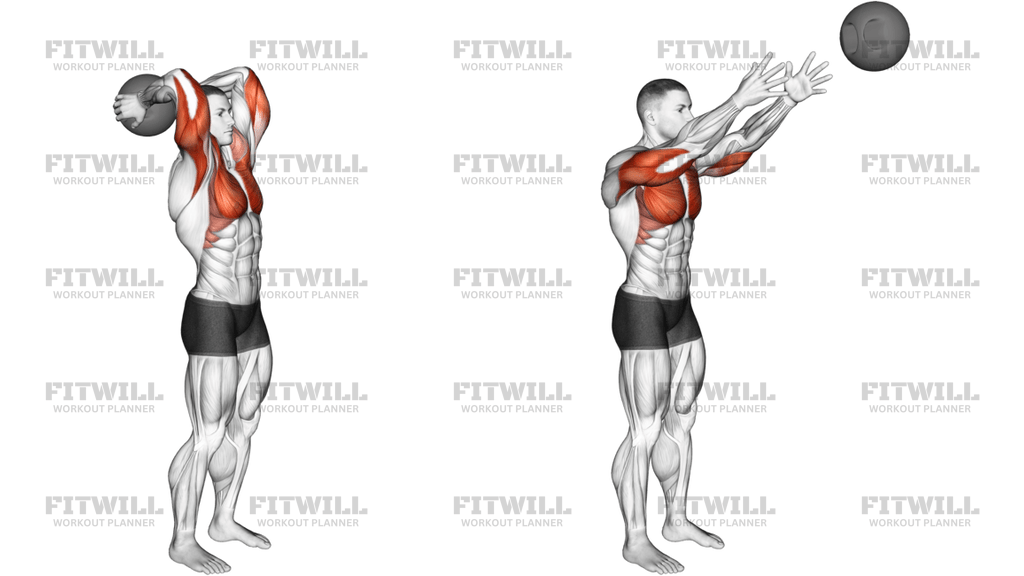
Medicine Ball Chest Push With Run Release is an explosive standing power drill for the chest, front shoulders, triceps, and trunk. The image shows the ball starting low and close, then moving to the sternum before being driven straight forward, so the key job is to keep the torso organized while the arms accelerate the ball on a clean horizontal line. It is not a slow strength press; it is a fast push-and-release pattern that trains force production, coordination, and quick reset mechanics.
The chest does most of the work, with the front shoulders and triceps helping finish the press and the core keeping the ribs from flaring. In anatomy terms, the main work centers on the Pectoralis major, assisted by the Anterior deltoid, Triceps brachii, and Rectus abdominis. That combination matters because the movement looks simple, but if the trunk collapses or the shoulders shrug, the push becomes sloppy and the line of force changes.
Setup is important because the start position determines whether the rep feels athletic or forced. Stand in a balanced stance with soft knees, hold the medicine ball against the chest, and keep the elbows under control instead of flaring wide. From there, brace the midsection and keep the chest tall without leaning back. That stacked posture lets the ball leave the hands in a straight path rather than drifting upward or turning into a full-body heave.
During the rep, press the ball away from the sternum by extending the arms and driving through the chest, then release it with an explosive finish. If the drill includes the run release, move forward immediately after the release to chase, collect, or reset the ball under control. The running action should stay crisp and athletic, not chaotic, so the drill remains a power movement instead of a scramble.
This exercise fits well in warm-ups, power circuits, sport preparation, or conditioning blocks where you want upper-body explosiveness without heavy external load. Keep the ball light enough to stay fast, stop the set when the line of push deteriorates, and avoid any shoulder pinch or low-back arching that shows the body is compensating for speed.
Fitwill
Log Workouts, Track Progress & Build Strength.
Achieve more with Fitwill: explore over 9600 exercises with images and videos, access built-in and custom workouts, perfect for both gym and home sessions, and see real results.
Start your journey. Download today!




Instructions
- Stand with your feet about hip-width apart and hold the medicine ball tight to the center of your chest.
- Bend your knees slightly, keep your chest tall, and stack your ribs over your pelvis instead of leaning back.
- Set your elbows under the ball so the forearms support it and your shoulders stay down and away from your ears.
- Take a short breath in and brace your midsection before you start the push.
- Drive the ball straight forward from the sternum by extending your arms and pressing through the chest.
- Finish the push with the hands reaching forward and release the ball on the same line rather than letting it arc upward.
- If the drill calls for the run release, move forward immediately after the release to chase, collect, or reset the ball.
- Bring the ball back to the chest, re-establish your stance, and reset your breath before the next repetition.
- Repeat for the planned number of reps with the same path and speed on every attempt.
Tips & Tricks
- Use a light medicine ball that lets you accelerate the release without leaning your torso backward.
- Keep the ball starting at sternum height so the push stays horizontal instead of turning into an upward throw.
- Let the elbows finish long, but do not shrug the shoulders at the end of the press.
- If the ball keeps floating upward, lower the release angle and keep your chin tucked.
- Soft knees help you stay athletic and balanced during the push-and-go transition.
- Exhale as the ball leaves your hands so the trunk does not brace so hard that the shoulders jam up.
- Short quick steps are better than a wild sprint when you chase the ball after the release.
- Stop the set when the rib cage flares, the low back arches, or the ball path stops looking straight.
Frequently Asked Questions
What muscles does Medicine Ball Chest Push With Run Release target most?
It mainly hits the chest, with the front shoulders, triceps, and core helping control the push and release.
Do I need a wall or partner for the chest push?
No. The drill can be done as a straight forward release, then you move to the ball or reset for the next rep.
How heavy should the medicine ball be?
Choose a light enough ball that you can push it fast and keep the release line clean from rep to rep.
What is the biggest form mistake?
Leaning backward or throwing the ball upward usually means the chest press has turned into a full-body heave.
Should my knees stay bent?
Yes, keep a small athletic bend so you can stay balanced when you drive the ball and move forward after the release.
Is this more of a strength or power exercise?
It is mainly a power drill. The goal is a fast, crisp push rather than a slow, heavy press.
Can beginners use this exercise?
Yes, but they should start with a very light ball and practice the chest-level release before adding speed.
How should I breathe during the rep?
Take a breath and brace before the push, then exhale as you release the ball and reset.