Cable Wide-Grip Rear Pulldown Behind Neck
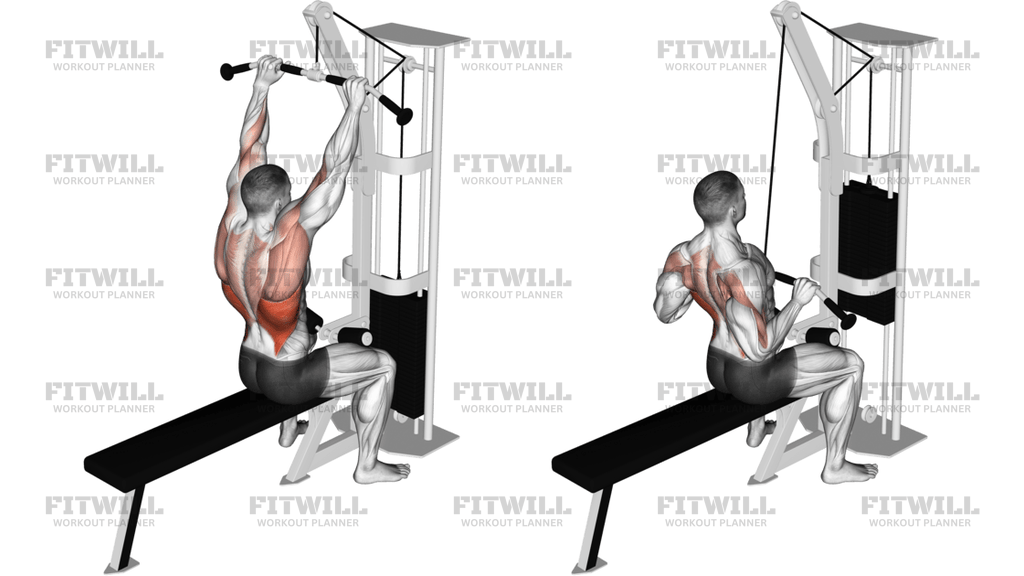
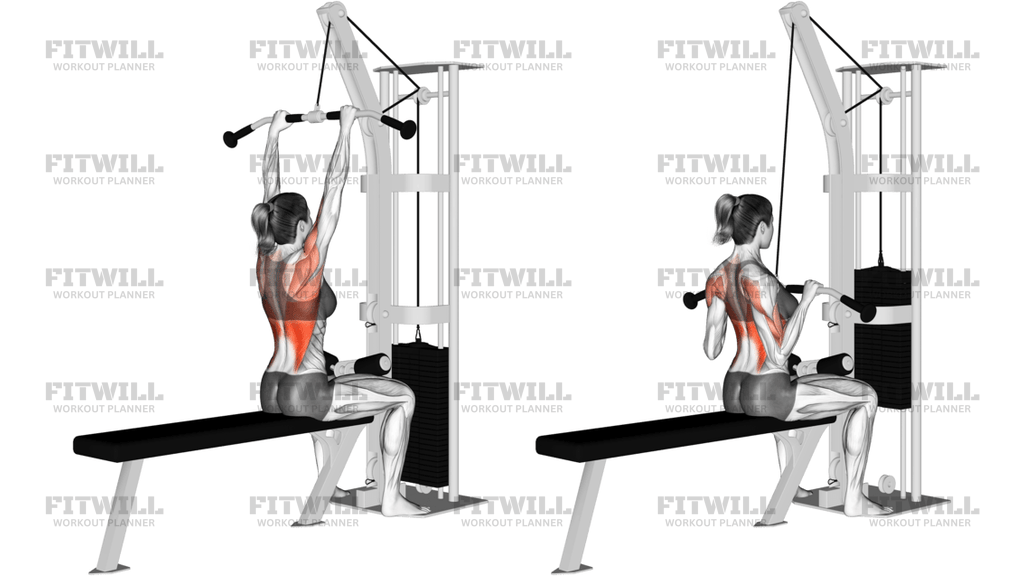
Cable Wide-Grip Rear Pulldown Behind Neck is a seated cable back exercise that emphasizes the lats while asking the upper back and rear shoulders to stabilize the bar. The wide overhand grip and behind-the-head path make the setup more important than in a standard pulldown, because the torso, neck, and shoulder position have to stay organized from the first rep to the last. When the station is adjusted correctly, the movement becomes a controlled pull that trains strength through a long, deliberate range rather than a rushed yank on the handle.
This variation is useful when you want to work the back with a fixed cable path and a wide elbow angle. The lats do most of the work, but the rhomboids, mid traps, biceps, and forearms help control the descent and keep the bar steady behind the head. It can be a good accessory movement for lifters who already have the shoulder mobility and can keep the rib cage from flaring as the bar comes down.
The setup starts with the thighs locked under the pads, feet flat, and chest tall against a mostly upright torso. Take a wide overhand grip on the bar, then let the shoulders settle down before you pull. A small lean back is acceptable, but the rep should still look like a vertical pulldown, not a row or a body swing. Keeping the head neutral matters here because the bar travels behind the head instead of in front of the face.
On the way down, drive the elbows toward the floor and slightly out to the sides while the bar moves behind the head to the top of the shoulders or upper traps. The finish should feel like the lats are shortened, not like the neck is being forced forward. The return should be slow and controlled until the arms are straight and the back has length again, with the shoulders still packed rather than dumped into the stack.
Use Cable Wide-Grip Rear Pulldown Behind Neck as an accessory for back-focused sessions, upper-body strength work, or controlled hypertrophy training. It works best when the weight is light enough to keep the torso quiet and the shoulders comfortable through the whole rep. If the wide behind-neck path causes pinching, shorten the range or switch to a front pulldown rather than forcing a rep that the joint position does not support.
[ Workout Log & Planner ]
Put your next workout in Fitwill
Keep your plan and training log ready when you are.


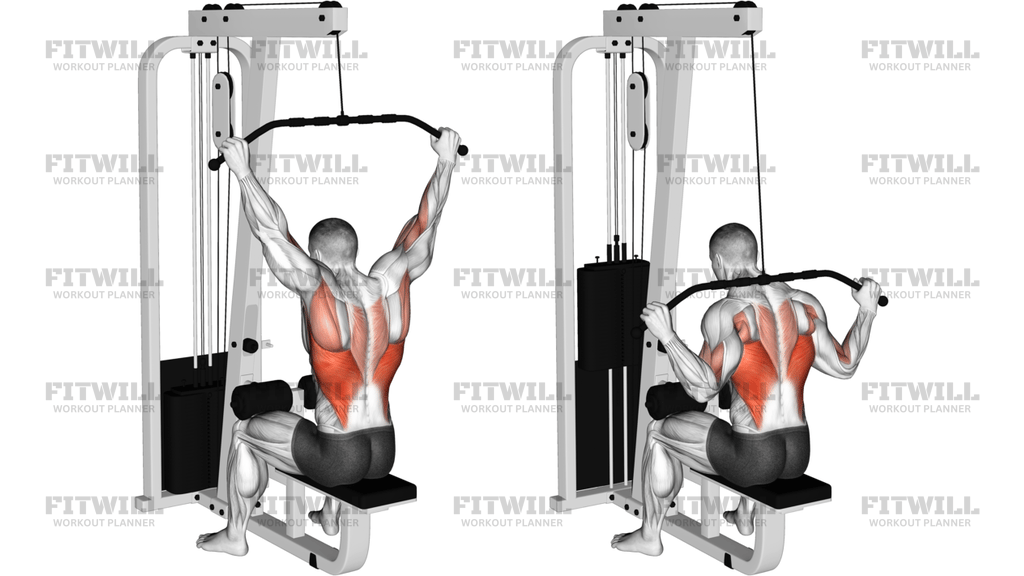
Instructions
- Sit on the lat pulldown seat and lock your thighs under the pads so your hips stay planted.
- Reach up and grab the wide bar with an overhand grip that is a little wider than shoulder width.
- Plant both feet flat, lift your chest, and keep your torso mostly upright with only a slight lean back.
- Set your shoulders down away from your ears before you start the first rep.
- Inhale, then pull the elbows down and slightly out as the bar travels behind your head toward the top of your shoulders.
- Stop the pull when the bar is just behind the head and your neck stays neutral, not shoved forward.
- Squeeze the lats and upper back for a brief moment at the bottom without shrugging.
- Lower the bar back up under control until your arms are straight and the cable stretches the back.
- Reset your shoulders and breathing before the next rep, or safely rack the bar if the set is done.
Tips & Tricks
- Keep the thighs pinned under the pads; if your hips lift, the cable path gets sloppy fast.
- Use a grip wide enough that your wrists stay stacked over the bar instead of bending back hard.
- Pull the bar behind the head, not onto the neck. The finish should be high on the upper traps, not jammed into the cervical spine.
- A small lean back is fine, but if you are rocking your torso, the load is too heavy for this variation.
- Drive the elbows toward the floor and out, which helps the lats work better than thinking only about the hands.
- Do not shrug at the bottom. The shoulders should stay down while the lats finish the pull.
- Let the bar rise until the arms are straight, but do not collapse into the stack and lose upper-back tension.
- A slower return usually makes the movement feel cleaner and keeps the cable from yanking your shoulders upward.
- If the behind-neck path feels pinchy, shorten the range immediately rather than forcing the bar lower.
- This exercise usually works better with moderate or lighter loads than with max-effort weight.
Frequently Asked Questions
What muscles does Cable Wide-Grip Rear Pulldown Behind Neck work?
It mainly targets the lats, with the upper back, rear shoulders, biceps, and forearms helping control the bar.
Is Cable Wide-Grip Rear Pulldown Behind Neck different from a front pulldown?
Yes. The behind-neck path asks for more shoulder mobility and a more upright torso, while a front pulldown usually feels easier to control.
Should the bar touch my neck?
No. Bring it down behind the head to the upper traps or top of the shoulders, then stop before your neck cranes forward.
How wide should my grip be on the bar?
Use a grip a little wider than shoulder width so your elbows can travel down and out without forcing the wrists to bend back.
Can beginners do Cable Wide-Grip Rear Pulldown Behind Neck?
Only if they can keep the ribs down and the shoulders comfortable overhead. Many beginners are better off starting with a front pulldown first.
Why do I feel this more in my arms than my back?
That usually means the load is too heavy or you are pulling with your hands instead of driving the elbows down.
What should I do if my shoulders feel pinchy?
Shorten the range of motion and lighten the load, or switch to a front pulldown if the behind-neck position still feels awkward.
Is it okay to lean back a little during the rep?
A small lean is fine, but if you are rocking the torso or turning it into a row, the weight is too heavy.