Chin-Up
Chin-Up is a bodyweight pulling exercise built around a supinated grip on a fixed overhead bar. The palms face toward you, which shifts a noticeable amount of work to the biceps while still demanding strong contribution from the lats, upper back, brachialis, brachioradialis, forearms, and grip. It is one of the clearest tests of vertical pulling strength because every rep has to be created by your own body, with no machine path to guide you.
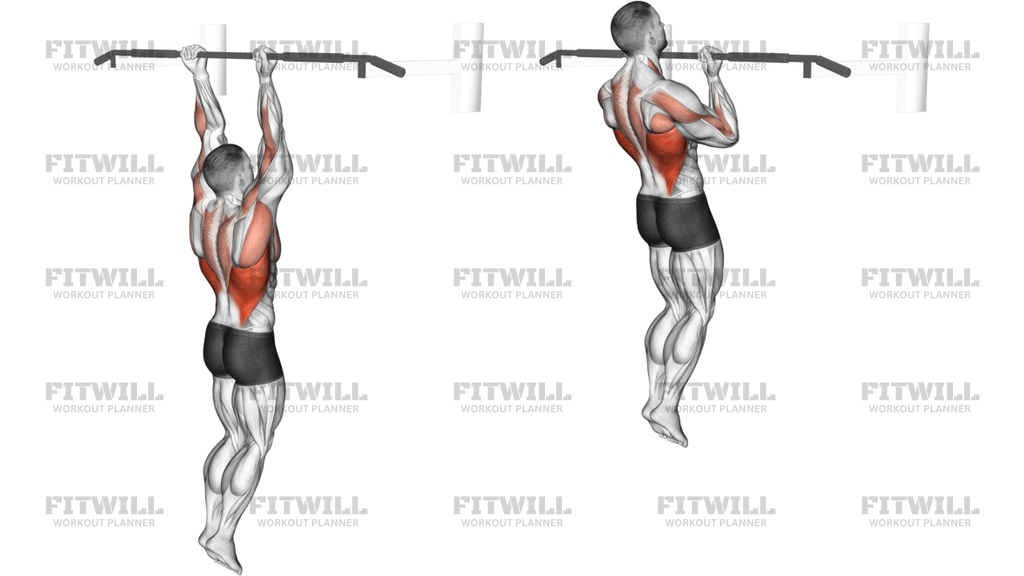
The setup matters because a good chin-up starts from a stable hang, not from a swing. In the image, the athlete uses a shoulder-width underhand grip and keeps the body long beneath the bar. That position lets the elbows travel down and back instead of flaring wildly, which keeps the pull efficient and reduces wasted motion through the shoulders and lower back. A small shift in grip width or body angle can change how much the biceps contribute, so the start position should be consistent rep to rep.
During the pull, the goal is to drive the chest upward while the elbows move toward the ribs. The torso should stay controlled, the ribs should not flare aggressively, and the neck should stay neutral as the chin approaches the bar. The top position should look strong and deliberate, not craned forward. On the way down, lower yourself under control until the arms are long again and the shoulders are set, because the eccentric phase is part of the strength stimulus rather than a throwaway return.
Chin-ups are useful for building upper-body pulling strength, improving arm and grip endurance, and teaching better control through the shoulder blades. They also carry over well to sports and general fitness because they reward clean body tension, not just raw arm effort. If you need assistance, use a band or machine support that still lets you keep the same bar path and grip, rather than turning the rep into a swing or a partial pull.
Treat the rep as a strict bodyweight strength movement and keep the standard high. A clean chin-up is usually better than a higher rep count with momentum, shortened range, or a loose finish. When the bar path, body line, and breathing stay organized, the exercise becomes more productive and much easier to progress over time.
[ Workout Log & Planner ]
Put your next workout in Fitwill
Keep your plan and training log ready when you are.


Instructions
- Grip the overhead bar with a shoulder-width underhand grip and hang with straight arms, feet off the floor, and shoulders set away from your ears.
- Cross your ankles or keep your legs together so your body stays quiet instead of swinging under the bar.
- Brace your abdomen and lightly tuck the ribs before the first pull so the torso stays firm.
- Pull your chest up by driving the elbows down and back toward your ribs.
- Keep the chin neutral and bring your chin over the bar without craning the neck forward.
- Squeeze briefly at the top while keeping the shoulders down and the body controlled.
- Lower yourself slowly until the arms are fully extended again and the shoulders remain organized.
- Inhale on the way down and exhale as you pull up for each rep.
- Reset at the bottom between reps if needed, then repeat for the planned set.
Tips & Tricks
- Keep the grip just outside or at shoulder width; going much wider usually reduces the biceps contribution and makes the rep less efficient.
- Start each rep from a controlled dead hang instead of bouncing out of the bottom.
- Think about bringing the elbows to the ribs, not just getting the chin over the bar.
- If your shoulders shrug toward your ears, reset and shorten the set before form breaks down.
- A slight lean back is fine, but a big swing turns the chin-up into a momentum exercise.
- Lowering under control matters as much as the pull up, especially if you are building strength or muscle.
- Use a band or assisted chin-up machine if you cannot keep the same bar path and tempo for every rep.
- Stop the set when your chin no longer clears the bar without neck strain or body English.
Frequently Asked Questions
What muscles do chin-ups train most?
The biceps are heavily involved, with the lats, brachialis, brachioradialis, forearms, and upper back helping drive and stabilize the pull.
What grip should I use for this exercise?
Use a shoulder-width underhand grip on the bar. That grip matches the chin-up pattern and keeps the pull centered and efficient.
How high should I pull myself?
Pull until your chin clears the bar without jutting your head forward. If you cannot reach that cleanly, use assistance rather than swinging.
Is a dead hang required at the bottom?
Yes, a controlled hang with straight arms gives each rep a clear start and helps you avoid bouncing through the bottom.
Why do chin-ups feel so hard on the arms?
The underhand grip increases biceps contribution, so the exercise often feels more arm-dominant than a pull-up even though the back is still working hard.
Can beginners do chin-ups?
Yes, but many beginners need band assistance, a machine, or controlled negatives to keep the form strict and repeatable.
What is the most common mistake?
The biggest mistake is using body swing to fake the rep. That usually shortens the range and shifts stress away from the intended muscles.
How should I breathe during chin-ups?
Exhale as you pull up and inhale on the way down. Keeping the breath steady helps you hold tension without losing position.