Dumbbell Hammer Curl
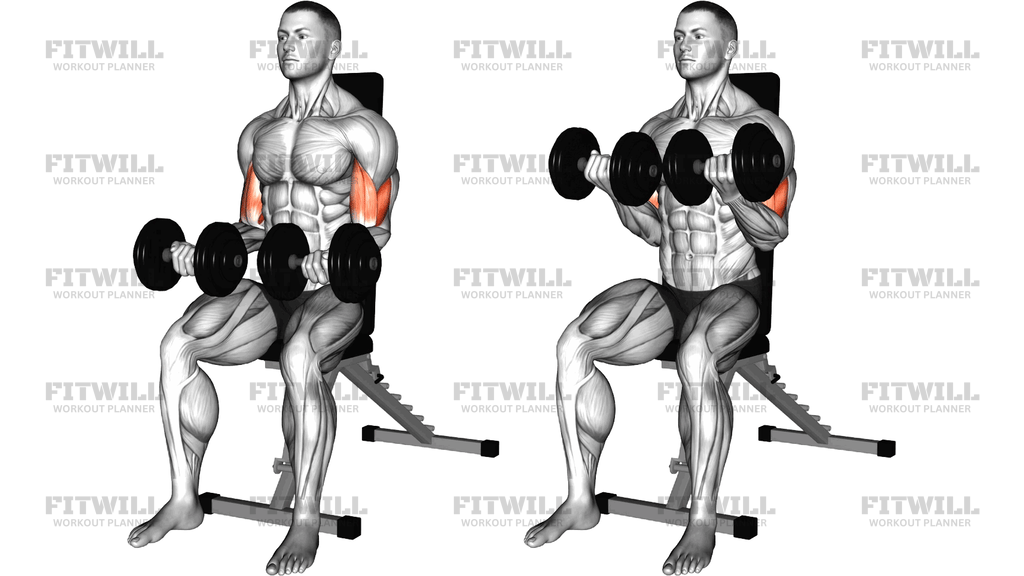
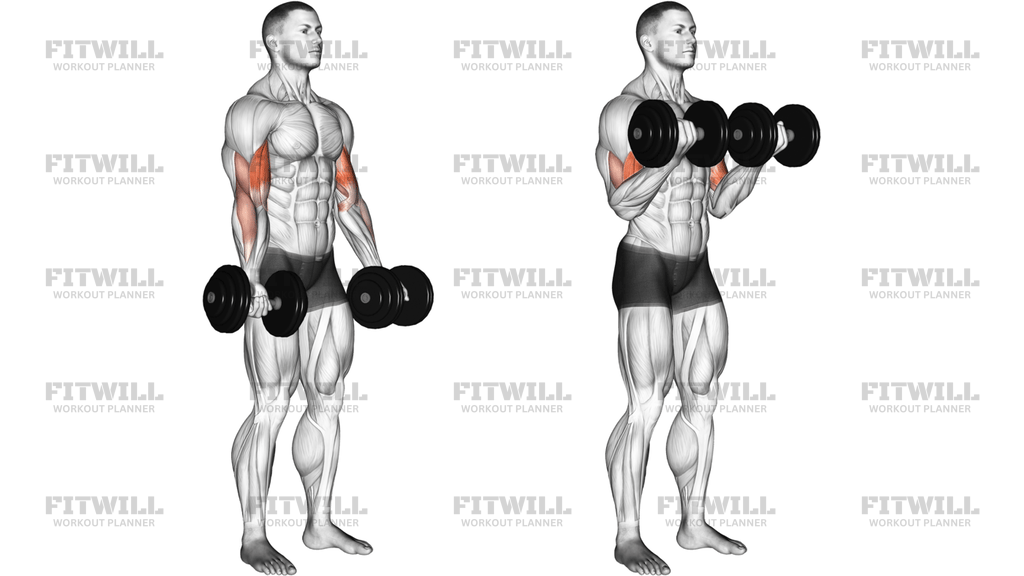
Dumbbell Hammer Curl is a standing arm exercise done with a neutral grip, where the palms face inward instead of turning up during the curl. That hand position shifts part of the work away from a fully supinated biceps curl and puts more emphasis on the brachialis and brachioradialis while still training the biceps hard. It is useful for building thicker-looking upper arms, improving elbow flexion strength, and strengthening the forearms that help control the dumbbells.
The setup matters because the hammer curl is easy to cheat with shoulder swing or a drifting elbow path. Stand tall with a dumbbell in each hand, feet about hip-width apart, and the arms hanging long at your sides. Keep the ribs stacked over the pelvis, the wrists straight, and the palms facing your thighs so the curl starts from a clean neutral position instead of a twisted forearm position.
From there, each repetition should travel in a simple vertical arc. Curl the weights up without letting the elbows travel forward, stop when the dumbbells reach roughly shoulder height, then lower them slowly until the arms are straight again. The forearms should stay neutral throughout the lift, and the shoulders should remain quiet so the upper arms do not turn the movement into a front-delt raise. Exhale as the dumbbells rise and inhale on the way down.
Dumbbell Hammer Curl fits well in arm training, upper-body accessory work, or a finisher after compound pulling and pressing exercises. It is also a good choice for lifters who want direct arm work without the wrist rotation required by a standard curl. Because the load is held with a neutral grip, it often feels friendly on the wrists and elbows when the dumbbells are chosen conservatively and the descent is controlled.
The best reps look smooth and boring: no torso lean, no shoulder shrugging, and no half-reps bounced off momentum. Keep the wrists stacked over the knuckles, lower the weight all the way, and let the biceps and forearm muscles do the work instead of the lower back. When the last few reps start to pull the shoulders forward or force a swing, the set is done.
[ Workout Log & Planner ]
Put your next workout in Fitwill
Keep your plan and training log ready when you are.


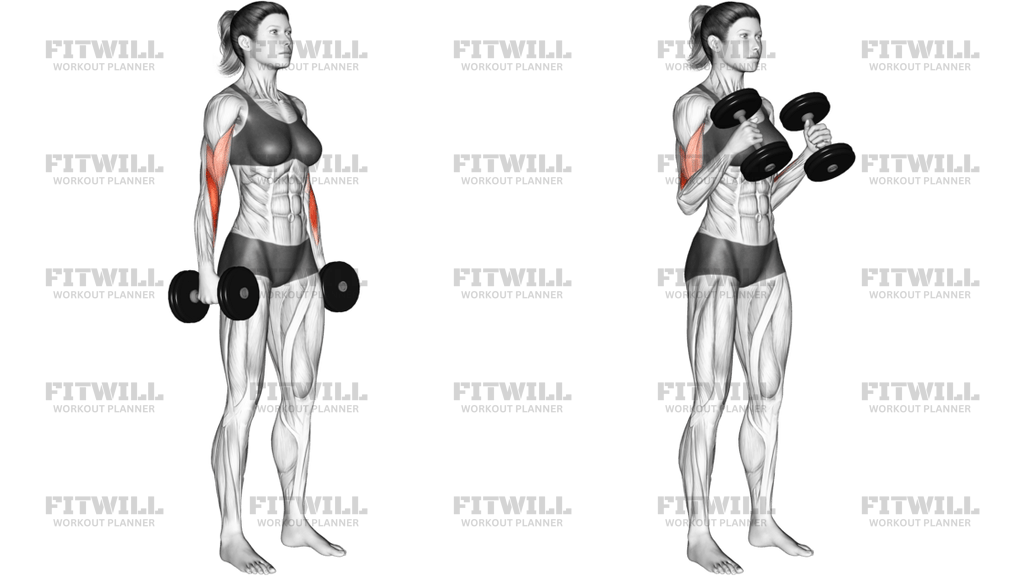
Instructions
- Stand tall with a dumbbell in each hand, feet about hip-width apart, arms hanging at your sides, palms facing your thighs.
- Keep your chest lifted, ribs stacked over your pelvis, wrists straight, and elbows pinned close to your torso.
- Brace lightly and look straight ahead so your shoulders stay quiet before the first curl starts.
- Curl both dumbbells upward by bending the elbows while keeping the palms facing in the whole time.
- Bring the dumbbells toward the front of your shoulders without letting the elbows drift far forward.
- Squeeze briefly at the top, then lower the dumbbells slowly until the arms are fully straight again.
- Keep the descent controlled and resist the urge to swing the weights back down.
- Repeat for the planned reps, then lower the dumbbells to your sides and stand tall before ending the set.
Tips & Tricks
- Keep the dumbbells close to the outer line of the thighs on the way up so the curl stays strict instead of turning into a front raise.
- A neutral wrist should stay stacked over the knuckles; if the wrist bends back, the forearms usually take over and the grip gets sloppy.
- If your elbows keep drifting forward, reduce the load and pin the upper arms slightly behind the side seam of your shirt.
- Use a slower lowering phase than the lifting phase to keep tension on the brachialis and brachioradialis.
- Avoid shrugging at the top; the shoulders should stay down while the elbow bends.
- For heavier sets, keep the torso upright rather than leaning back to start the rep with momentum.
- If the dumbbells hit the shoulders before the elbows finish flexing, shorten the top position slightly and keep the motion smooth.
- Stop the set when you have to swing the weights or lose the neutral hand position.
Frequently Asked Questions
What muscles does Dumbbell Hammer Curl work?
It trains the biceps, brachialis, and brachioradialis, with the forearms helping stabilize the neutral grip.
Why use a neutral grip for Dumbbell Hammer Curl?
The palms-facing-in grip shifts more work to the upper arm and forearm muscles and usually feels friendlier on the wrists than a fully turned-up curl.
Is Dumbbell Hammer Curl beginner-friendly?
Yes. It is straightforward to learn as long as you keep the elbows close to the torso and choose a light enough load to avoid swinging.
Should I curl one arm at a time or both together?
Both work. Alternating can help you focus on each arm, while curling both together keeps the rhythm simple and saves time.
How high should the dumbbells come up?
Stop when the dumbbells are near shoulder height or when your elbows are fully bent without letting the shoulders roll forward.
What is the most common mistake in Dumbbell Hammer Curl?
The usual mistake is using body swing to move the dumbbells, which takes tension off the arm and turns the rep into a momentum lift.
Can I use Dumbbell Hammer Curl for forearms too?
Yes. The neutral grip makes the brachioradialis and other forearm flexors work hard, especially if you lower the dumbbells slowly.
When should I use Dumbbell Hammer Curl in a workout?
It fits well after compound presses or rows, or as direct arm accessory work near the end of an upper-body session.