EZ Bar Reverse-Grip Bent-Over Row
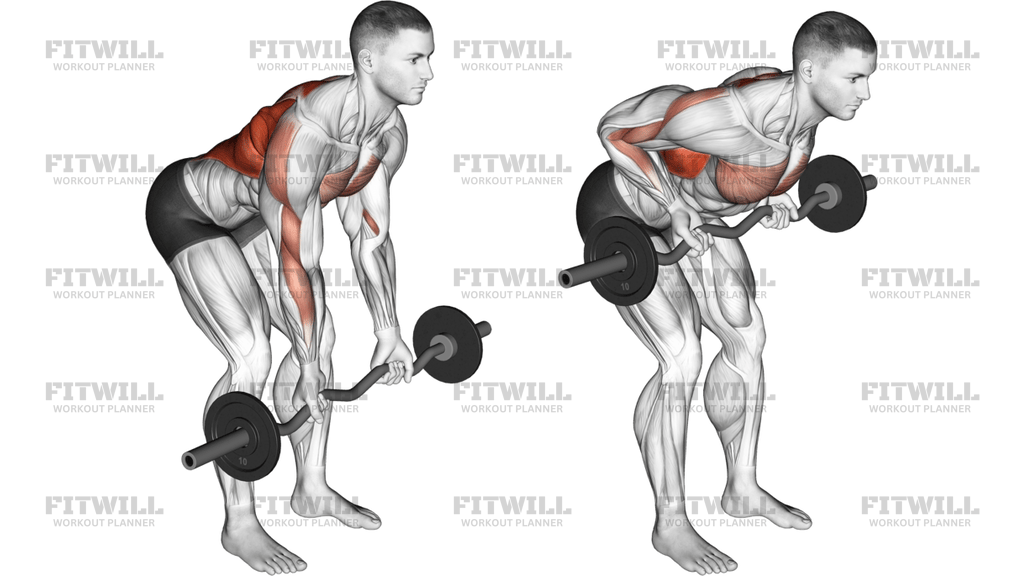
EZ Bar Reverse Grip Bent Over Row is a bent-over pulling exercise that uses an underhand grip on an EZ bar to train the back, arms, and rear shoulder support muscles. The hinge position shifts the work away from momentum and into the muscles that hold the torso steady while you row. It is a useful choice when you want a strict horizontal pull that still feels comfortable on the wrists compared with a straight bar.
The reverse grip changes the line of pull and usually lets the elbows stay a little closer to the torso. That makes EZ Bar Reverse Grip Bent Over Row especially useful for building control through the lower lats, upper back, and biceps while still demanding good spinal position. The exercise works best when the torso stays fixed and each rep is started from a deliberate hinge, not from a jerk of the shoulders.
The setup matters because the row is only as good as the hinge. With your feet about hip-width apart, push the hips back until your torso is angled forward and your spine stays long and neutral. The bar should hang under your shoulders before the first pull, and your weight should stay balanced through the whole foot so the lower back is not doing the job of the arms.
EZ Bar Reverse Grip Bent Over Row should be driven by the elbows, not the hands. Pull the bar toward the lower ribs or upper abdomen, squeeze the shoulder blades without shrugging hard, then lower the bar under control until the arms are long again. That controlled return keeps tension on the back and stops the set from turning into a fast hip swing. A smooth exhale on the pull and a steady brace through the torso help keep the rep clean.
This exercise fits well in back-focused sessions, pulling days, or accessory work after heavier compound lifts. It is also a practical option for lifters who want more wrist comfort than a straight bar row or want to emphasize strict upper-back work with a supinated grip. Use a load you can row without losing the hinge, and stop the set when the torso starts to rise or the shoulders begin to roll forward.
Fitwill
Log Workouts, Track Progress & Build Strength.
Achieve more with Fitwill: explore over 9600 exercises with images and videos, access built-in and custom workouts, perfect for both gym and home sessions, and see real results.
Start your journey. Download today!




Instructions
- Stand with your feet about hip-width apart and hold the EZ bar with an underhand grip, hands just outside your thighs.
- Hinge at the hips until your torso is angled forward and your chest is proud, keeping a long neutral spine and a soft bend in the knees.
- Let the bar hang under your shoulders with your arms straight and your weight spread through the middle of your feet.
- Set your ribs down, brace your midsection, and keep your neck in line with your spine before you row.
- Pull the bar toward your lower ribs or upper abdomen by driving your elbows back close to your sides.
- Squeeze your shoulder blades together at the top without standing up taller or shrugging your shoulders toward your ears.
- Lower the EZ bar slowly until your arms are straight again and the plates settle below knee level if your hinge allows it.
- Exhale as you row, inhale on the way down, and keep the same torso angle on every repetition.
- When the set is finished, place the bar down by hinging less and lowering it carefully to the floor.
Tips & Tricks
- Keep the elbows tucked and think about pulling them behind your body, not just lifting the bar with your hands.
- If the lower back starts to round, raise your torso angle slightly and reduce the load before the next set.
- Do not turn the top of the rep into a shrug; the bar should finish near the lower ribs, not up by the chest.
- Use a grip that feels secure on the EZ bends, but keep the wrists in line with the forearms instead of cranking them back.
- A short pause at the top makes the row more honest and keeps the weight from bouncing off the bottom position.
- If your torso keeps rising during the set, the bar is too heavy or you are losing tension in the hips and hamstrings.
- Let the bar lower until the arms are long, but do not relax the shoulders completely at the bottom.
- Controlled reps usually work better than heavy swings for this movement because the hinge position can hide cheating quickly.
- Aim for a steady pull and a slower return so the back stays loaded instead of letting the bar drop.
- If your biceps take over, narrow your focus to driving the elbows back and finishing the rep with the upper back.
Frequently Asked Questions
What does EZ Bar Reverse Grip Bent Over Row emphasize most?
It emphasizes the back, especially the lats and upper back, while the biceps help because of the underhand grip.
Why use an EZ bar instead of a straight bar for EZ Bar Reverse Grip Bent Over Row?
The angled grips can feel easier on the wrists and let some lifters keep a more comfortable underhand position.
How far forward should I hinge in EZ Bar Reverse Grip Bent Over Row?
Hinge until your torso is roughly 30 to 45 degrees above parallel, or lower if you can keep your back flat and the bar path clean.
Where should the bar touch on EZ Bar Reverse Grip Bent Over Row?
The bar should come to the lower ribs or upper abdomen, not high on the chest.
Should my elbows stay close or flare out in EZ Bar Reverse Grip Bent Over Row?
Keep the elbows close to your sides so the pull stays controlled and the lats can contribute more effectively.
Is EZ Bar Reverse Grip Bent Over Row safe for beginners?
Yes, if the load is light enough to keep the hinge steady and the spine neutral for the whole set.
What is the most common mistake in EZ Bar Reverse Grip Bent Over Row?
The most common mistake is standing up as the bar moves, which turns the row into a partial deadlift and reduces back tension.
Can I replace EZ Bar Reverse Grip Bent Over Row with a machine row?
A chest-supported row or low cable row can be a good substitute if you want less lower-back demand.
What load should I use for EZ Bar Reverse Grip Bent Over Row?
Use a weight that lets you pause at the top and lower the bar slowly without losing the hinge or swinging the torso.