One Handed Hang
One Handed Hang is a single-arm bodyweight hold on a pull-up bar that trains grip endurance, shoulder stability, and lat engagement while the torso stays quiet. It is a simple-looking exercise, but the challenge comes from controlling your own bodyweight with one side only. The hanging arm has to support the shoulder, elbow, wrist, and hand at once, so the movement is useful for climbers, pull-up work, gymnastics prep, and general upper-body strength.
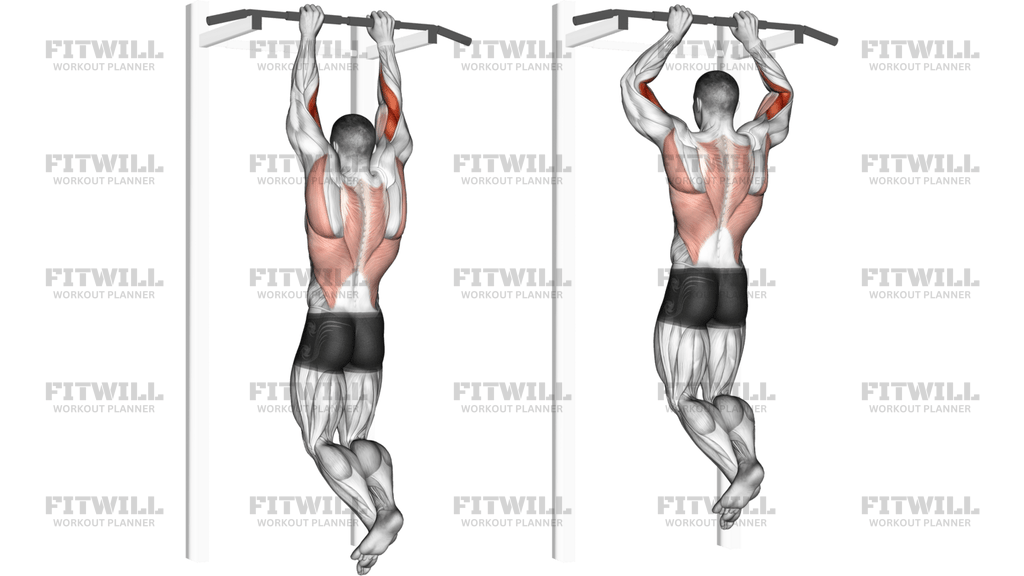
The setup matters because the shoulder on the hanging side should be active, not collapsed into the ear. The image shows a straight arm overhead with the body hanging long beneath the bar, which means the goal is to create tension without turning the hold into a swing or a shrug. A small amount of lat and upper-back engagement helps keep the shoulder centered while the hand and forearm do the grip work.
To do it well, reach up to a stable overhead bar, take hold with one hand, and step or lightly jump into a full hang. Let the free arm rest by your side and keep the ribs from flaring forward. The legs can stay together, cross slightly, or remain still underneath you, but the torso should not twist hard toward the hanging arm. Breathe slowly and keep the neck relaxed while maintaining enough shoulder control to avoid hanging passively.
This exercise is usually used as an isometric strength drill rather than for high repetitions. Short, clean holds build better shoulder and grip quality than long, sloppy hangs. If your grip gives out before your shoulder does, that is still useful feedback, but if the shoulder pinches or the body swings uncontrollably, reduce the duration or use assistance. A box, partial bodyweight support, or two-hand hang progressions can help you build up to stronger one-handed holds.
Use One Handed Hang as accessory work, warm-up preparation, or a skill-strength drill when you want better hanging control without the complexity of a dynamic pull. Keep the hold pain-free, keep the shoulder organized, and build duration gradually on each side. When both sides are trained evenly and the movement stays controlled, it becomes a practical way to improve grip, shoulder resilience, and body tension for more demanding pulling work.
[ Workout Log & Planner ]
Put your next workout in Fitwill
Keep your plan and training log ready when you are.


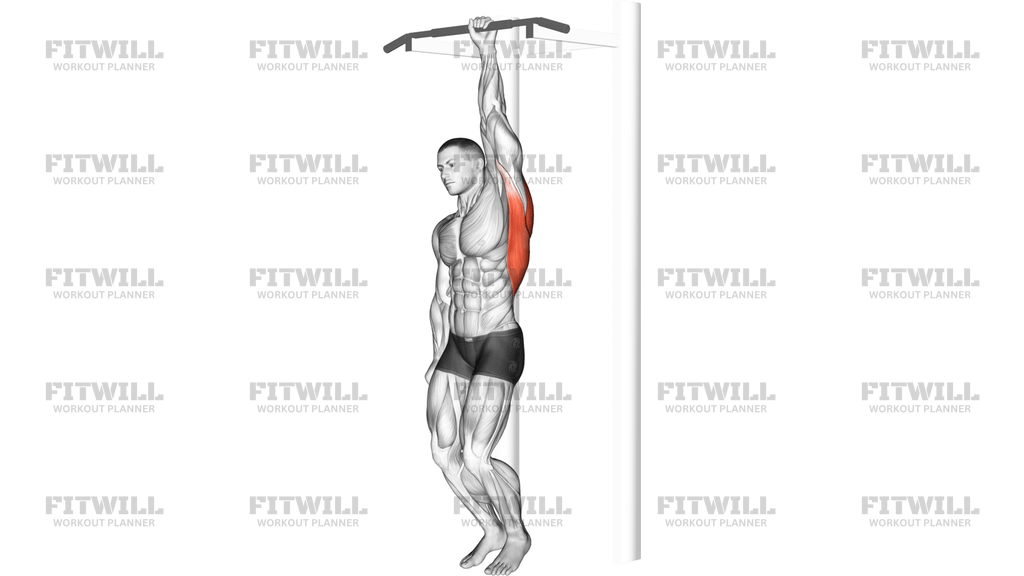
Instructions
- Stand under a sturdy pull-up bar and reach one hand overhead until the palm can wrap fully around the bar.
- Set the hanging hand so the wrist is stacked under the bar and the arm is straight before your feet leave the floor.
- Step up or lightly jump into the hang, then let the body settle into one long line beneath the shoulder.
- Keep the hanging shoulder active by gently pulling it down and away from the ear instead of letting it collapse.
- Let the free arm hang by your side or stay relaxed close to the body without helping to support your weight.
- Bring the ribs down, tighten the midsection lightly, and keep the pelvis from swinging or twisting toward one side.
- Hold the position for the planned time while breathing slowly and steadily through the hold.
- Step back to the floor under control, then repeat on the other side before the set is finished.
Tips & Tricks
- Use a box or bench to reach the bar if you need a cleaner start than a jump.
- Keep the shoulder working, but do not force a hard shrug or jam the joint upward.
- Short holds of 5 to 15 seconds are often better than long holds that turn into swinging.
- Cross the ankles or keep the legs quiet if your lower body wants to rotate.
- If grip fails far earlier than the shoulder, build time gradually before adding extra load.
- Stop the set if you feel pinching at the front or top of the shoulder instead of a strong hanging effort.
- A slight bend in the elbow is not the goal here; keep the arm long and the elbow extended.
- Train both sides separately and match the hold time on the weaker side to avoid asymmetry.
Frequently Asked Questions
What does One Handed Hang train most?
It mainly challenges grip endurance, shoulder stability, and lat engagement on the hanging side.
Is this the same as a dead hang?
It is a single-arm version of a dead hang, with all of your bodyweight supported by one hand.
How should my shoulder feel during the hold?
You should feel controlled tension around the shoulder and lat, not a sharp pinch or a loose collapse.
Can beginners do One Handed Hang?
Yes, but most beginners should start with two-hand hangs or assisted one-arm holds before full bodyweight hangs.
What are the most common mistakes?
Shrugging the shoulder, twisting the torso, swinging the legs, and turning the hold into a passive hang are the main issues.
How long should I hold it?
Start with short, controlled holds and build duration only as long as the shoulder position stays clean.
What can I use if my grip is too weak?
Use a box for the setup, shorten the hold time, or reduce bodyweight demand with an assisted progression.
How do I progress this exercise?
Add time, clean up the shoulder position, reduce body sway, or eventually add load once the base hold is solid.