One Leg Floor Calf Raise
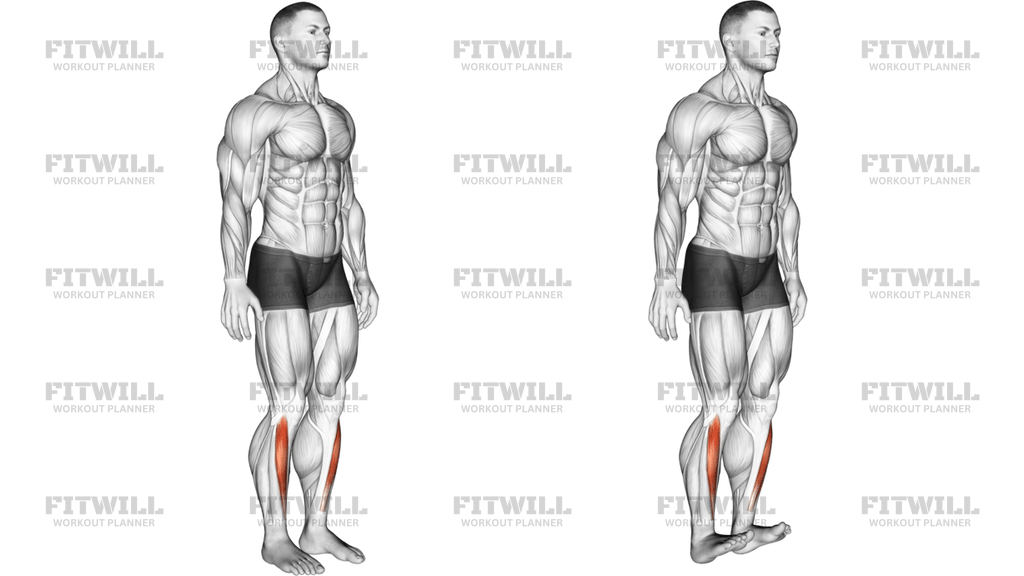
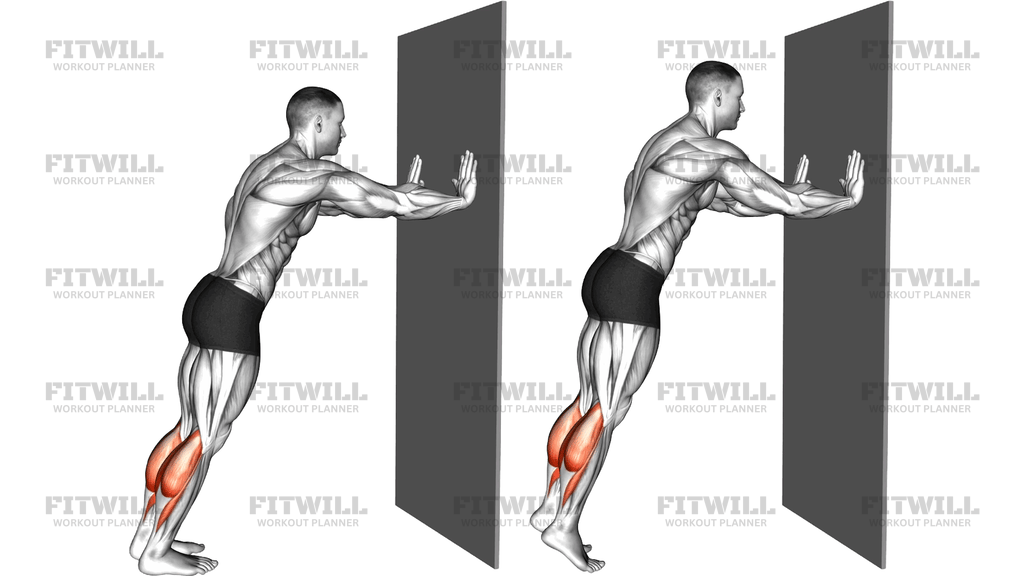
One Leg Floor Calf Raise is a bodyweight calf exercise performed standing on one foot with the other leg lifted behind you. The working foot stays on the floor, the heel drops into a controlled stretch, and then you rise onto the ball of that foot to train the lower leg through a simple but demanding unilateral pattern. It looks basic, but the single-leg setup makes ankle control, balance, and foot pressure matter immediately.
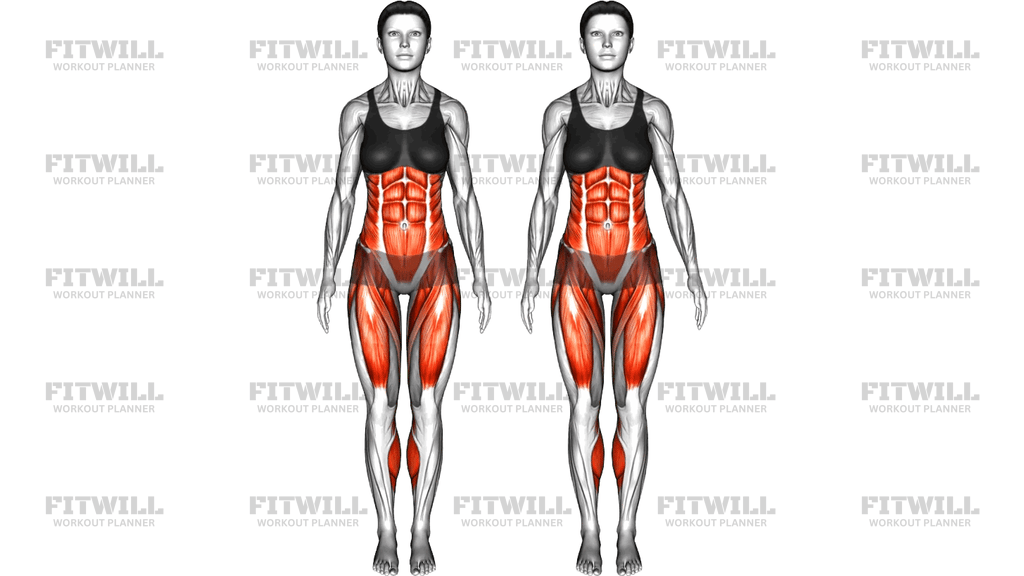
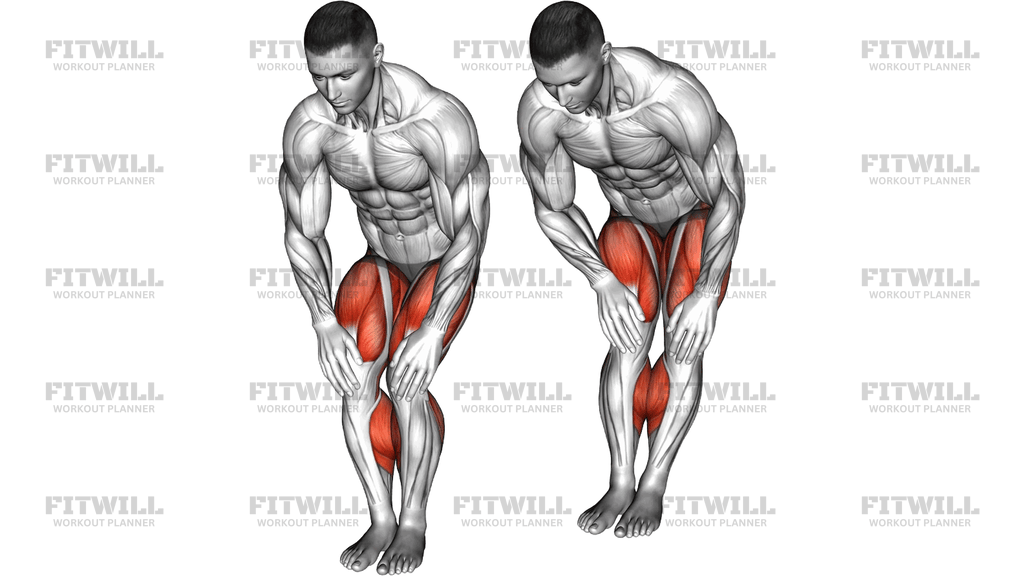
The main job of the exercise is to load the calf complex on one side at a time. That makes it useful for building strength, size, and endurance in the gastrocnemius and soleus while also challenging the small stabilizers around the ankle, foot, hip, and trunk. Because your body has to stay centered over one support point, the set also exposes side-to-side differences that are easy to hide in two-legged calf work.
The setup matters more here than in a lot of calf movements. Keep the working foot planted flat through the forefoot, let the heel travel straight up and down, and avoid rolling to the outside edge of the shoe or collapsing inward toward the big toe. The free leg should stay bent and off the floor so it does not help with the rep. A light fingertip on a wall, rack, or doorway is fine if it keeps your balance honest.
Each repetition should start from a controlled bottom position, move smoothly into a full heel raise, and finish with a brief squeeze at the top before you lower slowly again. Think about pressing through the big toe mound and second toe while keeping the ankle stacked over the foot. The motion should be vertical and deliberate rather than bouncy, with no swinging of the torso or snapping through the bottom stretch.
This exercise fits well as accessory work, warm-up activation, or a finishing movement when you want a high-quality calf stimulus without machines or heavy loading. It is also useful in return-to-training phases because the floor version gives you a clear, repeatable way to assess tolerance, control, and range of motion. If the Achilles tendon or the underside of the foot is sensitive, shorten the bottom range and keep the tempo slow until the tissue tolerates more.
[ Workout Log & Planner ]
Put your next workout in Fitwill
Keep your plan and training log ready when you are.


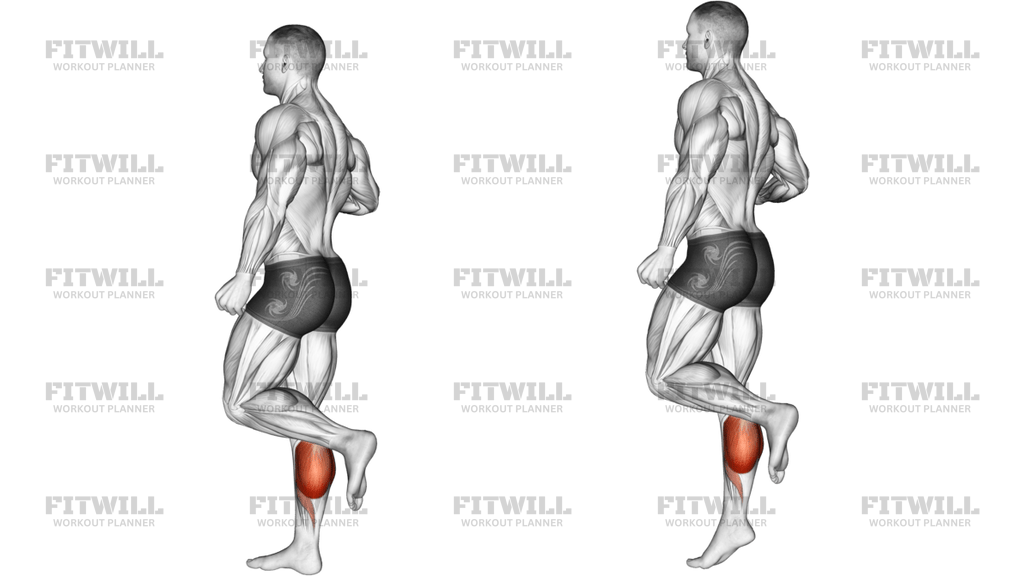
Instructions
- Stand on one foot with the ball of the working foot planted on the floor and the heel free to rise and lower.
- Keep the other leg bent and lifted behind you so it does not help you push off the floor.
- Set your weight over the center of the working foot and use a fingertip on a wall or rack if you need balance support.
- Start with the heel lowered under control until you feel a stretch in the calf and ankle.
- Brace your ribs over your pelvis and keep the working ankle, knee, and hip stacked.
- Drive through the big toe mound and second toe to lift the heel as high as you can without rolling the foot outward or inward.
- Pause briefly at the top with a tight calf contraction and a tall, stable torso.
- Lower the heel slowly back to the floor, then repeat for the planned reps before switching sides.
Tips & Tricks
- Keep the free leg bent behind you and off the floor so the working calf does all the lifting.
- Use light fingertip support instead of gripping a surface hard; too much help turns the set into a balance drill only.
- Press through the big toe mound and second toe so the ankle stays centered instead of drifting to the outside edge of the foot.
- Let the heel travel straight down and straight up; do not bounce off the bottom or swing the body to start the rep.
- If your heel cannot drop far without a pinch in the Achilles, shorten the bottom range and slow the lowering phase.
- Keep the standing knee mostly straight if you want more gastrocnemius work; a deep knee bend shifts the feel lower but also changes the exercise.
- Exhale as you rise and keep the torso tall so you do not lean backward to fake a higher heel lift.
- Stop the set when the ankle starts wobbling or the foot collapses, because the calf is no longer getting a clean rep.
Frequently Asked Questions
What does One Leg Floor Calf Raise target most?
It mainly trains the calf complex on the working side, especially the gastrocnemius and soleus.
Do I need any equipment for this movement?
No. A flat floor and your own body weight are enough, though a wall or rack can help you balance.
Should my heel touch the floor between reps?
On the floor version, let the heel lower under control until you reach your comfortable bottom position, then rise again without bouncing.
Why is the free leg bent behind me?
Keeping the free leg lifted removes help from the other side and forces the working calf and ankle to do the full rep.
Can I hold onto something while I do it?
Yes. A light touch on a wall, rack, or doorway is useful if balance is the limiting factor, but do not pull yourself up.
What is the most common form mistake?
People usually bounce off the bottom, roll onto the outside edge of the foot, or use body swing instead of a clean ankle raise.
Is a slight knee bend okay?
Yes, a soft knee is fine, but avoid turning it into a squat-like movement because that changes the calf emphasis.
How can I make it harder without adding weights?
Add a longer pause at the top, slow the lowering phase, or remove most of the balance support while keeping the same clean range.