Seated Calf Stretch
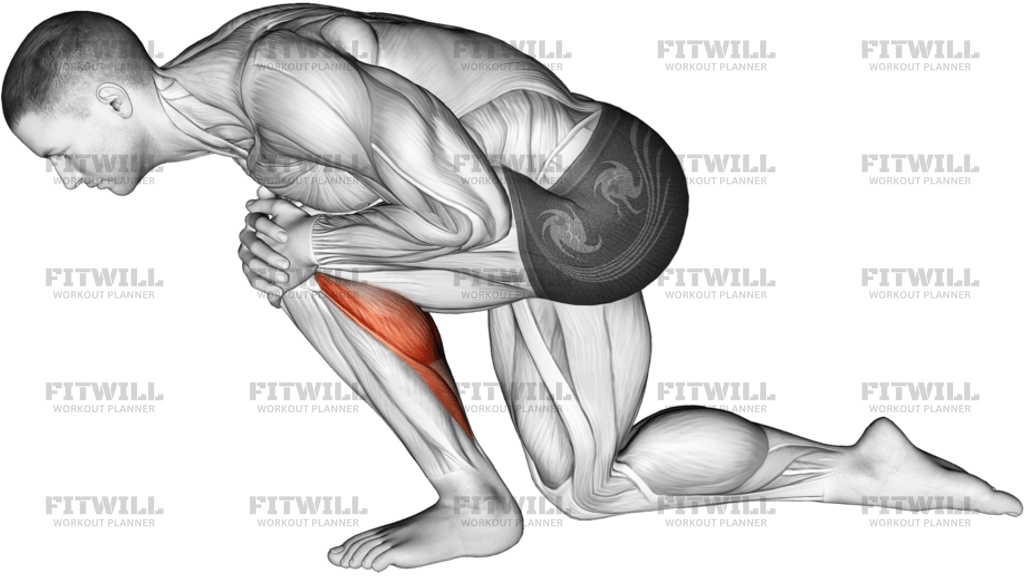
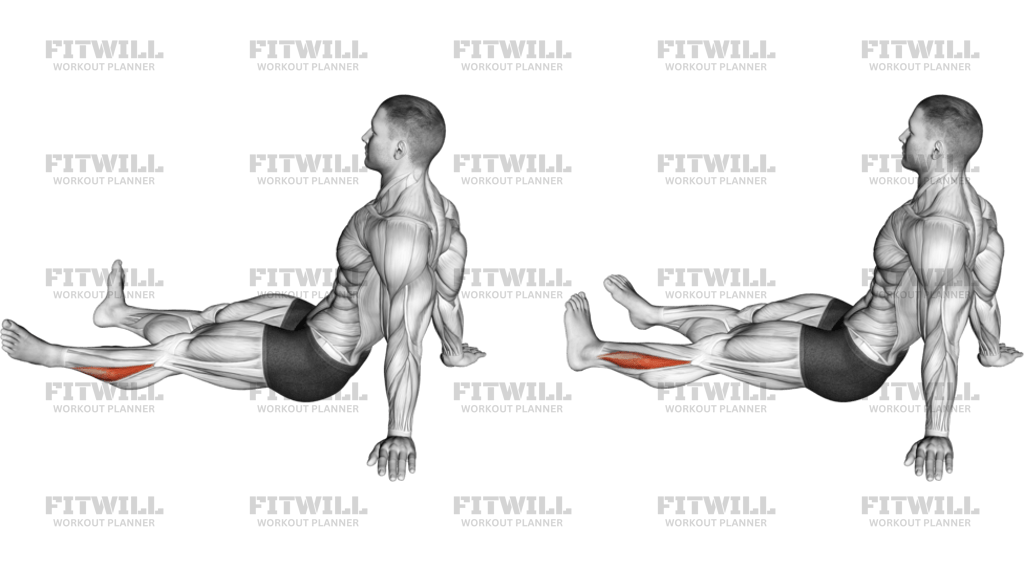
Seated Calf Stretch is a mat-based bodyweight stretch for the calves and lower Achilles line. It is meant to open the back of the lower leg in a position where you can stay relaxed, control the ankle angle, and hold the stretch long enough for the tissue to soften without forcing it. Because the stretch is done from the floor, the setup matters: if your pelvis is tipped back, your heel is lifting, or your foot is turned out, the calf will usually feel less direct and the stretch will spread into the ankle or hamstring instead.
The main target is the calf complex, especially the lower portion near the Achilles tendon, while the core and hip stabilizers help you stay tall and keep the pelvis from twisting. In a good rep, the working foot stays flexed, the heel stays planted, and the shin stays pointed in the same direction as the knee. That alignment lets you feel a clean line of tension along the back of the lower leg instead of collapsing into the low back or rolling onto the outside edge of the foot.
A strong seated calf stretch starts with a stable seat on the mat. Extend the working leg with the heel down, keep the other leg bent or positioned comfortably for balance, and lengthen through the spine before you lean. From there, hinge forward only as far as you can while keeping the foot active and the heel heavy. The goal is a controlled stretch, not a hard pull. If you need to reach your foot, keep the movement gentle and let the ankle and calf decide the range rather than yanking the toes toward you.
Use slow breathing to keep the stretch from turning into a brace. Exhale as you settle into the end range, then hold steady pressure without bouncing. Small adjustments in knee angle change the emphasis: a straighter knee will usually make the calf line feel longer, while a slight bend can shift more of the sensation toward the lower calf and Achilles. Either way, the rep should feel smooth, quiet, and easy to repeat on both sides.
This stretch works well after lower-body training, before running or jumping, or any time your calves feel tight after long periods of standing or walking. It is also a useful reset when the ankles feel stiff and you want cleaner dorsiflexion for squats, lunges, or step-downs. Stay within a stretch you can breathe through, and stop if you feel sharp heel pain, tingling, or a pinching sensation in the ankle joint.
Fitwill
Log Workouts, Track Progress & Build Strength.
Achieve more with Fitwill: explore over 9600 exercises with images and videos, access built-in and custom workouts, perfect for both gym and home sessions, and see real results.
Start your journey. Download today!




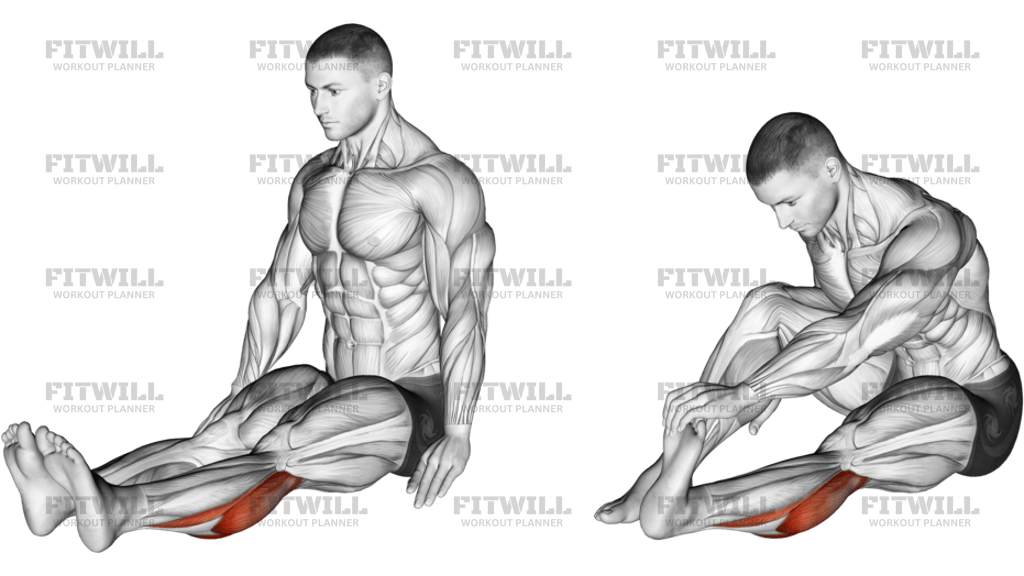
Instructions
- Sit on the mat and extend one leg in front of you with the heel on the floor and the toes pulled back toward the shin.
- Bend the other leg comfortably for balance and sit tall so your pelvis stays level.
- Square the working knee and ankle so the foot points straight ahead, not turned out.
- Brace lightly through the abdomen and lengthen your spine before you move deeper.
- Hinge forward from the hips until you feel a firm stretch through the calf and lower Achilles line.
- Keep the heel heavy and the foot active instead of letting the ankle roll outward.
- Breathe slowly and hold the end range without bouncing or forcing the stretch.
- Ease back to the start with control, then repeat on the other side.
Tips & Tricks
- Keep the heel planted; if it starts to lift, you are past a useful range.
- A straighter knee usually increases the calf stretch, while a softer knee shift it closer to the lower calf and Achilles.
- Pull the toes back toward the shin before you lean so the ankle is already active.
- Sit on both sitting bones instead of collapsing onto one hip.
- Lean from the hips rather than rounding the low back to reach farther.
- Use a steady exhale to let the calf relax instead of holding your breath.
- Keep the knee pointed in the same line as the second toe to avoid twisting the ankle.
- Back off immediately if you feel sharp heel pain, numbness, or a pinching sensation at the ankle.
Frequently Asked Questions
Where should I feel Seated Calf Stretch?
You should feel it along the back of the lower leg, usually from the mid-calf down toward the Achilles.
Do I keep the working knee straight or bent?
A straighter knee usually increases the calf stretch, while a slight bend can make the lower calf and Achilles feel more targeted.
What do I do with the foot on the stretching leg?
Keep the heel down and pull the toes back toward the shin so the calf stays under tension.
Should I round forward to get a bigger stretch?
No. Hinge from the hips and keep the spine long so the stretch stays in the calf instead of turning into a low-back reach.
Is this stretch beginner friendly?
Yes. Beginners can use a smaller lean and a less aggressive ankle angle and still get a useful calf stretch.
Can I use my hands for support?
Yes. Light support is fine if it helps you stay tall and keep the heel grounded, but do not yank on the foot.
What is the most common mistake?
Letting the heel come off the floor or twisting the foot outward, which usually reduces the calf stretch.
How long should I hold it?
Hold long enough to breathe calmly and feel the calf soften, then switch sides before the position becomes sloppy.