Standing Gastrocnemius
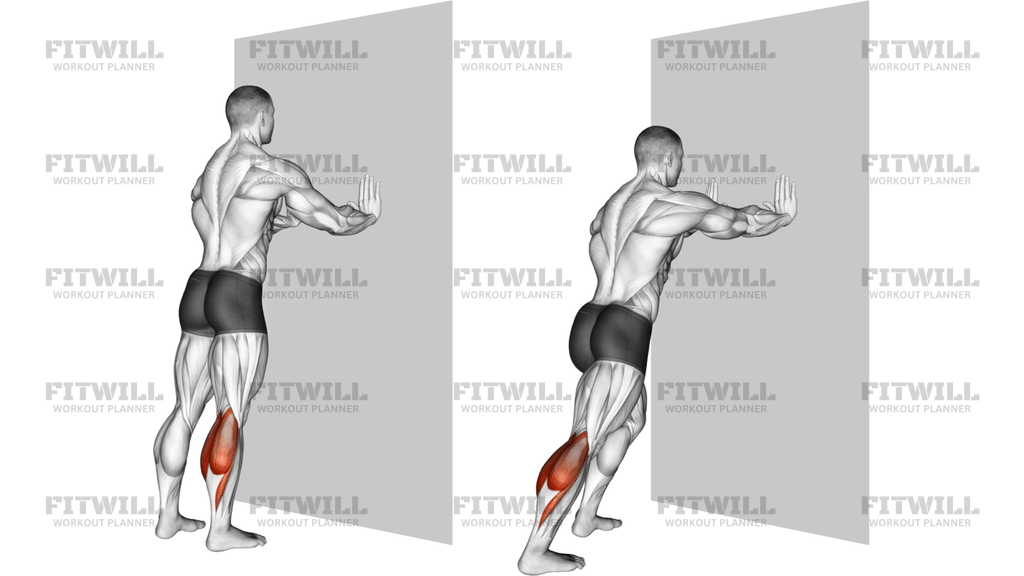
Standing Gastrocnemius is a wall-supported bodyweight calf raise that emphasizes the gastrocnemius by keeping the knee straight and loading the ankle through plantar flexion. The setup matters because the wall gives you balance, while the staggered stance lets you stay controlled enough to use a full heel raise without turning the movement into a bounce.
This exercise is most useful when you want direct calf work with minimal equipment. It trains the calves through a simple vertical line of force: the heel lowers under control, then drives up through the ball of the foot until the ankle is fully extended. Keeping the knee extended is the key detail that makes this a gastrocnemius-focused variation instead of a more soleus-biased bent-knee raise.
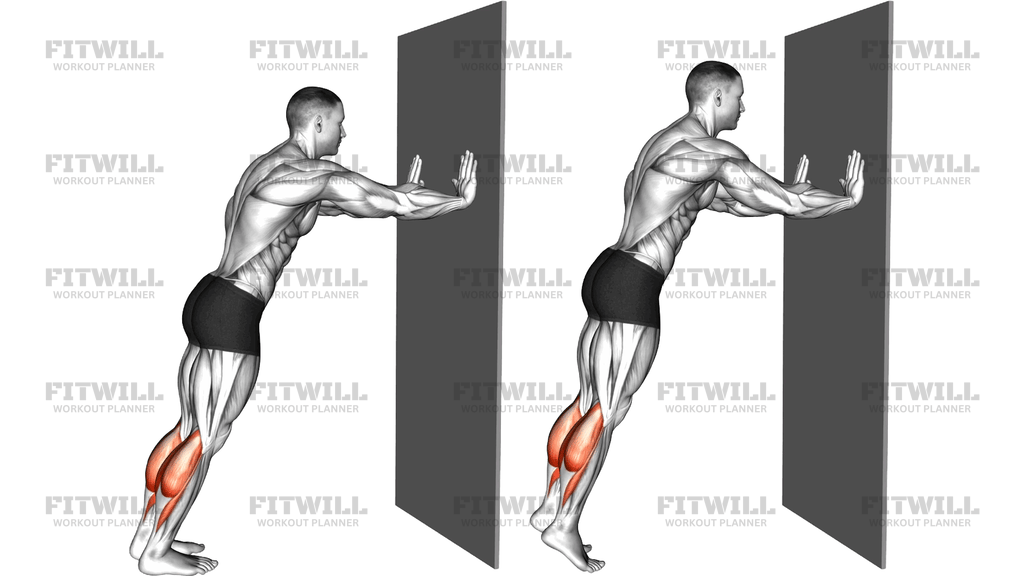
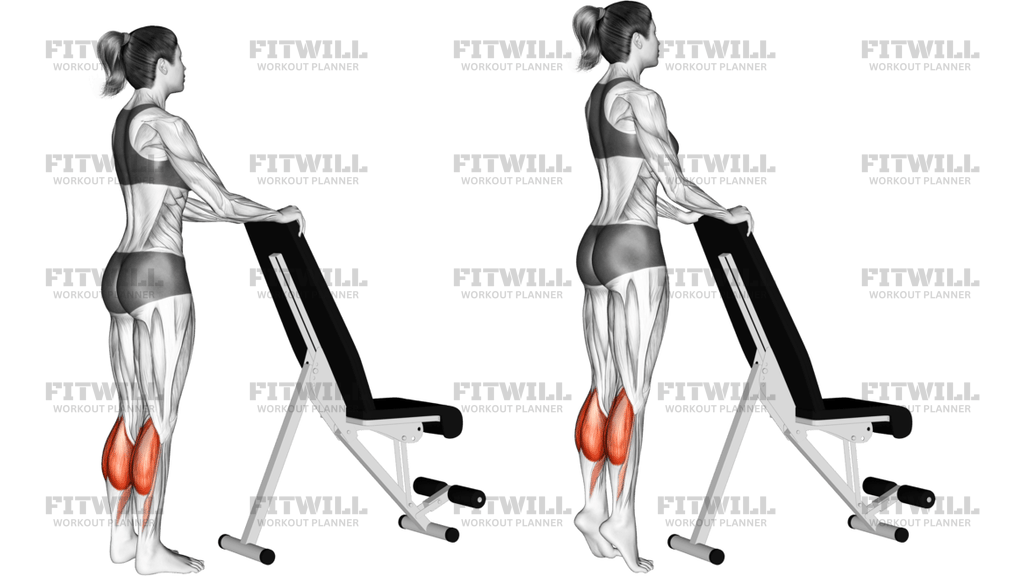
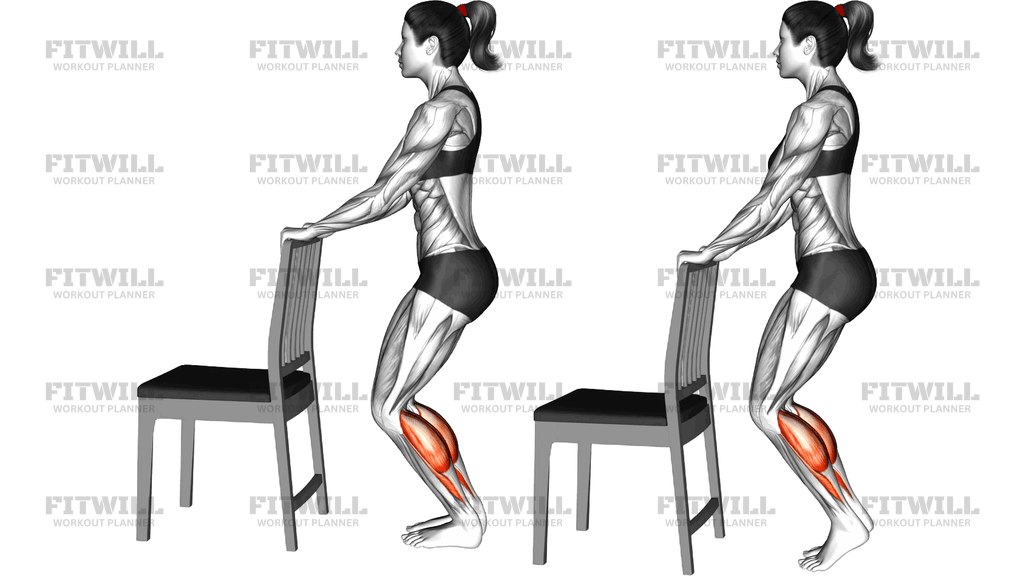
The visible image shows a forward lean into the wall with the working leg behind the body, so the torso should stay long, the hips square, and the ankle do the work. You should feel the calf lengthen at the bottom and tighten hard at the top, but the pelvis and ribs should stay quiet. If the trunk sways or the knee bends, the load shifts away from the calf and the rep becomes less specific.
Use a slow lower, a brief pause near the top, and a smooth push through the big toe and second toe. That keeps the ankle tracking cleanly and helps you avoid rolling onto the outer edge of the foot. This movement fits well in lower-body warmups, accessory blocks, or calf-specialization work, and beginners can use it as long as they keep the range honest and the tempo controlled.
Fitwill
Log Workouts, Track Progress & Build Strength.
Achieve more with Fitwill: explore over 9600 exercises with images and videos, access built-in and custom workouts, perfect for both gym and home sessions, and see real results.
Start your journey. Download today!




Instructions
- Stand facing a wall with both palms on it at chest height and place the working foot slightly behind you, with the other foot just helping you stay balanced.
- Keep the working knee straight but not locked, square your hips, and shift your weight onto the ball of the back foot.
- Brace your torso so your ribs stay down and your lower back does not arch as you start the rep.
- Press through the big toe and second toe to lift the heel as high as you can without letting the ankle roll outward.
- Squeeze the calf hard at the top for a brief pause while keeping the knee extended.
- Lower the heel slowly until you feel a full stretch through the calf and Achilles tendon.
- Keep the wall contact light so your arms steady you without helping you push through the rep.
- Exhale as you rise, inhale as you lower, then repeat for the planned reps before switching sides if needed.
Tips & Tricks
- Keep the working knee straight; a noticeable bend turns the exercise toward the soleus instead of the gastrocnemius.
- Do not bounce off the bottom. A controlled stretch is more useful than a fast rep count.
- Track pressure through the big toe and second toe so the ankle does not collapse outward.
- If your heel cannot reach a clear top position, shorten the range slightly and make the lowering phase slower.
- Let the wall stabilize you, but do not push hard enough to unload the calf.
- A small staggered stance usually feels better than standing perfectly square because it gives you room to lift the rear heel cleanly.
- Use a one-second squeeze at the top when you want more calf tension without adding weight.
- Stop the set when the heel starts drifting, the knee bends, or the rep becomes a hip thrust.
Frequently Asked Questions
What muscle does Standing Gastrocnemius target most?
It primarily targets the gastrocnemius, the main visible calf muscle that crosses the knee and ankle.
Can beginners perform this exercise?
Yes. The wall support makes it beginner-friendly as long as the rep stays slow and the heel lift is controlled.
Why are my knees supposed to stay straight?
A straighter knee keeps more tension on the gastrocnemius. Bending the knee shifts more work away from this muscle.
How much should I use the wall?
Use it only for balance. If you are pressing hard into the wall, you are probably taking work away from the calf.
Should the working foot stay flat?
No. The heel should rise and lower through the ball of the foot while the toes stay planted.
What does a good rep feel like?
You should feel a strong calf contraction at the top and a deep stretch through the lower calf and Achilles on the way down.
What is the most common mistake with this calf raise?
Most people bounce, bend the knee, or let the ankle roll outward instead of lifting straight through the big toe.
Can I make it harder without equipment?
Yes. Slow the lowering phase, add a pause at the top, or do the movement one leg at a time.