Standing Gastrocnemius Calf Stretch
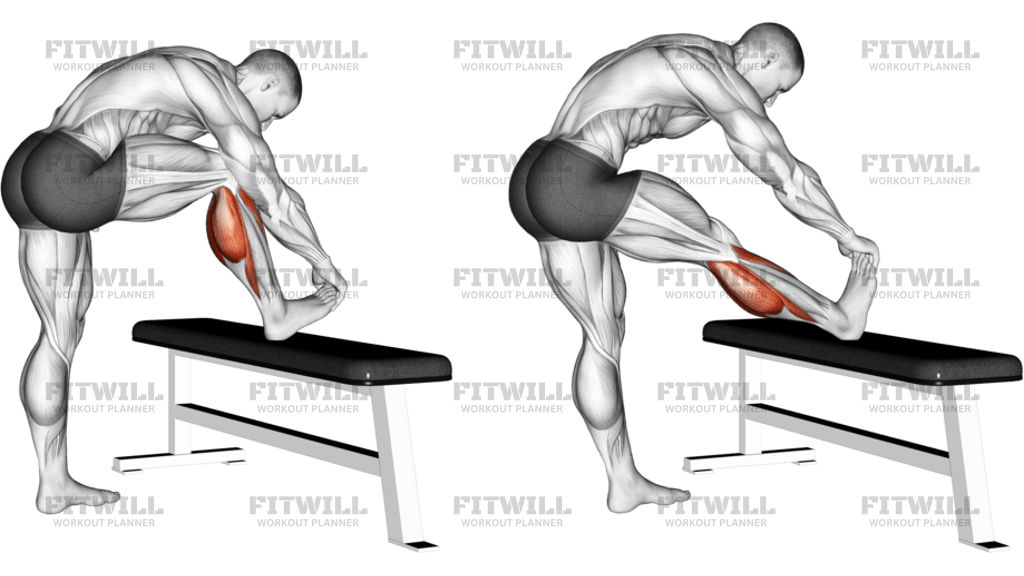
Standing Gastrocnemius Calf Stretch is a straight-knee calf mobility drill done with one foot elevated on a bench or other sturdy support. The straight knee shifts the stretch toward the gastrocnemius, so the tension is usually felt high in the calf and sometimes behind the knee of the elevated leg. It is a useful choice after running, jumping, calf training, squats, lunges, or any session that leaves the lower leg feeling tight and short.
The setup matters because a small change in foot angle or hip position can turn this into a balance task instead of a calf stretch. Place the raised foot on the bench with the leg pointing forward, keep the working knee long, and square the hips so the calf opens evenly. The standing leg stays planted and supportive while the torso hinges from the hips, not from the low back.
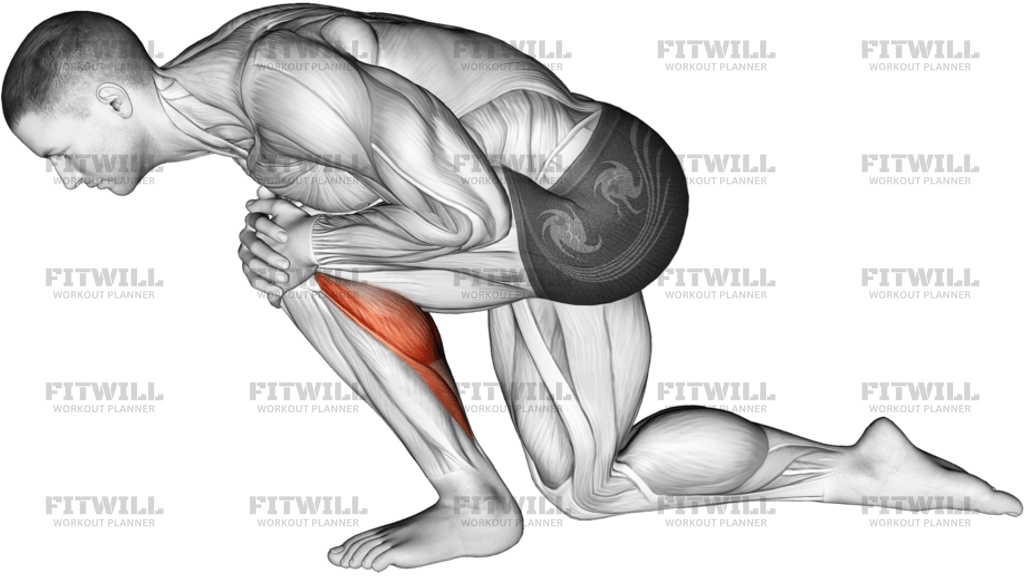
As you reach forward, let the ankle dorsiflex gradually and keep the heel heavy on the support. If the image is used as a guide, the hands help you find the foot so you can control the position instead of bouncing into it. The stretch should feel firm and focused, not sharp or pinchy. Breathe slowly, settle into the end range, and ease out under control so the calf can relax instead of guarding.
Use this stretch during a warm-up, cool-down, or mobility block when the calves need more length before lower-body training or sprint work. It can also help after long periods of standing or walking when one side feels tighter than the other. The goal is a clean, repeatable hold with a stable foot, a long knee, and a calm torso. If the arch cramps, the ankle pinches, or the heel starts to lift, back off and rebuild the setup with less range.
Fitwill
Log Workouts, Track Progress & Build Strength.
Achieve more with Fitwill: explore over 9600 exercises with images and videos, access built-in and custom workouts, perfect for both gym and home sessions, and see real results.
Start your journey. Download today!




Instructions
- Stand facing a sturdy bench or box and place one foot on top with the heel supported and the toes pulled back toward the shin.
- Keep the elevated knee straight and square the toes and kneecap forward so the calf stays aligned.
- Plant the other foot flat on the floor and use it to balance without twisting the hips.
- Hinge forward from the hips and lengthen your chest toward the elevated foot while keeping your spine long.
- Reach toward the toes or lightly hold the foot so you can settle into the position without jerking forward.
- Let the ankle dorsiflex until you feel a strong stretch high in the calf and behind the knee of the raised leg.
- Breathe slowly and hold the end range without bouncing, keeping the heel and arch of the elevated foot grounded.
- Ease back out of the stretch with control, lower the foot, and repeat on the other side if both calves need work.
Tips & Tricks
- Use a low bench or step first; a high surface often makes balance the limiting factor before the calf gets a clean stretch.
- Keep the elevated knee straight to bias the gastrocnemius; bending it shifts more of the stretch toward the deeper calf muscles.
- Pull the toes toward the shin if the ankle and arch tolerate it, but stop before the foot starts to cramp.
- Keep the heel heavy on the support so the stretch stays in the calf instead of drifting into the Achilles tendon.
- Hinge at the hips rather than rounding the low back so the torso helps the setup without stealing the stretch.
- A light hand contact on the foot is enough; do not yank yourself deeper into the stretch.
- Hold long enough for the calf to soften instead of taking quick pulses that make the tissue guard.
- If one side is much tighter, start there and match the same bench height and trunk angle on the second side.
Frequently Asked Questions
What muscle does Standing Gastrocnemius Calf Stretch target most?
It mainly targets the gastrocnemius, the larger upper calf muscle, with some stretch spreading into the lower calf and ankle.
Why is the knee kept straight on the raised leg?
A straight knee biases the gastrocnemius more effectively. Bending the knee reduces that calf emphasis and changes the stretch pattern.
Can I use a step instead of a bench?
Yes. A lower step is often easier to control and is a good place to start before moving to a taller support.
What should the stretch feel like?
You should feel a firm stretch high in the calf or behind the knee of the elevated leg, not a sharp pinch in the ankle or heel.
Do I need to hold my foot with my hands?
No, but light hand contact can help you control the position and keep from bouncing into the end range.
Is this a good stretch before running?
Yes, especially when the calves feel stiff. Keep the hold controlled and avoid forcing a very deep stretch right before explosive work.
What if my arch cramps during the stretch?
Reduce the angle, keep the foot flatter, or lower the support height. Cramping usually means the position is too aggressive.
Can I bend the standing leg a little?
Yes, as long as the working leg stays the focus. A small bend in the support leg can help balance without changing the calf stretch much.