Muscle-Up On Vertical Bar
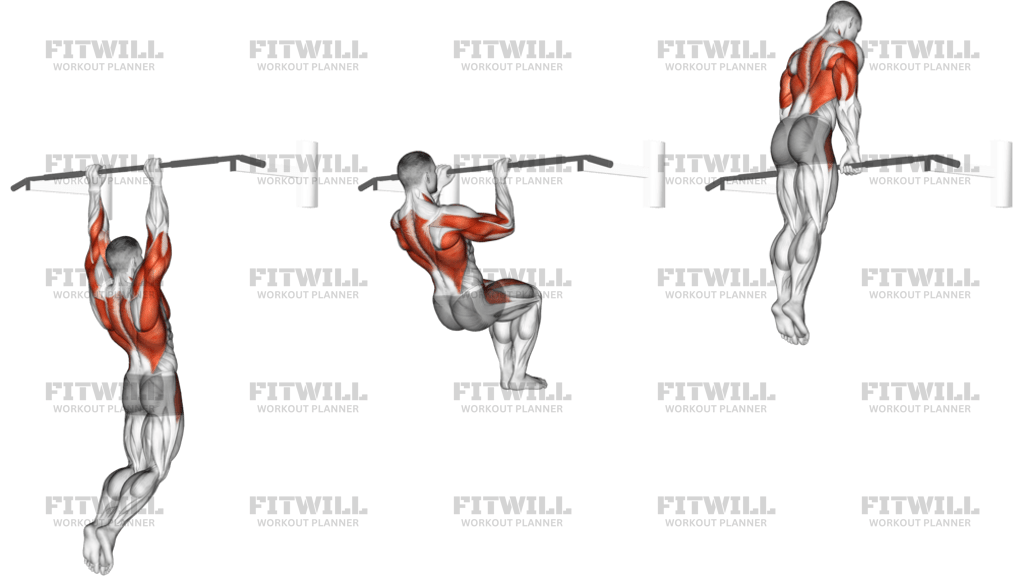
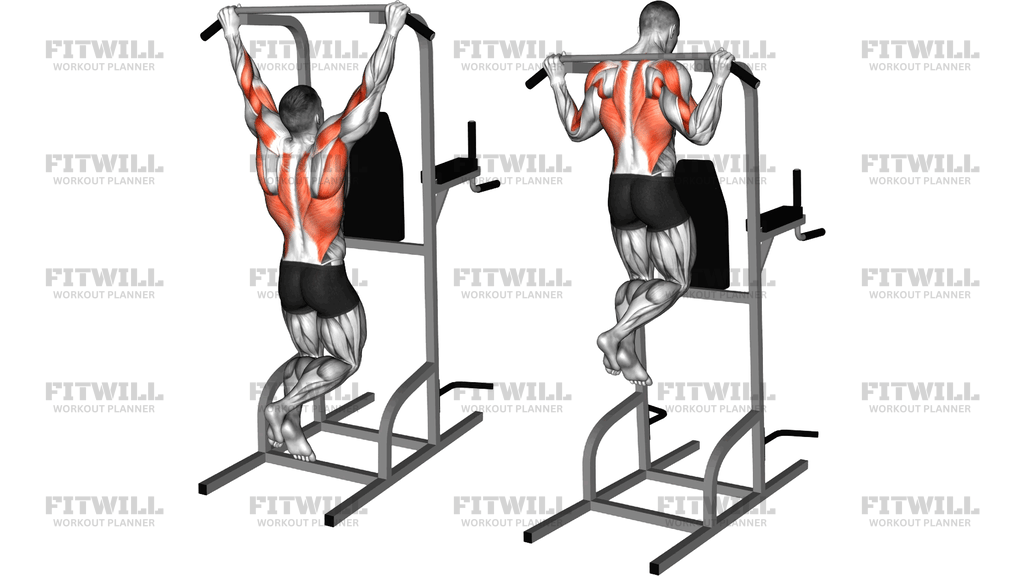
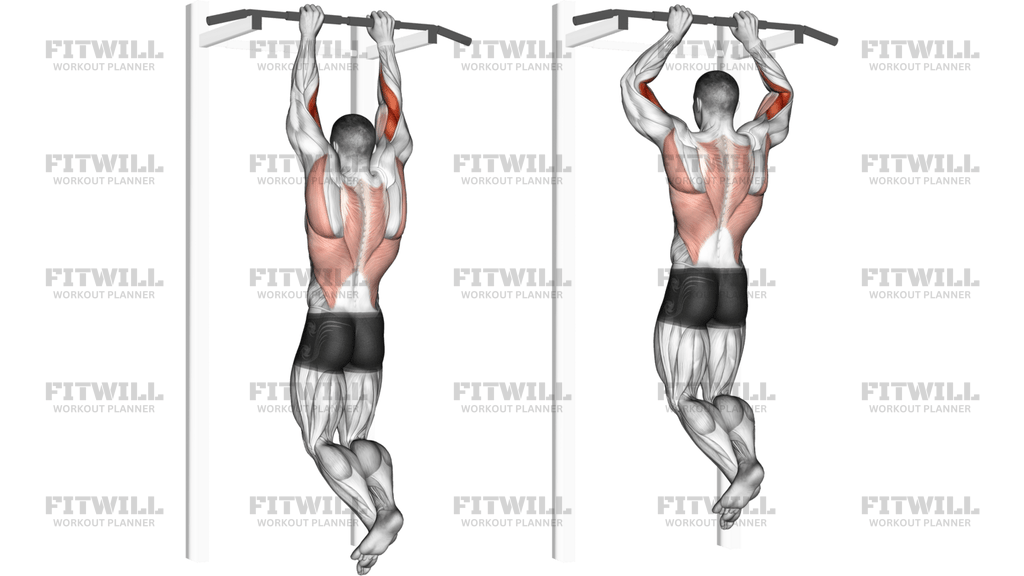
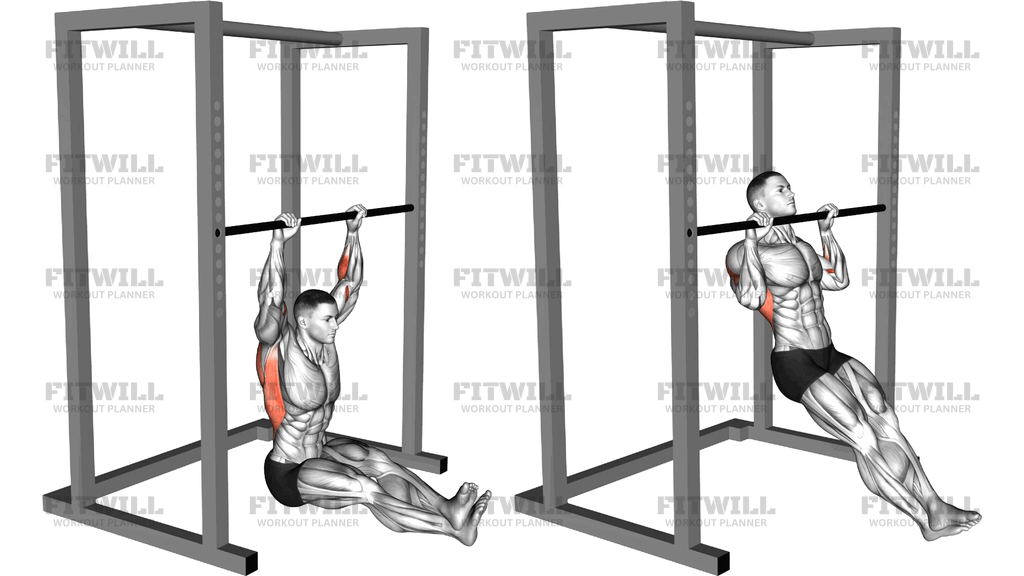
Muscle-Up On Vertical Bar is a bodyweight bar skill that combines a powerful pull, a fast transition, and a strong press to finish above the bar. In the image, the athlete starts in a dead hang, pulls the chest toward the bar, rolls the torso over the top, and locks out in a straight-arm support. That sequence makes this more than a pull-up: it is a full upper-body coordination drill that asks the lats, upper back, biceps, forearms, chest, shoulders, and triceps to work together.
The setup matters because the whole rep depends on how close you stay to the bar from the first pull through the turnover. A clean muscle-up begins with active shoulders in the hang, a stable hollow body, and a grip that can hold the bar while the wrists and elbows change from pulling to pressing. If the shoulders shrug or the swing gets loose early, the transition becomes harder and the rep turns into a wild kip instead of a controlled skill.
From the hang, pull the bar down and back toward the lower chest or upper ribs, then keep driving as the chest rises over the bar. The elbows should travel down and back during the pull, then quickly move around and above the bar as you transition. Once the shoulders move over the hands, press the bar away until the elbows are straight and the body is tall in support. Lower only as far as you can control; if you are training strict reps, return through the same path without dropping into an uncontrolled swing.
This movement is best used when you want pulling strength, pressing strength, and bar transition skill in the same rep. It is demanding on the shoulders, wrists, and elbows, so the rep quality has to stay high. Use it with low repetitions, long rests, and enough preparation for hanging strength, explosive pulling, and dip control. For most lifters, the safest progression is to earn a stable pull-up, a confident bar dip, and controlled transition work before chasing full reps. Keep the bar close, stay organized through the turnover, and stop the set when you can no longer make the rep clean.
[ Workout Log & Planner ]
Put your next workout in Fitwill
Keep your plan and training log ready when you are.


Instructions
- Grip the straight bar slightly wider than shoulder width and hang with straight arms, feet together, and shoulders active.
- Set the ribs down into a hollow hang so the body stays tight instead of swinging freely.
- Start the pull by driving the elbows down and back, bringing the chest toward the bar rather than reaching for the chin.
- Keep the bar close as it rises from the lower chest toward the upper abdomen.
- As soon as the chest reaches the bar, lean forward and rotate the elbows over the top of the bar.
- Press the bar down until the arms lock out and you finish in a tall support above the bar.
- Squeeze the glutes and legs together at the top so the body stays stacked over the hands.
- Lower under control by reversing the path to a dead hang, or step down safely if strict lowering is not available.
Tips & Tricks
- Keep the bar close to your torso during the pull; a long, drifting bar path makes the turnover much harder.
- Think about pulling the bar to the lower ribs, not just getting the chin over it.
- Finish the pull with the elbows moving down and back before you rotate them over the bar.
- Stay in a hollow body through the hang so the legs do not swing behind you and steal power.
- Use the bar support like a dip finish: shoulders over hands, elbows locked, and chest tall.
- Do not chase high reps on this movement; one clean rep is better than a messy cluster of half-reps.
- If your wrists or elbows feel irritated, reduce volume and practice the transition with lower-intensity progressions.
- Exhale through the pull and press phases, then reset your breath before the next rep.
Frequently Asked Questions
What does a muscle-up on a vertical bar train most?
It combines a hard vertical pull and a bar dip, so the lats, upper back, biceps, forearms, shoulders, chest, and triceps all contribute.
Is this the same as a pull-up?
No. The pull-up is only the first part; the muscle-up also includes the turnover over the bar and the press to lockout.
Where should the bar travel during the rep?
The bar should stay close to your body and rise toward the lower chest and upper abdomen, not drift far in front of you.
What is the hardest part of the movement?
The transition is usually the hardest part because you have to move from pulling to pressing while staying close to the bar.
Can beginners do this exercise?
Not as a first-choice movement. Most beginners should build pull-ups, bar dips, and controlled transition drills before trying full reps.
What equipment do I need?
A stable straight bar and enough overhead clearance are the main requirements. The movement in the image uses only body weight.
Why do my elbows have to move over the bar?
That elbow rotation is what changes the rep from a pull into a support position. Without it, you usually stall below the bar.
Should I swing to get over the bar?
A small, controlled kip can help in advanced versions, but the image shows a more strict, organized rep. Excess swing usually makes the turnover worse.