Assisted Standing Chin-Up
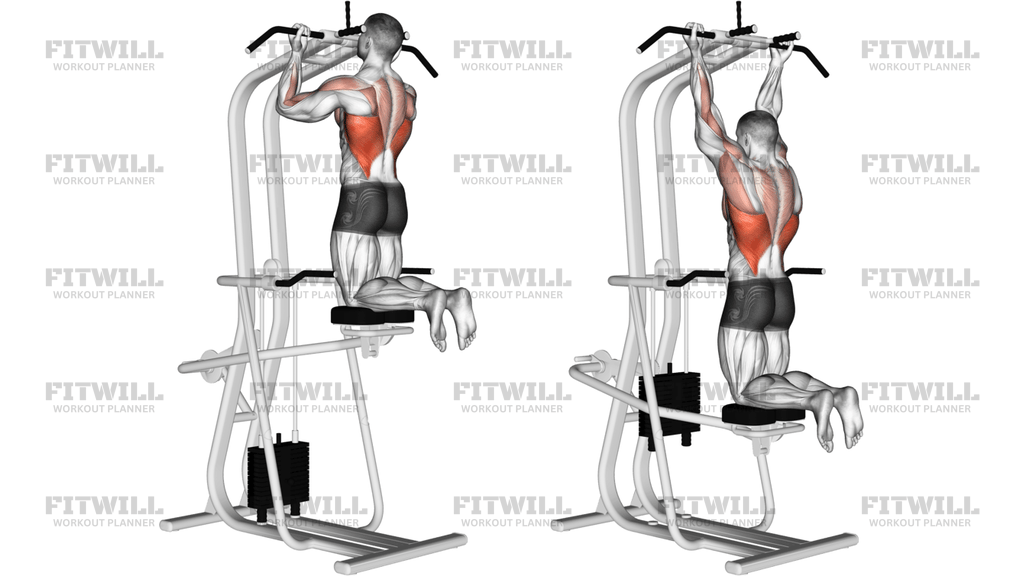
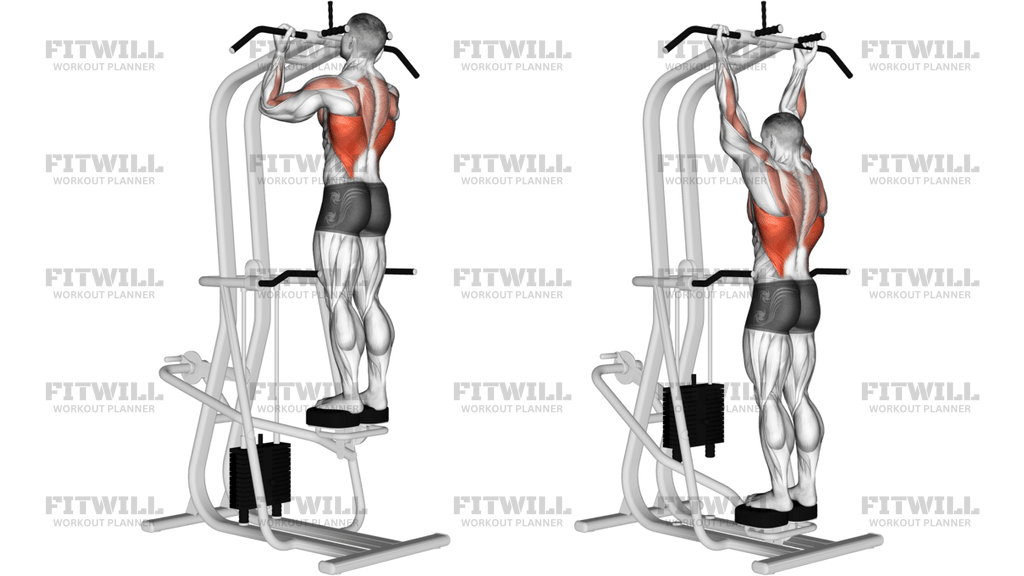
Assisted Standing Chin-Up is a machine-assisted vertical pulling exercise that lets you train chin-up strength while reducing the amount of bodyweight you must lift. On a leverage machine, the moving platform or counterbalance gives you assistance from the bottom of the rep, which makes it easier to practice a clean pull, keep the torso organized, and accumulate useful back volume without turning every set into a grind. It is especially useful when you want to build toward unassisted chin-ups or keep pulling work in a controlled, repeatable range.
The exercise primarily targets the lats, with the upper back, biceps, and forearms contributing to the pull and to grip stability. In anatomy terms, the main work centers on the latissimus dorsi, with help from the rhomboids, biceps brachii, and forearm flexors. That means the best reps feel like a strong downward drive of the elbows rather than a shrugging or swinging motion. If the shoulders creep up toward the ears, the set usually turns into a shorter, less efficient pull.
The setup matters because the feet, grip, and starting height determine how much assistance you get and how cleanly you can move. Stand on the assisted platform, take the machine handles, and settle into a tall position with a slight bend in the knees and ribs stacked over the pelvis. Before each rep, let the shoulders drop away from the ears and make sure the platform is set so you can begin from a controlled dead hang or near-dead hang without losing your grip or bouncing out of the bottom.
During the pull, keep the chest lifted enough to avoid collapsing, then drive the elbows down and back until the chin clears the handles. The path should look smooth and vertical, not like a body swing or a half-rep. Lower under control until the arms are extended again and the shoulder blades can lengthen naturally. Breathe out as you pull, inhale on the way down, and reset briefly if needed before the next repetition so each rep starts from a stable position.
Assisted Standing Chin-Up fits well in upper-body strength sessions, back-focused training, and beginner progressions toward full chin-ups. It is also a useful accessory for lifters who can already do some bodyweight reps but want extra volume with less joint strain or less cheating. Keep the assistance amount honest: too much help turns the movement into a shrugging platform dip, while too little help forces swinging and short range. The right setting should let you move cleanly, own the lowering phase, and keep tension on the lats and biceps from start to finish.
[ Workout Log & Planner ]
Put your next workout in Fitwill
Keep your plan and training log ready when you are.


Instructions
- Step onto the machine's assisted platform and take the chin-up handles with a grip that feels secure and symmetrical.
- Stand tall with your feet centered on the platform, knees softly bent, and arms fully extended overhead without losing shoulder control.
- Set your shoulders down away from your ears, brace your midsection, and keep your rib cage stacked over your pelvis before the first pull.
- Pull your body upward by driving your elbows down and back rather than by swinging or kicking your legs.
- Keep the torso steady as you rise until your chin clears the handles and your upper chest approaches the bar path.
- Pause briefly at the top without shrugging or craning your neck forward.
- Lower yourself under control until the arms are straight again and the shoulders can open naturally at the bottom.
- Reset your posture and breathing on the platform before starting the next repetition.
Tips & Tricks
- Choose enough assistance that you can keep the rep smooth; if you have to kip or bounce, the setting is too hard.
- Keep the shoulders depressed as you start the pull so the lats take over instead of the upper traps.
- Think about bringing the elbows toward your ribs, not just lifting the chin toward the handles.
- Do not let the feet drive the platform upward early; the lower body should stay quiet throughout the rep.
- Use a controlled descent of about two to three seconds so the lats stay loaded on the way down.
- Stop just short of losing grip or shoulder position; a clean partial rep is better than a sloppy full one.
- If your neck cranes forward at the top, lower the target height or reduce the load so the chin clears naturally.
- Keep the wrists neutral and avoid overgripping the handles, which can tire the forearms before the back is challenged.
Frequently Asked Questions
What muscle does Assisted Standing Chin-Up target most?
The lats are the primary target, with the biceps and upper back helping finish the pull.
How does the machine assistance work on this chin-up?
The assisted platform or counterbalance reduces the amount of bodyweight you must lift, especially near the bottom of the rep.
Should my feet stay on the platform the whole time?
Yes. Keep your feet centered and quiet on the platform so the assistance stays consistent and the rep does not turn into a leg-driven swing.
How high should I pull?
Pull until your chin clears the handles or your upper chest reaches the top of the path without shrugging your shoulders.
Is this the same as a pull-up?
It is the chin-up pattern on an assisted machine. The main difference is that the machine reduces load and makes the movement easier to practice.
What is the biggest form mistake on this machine?
Swinging the body or shrugging the shoulders usually means the assistance is set too low or the setup is losing tension.
Can beginners use Assisted Standing Chin-Up?
Yes. It is often one of the best ways to build chin-up strength before moving to unassisted reps.
How do I progress this exercise?
Reduce the amount of assistance over time while keeping the same range of motion, tempo, and shoulder control.