Barbell Pullover Hold Isometric
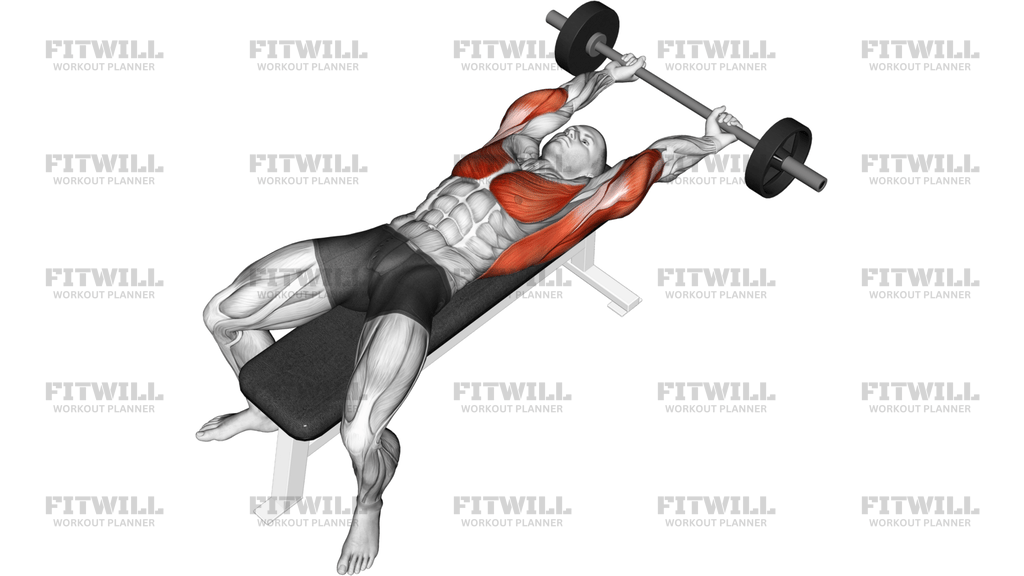
Barbell Pullover Hold Isometric is a supine bench exercise where you hold a barbell in the stretched pullover position instead of repeating full reps. The lifter lies on a flat bench, reaches the bar in a controlled arc behind the head, and keeps the arms fixed while the chest, lats, serratus, and long head of the triceps work to resist the pull of the load. Because the position places the shoulders in a deep overhead stretch, small setup details matter more here than they do in a normal pullover.
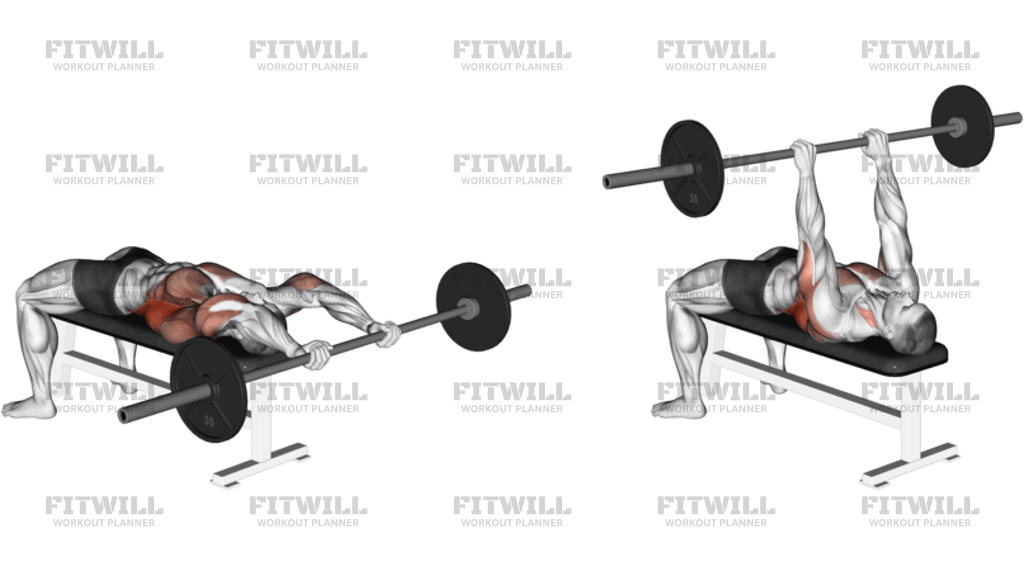
The image shows the bar held high and slightly behind the face with the upper arms angled back while the torso stays anchored on the bench. That position should feel demanding but organized: shoulder blades stay supported, ribs stay down, and the elbows keep a soft bend rather than locking aggressively. If the bar drifts too far back or the lower back arches hard to chase the hold, the load is too heavy or the range is too deep for your shoulder mobility.
This isometric version is useful when you want the pullover pattern without the swing that often appears in dynamic reps. It can build position strength for chest and lat training, improve comfort in the overhead-to-overhead-extension transition, and teach you to keep the torso stable while the shoulders work through a long lever. It also fits well as a low-rep accessory, a timed finisher, or a controlled bridge between mobility work and heavier upper-body training.
Hold the bar for a clean, repeatable time while breathing under control and keeping tension even through both sides of the body. The goal is not to sink deeper every second; the goal is to keep the bar path, elbow angle, and rib position steady until the set ends. Choose a load that lets you maintain the position without shoulder pinching, elbow flare, or rib flare, and stop the hold if the shoulders start to roll forward or the low back takes over.
[ Workout Log & Planner ]
Put your next workout in Fitwill
Keep your plan and training log ready when you are.


Instructions
- Lie lengthwise on a flat bench with your upper back and head supported, feet planted firmly on the floor, and the barbell positioned above your chest.
- Take a grip slightly wider than shoulder width, wrap your thumbs, and stack your wrists over your forearms before unracking the bar.
- Unrack the bar and press it to straight arms, keeping a small bend in the elbows so the joints stay soft under load.
- Lower the bar in a slow arc toward and just behind your head until you reach the position shown in the image, or stop sooner if your shoulders lose control.
- Keep your ribs down, glutes lightly tight, and shoulder blades supported on the bench so the arch does not come from the low back.
- Hold the bar still for the planned time without letting it drift deeper, rotate, or sway side to side.
- Breathe shallowly and steadily while keeping the torso braced; exhale a little on the hard parts of the hold, then reset the brace.
- When the hold is complete, bring the bar back over the chest under control and rack it only after the bar is stable.
Tips & Tricks
- Use a load you can hold without the bar wobbling; a pullover isometric is about position quality, not how much weight you can survive.
- A soft elbow bend usually feels better on the shoulders than a hard lockout, especially in the stretched overhead position.
- If your lower back starts arching to fake more range, shorten the hold depth and keep the ribs pinned to the bench.
- Keep the bar path smooth on the way back; the image position should feel like a controlled catch, not a drop.
- Let the shoulders move back, but do not let them shrug toward your ears or roll forward under fatigue.
- If one arm starts to bend more than the other, lower the load and re-center the grip before the next hold.
- Longer holds are better done with lighter weight; heavy loads usually turn this into a shoulder test instead of a pullover drill.
- Stop the set if you feel pinching at the front of the shoulder or numbness through the arms.
Frequently Asked Questions
What muscles does the barbell pullover hold train most?
The main work comes from the lats, chest, serratus, and triceps as they hold the bar in the stretched pullover position.
Is this the same as a regular barbell pullover?
No. A pullover hold freezes the bar in the stretched position instead of moving it through full reps.
How far behind my head should the bar go?
Only as far as you can keep your ribs down and your shoulders comfortable; the image shows a deep but controlled stretch, not a forced drop.
Should my elbows stay straight?
Keep them nearly straight with a soft bend. A little elbow flexion protects the joint and makes the hold easier to control.
Can beginners do this exercise?
Yes, but only with a very light bar and a shorter hold range until shoulder control improves.
What is the most common mistake in this hold?
Letting the low back arch and the bar drift farther behind the head than the shoulders can stabilize.
Where should I feel the stretch?
You should feel tension across the chest and lats, with the shoulders working to keep the bar steady.
How do I progress the exercise?
Add time to the hold first, then add a small amount of weight only if the bar stays steady and the bench position does not change.