Barbell Biceps Curl With Arm Blaster
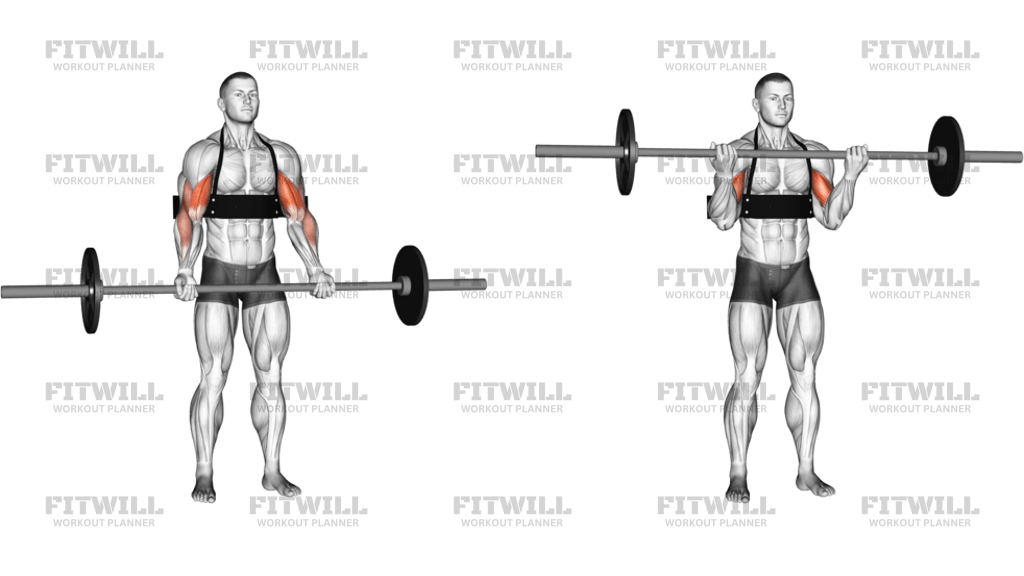
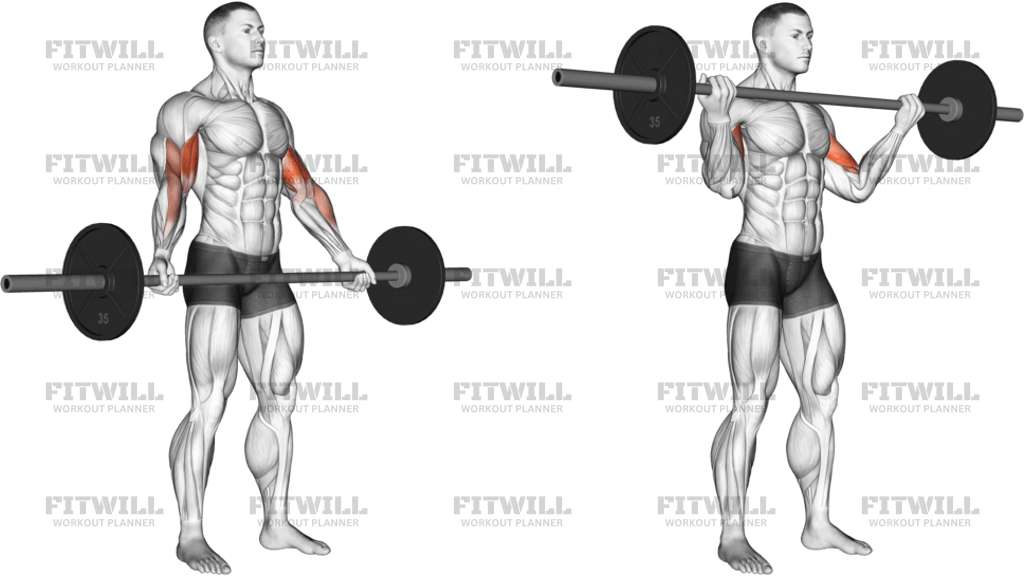
The Barbell Biceps Curl With Arm Blaster is a strict standing curl that keeps the upper arms pinned in front of the torso so the biceps have to do the work instead of the shoulders and back. The arm blaster acts like a brace for the elbows and upper arms, which makes the movement more honest and usually a little harder than a free-standing barbell curl. It is a direct arm-building exercise for lifters who want a cleaner biceps stimulus and less body English.
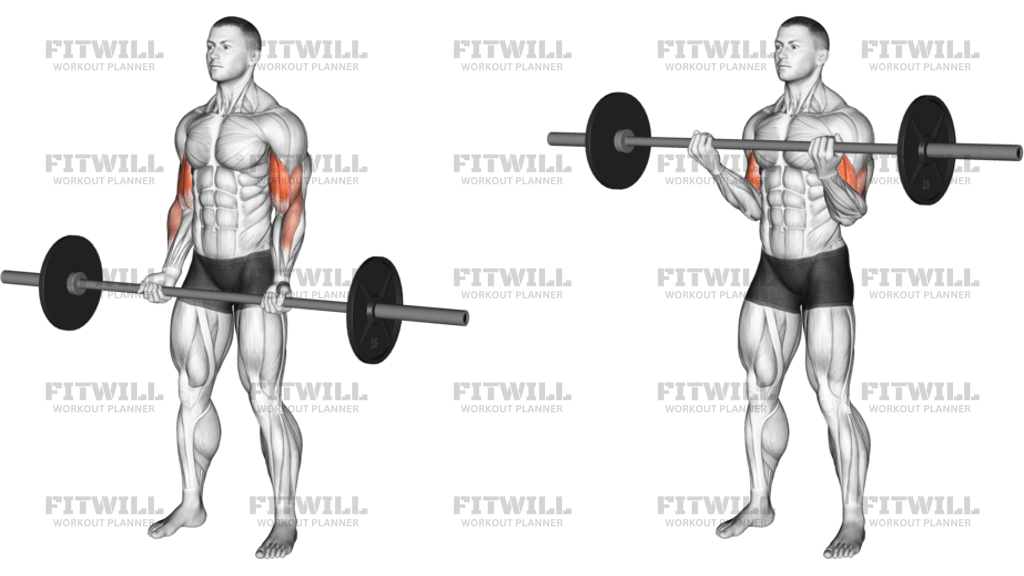
This version emphasizes the biceps brachii most, with brachialis, brachioradialis, and the forearm flexors helping to bend the elbow and stabilize the grip. Because the elbows stay fixed and the chest stays tall, the curl is driven by elbow flexion rather than by leaning back or swinging the bar. That makes the exercise useful for hypertrophy work, strict arm days, and accessory blocks where you want the set to stay focused on the target muscles.
The setup matters more here than in a loose curl. Stand tall with the feet about hip-width apart, brace the arm blaster against the torso, let the upper arms rest inside the pad, and grip the bar with the wrists stacked over the forearms. Start with the bar in front of the thighs and the shoulders relaxed down. If the elbows drift forward or the lower back arches to start the rep, the blaster is no longer doing its job.
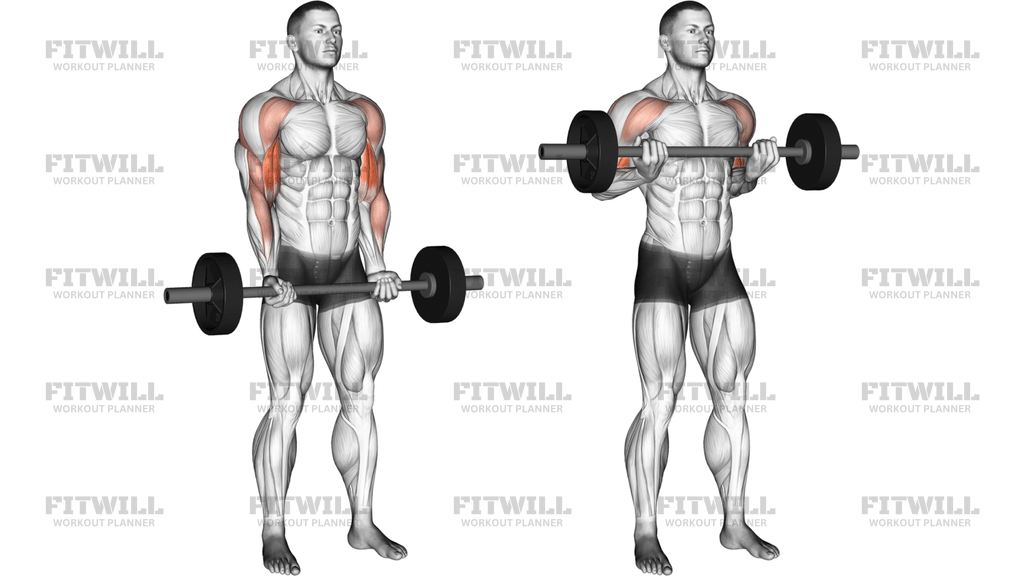
Each repetition should travel in a smooth arc from the thighs toward the upper chest or lower sternum, depending on your arm length and the bar path that keeps the elbows quiet. Curl the bar without shrugging, then lower it under control until the elbows are almost straight again. A short pause at the top can help you feel the biceps, but the real quality check is the lowering phase: if the bar drops fast or the elbows peel away from the pad, the set is getting sloppy.
Use a load that lets you keep the torso still, the wrists neutral, and the elbows locked into the blaster for every rep. This is a good choice when you want strict arm work without using momentum, and it can be appropriate for beginners if they start light and learn the setup first. It is also a solid option for intermediate lifters who want a more disciplined curl variation that exposes cheating quickly and keeps tension where it belongs.
[ Workout Log & Planner ]
Put your next workout in Fitwill
Keep your plan and training log ready when you are.


Instructions
- Stand tall with your feet about hip-width apart and place the arm blaster against your torso so the pad supports your upper arms.
- Let your elbows rest inside the blaster, grip the bar with an underhand shoulder-width grip, and keep your wrists stacked over your forearms.
- Start with the bar resting in front of your thighs, chest lifted, shoulders down, and your lower back neutral.
- Brace your abs and keep your upper arms pressed into the blaster before the first rep.
- Curl the bar upward in a smooth arc by bending the elbows, keeping the bar close to your body as it rises.
- Stop the curl near upper-chest or lower-sternum height, depending on your build, without letting the shoulders roll forward.
- Lower the bar slowly until your elbows are almost straight again and keep tension in the biceps the whole way down.
- Exhale as you curl up, inhale as you lower, and reset your torso before the next rep if you feel yourself leaning back.
Tips & Tricks
- Keep the back of your upper arms glued to the blaster pad; if the elbows slide forward, the exercise turns into a loose curl.
- Choose a bar width that lets your wrists stay straight instead of bent back at the top of the rep.
- Do not flare the elbows out to chase a bigger range; the blaster should keep the upper arms narrow and fixed.
- Use a lighter load than your free-standing barbell curl, because the blaster removes a lot of momentum.
- Lower the bar under control for a full eccentric, since the long lower phase is where this variation usually pays off.
- Keep your ribs down and glutes lightly braced so the lower back does not arch to finish the curl.
- If the bar touches your chest at the top, it is usually too high; stop where the biceps stay loaded and the shoulders stay quiet.
- Straps are not usually needed, but if grip fails before the biceps do, the load is too heavy for this variation.
Frequently Asked Questions
What does the arm blaster change in this barbell curl?
It keeps the upper arms pinned in front of the torso, which reduces shoulder swing and forces the biceps to do more of the work.
What muscles do I feel most in this exercise?
The biceps are the main target, with the brachialis, brachioradialis, and forearm flexors helping with elbow flexion and grip.
Where should the bar travel on each rep?
The bar should move from the thighs toward the upper chest in a smooth arc while staying close to the body.
How do I know if my setup is correct?
Your elbows should stay supported inside the blaster, your wrists should stay stacked, and your torso should remain tall without leaning back.
Is this better than a regular barbell curl?
It is not better for everyone, but it is stricter and usually better when you want to remove body English and isolate the biceps more directly.
Can beginners use the arm blaster version?
Yes, if they start with a lighter bar and learn to keep the elbows fixed before adding load.
What are the most common mistakes here?
Leaning back, letting the elbows drift off the pad, and dropping the bar too quickly are the main form errors.
Can I use an EZ bar instead of a straight bar?
Yes, if the wrist angle feels better, an EZ bar can be a useful substitution as long as the elbows stay locked into the blaster.