Barbell Pullover
Barbell Pullover is a lying upper-body pulling exercise performed on a flat bench with a barbell held over the chest and lowered in an arc behind the head. It is a classic accessory movement for training the lats, with the upper back, biceps, and forearms helping to stabilize the bar and keep the motion smooth. Because the bar travels around the shoulders rather than straight up and down, the setup and range of motion matter more than the load.
This exercise is useful when you want direct lat work without a rowing pattern. A good Barbell Pullover keeps the ribcage controlled, the shoulders organized, and the elbows in a slight bend so the arms act like levers instead of turning the movement into a triceps press or a loose shoulder swing. The goal is a long, even arc that creates tension through the torso while the bench gives you a stable base.
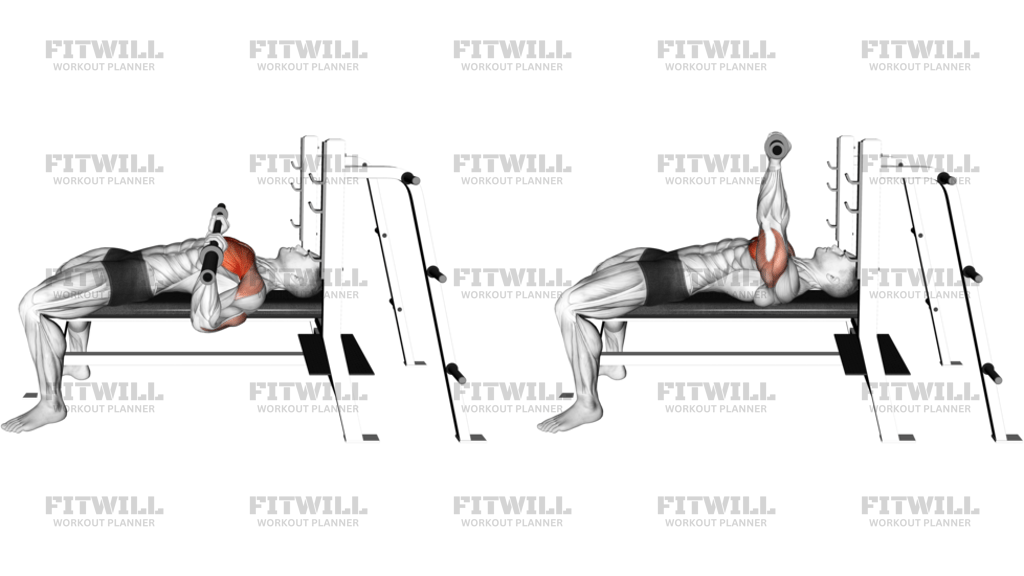
The image shows a lifter lying lengthwise on a flat bench with the feet planted on the floor and the bar held above the chest before lowering it behind the head. That position lets you feel the stretch through the lats and upper torso while still keeping the body anchored. If the bench is too high, the shoulders can feel crowded; if the elbows bend too much, the movement shifts away from the intended pullover pattern.
Barbell Pullover is often used as an accessory lift after heavier presses or pulls, or as a controlled way to add volume for the back and torso. It rewards moderate loads, patient tempo, and consistent breathing more than maximal weight. Beginners can use it with a light bar and a shortened range at first, while experienced lifters can emphasize a bigger stretch as long as the shoulders stay comfortable.
Safety is mostly about control and shoulder position. Keep the wrists stacked over the bar, let the shoulders move through a comfortable arc, and stop the descent before the upper arms drift into a painful range. If the bar feels unstable or the shoulders start rolling forward, shorten the range and lighten the load. Clean reps should feel like a deliberate lat-focused movement, not a fight to keep the bar from drifting.
[ Workout Log & Planner ]
Put your next workout in Fitwill
Keep your plan and training log ready when you are.


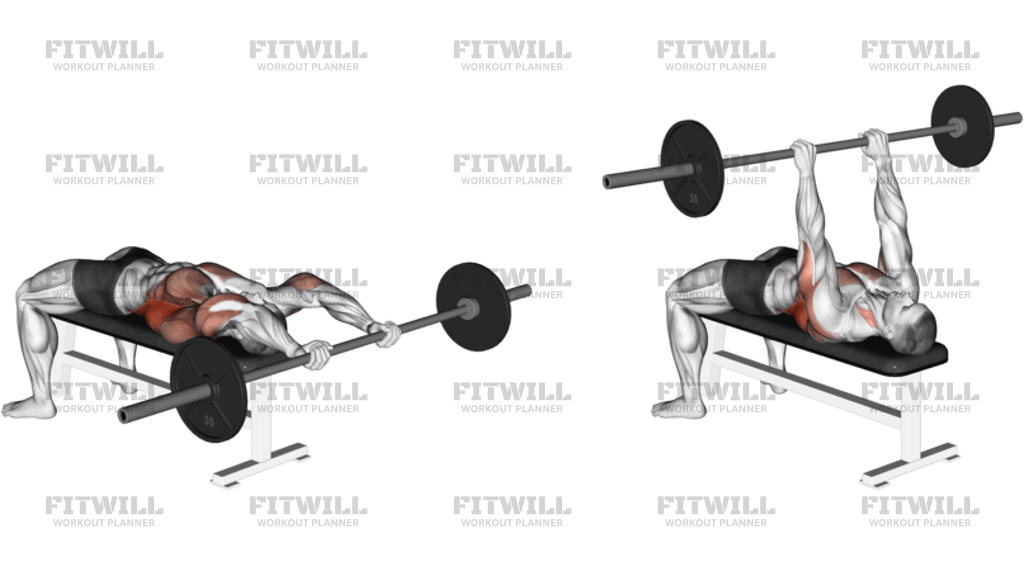
Instructions
- Sit on a flat bench with your upper back supported, feet flat on the floor, and a barbell held above your chest with a shoulder-width grip or slightly wider.
- Lie back with your head and shoulders anchored on the bench, then press the bar to arms length over the middle of your chest.
- Keep a small bend in your elbows and stack your wrists over the bar so the load stays balanced in your hands.
- Brace your ribs down and inhale as you begin lowering the bar in a smooth arc toward the space behind your head.
- Let the bar travel until you feel a strong lat and chest stretch, or until your upper arms are close to level with your torso without shoulder pain.
- Pause briefly in the stretched position while keeping your elbows softly bent and your lower back from over-arching.
- Exhale and pull the bar back along the same arc, using your lats to bring it from behind your head to above your chest.
- Finish with the bar over the chest, shoulders still packed down, then control the next repetition or re-rack the bar carefully after the set.
Tips & Tricks
- Keep the elbow bend almost fixed; turning the rep into a bent-arm press shifts the work away from the lats.
- A wider grip usually makes the arc easier to control, while a narrow grip can crowd the shoulders and shorten the comfortable range.
- Lower the bar only until the shoulders stay smooth and the ribcage does not flare hard off the bench.
- Use the bench as a reference point: your head, upper back, and feet should stay planted instead of sliding during the pull.
- Think about pulling the bar with your upper arms rather than trying to press it back up from the chest.
- Keep the bar path even from rep to rep; wobbling at the bottom usually means the load is too heavy.
- If the shoulders feel pinchy, shorten the descent and stop the bar higher behind the head.
- Use collars and modest plates so the bar stays stable when it passes behind the head.
Frequently Asked Questions
What muscles does Barbell Pullover train most?
Barbell Pullover primarily targets the lats, with the upper back, biceps, and forearms helping to steady the bar through the arc.
How does the barbell move in Barbell Pullover?
The bar starts above the chest and travels in a controlled arc behind the head before returning to the same line over the chest.
How bent should my elbows be during Barbell Pullover?
Keep a small, fixed bend in the elbows the whole time. If the bend changes a lot, the movement turns into a different press-style lift.
Can beginners do Barbell Pullover safely?
Yes, but start light and shorten the lowering range until the shoulders feel comfortable on the bench and behind the head.
What bench position works best for Barbell Pullover?
A flat bench gives the most stable setup for this version. Keep your upper back anchored and your feet planted so the torso does not slide as the bar moves.
Why do my shoulders feel it more than my lats?
Usually the bar is dropping too far, the elbows are bending too much, or the ribcage is flaring. Shorten the range and think about pulling the bar back with the upper arms.
Should I use a heavy barbell for this exercise?
No. Barbell Pullover works best with moderate or light loads that let you keep the arc smooth and the shoulders stable.
Where should Barbell Pullover fit in a workout?
It is usually best as accessory work after your main presses or pulls, when you can focus on control instead of max load.