Barbell Clean Pull
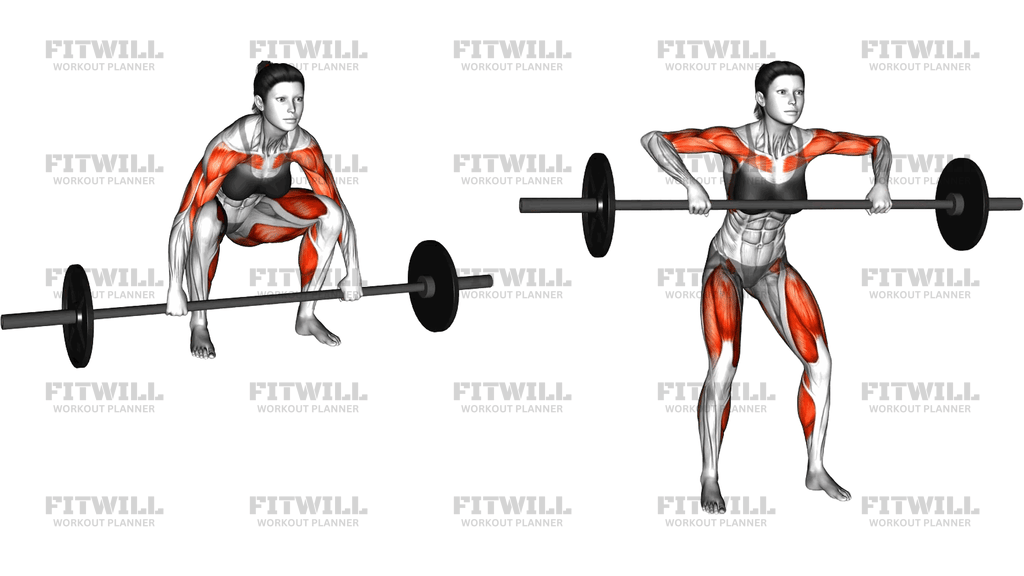
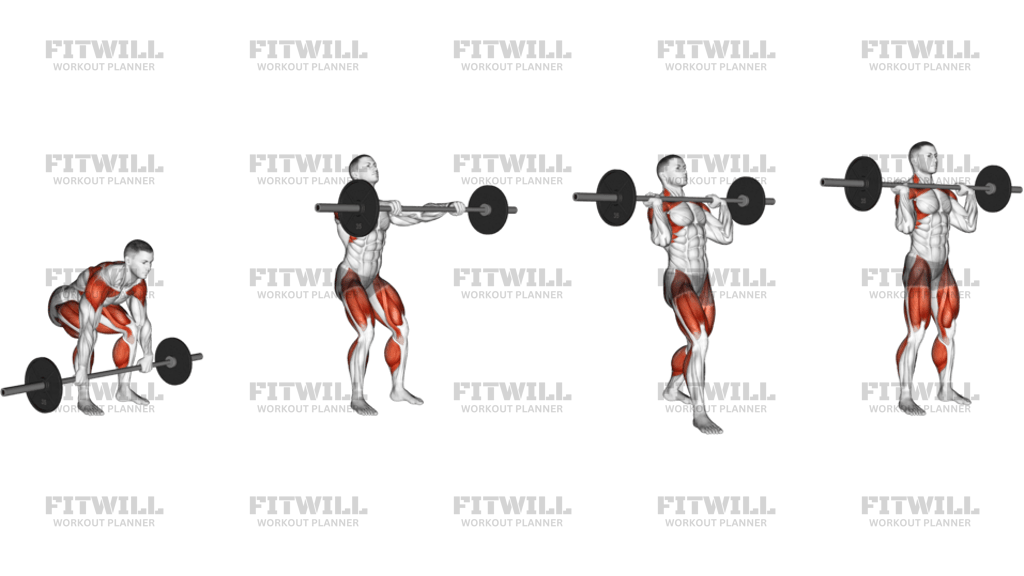
Barbell Clean Pull is a weightlifting pull used to build explosive extension without the catch phase of the clean. It is performed with a barbell, usually from the floor, and it teaches the lifter to keep the bar close while driving force through the floor, hips, and legs. Because there is no rack or receiving position, the exercise lets you focus on the first pull, transition, extension, and shrug without the extra timing demands of catching the bar.
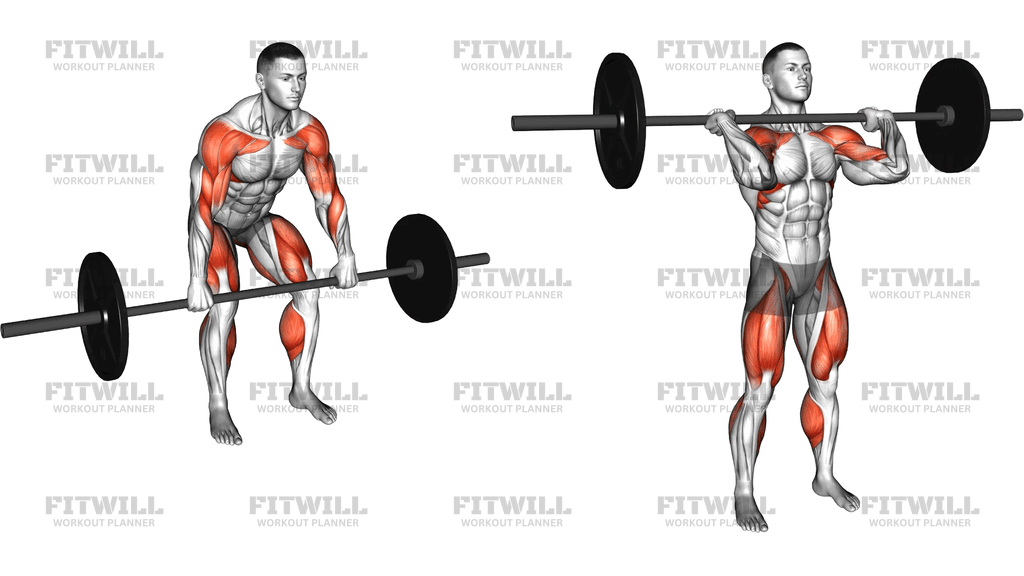
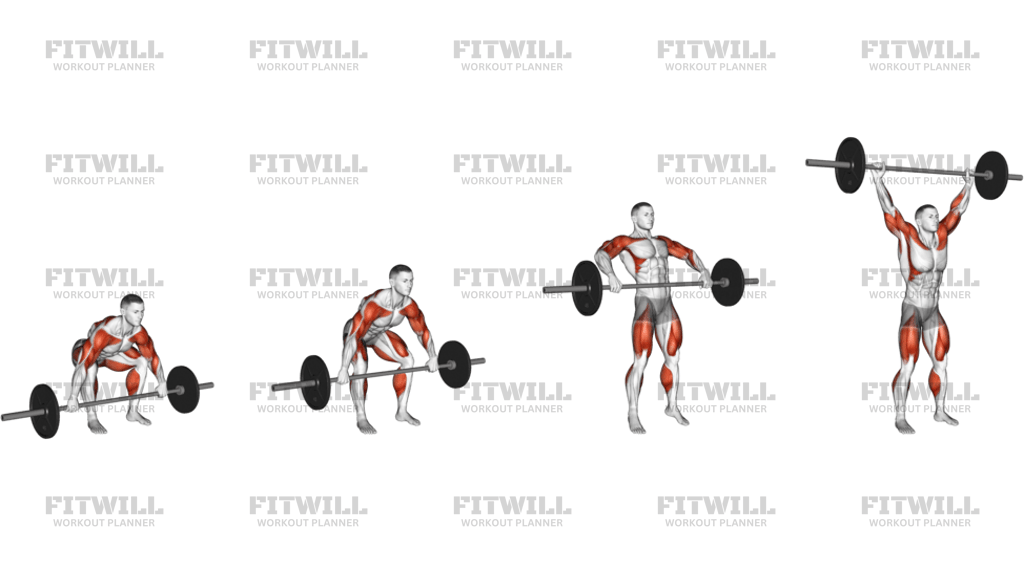
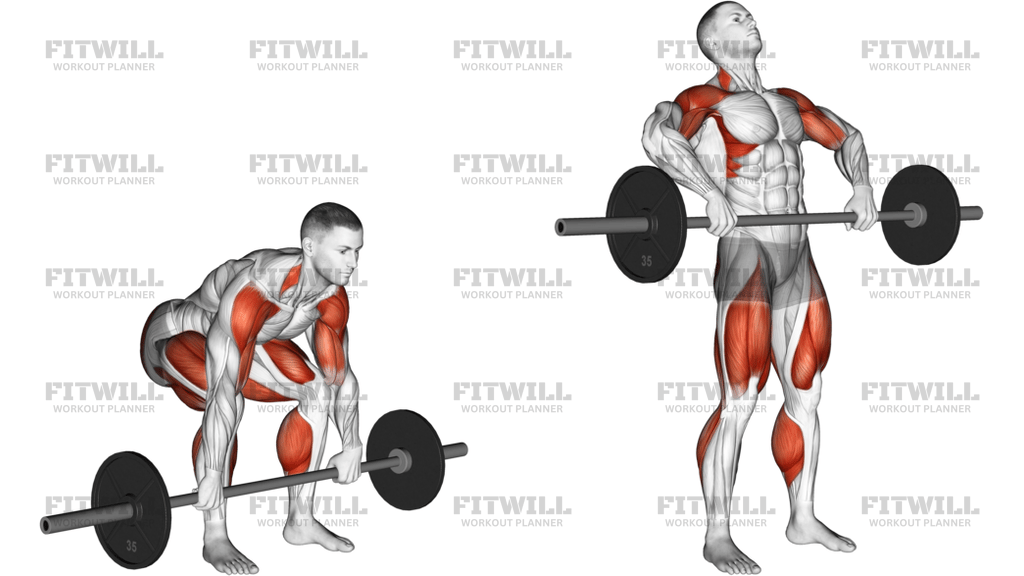
The setup matters because the bar should begin over the midfoot with the shins close, the shoulders slightly in front of the bar, and the back held flat. That position lets the legs and hips do the work instead of the lower back or arms trying to yank the bar off the floor. A clean pull should feel organized from the start: feet planted, trunk braced, lats tight, and the bar already in a path that can stay close to the body.
As the rep unfolds, the bar leaves the floor under control, passes the knees with the torso angle mostly preserved, and then accelerates as the hips and knees extend together. The finish is tall and violent in a controlled way: ankles, knees, and hips extend, the shoulders shrug, and the elbows stay straight or only slightly bent. The bar should travel vertically or slightly toward the body, not swing away in front of you. The goal is not to curl the bar higher, but to create clean force through the legs, hips, and upper back.
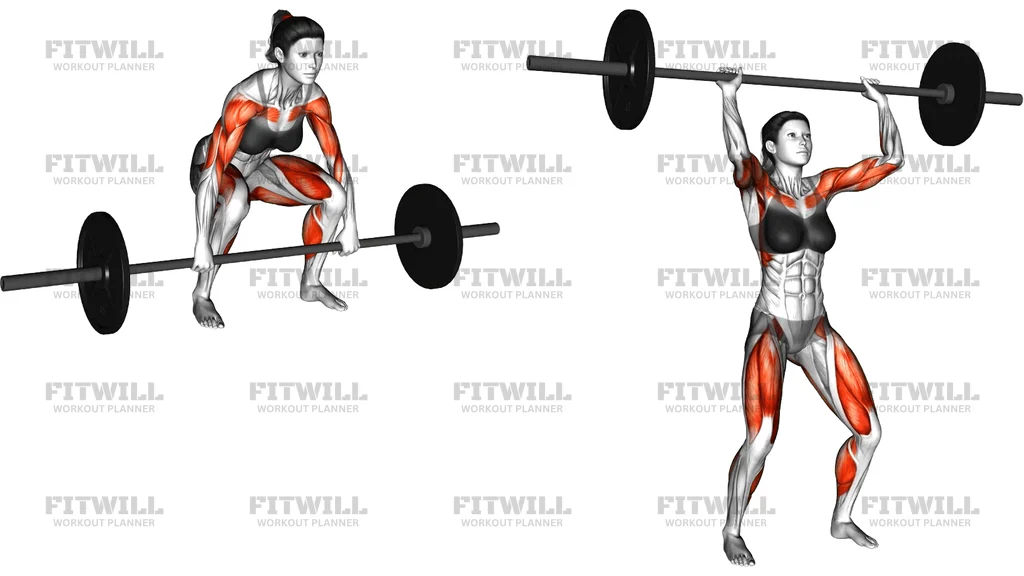
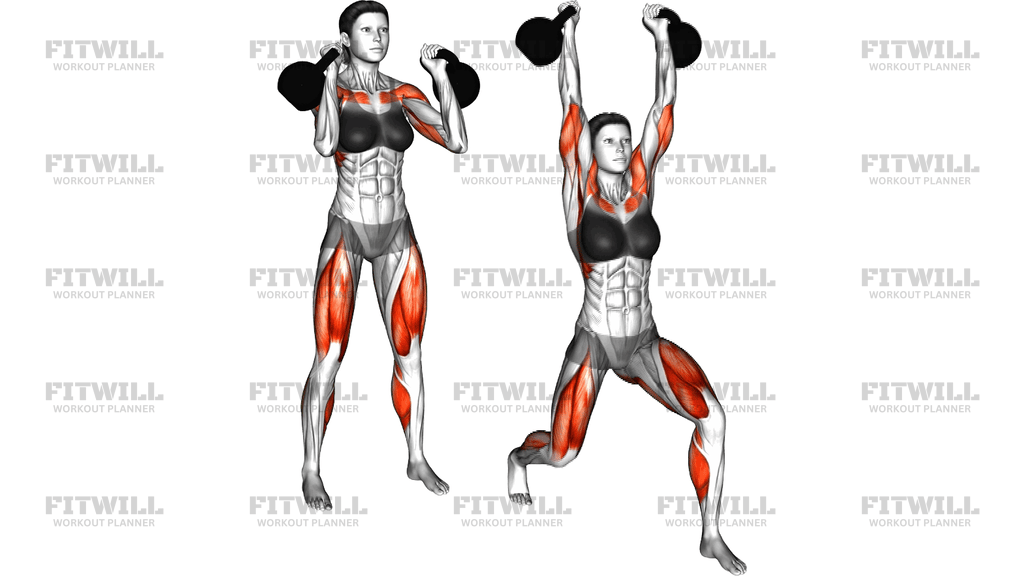
This exercise is commonly used by weightlifters, field athletes, and strength trainees who want more power from the second pull without practicing a full catch. It also works well as a technique builder for the clean, snatch pull variations, or as a heavy accessory lift when you want to overload triple extension. Start lighter than you think, keep the reps crisp, and stop the set once the bar drifts forward, the back position changes, or the pull becomes an arm-driven heave instead of a leg and hip extension.
[ Workout Log & Planner ]
Put your next workout in Fitwill
Keep your plan and training log ready when you are.


Instructions
- Stand with your feet about hip-width apart and set the barbell over your midfoot, with a clean grip just outside your legs.
- Hinge down, bend your knees, and bring your shins close to the bar while keeping your chest up and your back flat.
- Set your shoulders slightly in front of the bar, squeeze your lats, and fix your gaze a few feet ahead on the floor.
- Brace your trunk and pull the slack out of the bar before the plates leave the ground.
- Push through the floor to lift the bar, keeping it close to your shins and thighs as it passes the knees.
- As the bar reaches mid-thigh, extend your hips and knees together to drive to full body extension.
- Finish with a powerful shrug while keeping your arms long and the bar path tight to the body.
- Lower the bar by reversing the hinge with control, reset your setup, and repeat for the planned reps.
Tips & Tricks
- If the bar drifts away from your thighs, reset and think about keeping it brushing the legs on every rep.
- Keep your arms long during the pull; bending early turns the lift into a curl and steals power from the hips.
- Load should feel like a clean power pull, not a grind. When speed drops, the set is too heavy.
- Keep your chest from collapsing off the floor, especially when the bar breaks from the ground and passes the knees.
- Drive through the whole foot, then finish tall; do not rock forward onto the toes before the bar is moving fast.
- A tight lat squeeze helps keep the bar close and prevents the shoulders from drifting behind the bar too early.
- Use straps if grip is the limiting factor, particularly on heavier triples or sets of clean pulls.
- Stop each rep with control on the way down so the next setup starts from the same position.
Frequently Asked Questions
What muscles do Barbell Clean Pulls work most?
They hit the glutes, hamstrings, quads, traps, upper back, and core, with the biggest demand coming from explosive hip and leg extension.
Is a clean pull the same as a clean?
No. A clean pull trains the pull and extension without catching the bar in the front rack, so it is easier to focus on bar speed and position.
Where should the bar start on the floor?
The bar should start over the midfoot with the shins close to it, the shoulders slightly in front of the bar, and the back set flat.
Should my arms bend during the pull?
Keep them long as long as possible. The arms guide the bar, but the legs, hips, and traps should create the force.
Can beginners use this exercise?
Yes, but only with light loads and a controlled setup. Beginners should own the hinge and bar path before trying to move fast.
What is the biggest technique mistake?
Letting the bar swing away from the body or yanking it with the arms instead of driving through the floor and hips.
How does this differ from a high pull?
A clean pull emphasizes the pull and extension only, while a high pull usually finishes with a higher elbow path and more upper-body finish.
Should I use straps for clean pulls?
You can, especially when grip starts limiting the load you can use. Straps let you focus on bar speed and position.